

Did you know that authentic antique Chinese stools, which inspired this project, can cost over $2,000 at auction houses? That’s more than many people’s entire furniture budget. Yet you can create a piece with similar character for a fraction of the price.
This guide shows you how to build a stunning centerpiece for your home. You’ll replicate the weathered beauty of century-old pieces using modern materials and techniques. The result is furniture that looks like it has generations of history.
With careful work, you can achieve an aged appearance that commercial reproductions cannot match. The process requires dedication but offers complete creative control. You determine the exact dimensions, finish, and style to suit your space perfectly.
This approach lets you craft a unique item that becomes the focal point of your decor. The finished piece brings warmth and personality without the antique store price tag. It’s a rewarding way to enhance your interior design with handmade character.
Key Takeaways
- Create authentic-looking aged furniture at a fraction of antique store prices
- Gain complete control over dimensions, finish, and style for perfect customization
- Learn woodworking fundamentals combined with artistic distressing techniques
- Build a unique centerpiece that adds character and warmth to your space
- Replicate the weathered beauty of expensive antique pieces using modern methods
- Achieve professional results that surpass commercial reproduction quality
- Transform basic materials into a conversation-starting focal point for your home
Introduction: Embracing Vintage Charm in Your Living Room
Modern interior design is witnessing a significant shift toward incorporating elements that bring warmth and history into living spaces. Homeowners increasingly seek furnishings with distinctive character that break away from generic, mass-produced options.

The appeal of aged furniture lies in its beautiful imperfections. Worn edges, distressed surfaces, and weathered patinas tell stories of use and time. These elements create an authentic look that new pieces cannot replicate.
Antique-inspired items serve as natural focal points in any room. They draw attention and anchor your design scheme with substantial presence. This approach adds visual interest and sophistication to your home.
Creating your own vintage-style table lets you embrace this aesthetic without high costs. You control the aging process to ensure the piece complements your existing decor. The result brings unique charm to your living space while maintaining everyday functionality.
Gathering Essential Tools and Materials for Your Project
The authenticity of your final piece hinges on the quality and selection of your initial materials and tools. Gathering everything beforehand prevents interruptions and ensures a cohesive look. This careful preparation is crucial for a smooth workflow.

Must-Have Materials and Supplies
Start with the core lumber. You will need a 2×12 pine board for the main surface. Use 2×4 boards for the legs and 2×2 boards for internal support. This combination creates a sturdy frame.
Essential hardware includes 3.5-inch screws and strong wood glue for solid joints. A ½-inch drill bit is necessary for creating holes for wood plugs. These plugs hide fasteners for a cleaner, more authentic appearance.
Your choice of finish, like a protective top coat from a trusted brand, adds the final layer of character and durability.
Specialized Tools and Equipment
Power tools make the construction efficient. A jig saw allows for custom cuts and initial distressing. A router or planer helps square off the rounded edges of new lumber. A palm sander prepares surfaces for a flawless finish.
For aging, specialized tools are key. A coarse wire brush attachment for your drill creates grain texture. Hand tools like a saw, chain links, and a hammer make unique dents and marks. These tools mimic decades of wear.
Always prioritize safety. Wear eye protection and a dust mask during sanding and distressing. This keeps your project safe and enjoyable from start to finish.
Planning Your Design and Layout
Before cutting your first board, thoughtful design planning ensures your creation fits perfectly in your space. This phase transforms basic materials into a cohesive piece with professional results. Proper layouts prevent costly mistakes during construction.
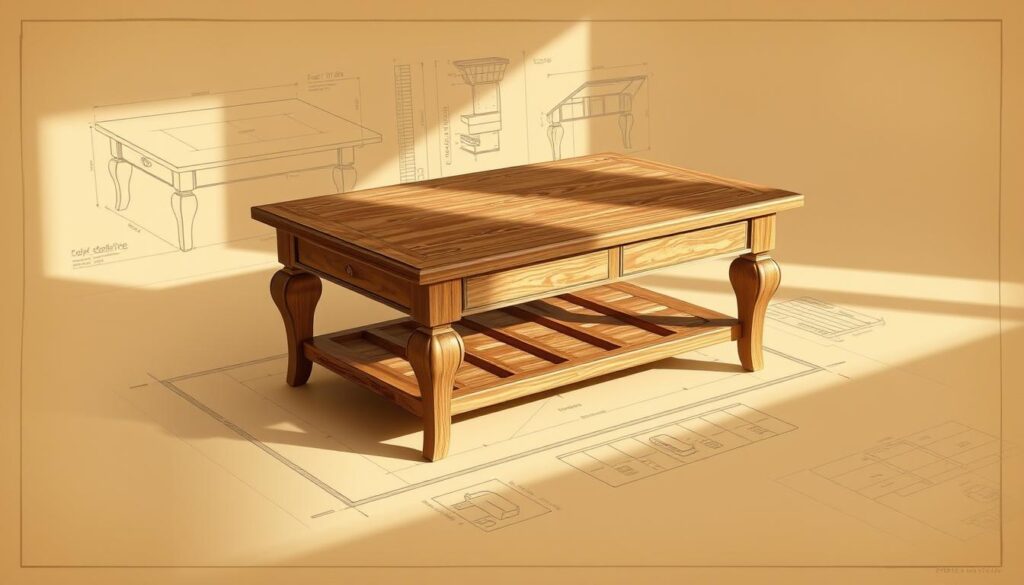
Start by determining the overall dimensions for your furniture piece. Consider sofa height and traffic flow in your room. The right proportions create harmony with surrounding items.
| Component | Measurement | Purpose |
|---|---|---|
| Tabletop Length | Custom based on space | Main surface area |
| Leg Height | 16.5 inches | Standard coffee table height |
| Leg Attachment | 6 inches from ends | Structural stability |
| Leg Angle | 10 degrees parallel | Asian-inspired aesthetic |
Visualize the angled leg design that gives this piece its distinctive character. The 10-degree cuts create a splayed stance reminiscent of antique stools. This one feature defines the overall style.
Sketch your design with all measurements and angles noted. Consider how the finished piece will function in your room. This planning phase allows for creative ideas and a balanced look of your preferred kind.
Step-by-Step: DIY Vintage Coffee Table: Add Antique Charm To Your Living Room
Building the foundation for your furniture piece begins with transforming raw lumber into a unified surface through precise cutting and joining. This systematic approach breaks the project into manageable stages.

Your first task involves cutting a 2×12 pine board in half lengthwise. This creates two pieces that will form the main surface. Remove the rounded factory edges by ripping ¼” from one long edge of each board.
| Step | Tool Needed | Purpose | Time Required |
|---|---|---|---|
| Cut Board Lengthwise | Circular Saw | Create Two Equal Pieces | 15 minutes |
| Remove Rounded Edges | Planer or Router | Create Flat Joining Surfaces | 20 minutes |
| Drill Holes for Plugs | ½” Drill Bit | Prepare for Decorative Details | 10 minutes |
| Join Boards | Wood Glue & Clamps | Create Solid Surface | 30 minutes + drying |
The technique of adding wood plugs involves drilling ½” deep holes with precision. Carefully match the boards to ensure perfect alignment before inserting flat head plugs. These details contribute to the authentic appearance.
Use wood glue and clamps to permanently bond the two boards together. This methodical way of building ensures a strong joint that withstands years of use. The process allows you to pause between steps for proper drying.
This approach helps even beginners complete the project successfully. Check measurements twice and avoid rushing critical assembly stages. The result is a sturdy surface ready for the next construction phase.
Preparing and Cutting the Wood Planks
Successful woodworking projects always start with meticulous material preparation, setting the stage for everything that follows. Begin by selecting quality pine boards that are straight and free from excessive knots or warping.

Properly dried wood prevents future movement or cracking in your finished piece. This careful selection ensures your foundation is solid from the start.
| Tool | Purpose | Key Benefit |
|---|---|---|
| Circular Saw | Lengthwise cutting | Precise straight cuts |
| Planer | Edge preparation | Clean surface finish |
| Measuring Tape | Accuracy checks | Consistent dimensions |
| Straightedge | Cutting guide | Perfect alignment |
The initial cut divides your 2×12 pine board lengthwise down the center. This creates two narrower planks that will form the surface of your furniture piece. Use a straight cutting guide for perfect accuracy.
Next, remove the rounded factory edges from the pine lumber. Rip ¼” from one long edge of each plank using a planer or router. This crucial step ensures tight joints when the wood planks are joined together.
Mark your cutting lines carefully using a straightedge and pencil. Double-check measurements before making cuts to ensure both planks are identical in width. Proper preparation at this stage directly impacts the final quality.
After cutting and edge preparation, lightly sand the surfaces to remove rough spots. This prepares the wood for the drilling and assembly steps that follow. Your careful work now pays off in professional results.
Constructing the Table Legs and Frame
The structural integrity of your furniture depends heavily on a well-built base. This phase transforms your flat surface into a stable, functional piece. The angled leg design is key to its visual appeal.

Begin by cutting four pieces from a 2×4 pine board, each 16.5 inches long. These form the legs. Cut a 10-degree angle on one end of each leg, ensuring the angles are parallel. This creates the distinctive splayed stance.
Position each leg 6 inches from the end of your assembled top. Use a Kreg jig to create pocket holes for a clean installation. Drive two screws into each leg for a strong connection. This method hides fasteners for a professional look.
| Component | Material | Cut Angle | Position |
|---|---|---|---|
| Legs | 2×4 Pine | 10° Parallel | 6″ from End |
| End Braces | 2×2 Pine | 10° Perpendicular | 4″ High |
| Side Braces | 2×2 Pine | Square | 9″ High |
Next, cut 2×2 boards to fit between the legs. The end braces require 10-degree perpendicular cuts. Install these pieces 4 inches from the bottom of the legs.
Cut longer 2×2 braces for the long sides. Position these 9 inches high on the legs. Attach each brace with two screws from the inside. This creates a rigid frame that prevents wobbling.
This construction method ensures your finished piece is both sturdy and visually balanced. The angled legs and cross-bracing provide excellent stability for years of use.
Methodology: Attaching Wood Planks and Tabletops
Creating a seamless connection between wood planks requires a methodical approach that combines modern adhesives with traditional detailing. This technique ensures your table top appears as one solid surface while maintaining historical authenticity.
Begin by positioning your prepared planks on their edges. Carefully mark drilling locations for the wood plugs, ensuring perfect alignment between both boards. Consistent spacing creates the appearance of traditional joinery methods.
Use a ½-inch drill bit to create holes exactly ½-inch deep into the edges. Match the boards correctly so holes align when brought together. This precision work forms the foundation for your furniture’s top surface.
Install ½-inch flat head wood plugs into the drilled holes. These decorative elements enhance the vintage aesthetic while contributing to structural stability. The plugs create visual interest that mimics antique construction techniques.
Apply a generous bead of quality wood glue along the prepared edges. Ensure complete coverage for a bond that withstands daily use. The adhesive penetrates the wood fibers, creating a permanent connection between planks.
Use bar clamps to hold the glued boards tightly together. Apply even pressure across the entire length to prevent gaps. Allow the adhesive to cure completely before proceeding to the next construction phase.
This methodology transforms individual components into a unified table surface. The combination of mechanical fasteners and chemical bonding creates a piece that balances aesthetic appeal with practical durability.
The Art of Distressing: Creating an Authentic Aged Look>
The transformation from new lumber to a piece with genuine history happens during the distressing process. This is where you apply elbow grease to mimic decades of wear and tear. Your goal is to create a unique character that cannot be bought.
This technique is both physical and artistic. You will aggressively alter the surface and edges of your project. The result should tell a story of long use.
Techniques for Shaving and Indenting the Wood
Begin with your jigsaw. Make random up-and-down cuts along all edges of the top surface. Continue this on the legs and support braces.
Next, use a small hand saw. Shave off chunks and slivers from the legs and the long edges of the top. This creates irregular surfaces for a believable look.
Using Wire Brush and Hand Tools for Texture
Attach a coarse wire brush to your drill. Run it along the top, sides, and legs. This creates grooves in the wood grain that will hold more stain.
For denting, use various tools. Hammer screws on their sides into the wood. Partially drive in nails then remove them. Use chain links and the hammer’s end to create unique marks.
| Tool | Action | Effect Created |
|---|---|---|
| Jigsaw | Random cuts on edges | Chipped, worn appearance |
| Hand Saw | Shaving slivers | Irregular wear patterns |
| Wire Brush | Drill-powered brushing | Deepened grain texture |
| Hammer & Implements | Strategic impacts | Dents and historical marks |
The best way to work is intuitively. Focus on areas that would naturally receive wear. Random, varied damage creates the most authentic look.
True aging is never uniform. Embrace the imperfections for a piece that feels genuinely old.
Finishing Techniques: Stain, Paint, and Protective Coats
The final transformation of your project occurs during the finishing stage. Here, you apply protective layers that enhance the aged character you created.
This process brings out the depth and texture of the wood. Your choice of products determines the final aesthetic.
Selecting the Right Finish for a Vintage Appeal
Stain is the traditional choice for achieving an authentic aged look. It penetrates the wood grain, highlighting all the distressing marks.
Darker colors like walnut create a dramatic effect. The stain application settles into grooves, making them appear darker.
For a different style, consider chalk paint. This popular option offers a matte finish with minimal preparation.
Layering techniques can produce complex patinas. Applying a base coat of stain and then dry-brushing paint over it creates depth.
Layering and Curing Tips for Durability
Always apply multiple thin coats of your chosen finish. This method prevents drips and ensures even coverage.
Allow each layer to dry completely before adding the next. Rushing this step can lead to a tacky surface and reduced durability.
The final protective coat is essential for longevity. A product like Minwax Polycrylic shields the table top from scratches and moisture.
Proper curing protects your hard work. It maintains the beautiful aged look for years to come.
Incorporating Design Inspirations from Antique Chinese Stools
Ancient furniture forms from China carry distinctive qualities that translate beautifully to modern spaces. These traditional stools provide excellent inspiration for creating furniture with authentic vintage appeal.
The design elements from these historical pieces create remarkable visual impact. Key features include angled legs, simple rectangular tops, and minimal decorative details.
| Design Element | Functional Purpose | Aesthetic Impact |
|---|---|---|
| Splayed Legs | Enhanced stability | Dynamic visual lines |
| Simple Rectangular Top | Practical surface area | Clean, uncluttered look |
| Substantial Proportions | Durability and strength | Substantial presence |
| Minimal Ornamentation | Focus on craftsmanship | Timeless style |
Original antique examples were crafted from dense hardwoods. Years of use in homes created rich patinas that give each piece unique character.
The most valuable antique stools show honest wear that tells their history through surface textures and subtle imperfections.
This building approach adapts well to different furniture types. You can create a coffee table, side table, or bench using the same techniques.
Each furniture piece you build captures the essence of these historical designs. The result brings authentic vintage appeal to your space.
Expert Tips for a Successful DIY Table Makeover
The difference between a good project and a great one often comes down to following proven techniques and expert advice. These professional insights can elevate your craftsmanship significantly.
Always work in a well-ventilated area with good lighting. The distressing phase creates substantial dust, and proper visibility ensures accurate work. Dry-fitting components before permanent assembly helps identify fit issues early.
Invest ample time in the distressing process rather than rushing through it. Authentic aging requires patience, and thorough work shows in the final result. Test your finish on a scrap piece first to preview the color.
Selecting the right kind of wood glue matters for long-term durability. Quality adhesives create bonds stronger than the wood itself. Document your progress with photos for reference and sharing.
If you create a piece using this method, the creator welcomes seeing your work. Consider sharing photos or tagging on social media to inspire others. Previous builds using these techniques include benches and stools.
Remember that each creation is unique. Embrace variations from the tutorial as they enhance the one-of-a-kind character you’re aiming for. Your personal touch makes the final piece truly special.
Creative Variations to Customize Your Living Room Piece
Your completed furniture piece becomes a canvas for endless creative possibilities that reflect your personal taste. The basic construction serves as a foundation for numerous decorative approaches.
Consider using chalk paint for a soft, matte finish that suits farmhouse aesthetics. Apply it in gentle hues like cream or light gray. Then lightly sand the edges to reveal hints of wood beneath.
The two-tone approach creates striking visual contrast. Paint the base one color while staining the top a complementary wood tone. This technique adds depth and modern flair to traditional designs.
For coastal style, try a whitewash technique. Dilute white paint with water and apply it thinly. This creates an airy look while allowing the wood grain to show through.
Metallic accents can elevate your piece significantly. Use gold or bronze spray paint on legs or edges. This adds sophistication beyond rustic farmhouse appeal.
Creative surface treatments include stenciling patterns or applying decorative transfers. These ideas let you match your piece to your room’s theme. Consider peel-and-stick wallpaper for temporary changes.
Faux wood finishes can transform basic pine into exotic hardwood appearances. Specialized painting methods can also create marble or stone effects. These techniques offer luxury looks without high costs.
The flexibility of these approaches allows you to combine multiple techniques. Your finished table will reflect your unique style and enhance your living space beautifully.
Reflecting on the Journey: From Project to Statement Piece
Completing a hands-on furniture project brings a unique sense of accomplishment that store-bought items cannot replicate. You transform basic materials into a functional work of art through dedication and skill.
Your finished creation becomes more than just a practical item. It serves as a conversation starter that showcases your personal style. The character you built through distressing makes it genuinely one-of-a-kind.
This piece of furniture represents the elbow grease and creativity you invested. It anchors your space with distinctive personality that mass-produced options lack.
| Aspect | Purchased Furniture | Your Custom Creation |
|---|---|---|
| Emotional Value | Transactional | Personal accomplishment |
| Uniqueness | Mass-produced | Truly one-of-a-kind |
| Fit for Space | Standard dimensions | Perfect custom fit |
| Skill Development | None | Lasting woodworking skills |
The techniques you mastered open doors to future projects. You can build matching items that share the same aesthetic throughout your home.
Sharing your work inspires others to begin their own creative journeys. We enjoy seeing completed projects and welcome photos on social media.
Thank you for visiting this blog post. May your new piece bring lasting joy to your living space.
Conclusion
Your completed project represents more than just furniture—it embodies personal accomplishment and creative expression. You have mastered techniques that transform basic materials into a distinctive centerpiece for your home.
The skills you developed extend beyond this single piece. You can apply these construction methods and finishing ideas to future projects throughout your space. Each creation will carry the same authentic character.
Your choice of stain, paint, or protective finish personalizes the final look. These options ensure your furniture complements any room’s style. The result surpasses store-bought items in both quality and uniqueness.
We hope this guide inspired your creative journey. Share your finished work on our blog or social media using relevant links. Your project might spark ideas for other makers.
Thank you for following this post. May your new piece bring lasting warmth and personality to your living area.