

Did you know that the average American spends over $1,800 on furniture each year? Often, that investment goes toward mass-produced pieces that lack personality.
Creating your own furniture, like a coffee table, offers a powerful alternative. This project allows you to craft a piece that perfectly fits your living space and personal style.
You gain complete control over the design, materials, and dimensions. This means you can build something truly unique that reflects your taste.
This guide is designed for those new to woodworking. You will discover that building a functional and beautiful piece is an achievable goal.
The process is broken down into clear, manageable stages. From initial planning to the final coat of finish, you will have a clear path to follow.
Key Takeaways
- Building your own furniture saves money compared to store-bought options.
- Customization allows the piece to match your exact style and room dimensions.
- This is an accessible project for individuals with limited experience.
- The process provides a great sense of accomplishment and personalization.
- You will learn valuable skills that can be applied to future DIY endeavors.
- Proper planning ensures the final product is both functional and aesthetically pleasing.
Planning Your Coffee Table Project
A successful DIY build starts with a solid plan. This ensures your final piece is both beautiful and functional for your space.
Defining Your Style and Function
First, decide on the aesthetic for your new piece. Do you prefer a simple rectangular design, a round shape, or something with rustic or modern character?
Your choice directly influences the materials and construction approach. Next, consider its primary job.
Will it hold drinks and books, or do you need storage underneath? You might even want wheels for easy mobility around the living room.
Setting a Budget and Measuring Your Space
Accurate measurements are critical for this furniture project. The ideal height usually falls between 16 and 18 inches.
You can adjust this to match your sofa’s height. Carefully measure the available area to determine the perfect length and width.
The table’s size must be proportional to your other furniture. A piece that is too small looks lost, while one that is too large overwhelms the room.
Finally, set a realistic budget. Pallet wood offers an economical option, while hardwoods provide durability.
Both choices offer significant savings compared to retail prices. Make sure your design aligns with your skill level before purchasing any materials.
Gathering Essential Tools and Materials
With your design finalized, the next exciting phase is collecting all the necessary items. Having the right materials and tools on hand before you start is crucial for a smooth building process. This preparation prevents interruptions and ensures you can focus on the craft.
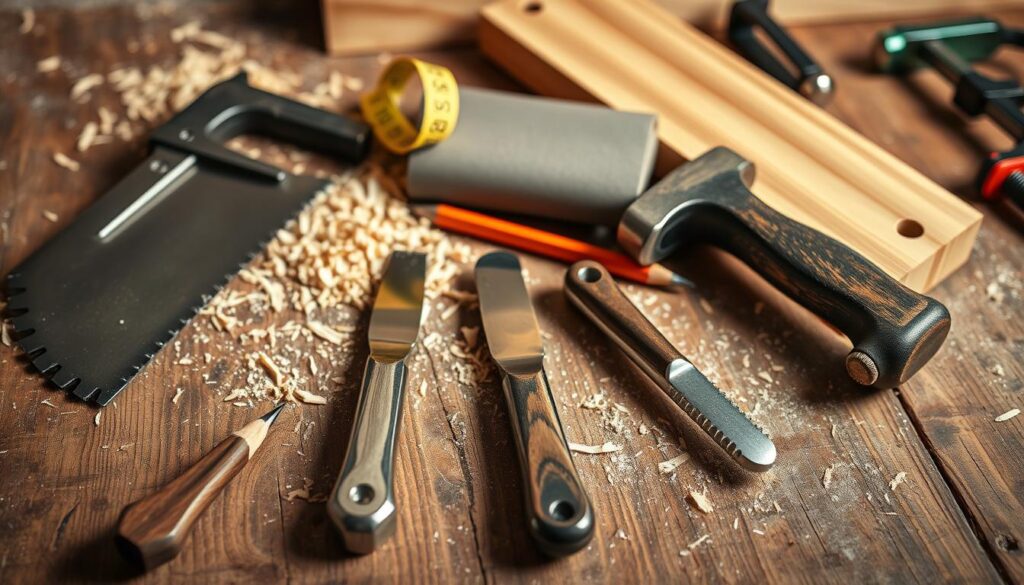
Selection of Wood, Adhesives, and Fasteners
Your choice of wood defines the project’s character and cost. Beginners often find pine or basswood easy to work with. These options are lightweight and budget-friendly.
For a more durable piece, consider hardwoods like oak or maple. Reclaimed pallet wood offers a rustic look and sustainability. Plywood is another versatile material, especially for modern designs.
Strong joints rely on quality adhesive. A product like Titebond III wood glue creates lasting bonds. For securing the frame, you will need 2 1/2-inch screws. Smaller screws and corner braces add reinforcement.
Overview of Power Tools and Hand Tools
Essential power tools make cutting and shaping efficient. A circular saw or table saw accurately sizes your pieces. A drill is indispensable for creating holes and driving screws.
A jigsaw handles curved cuts, while sanders create a smooth surface. Do not underestimate simple hand tools. Clamps are vital for holding pieces together during assembly.
Accurate measuring tools and a square ensure your project stays true. Always prioritize safety with glasses, gloves, and a dust mask before using any tools.
How To Make Coffee Table At Home: Beginner’s Step‑By‑Step Tutorial
The moment has arrived to transform your plans and supplies into a functional centerpiece for your living space. This comprehensive guide walks you through the entire creation process from start to finish.
Realistic timing is crucial for success. Most first-time builders need about eight to nine hours of active work. This spreads across several days to accommodate drying periods.
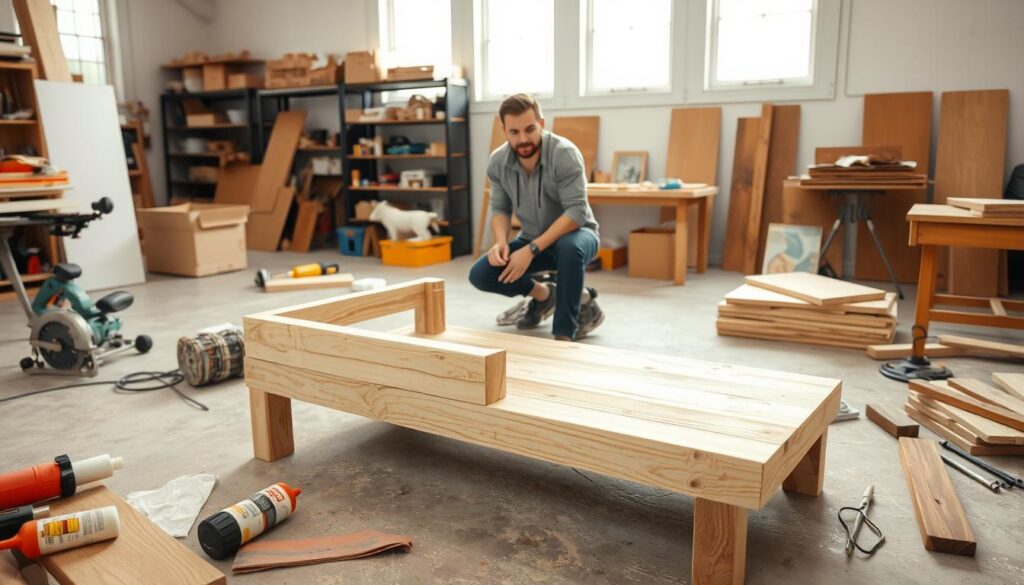
The wood glue requires overnight curing between certain stages. The final protective finish needs at least twenty-four hours to set properly. Planning your schedule around these drying times ensures a professional result.
Our systematic approach breaks the project into clear, manageable phases. You will progress through measuring, cutting, assembly, and finishing. Each stage builds logically upon the previous one.
Following each instruction carefully creates a sturdy, lasting piece. This methodical process makes furniture construction accessible even with limited experience. Your dedication will yield a beautiful, custom coffee table that reflects your personal style.
The subsequent sections provide detailed guidance for every step. This diy project empowers you to create something truly unique for your home.
Cutting, Gluing, and Assembling the Tabletop
Building the table top is the most rewarding part of the project. This surface defines the entire piece, so precision is critical for a professional result.
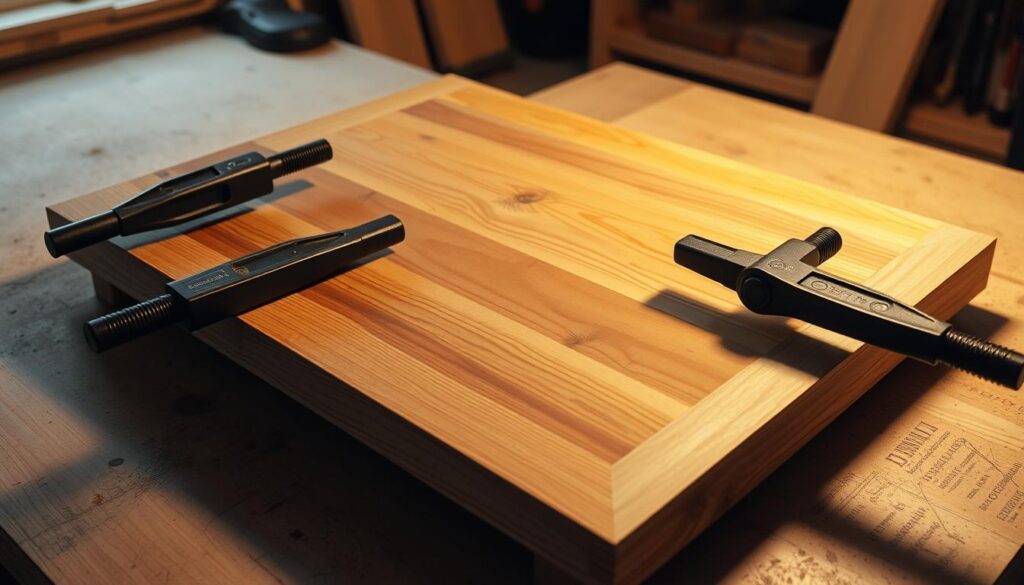
Your initial cuts establish the foundation. Begin by cutting your 3/4-inch boards to rough dimensions. Accurate measuring now prevents issues later.
Precise Measuring and Cutting Techniques
For a wider surface, you can laminate boards together. Apply wood glue quickly and clamp the pieces firmly. Let this assembly dry overnight.
After drying, use a straight-edge guide to trim the edges perfectly straight. This ensures tight seams where the boards meet.
Joining Boards with Wood Glue and Clamps
For edge-to-edge joining, a biscuit joiner offers superior alignment. Cut matching slots into the edges of your boards.
Apply glue in the slots and along the edges. Insert the biscuits and clamp the entire table top securely. Allow another full night for the glue to cure.
For curved ends, use a flexible template to mark your design. Cut just outside the line with a jigsaw, then sand to the final shape.
| Joint Type | Recommended Clamps | Clamping Pressure | Drying Time |
|---|---|---|---|
| Edge-to-Edge (Biscuit) | Bar Clamps or Pipe Clamps | Firm, Even Pressure | Overnight (12+ hours) |
| Laminating for Thickness | Multiple F-Style Clamps | Moderate Pressure | Overnight (12+ hours) |
| Angled Pallet Wood Pieces | Quick-Grip Clamps | Light to Moderate | Overnight (12+ hours) |
Working with pallet wood requires a slightly different approach. Cut the end pieces first with 45-degree angles.
Progressively cut and glue each subsequent piece, clamping as you go. For the final piece, measure the gap precisely for a perfect fit.
Make sure each joint is aligned before the adhesive sets. This careful process results in a seamless, sturdy table top for your diy creation.
Constructing the Base and Supporting Frame
A sturdy base is crucial for the longevity and stability of your new furniture piece. This section explores two effective methods for building this core structure.
You can choose a traditional approach with a lumber frame or a modern design using solid plywood ends.
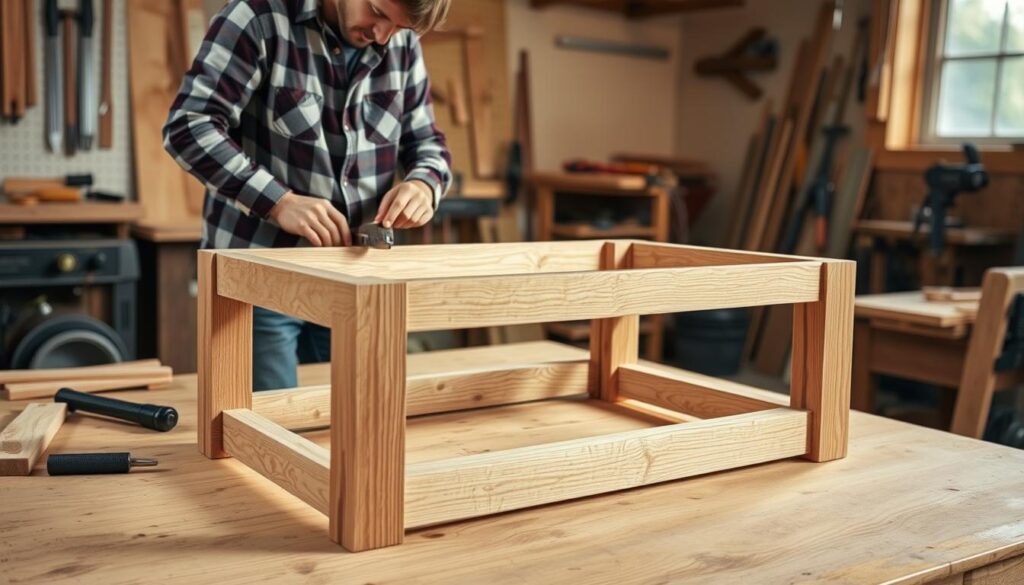
Building the Base Using Plywood and Strips
For a contemporary look, create solid legs from stacked plywood strips. Cut uniform 2.5-inch wide strips on a table saw.
Glue the strips together in layers of three, clamping them firmly. Allow the adhesive to cure completely before stacking the pieces to your desired height.
Mark and cut graceful curves on the ends using a band saw. Sand the profiles smooth for a refined appearance.
Incorporating Center Braces for Stability
Regardless of your chosen method, a center brace is essential. It locks the two base ends together, preventing them from shifting.
Cut a recess in each end to accept the brace. Use a Japanese pull saw and chisel for precision.
Glue the brace firmly into place. This simple step adds immense rigidity to the entire table structure.
- Frame Method: Assemble a rectangular frame from 2×2 lumber. Use corner braces and screws for strong joints. Add cross braces for even weight distribution.
- Plywood Panel: Attach a sheet of plywood to the bottom of the frame. This creates a stable platform and optional storage space.
- Pilot Holes: Always drill pilot holes before driving screws. This prevents the wood from splitting and ensures a clean, professional result.
Sanding, Shaping, and Finishing Touches
Achieving a polished appearance requires careful attention to surface preparation and protective coatings. This final stage transforms your project from basic construction to professional furniture.
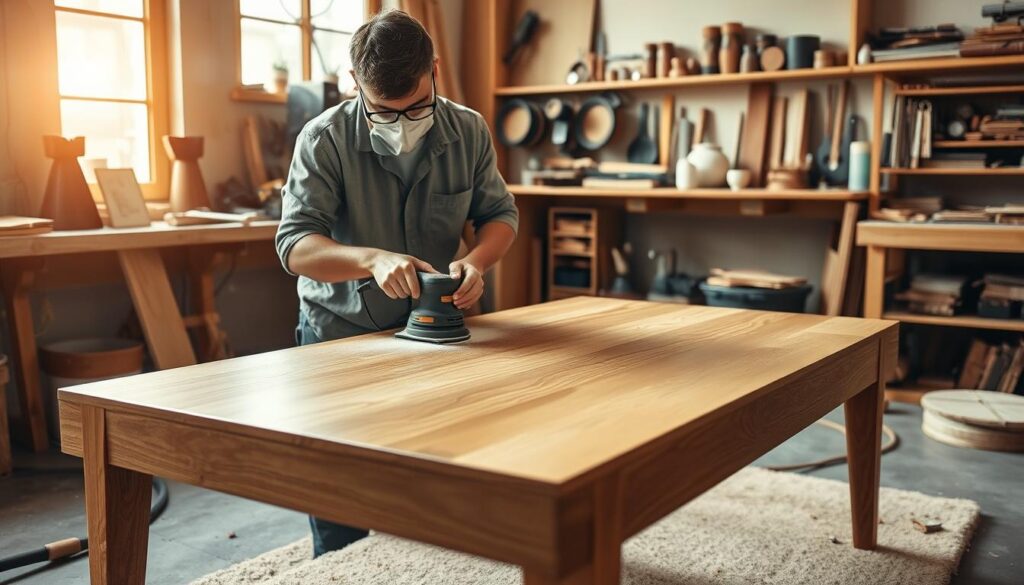
Progressive Sanding and Surface Smoothing
Begin with 80 grit sandpaper on a belt sander to flatten the tabletop. Remove glue residue and rough spots effectively.
Progress to 120 grit for further smoothing. Use the same tool on curved ends to create symmetrical profiles.
Complete the process with 180 grit on an orbital sander. This creates the ideal texture for finish adhesion.
Applying Finishes: Stain, Oil, or Paint Options
Oil finishes protect the wood while maintaining its natural look. They penetrate deeply for lasting protection.
Stains enhance grain patterns and add rich color depth. Wax-oil tints offer similar benefits with easier application.
The right finish doesn’t just protect the wood—it reveals its character.
Clear finishes like General Finishes High Performance Satin provide crystal-clear protection. They work well on light woods without yellowing.
| Finish Type | Application Method | Drying Time | Best For |
|---|---|---|---|
| Oil Finish | Wipe-on, buff off | 8-12 hours | Natural wood appearance |
| Wood Stain | Brush or rag application | 4-6 hours | Color enhancement |
| Clear Topcoat | Thin, even coats | 2-4 hours | Maximum protection |
| Antiquing Wax | Sectional application | 1-2 hours | Vintage look |
Apply finishes in thin, even layers. Allow proper drying time between coats for optimal results.
Work in a well-ventilated area. Let the final coat cure for at least 24 hours before use.
Preparing Your Workspace and Safety Tips
A well-prepared workspace is the foundation for a successful and safe building experience. Before you pick up any tools, dedicating time to organize your area pays off immensely. This preparation minimizes frustration and maximizes efficiency throughout your project.

Choose a location like a garage, backyard, or a spacious room with excellent lighting and airflow. Good ventilation is crucial when applying finishes. Make sure you have a sturdy surface, such as a workbench or sawhorses topped with plywood.
Keep all your tools within easy reach. This organization saves time and prevents unnecessary movement. Lay down a tarp or drop cloth to protect floors from sawdust and spills.
Organizing a Well-Ventilated, Well-Lit Area
Safety is the most important part of any diy endeavor. Never compromise on protective gear. Having the right equipment is the professional way to approach woodworking.
Essential safety gear includes:
- Safety glasses to shield your eyes from dust and debris.
- Cut-resistant gloves for handling rough wood and preventing splinters.
- A dust mask to avoid inhaling fine particles.
- Hearing protection when operating loud power tools.
- A work apron with pockets to keep small items handy.
- Closed-toe shoes or work boots for foot protection.
Make sure all your equipment is in good working order before you begin. This careful setup ensures your focus remains on crafting your unique piece.
Creative Customizations and Personal Touches
The true artistry in DIY projects emerges when you add your unique signature. This phase transforms functional construction into expressive craftsmanship.
Adding Decorative Details and Wood Carving
Wood carving introduces distinctive character to your furniture piece. Chip carving creates shallow, geometric patterns using specialized knives with angled blades.
Work slowly for clean, controlled cuts that personalize your table’s surface. This technique adds intricate designs without compromising structural integrity.
Other tools like chisels and gouges shape decorative elements on legs or edges. These hand-carved details showcase your growing woodworking skills.
Consider contrasting wood species for visual interest or metal accents for industrial flair. Functional additions like lower shelves or casters enhance practicality.
These creative projects distinguish handmade furniture from mass-produced tables. Your personalized piece becomes a true reflection of individual style.
Conclusion
Your journey from planning to finished product demonstrates remarkable capability. Completing this furniture creation brings deep personal satisfaction. Your handmade piece now serves as both functional furniture and a testament to your skills.
The experience develops practical woodworking techniques applicable to future projects. Your custom coffee table reflects unique design choices unavailable in store-bought options. This achievement proves beginners can successfully build quality furniture with proper guidance.
Consider this project the foundation for more ambitious diy endeavors. The confidence gained opens doors to designing other coffee tables and furniture pieces. Enjoy your creation while planning your next living space enhancement.