

A coffee table is more than just a place to rest your mug—it’s the centerpiece of your living room that showcases your personal style and craftsmanship. Building your own DIY coffee table not only saves money but allows you to customize dimensions, materials, and design elements to perfectly suit your space. In this comprehensive guide, we’ll explore 10 stunning coffee table designs with detailed joinery techniques, size recommendations, and professional tips to help you create a beautiful, functional piece that will become the conversation starter in your home.
1. Modern Farmhouse Coffee Table
The modern farmhouse coffee table combines rustic charm with contemporary clean lines, creating a versatile piece that works in almost any living room. This design features a solid wood top with an X-frame base that provides both stability and visual interest.
Design Features
What makes this coffee table stand out is the contrast between the rustic wood grain and the geometric precision of the base. The tabletop can be crafted from reclaimed barn wood for authentic character or new lumber distressed to achieve that coveted farmhouse look.
Joinery Techniques
For the tabletop, use pocket hole joinery to connect boards seamlessly. The X-frame base requires precise 45-degree miter cuts that meet in the middle. Half-lap joints where the X-pieces cross provide crucial structural integrity, ensuring your coffee table remains sturdy for years of use.
Ideal Dimensions
For optimal proportion in most living rooms, aim for dimensions around 48 inches long by 24 inches wide by 18 inches high. This height falls within the ideal coffee table range (16-18 inches) that complements standard sofa heights while providing comfortable access.
2. Industrial Pipe Coffee Table
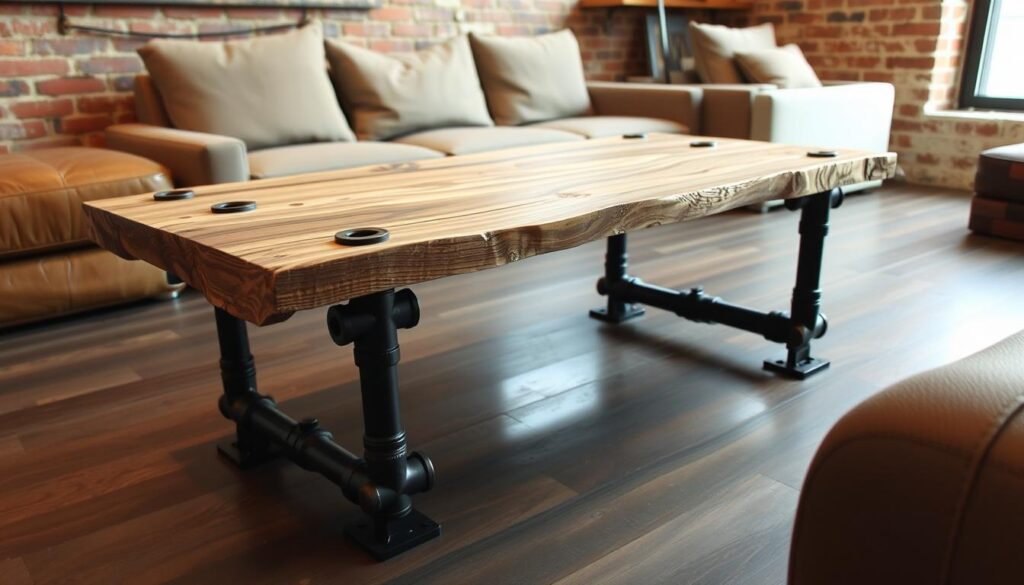
For urban dwellers or those who appreciate industrial aesthetics, this pipe-based coffee table delivers raw character with surprisingly simple construction. The combination of unfinished wood and metal creates a compelling visual contrast.
Design Features
This design showcases the beauty of industrial materials with exposed black iron pipes forming the base structure. The tabletop typically features thick wood planks that can be finished to your preference—from a natural sealed look to painted or stained surfaces.
Joinery Techniques
The beauty of this design lies in its straightforward assembly. The pipe fittings thread together without requiring complex woodworking joints. For the wooden top, use dowel joinery or wood glue with clamps to connect multiple boards. Attach the top to the pipe base using flanges that screw into the underside of the wood.
Ideal Dimensions
For proper balance between the heavy pipe elements and wood top, aim for 42 inches long by 24 inches wide by 17 inches high. The pipes provide substantial weight, so keep the design proportional to prevent it from appearing too bulky in your living room space.
3. Mid-Century Modern Coffee Table
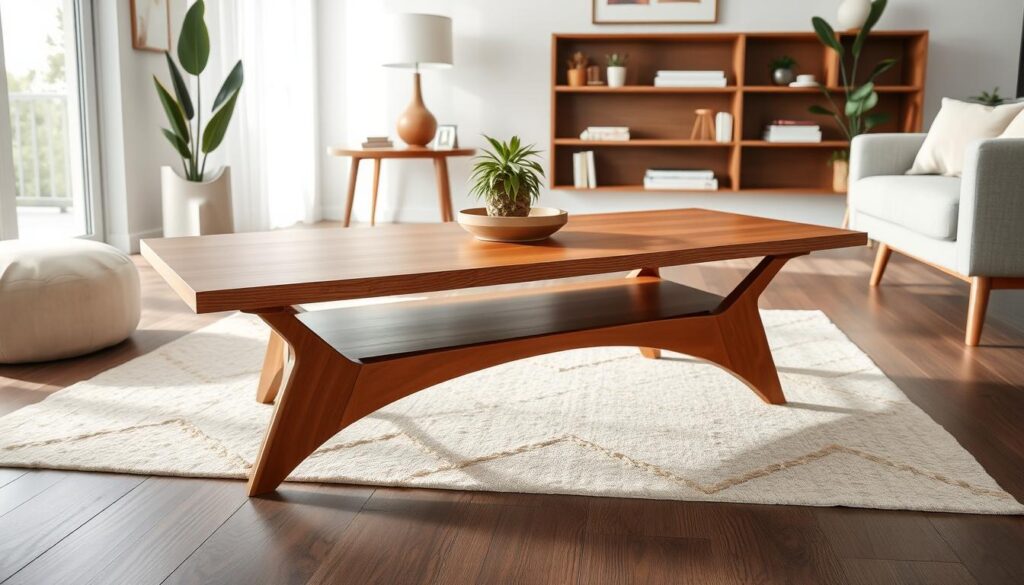
The timeless appeal of mid-century modern design makes this coffee table a favorite for those seeking clean lines and elegant simplicity. Characterized by tapered legs and minimal ornamentation, this style offers sophisticated charm without overwhelming your space.
Design Features
The hallmark of this design is its tapered angled legs that attach to the underside of a simple rectangular top. Optional features include a lower shelf for storage or subtle rounded edges on the tabletop for a softer look. Walnut, teak, or oak woods are traditional choices that enhance the mid-century aesthetic.
Joinery Techniques
Angled mortise and tenon joints create the strongest connection between the legs and table frame. For a simpler approach, angled pocket holes can work with proper reinforcement. The tabletop typically uses tongue and groove joinery or dowels to connect boards seamlessly while allowing for natural wood movement.
Ideal Dimensions
The classic proportions for this style are 48 inches long by 22 inches wide by 16 inches high. The lower height is characteristic of mid-century design and creates a sleek, horizontal profile that complements contemporary living spaces.
Ready to Build Your Perfect Coffee Table?
Get access to professional-grade coffee table plans with detailed measurements, cut lists, and step-by-step instructions. Our plans eliminate guesswork and help you build with confidence!
4. Rustic Reclaimed Coffee Table
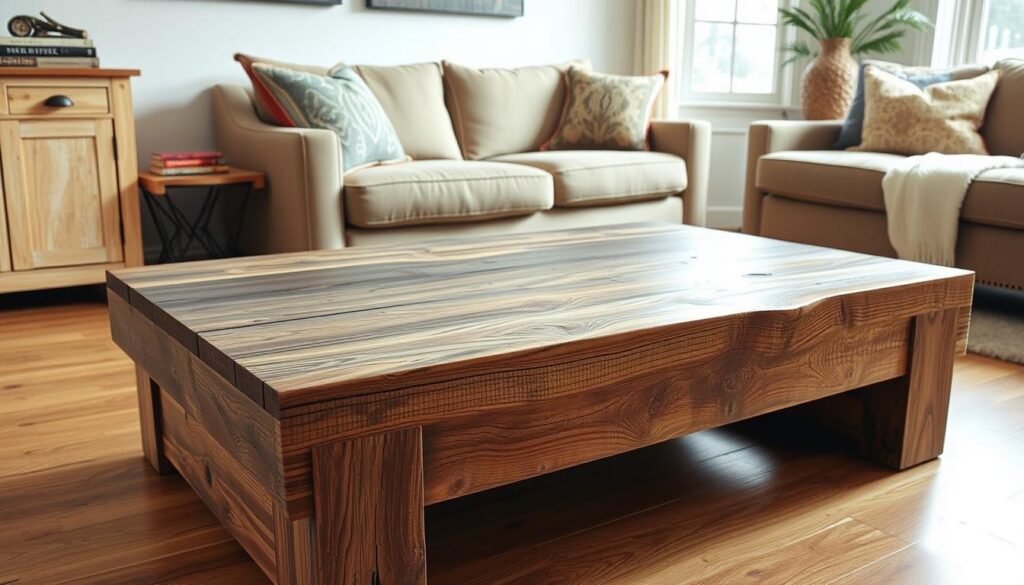
There’s something authentically appealing about furniture crafted from materials with history. This rustic coffee table design utilizes reclaimed wood to create a piece with character, sustainability, and a story to tell.
Design Features
The beauty of this table lies in the imperfections of the wood—weathered textures, nail holes, and varied coloration create visual interest impossible to replicate with new lumber. The design typically features chunky proportions with thick planks and substantial legs that emphasize the rugged aesthetic.
Joinery Techniques
Working with reclaimed wood requires adaptive joinery approaches. Timber frame techniques like mortise and tenon or half-lap joints work well for connecting the base components. For the tabletop, breadboard ends not only look authentic but help prevent warping in wood that may have variable moisture content.
Ideal Dimensions
To properly showcase the substantial nature of reclaimed materials, aim for dimensions around 50 inches long by 30 inches wide by 18 inches high. The extra width accommodates the visual weight of the piece while maintaining functional proportions for your living room.
5. Minimalist Floating Top Coffee Table
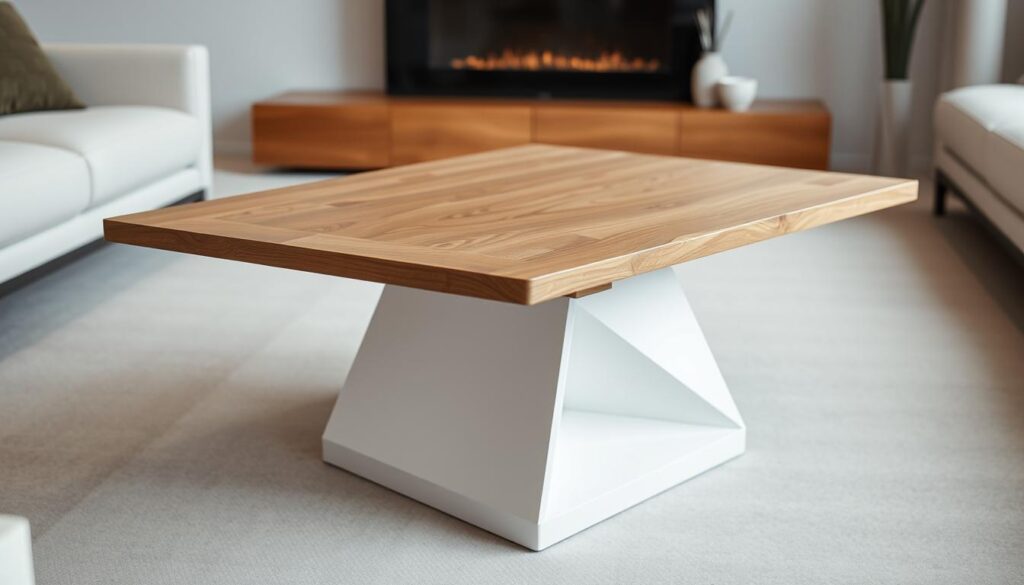
For those who appreciate clean, uncluttered design, this minimalist coffee table creates the illusion of a floating top—perfect for contemporary spaces where every piece of furniture makes a deliberate statement.
Design Features
The defining characteristic is the visual separation between the thin tabletop and the geometric base, creating a sense of lightness despite the solid construction. This design often features contrasting materials or finishes to emphasize the floating effect—such as a light wood top with a darker base or vice versa.
Joinery Techniques
The floating effect requires precise joinery where the top connects to the base through recessed supports. Dado joints or hidden brackets create clean connections. For the base, miter joints with splines provide both strength and a seamless appearance that maintains the minimalist aesthetic.
Ideal Dimensions
To maintain the light, airy feel of this design, keep proportions modest at 42 inches long by 24 inches wide by 16 inches high. The tabletop should be relatively thin (3/4 to 1 inch) to enhance the floating appearance while still providing adequate durability.
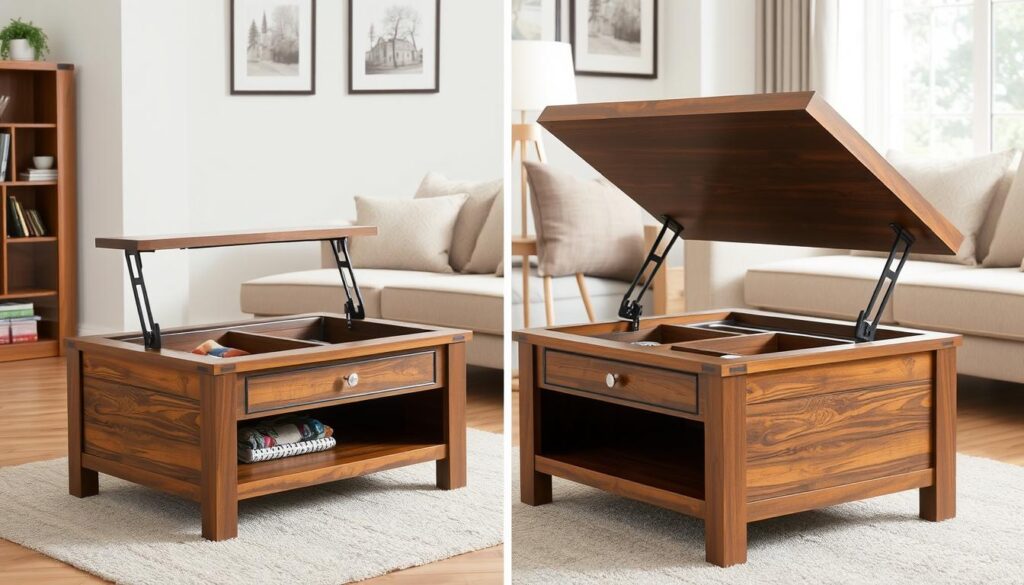
6. Storage Coffee Table with Lift Top
Combine form and function with this ingenious coffee table design that features hidden storage and a lifting mechanism that transforms it into a convenient work surface or dining area—perfect for apartments and multifunctional spaces.
Design Features
The magic of this design is its transformative nature—at rest, it looks like a standard coffee table, but the top lifts and extends toward the sofa, creating an elevated surface. Beneath the hinged top lies generous storage space for blankets, books, or game night essentials.
Joinery Techniques
The lifting mechanism requires precise installation of specialized hardware (gas pistons or springs). The table structure needs robust box joint or dovetail construction for the storage compartment, ensuring it can handle the repeated stress of the moving top. Reinforced corners with glue blocks provide additional stability.
Ideal Dimensions
To accommodate both the lifting mechanism and adequate storage, aim for 48 inches long by 26 inches wide by 19 inches high. The slightly taller height allows for more interior storage space while still maintaining comfortable proportions when used as a standard coffee table.
Struggling With Complex Joinery?
Our professional coffee table plans include detailed joinery guides with illustrations and measurements for perfect fits every time. Save time and avoid costly mistakes!
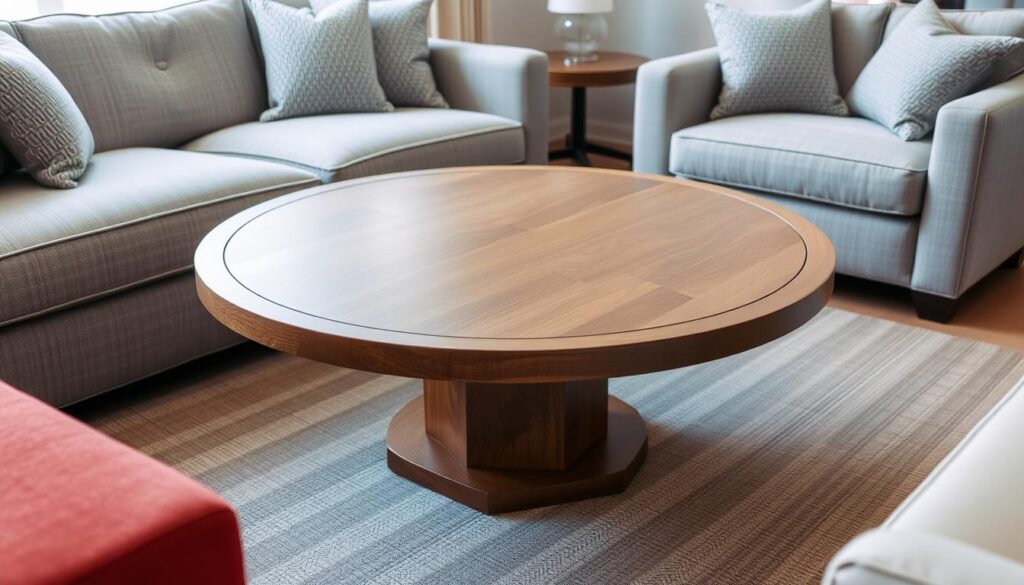
7. Round Pedestal Coffee Table
Break away from rectangular designs with this elegant round coffee table supported by a central pedestal. The circular shape promotes conversation flow and works beautifully in smaller spaces where sharp corners might impede movement.
Design Features
The round tabletop creates a softer visual presence while the central pedestal base maximizes legroom and cleaning access underneath. This design can range from ornately turned traditional styles to sleek, contemporary interpretations depending on how you shape the pedestal.
Joinery Techniques
Creating a stable round tabletop requires edge-joining boards and then cutting the circle with a router or jigsaw. The pedestal typically attaches to a base plate and top plate using sturdy threaded inserts or lag bolts. For the pedestal itself, turned wood offers classic appeal, while stacked geometric shapes provide a more modern look.
Ideal Dimensions
For balanced proportions, a 36-inch diameter top with a height of 18 inches works well in most living rooms. The pedestal base should be approximately 12-14 inches in diameter to provide adequate stability without appearing too bulky.
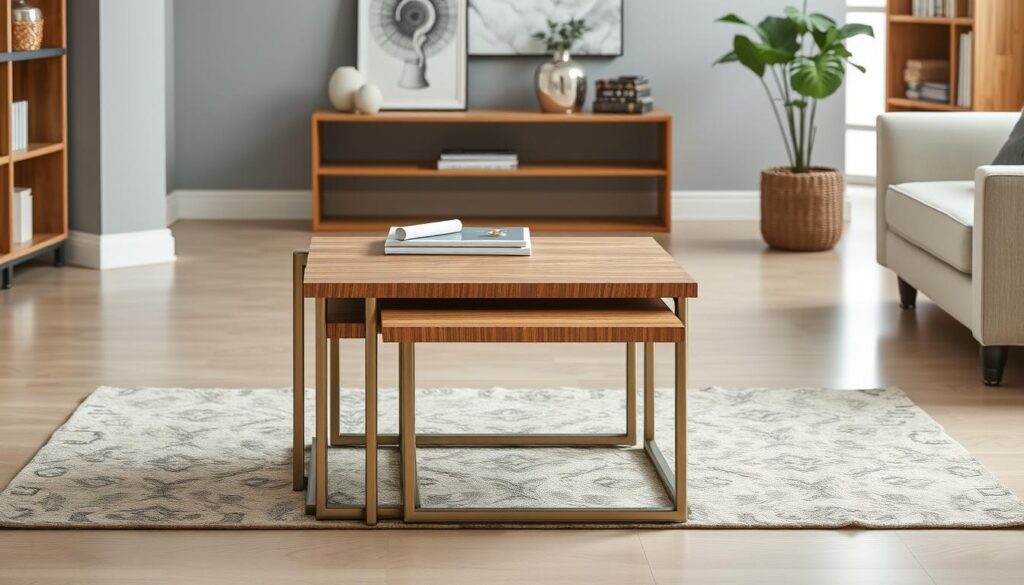
8. Nested Coffee Tables
For ultimate flexibility, nested coffee tables offer multiple surfaces that can be arranged together or separated as needed. This adaptable design is perfect for entertaining or homes where space requirements frequently change.
Design Features
This concept typically includes 2-3 tables of graduated sizes that nest together when not in use. The tables share design elements for visual cohesion but may incorporate slight variations in shape or materials. Common configurations include rectangular sets with consistent widths but varying lengths, or mixed geometric shapes that create interesting arrangements.
Joinery Techniques
Since these tables will be moved frequently, prioritize sturdy construction methods. Bridle joints or reinforced miter joints work well for the frames. Keep the design consistent across all tables while scaling the dimensions proportionally. Consider adding felt pads to prevent scratching when the tables are nested.
Ideal Dimensions
For a three-piece nested set, typical dimensions would be: Large table (40″L x 20″W x 18″H), Medium table (32″L x 20″W x 16″H), Small table (24″L x 20″W x 14″H). This graduated sizing allows for nesting while maintaining usable surface areas when separated.

9. Glass Top Coffee Table with Display Base
Showcase your woodworking skills with this sophisticated design that pairs a glass top with a carefully crafted base. The transparent surface allows the structural elements below to become a visible design feature rather than hidden support.
Design Features
The glass top creates a sense of lightness while protecting the wooden structure beneath. The base can range from geometric grid patterns to organic sculptural forms, essentially becoming functional art. Some designs incorporate a shallow display area beneath the glass for showcasing collections or seasonal decorative elements.
Joinery Techniques
Since the base will be visible, focus on clean, precise joinery methods like through tenons, dovetails, or finger joints that become part of the aesthetic appeal. The glass top typically rests on corner blocks with silicone bumpers or specialized glass supports. Ensure all joinery is sturdy enough to support the weight of the glass plus items placed on the table.
Ideal Dimensions
Standard proportions work well at 44 inches long by 24 inches wide by 17 inches high. The glass should be tempered safety glass at least 3/8 inch thick to prevent breakage. Allow 1/2 inch overhang on all sides of the base for a polished appearance.
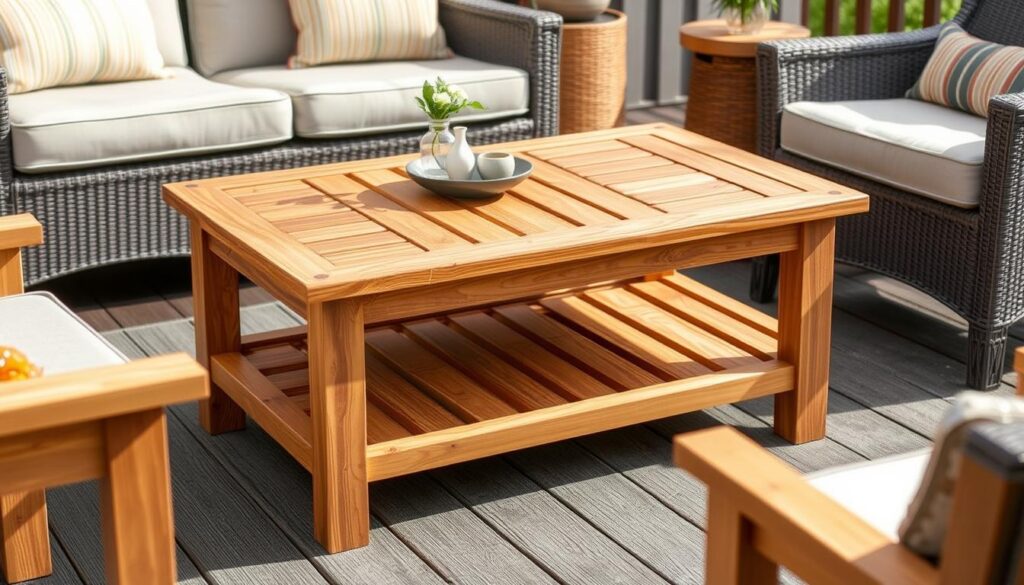
10. Weather-Resistant Outdoor Coffee Table
Extend your living space to the outdoors with a coffee table specifically designed to withstand the elements. This durable piece brings indoor comfort to your patio or deck while resisting moisture, sun damage, and temperature fluctuations.
Design Features
Weather resistance is the primary consideration, achieved through material selection and construction techniques. Slatted tops allow water drainage, while slightly angled surfaces prevent pooling. The design typically features chunky proportions that stand up to outdoor use while providing visual weight appropriate for open-air spaces.
Joinery Techniques
Outdoor furniture requires joinery that can handle expansion and contraction through seasonal changes. Stainless steel screws with pilot holes prevent splitting, while exterior-grade glue provides additional reinforcement. Mortise and tenon joints sealed with waterproof glue offer excellent durability, as do half-lap joints for connecting slats to the frame.
Ideal Dimensions
Outdoor coffee tables often run slightly larger than indoor versions—48 inches long by 28 inches wide by 18 inches high provides ample surface area for entertaining. The extra width accommodates the visual scale of outdoor spaces while maintaining functional proportions.
Build With Confidence
Don’t waste time and materials on trial and error. Our comprehensive coffee table plans include detailed cut lists, 3D diagrams, and step-by-step instructions for all 10 designs featured in this guide!
Essential Tools for DIY Coffee Table Projects
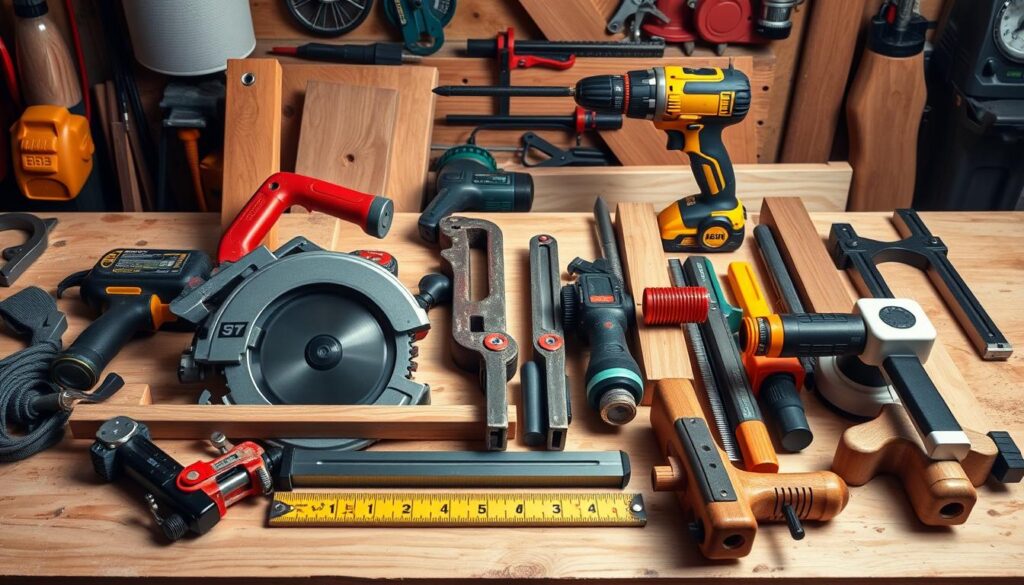
Building your own coffee table requires some basic woodworking tools. While the specific requirements vary based on design complexity, these essential tools will handle most coffee table projects:
Basic Tools
- Tape measure and marking tools
- Speed square and carpenter’s square
- Circular saw or table saw
- Drill/driver with various bits
- Orbital sander with assorted grits
- Clamps (at least 4-6 of various sizes)
- Hammer and nail set
Advanced Tools (Optional)
- Miter saw for precise angle cuts
- Router with basic bit set
- Pocket hole jig
- Chisel set for joinery
- Kreg jig or doweling jig
- Hand plane for fine adjustments
- Brad nailer for assembly
Not Sure Which Tools You Need?
Our professional plans include detailed tool lists specific to each coffee table design, helping you prepare properly before you start building.
Materials Guide for Coffee Table Construction
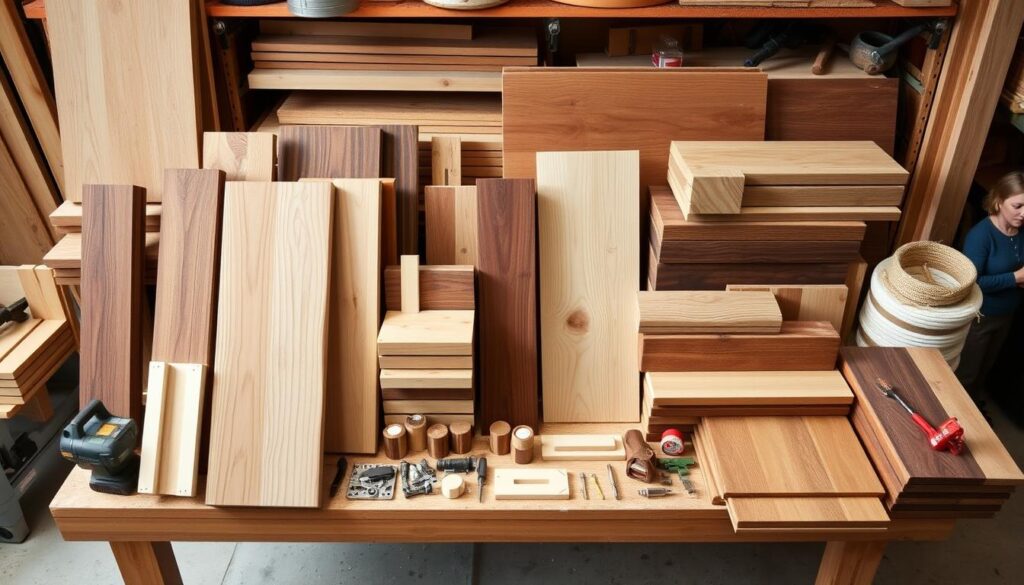
Selecting the right materials significantly impacts both the appearance and durability of your coffee table. Here’s what you’ll need for most designs:
Wood Selection
Different wood species offer varying characteristics in terms of appearance, durability, and workability:
Pine
Affordable and easy to work with, ideal for painted projects or rustic designs. Softer wood that may dent more easily.
Oak
Durable hardwood with prominent grain patterns. Excellent for traditional designs and high-traffic furniture.
Walnut
Rich, dark tones with beautiful grain. Premium option for high-end designs with natural elegance.
Hardware and Fasteners
Quality hardware ensures your coffee table remains sturdy through years of use:
- Wood screws (various sizes)
- Wood glue (waterproof for outdoor designs)
- Corner brackets for reinforcement
- Specialty hardware for specific designs (lift mechanisms, glass supports)
- Finishing nails or brad nails
Finishes
Protect your work and enhance the wood’s natural beauty:
- Wood conditioner (especially for pine and other soft woods)
- Stain in your preferred color
- Polyurethane or other clear topcoat
- Sandpaper (120, 180, and 220 grit)
- Tack cloth for dust removal
Complete Materials Lists
Our professional coffee table plans include detailed materials lists with exact quantities and recommended alternatives to fit your budget and skill level.
Start Building Your Perfect Coffee Table Today
Creating your own DIY coffee table is a rewarding project that combines practical woodworking skills with artistic expression. Whether you choose the rustic charm of farmhouse style, the clean lines of mid-century modern, or the functionality of a storage table, the perfect design awaits your personal touch.
Remember that woodworking is a journey—each project builds skills for the next. Start with designs that match your current ability level and work your way up to more complex joinery and features as your confidence grows. Your handcrafted coffee table will not only serve as a functional piece in your living room but also as a testament to your craftsmanship and creativity.
Ready to Transform Your Living Room?
Get started today with our comprehensive collection of professional coffee table plans. Each design includes detailed instructions, cut lists, 3D diagrams, and expert tips to ensure your project turns out perfectly.