
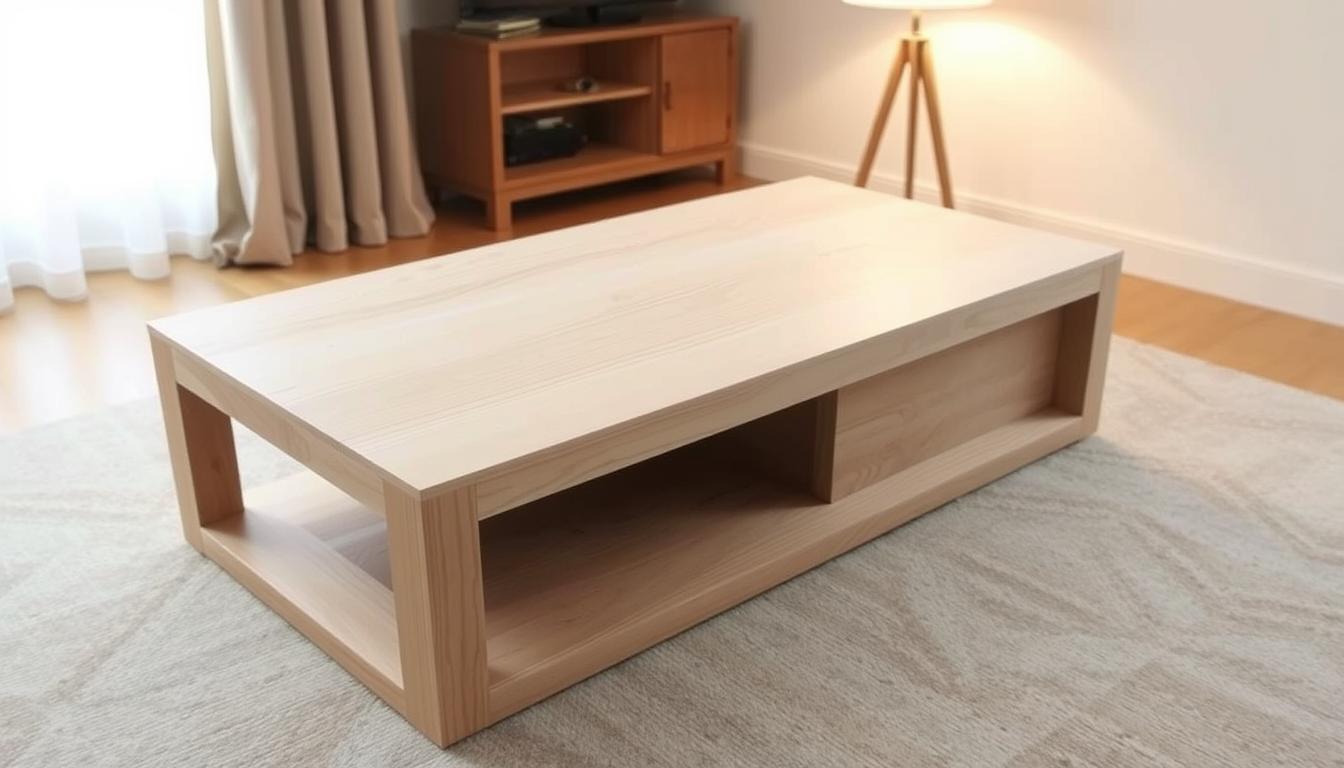
Did you know the average American living room contains over 50 small items that typically clutter coffee table surfaces? Remote controls, magazines, and various household essentials create visual chaos in what should be a relaxing space.
This comprehensive guide reveals how creating furniture with concealed compartments transforms your home environment. You’ll discover a smart approach to building a versatile piece that serves multiple purposes while maintaining a clean aesthetic look.
The project combines practical woodworking techniques with intelligent design principles. Whether you’re new to DIY projects or have woodworking experience, this method helps you construct functional furniture that appears professionally crafted.
By following this proven way to plan your build, you’ll save significant time and avoid common mistakes. The result is a beautiful table that provides valuable storage space for items that typically create clutter in your living area.
Key Takeaways
- Transform your living space with furniture that combines style and practical storage solutions
- Learn professional techniques for building a multi-functional coffee table
- Maximize storage capacity without compromising the aesthetic appeal of your room
- Follow a time-efficient approach that consolidates proven woodworking methods
- Create concealed compartments for remote controls, magazines, and household items
- Benefit from clear instructions suitable for various skill levels
- Achieve a clutter-free living environment with smart furniture design
Materials and Tools for Your DIY Coffee Table Project
The foundation of any successful woodworking endeavor lies in gathering quality materials and reliable tools. Having everything organized before starting your project prevents frustrating interruptions and maintains workflow efficiency.

Careful wood selection directly impacts your final results. Pine offers an affordable, accessible option available at most home improvement stores. You’ll need specific pieces including four 1x4s, two 1x2s, one 1×3, and one 1×8 board. The size of these components determines your table’s final dimensions.
Wood Selection, Screws, and Adhesives
Wood glue creates strong, lasting joints when combined with mechanical fasteners. Your fastener selection should include wood screws in 1.5″ to 2″ lengths. Brad nails work well for attaching trim, while specialized cabinet screws secure heavier components.
Plywood or MDF panels form the table surface and hidden compartment bottoms. Choose 3/8″ to 3/4″ thickness for adequate strength without excessive weight. Proper glue application ensures joints withstand daily use.
Essential Tools and Equipment
The right tools dramatically improve your building experience. A brad nail gun speeds assembly compared to hand-nailing. A miter saw ensures precise cuts for seamless fitting.
Your woodworking toolkit should include measuring devices, clamps, and safety equipment. Having all tools ready before beginning prevents mid-project delays.
Finishing materials like stain and paint customize your table’s appearance. Protective sealants ensure durability against spills and everyday wear.
How to Add Hidden Storage to Your DIY Coffee Table Design
The true value of a well-designed coffee table emerges when it seamlessly combines form with hidden functionality. Begin by measuring your available space and considering traffic flow patterns in your home. This ensures your final piece complements existing furniture while providing practical benefits.

Design Considerations and Clutter-Free Living Room Tips
Multiple storage options exist for keeping your living area organized. Lift-top compartments with hinges offer large capacity for bulky items. Sliding mechanisms using drawer slides create sophisticated access points.
Internal pocket storage conceals small items within the framework. A bottom shelf provides both structural support and accessible space. Plan compartment sizes based on what you’ll actually store daily.
Integrating Storage Areas Using Wood Glue, Screws, and Hinges
Wood glue combined with screws creates exceptionally secure joints for hidden compartments. Pocket hole joinery keeps fasteners hidden while maintaining clean sight lines. This approach ensures durability without compromising aesthetics.
Hinged lift-top designs transform the entire surface into accessible storage. Magnet locks keep sliding tops securely in place during use. Proper planning at the design stage guarantees all components fit perfectly.
Your finished furniture will function exactly as intended when you consider these integration methods early. The result is a versatile piece that maintains visual appeal while solving organizational challenges.
Step-by-Step Construction and Finishing Process
The construction phase transforms your prepared materials into a functional piece of furniture. This stage requires methodical assembly and attention to detail for professional results.
Building the Table Frame with Precision
Begin by cutting your leg pieces to identical length using a miter saw. This ensures your table sits perfectly level. Rip 2×4 lumber to create specific dimensions for legs and side rails.
Connect each leg to side pieces using both wood glue and screws. Apply adhesive to mating surfaces first for maximum strength. Install bottom shelf supports measured precisely from the leg ends.
Creating the Hidden Compartment and Pocket Storage
Construct the sliding top by gluing two plywood pieces together. Clamp them until the adhesive fully cures. Attach drawer slides at designated positions on both the frame and top panel.
Use pocket hole joinery for the strongest connections on larger pieces. Install magnet locks with precise alignment between the frame and sliding top. This keeps the compartment securely closed.
| Finishing Step | Purpose | Key Consideration |
|---|---|---|
| Sanding | Create smooth surface | Progress from coarse to fine grits |
| Staining | Enhance wood appearance | Follow grain direction |
| Painting | Add color accents | Use tape for clean lines |
| Sealing | Protect against wear | Apply thin, even coats |
Applying Finish: Stain, Paint, and Protective Sealants
Begin finishing with comprehensive sanding of every surface. Start with coarser grits to remove imperfections. Progress to finer grits for a texture that accepts stain evenly.
Apply stain following the wood grain direction. Allow proper penetration time before wiping away excess. Darker stains create dramatic contrast on pine wood.
If using paint, apply it to designated pieces before final assembly. Use protective tape for clean lines on assembled furniture. Complete the project with protective sealant in thin, even coats.
Conclusion
With the final touches complete, your living space gains a centerpiece that combines aesthetic appeal with intelligent storage solutions. Your new coffee table eliminates clutter while maintaining a clean, organized look throughout the room. This functional furniture piece keeps everyday items neatly concealed yet easily accessible.
The skills you developed during this project—from precise wood cutting to professional finishing techniques—serve as valuable assets for future DIY endeavors. You now possess the knowledge to create customized storage solutions for any area of your home. The time invested yields lasting returns through both the finished product and acquired expertise.
Placing your handcrafted table in its designated spot brings genuine satisfaction. You’ve created furniture that rivals store-bought options at a fraction of the cost. Your coffee table stands as a testament to what thoughtful planning and quality craftsmanship can achieve for any living space.