

Did you know that nearly 70% of living rooms lack a truly versatile centerpiece? Many homeowners desire a focal point that offers more than just a hard surface. They want something that adds both style and practicality to their daily lives.
This guide introduces a creative solution for your space. You can build a stunning piece that perfectly balances soft comfort with hard-working function. Imagine a soft, padded surface for relaxing your feet after a long day. Now, picture that same surface holding drinks, books, or a tray for snacks.
This project combines the best features of two classic furniture items. It merges the cozy appeal of an ottoman with the utility of a traditional center table. The result is a unique and highly adaptable piece for your home.
Creating this item yourself puts you in complete control. You get to select the exact dimensions, the perfect fabric, and the design details. This ensures your new creation matches your existing décor and meets your specific needs.
You will learn essential skills, from building a sturdy base to applying professional-looking upholstery. This comprehensive walkthrough provides every step. It transforms a complex-sounding build into an achievable and rewarding endeavor.
Key Takeaways
- Learn to construct a dual-purpose furniture item that serves as both a footrest and a stable surface.
- Gain the ability to fully customize the size, style, and fabric to suit your personal taste and room layout.
- Understand the fundamental techniques for building a solid wooden frame and applying upholstery with a polished finish.
- Discover how this versatile piece can maximize space efficiency in your living area.
- Follow a detailed, step-by-step process that ensures a successful build from start to finish.
- Build confidence in tackling a project that combines woodworking and fabric work.
Introduction: Transform Your Living Room with DIY Craftsmanship
Many homeowners face a tough choice between a soft footrest and a hard surface in their living area. This common dilemma sparked the idea for a unique furniture project.
One creator asked a simple question: what do you want most from a center table? The answer was clear: “a comfy place to put my feet up.” Yet, they also needed a stable spot for drinks and snacks. This need for dual functionality is the heart of the design.
Project Inspiration and Benefits
This diy endeavor was born from real-life needs in a real home. An existing piece no longer fit the new living room layout. The goal was to merge relaxation with utility.
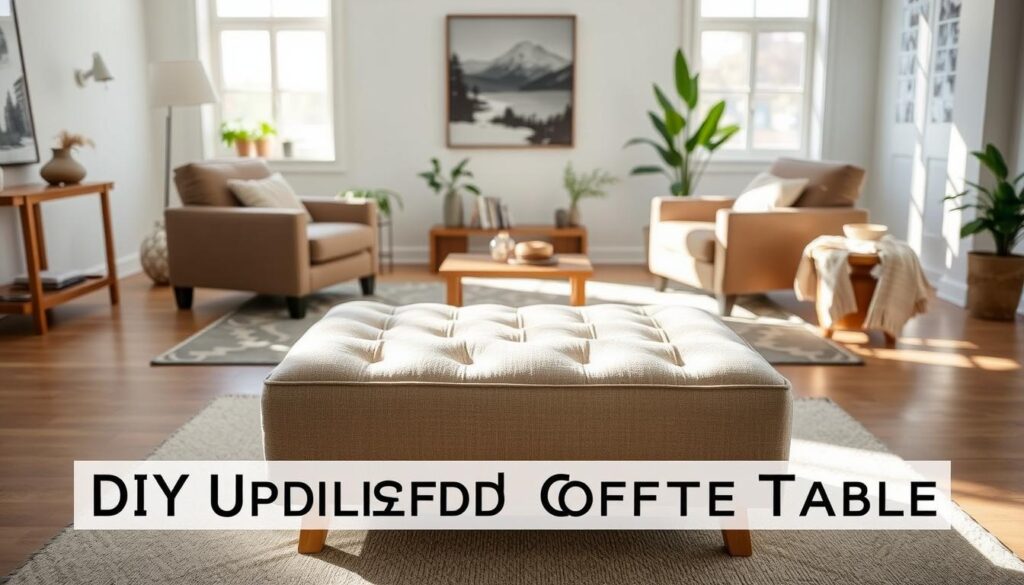
For compact apartments or family rooms, a dual-purpose piece is a game-changer. It saves valuable space while offering incredible flexibility. You gain a soft ottoman for lounging and a solid surface for entertaining friends.
The benefits extend beyond just saving room. This type of furniture can include hidden storage. It can also serve as extra seating when you have guests over.
Why Custom-Made Furniture Works for You
Building your own piece puts you in control. You are not limited to standard store sizes or styles. You can tailor every detail to your specific living room and lifestyle.
The table below highlights the key advantages of a custom build versus buying a pre-made item.
| Feature | Store-Bought Furniture | Custom DIY Project |
|---|---|---|
| Size & Fit | Limited to standard dimensions | Perfectly tailored to your space |
| Style & Fabric | Pre-selected options | Your personal choice for a unique look |
| Functionality | Single-purpose design | Dual-purpose, like an ottoman coffee table |
| Cost | Often more expensive | Typically more budget-friendly |
This hands-on approach allows you to create a one-of-a-kind centerpiece. It reflects your personal taste and solves your specific needs. You can follow a detailed guide on our site to start your own project. This empowers you to craft a piece that truly belongs in your home.
DIY Upholstered Coffee Table: Comfort Meets Function
What if one furniture piece could serve two completely different purposes in your living space? This innovative approach eliminates the need to choose between a soft footrest and a hard surface. You get the best of both worlds in a single, elegant solution.
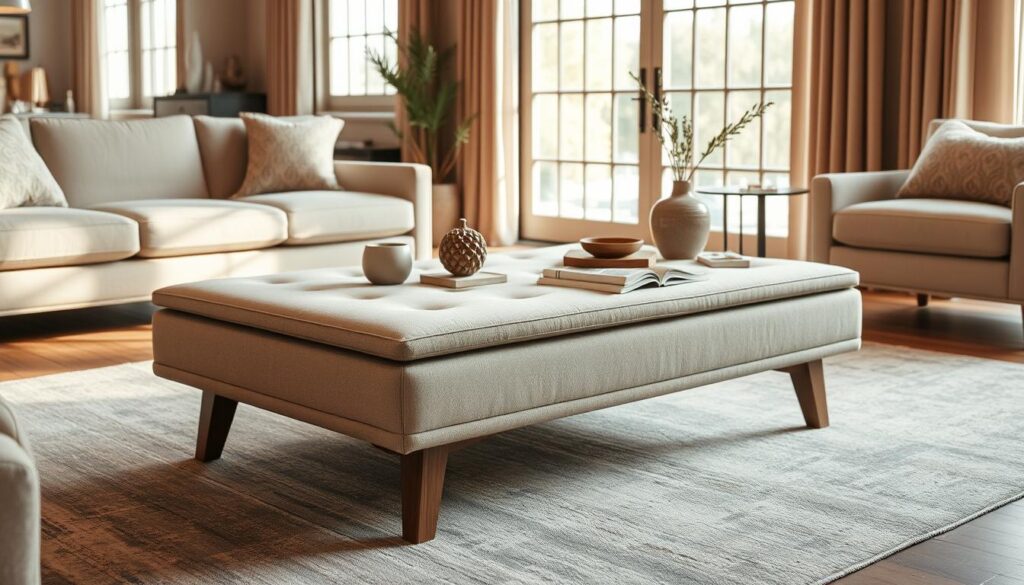
The core concept involves a main upholstered ottoman for relaxation. A separate wooden table component nests perfectly on top. This creates a stable surface for drinks and decorative items.
When you need extra seating or want to lounge, simply remove the table section. The cushioned ottoman provides comfortable seating for guests. It also works as a perfect spot to put your feet up after a long day.
This dual-function approach is particularly valuable for smaller rooms. Every piece must work efficiently to maximize your available space. The ottoman coffee table combination reduces visual clutter while adding warmth.
The nesting design offers maximum flexibility in your living area. You can place the table component to the side when not needed. Or keep it centered for daily use as a traditional coffee table.
This furniture configuration balances three essential elements. It provides comfort for relaxation and practical function for daily activities. The natural wood and fabric combination also adds aesthetic appeal to your room.
Gathering Materials and Tools for Your Project
The quality of your finished piece depends heavily on selecting appropriate materials from the start. Careful planning ensures you have everything needed for both construction and upholstery phases.
Essential Supplies and Equipment
Your core materials list includes plywood sheets for the frame structure. Choose ¾-inch thickness for durability. You’ll need 4×4 posts for internal support.
For cushioning, select high-density foam measuring 2-3 inches thick. This provides optimal comfort. Add batting layer for smooth finishing.
Upholstery fabric should be durable and stain-resistant. Performance linen or velvet works well. Measure your space with painter tape before purchasing.
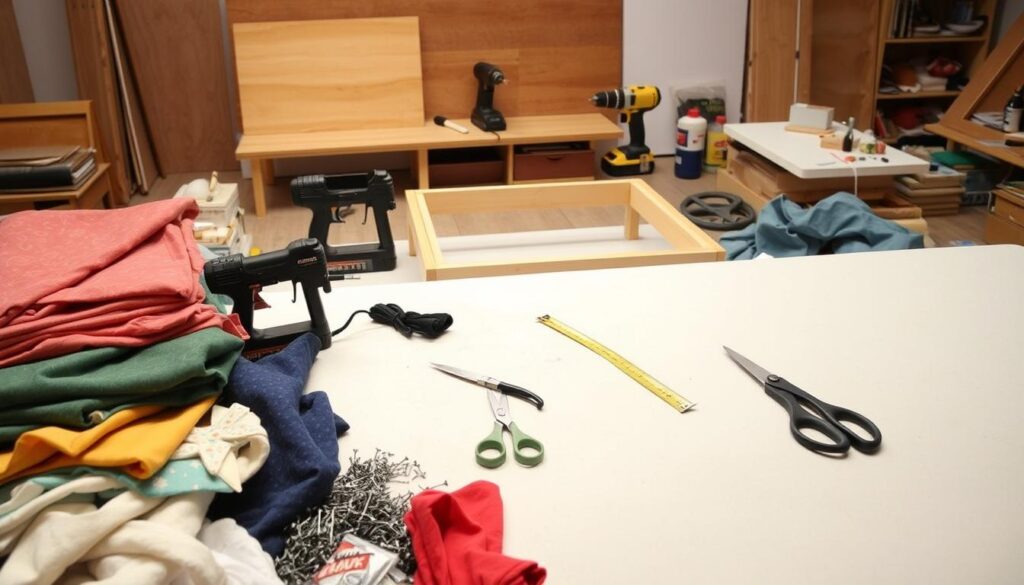
Essential tools include a heavy-duty staple gun for securing fabric. You’ll need saws for cutting wood components. An orbital sander creates smooth surfaces.
| Material Type | Recommended Options | Key Characteristics |
|---|---|---|
| Wood Frame | Plywood, 4×4 posts | Structural stability, easy cutting |
| Cushioning | 2-3″ high-density foam | Comfort, longevity, shape retention |
| Covering | Performance fabric | Durability, stain resistance |
| Adhesives | Wood glue, spray adhesive | Strong bonds, foam security |
Budgeting Your Materials
Plan your budget by prioritizing quality cushioning and durable fabric. These elements determine comfort and longevity. You can economize on decorative details.
Check local upholstery shops for remnant fabric discounts. Online marketplaces often have wood scraps at reduced prices. Proper planning prevents wasteful spending.
Your project success hinges on selecting the right materials. Invest in key components while finding savings elsewhere. This approach maximizes value without compromising quality.
Designing a Dual-Function Piece: Ottoman and Coffee Table Combo>
Effective furniture planning begins with understanding how you actually use your living space daily. This design phase is crucial for creating a piece that truly works for your lifestyle.
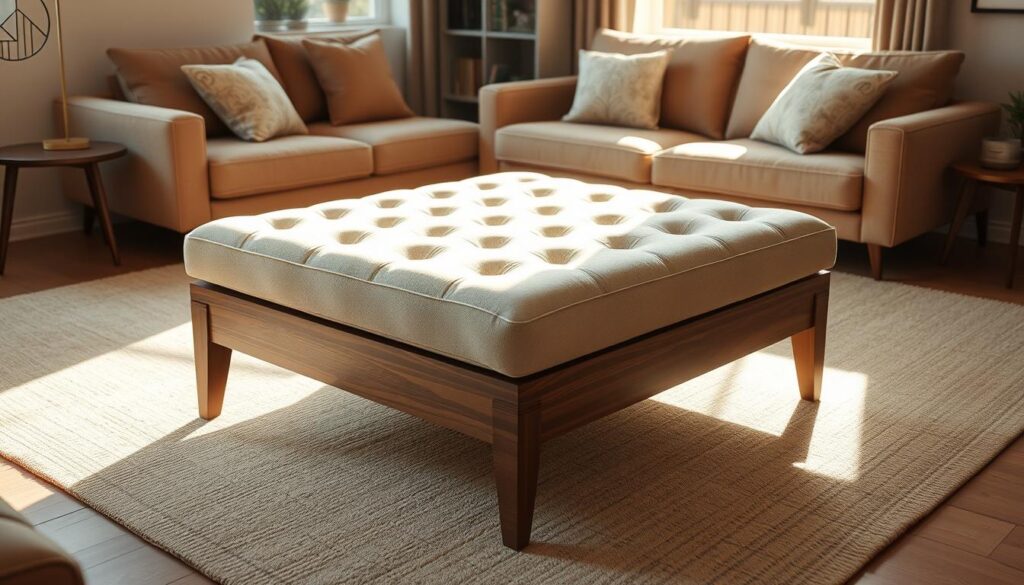
Start by marking the ideal footprint on your floor using painter’s tape. This simple trick helps you visualize the perfect size before cutting any materials. There’s no universal “right” dimension – only what fits your specific space.
Balancing Comfort, Function, and Aesthetics
Your furniture should balance three key elements. The comfort comes from plush cushioning on the ottoman section. Function is provided by a stable surface for daily activities.
Consider your household’s needs when planning. For families with children or pets, durable, patterned fabric hides stains well. Minimalist spaces might prefer neutral tones and subtle textures.
You can incorporate design elements you love from existing pieces. The natural appeal of live edge wood adds organic warmth. A wooden tray creates instant functionality for serving.
This versatile piece adapts to different uses throughout the day. It provides extra seating when guests visit. The removable top offers flexibility for your living room layout.
Step-by-Step Construction of Your Ottoman Base
Your first cuts and connections determine the long-term stability of your creation. This phase transforms flat sheets into a three-dimensional structure ready for upholstery.
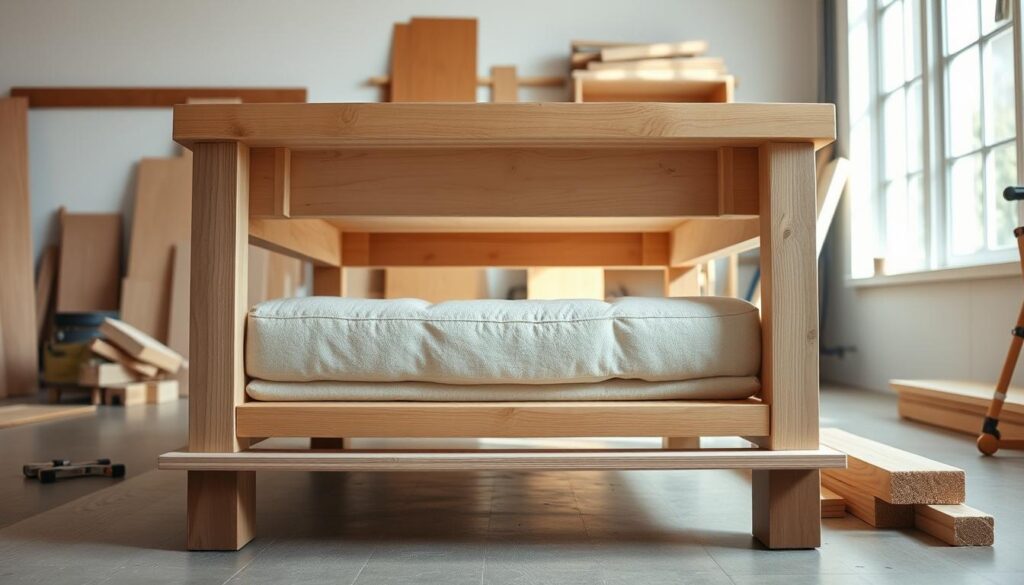
Begin by cutting your plywood into six precise pieces. You need top, front, back, side panels, and an internal support piece. Accuracy here ensures proper fit during assembly.
Cutting and Assembling the Plywood Box
Cut four sections from your 4×4 post for corner supports. These posts serve dual purposes – reinforcing structure and anchoring furniture feet.
Use painter tape for a temporary dry-fit assembly. This lets you verify all piece measurements before permanent fastening. This simple step prevents costly material waste.
Sandwich the end panels between the side pieces. Position your 4×4 posts inside each corner for maximum strength. The internal support fits between posts, creating a spine for the top cushion.
Adding Structural Support and Furniture Feet
Build the box upside down for easier access. Pre-drill pilot holes to prevent wood splitting. Secure components with wood glue and screws.
Work systematically around each corner, using clamps to hold posts steady. Attach furniture feet to the bottom of your support posts.
| Construction Phase | Key Action | Pro Tip |
|---|---|---|
| Dry Fit | Tape assembly without glue | Verify all corners align perfectly |
| Permanent Assembly | Apply glue and screw fasteners | Use corner clamps for 90-degree angles |
| Structural Reinforcement | Install internal support spine | Connects top cushion to base securely |
Flip the completed base right-side up. Your sturdy foundation is now ready for the cushioning phase. This step completes the structural portion of your project.
Expert Upholstery Techniques for a Polished Finish
The finishing touches of your project will determine whether it appears homemade or professionally crafted. Proper fabric application creates that store-quality look you desire. This phase transforms your sturdy frame into a comfortable, beautiful piece.
Attaching Batting, Foam, and Fabric Securely
Begin by securing batting material to your plywood base. Use a staple gun along all edges, pulling the material taut. Don’t worry about visible seams since they’ll be covered.
Cut excess batting cleanly at the top edges. Apply spray adhesive to attach firm foam to your cushion top. This creates the comfortable foundation for your fabric.
Creating a Seamless Cushion Top Look
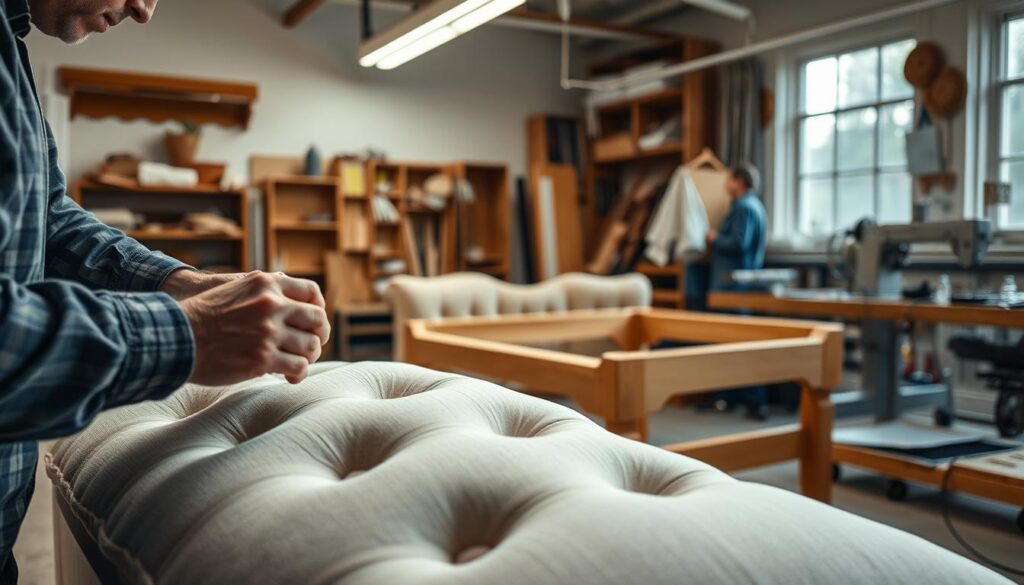
Measure and cut your fabric with generous overlap. Work systematically from the center outward when stapling. Use extra staples as needed to maintain tight tension.
For professional edges, create a folded fabric strip that mimics high-end ottoman seams. This technique elevates your piece significantly. Always cut excess fabric after securing all edges.
Handle corners with neat folds to eliminate bunching. This attention to detail ensures a polished look from every angle. Your finished upholstery will appear refined and intentional.
Building the Live Edge Table Component
Working with raw lumber demands patience and precision to achieve professional results. This phase transforms a natural slab into the functional top for your creation.
Preparing, Sanding, and Shaping the Wood
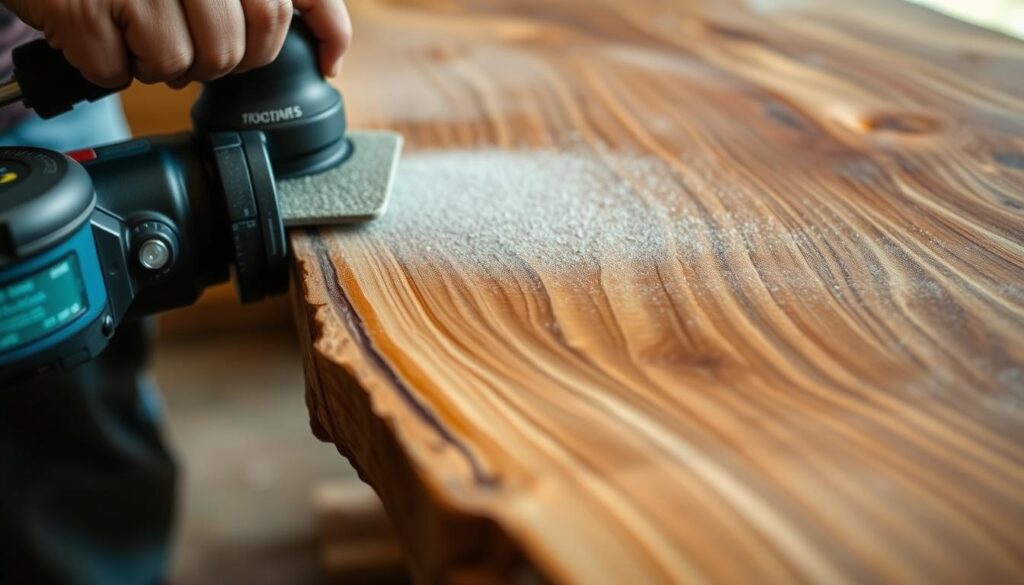
Begin by removing bark from your slab using a hammer and chisel. Follow with a disc grinder featuring an 80-grit wheel for clean edges.
The sanding process requires systematic progression through grit levels. Start with 80-grit paper and work upward to 180-grit for a smooth finish.
Draw light pencil marks across the surface before each sanding step. Continue until all marks disappear, ensuring complete coverage.
Executing the Waterfall Edge and Epoxy Details
Create stunning waterfall edges with precise 45-degree angle cuts. Use a plunge saw and make passes from both sides for thick wood.
Fill natural imperfections like knots with tinted epoxy. Seal grooves with Tyvek tape before pouring the mixture.
Use a small torch to eliminate air bubbles from the epoxy. Sand the cured material flush with the wood surface.
| Sanding Grit | Primary Action | Surface Result |
|---|---|---|
| 80-100 | Remove major imperfections | Rough but even surface |
| 120-150 | Smooth wood grain | Prepared for finishing |
| 180 | Final polish | Ready for oil application |
Assemble your pieces using a simple plywood jig for perfect alignment. Apply high-quality wood glue and reinforce with L-brackets.
Allow adequate drying time before sanding joined edges smooth. Finish with walnut oil to enhance the natural grain pattern.
Adding Stylish Customizations and Practical Features>
The final phase of customization allows you to infuse personality and practical features into your handcrafted piece. This stage transforms your basic construction into a truly personalized item for your home.
Personalizing Upholstery and Fabric Choices
Your fabric selection defines the character of your furniture. Bold colors like emerald green create striking focal points in your living room. For families with pets, dark-patterned materials offer excellent stain resistance.
Minimalist spaces benefit from neutral shades and subtle textures. Linen or herringbone patterns add visual interest without overwhelming smaller areas. Consider upholstery-grade materials for long-lasting durability.
Incorporating Extra Seating and Storage Enhancements
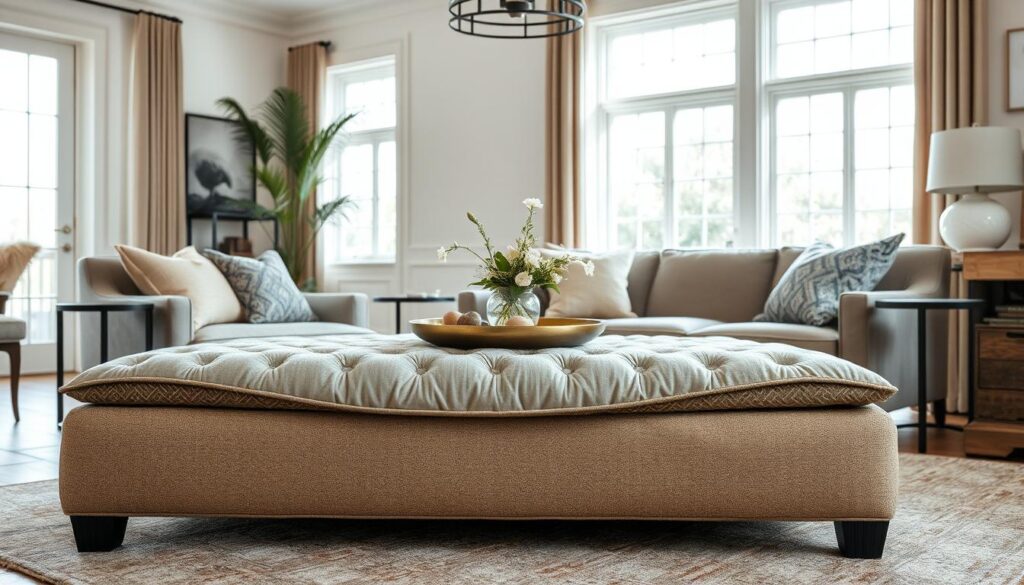
Design your piece to serve as comfortable extra seating when needed. Ensure your base structure provides sturdy support for guests. This maximizes functionality in your living space.
Storage solutions add valuable utility to your furniture. A hinged lift-top reveals hidden space for blankets or games. Alternatively, an open shelf below offers convenient access to frequently used items.
| Customization Option | Best For | Key Benefit |
|---|---|---|
| Bold Color Fabric | Making a style statement | Creates dramatic focal point |
| Patterned Upholstery | High-traffic areas | Hides stains and wear |
| Wooden Serving Tray | Daily functionality | Provides stable surface |
| Lift-Top Storage | Space optimization | Maximizes utility |
Choose between fixed legs for stability or casters for mobility. These hardware decisions affect how you use your furniture daily. Each choice tailors the piece to your specific lifestyle needs.
Troubleshooting Common DIY Pitfalls and Pro Tips
Even the most carefully planned project can encounter unexpected hurdles that test your skills and patience. This guide helps you navigate common issues, saving time and ensuring a high-quality result for your piece.
Avoiding Tool and Material Mishaps
Choosing the right materials is crucial. Skimping on foam thickness leads to quick wear. Using regular fabric instead of upholstery-grade material means it won’t hold up.
When working with wood like oak, it splinters easily. Research blade types beforehand. Place the wood top-side down during cuts to protect the visible surface.
Failing to pre-drill pilot holes before inserting screws is a critical error. This can cause splitting at the corners and create wobbles. Always make sure to pre-drill for a stable table.
Ensuring Stability and a Professional Finish
Proper finishing techniques are vital for a polished look. Always apply a wood conditioner before staining for an even coat. Glue does not accept stain like wood does, so avoid getting adhesives on surfaces you plan to stain.
Reinforce corners with brackets for structural integrity. Use clamps during assembly to hold pieces steady. Allow adequate drying time for all adhesives before moving to the next step.
If you lack specialized tools, get creative. One creator made a simple jig from plywood scraps to join table pieces perfectly. This project proves you can achieve professional results on a budget.
| Common Pitfall | Pro Tip Solution | Key Benefit |
|---|---|---|
| Wood Splitting | Pre-drill all pilot holes | Ensures long-term stability |
| Uneven Stain | Apply wood conditioner first | Creates a professional, even finish |
| Visible Fasteners | Use pocket hole joinery | Hides screws for a clean look |
| Tool Limitations | Create custom jigs from scraps | Solves assembly problems creatively |
These tips help you make sure your projects are successful from start to finish. Anticipating challenges is the best way to complete any diy coffee table project with confidence.
Conclusion
Building your own dual-purpose ottoman and table combination offers rewards that extend far beyond the final product. The journey from planning to completion builds lasting confidence in your woodworking and upholstery skills.
Your custom creation stands apart from mass-produced options through personalized fabric choices and perfect sizing. This piece reflects your unique style while fitting seamlessly into your home environment.
The finished furniture serves multiple roles in your living space. It provides comfortable seating for guests while maintaining stability as a functional surface. This versatility maximizes utility in any room layout.
This project demonstrates that complex builds are achievable with proper guidance. Your new ottoman coffee table will serve as a testament to your growing DIY capabilities for years to come.