

Did you know that high-quality furniture pieces can cost over $2,700? Many homeowners spend this amount on a single centerpiece for their living space. This price tag often puts beautiful design out of reach for budget-conscious individuals.
Creating your own custom furniture offers a powerful alternative. You can achieve professional results at a fraction of the retail cost. This approach transforms your home with personalized touches that reflect your unique style.
This comprehensive guide walks you through creating a stunning centerpiece from scratch. You’ll discover techniques that work across various design aesthetics. Whether you prefer modern minimalism or rustic charm, the methods adapt to your vision.
The process delivers more than just financial savings. You gain valuable woodworking experience while creating a functional art piece. Your finished project becomes a conversation starter that showcases your craftsmanship.
Key Takeaways
- Custom furniture creation offers significant cost savings compared to retail purchases
- Personalized design allows your living space to reflect your unique aesthetic preferences
- Woodworking skills developed through this project have lasting value for future home improvements
- The finished piece serves as both functional furniture and a decorative centerpiece
- Adaptable techniques work with various design styles from modern to rustic
- Handcrafted items add character and personal touch to your home decor
- This project provides practical experience that builds confidence for future DIY endeavors
Introduction and Project Overview
Swedish design house Asplund Furniture recently showcased a stunning round coffee table that sparked widespread DIY interest. This piece retailed for approximately $2,700, demonstrating the significant savings possible through custom creation. The fluted, reeded trim trend continues to dominate interior design, making this an ideal time to craft your own version.
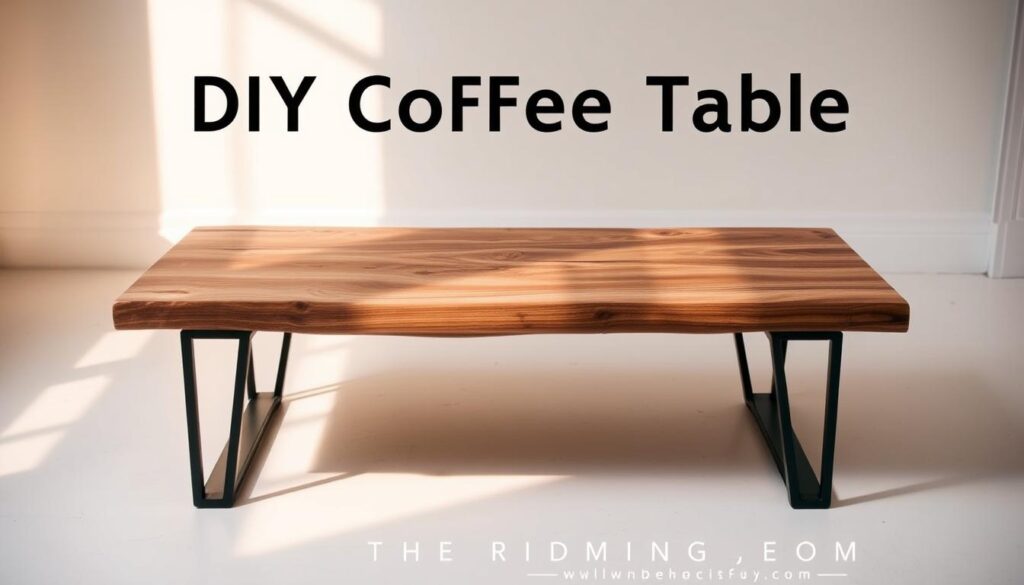
Successful furniture projects begin with careful planning. Your approach should balance creative vision with practical considerations. This foundation ensures your finished piece meets both aesthetic and functional needs.
Defining Your Vision
Before starting your project, envision what will best suit your space. Consider whether you prefer a simple rectangular design or an on-trend round fluted style. Your choice should reflect both personal taste and room requirements.
Think about how the piece will function in your daily life. Determine if you need basic surface space or additional storage features. This practical thinking helps create furniture that serves your needs perfectly.
Inspiration and Design Goals
Research existing designs thoroughly before beginning. Watch video demonstrations and read tutorials to learn from others’ experiences. Identify techniques that match your skill level and tools available.
Consider the overall look you want to achieve in your room. Whether modern minimalism or farmhouse warmth, let this guide your material and construction choices. Taking precise measurements ensures your finished piece fits proportionally and functions well.
Gathering Tools and Materials
Having the correct tools and materials ready is the first critical step toward a professional-looking final product. This preparation phase sets the foundation for a smooth and successful build.
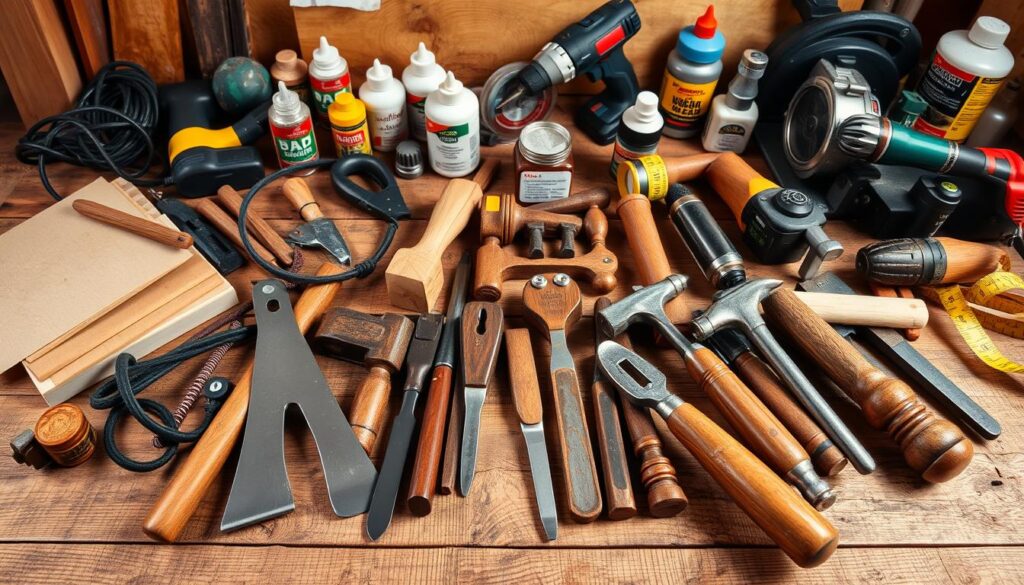
Essential Tools and Equipment
You need several key power tools. A circular saw is perfect for initial cuts on large panels. A table saw provides precision for ripping boards into uniform strips.
For detailed work, a jigsaw handles curved cuts. A biscuit joiner ensures strong, aligned joints. Don’t forget sanders and a variety of clamps for assembly.
Materials and Safety Tips
Your choice of wood is important. You can use solid boards or versatile plywood. Hardwoods like maple offer durability, while softwoods are easier to work with.
Joinery relies on quality wood glue and appropriate screws. Always prioritize safety. Wear protective glasses and a dust mask during cutting and sanding.
| Material Type | Best For | Considerations |
|---|---|---|
| Hardwood Boards (Maple, Oak) | Durable, premium finishes | Higher cost, requires more tool power |
| Softwood Boards (Pine, Basswood) | Beginner projects, painted finishes | Softer, more affordable |
| Plywood | Modern looks, large flat surfaces | Needs edge banding for a finished look |
Cutting and Preparing Your Wood Boards
The precision of your initial cuts determines the quality of your final furniture piece. This phase transforms raw materials into the components for your project. Careful preparation here prevents issues later.
Measuring, Marking, and Layout
Begin with 3/4″ maple boards. Find the center of each board and make a rough cut. This divides them, creating six workable pieces from three initial boards.
Double-check every measurement before cutting. This crucial step avoids costly material waste. Accurate marks guide your tools for perfect results.
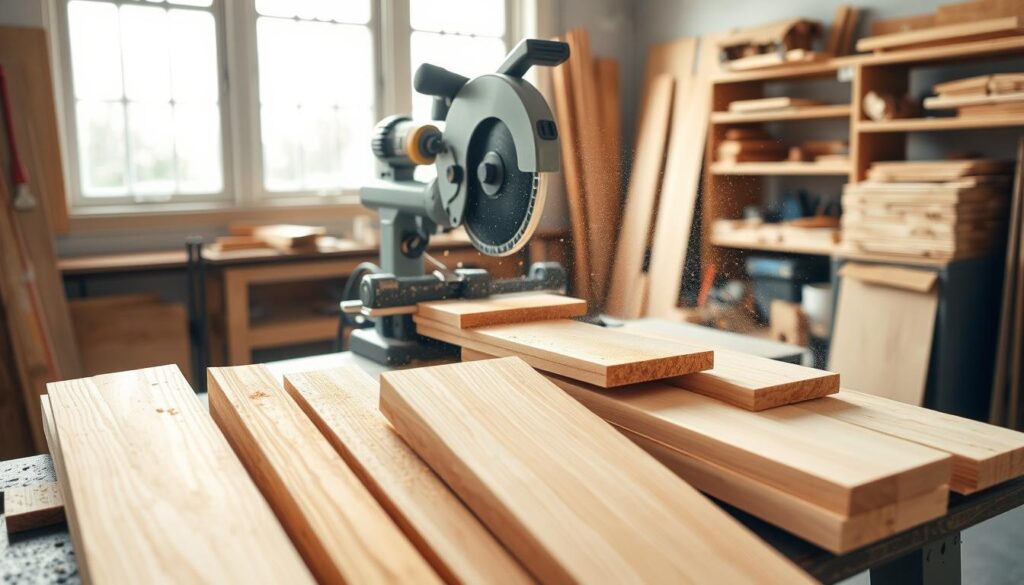
Using Circular and Table Saws Effectively
For straight edges, use a guide system like the Kreg Accu-Cut. It attaches to your circular saw, ensuring a perfectly straight line. This eliminates wobble from freehand cuts.
Your table saw excels at repetitive cuts. Use it to rip 2.5″ wide strips for a stacked base. The fence system guarantees uniform pieces.
Preparing Precise Edges for Gluing
The critical step is creating straight edges where boards join. You need seamless edges with no gaps for a strong glue joint.
Mark lines across the seams for a biscuit joiner. This tool cuts matching slots in adjoining edges. It makes joining more accurate and strong.
Make sure your marks align perfectly across both pieces. This prevents misaligned slots during assembly. For a round top, use a string compass to draw a perfect circle before cutting with a jigsaw.
Building the Top: Gluing and Clamping Techniques
Proper adhesive techniques separate amateur projects from professional-quality furniture construction. This critical phase determines whether your creation appears seamless or shows obvious joints.
Aligning Boards for a Seamless Top
Begin by pairing your prepared boards to create three 1.5-inch thick sections. The biscuit joinery system provides positive registration that prevents misalignment during assembly.
Apply wood glue to the edges and biscuit slots before inserting the connectors. Slide matching pieces together carefully. This approach ensures accurate joining of edges for an invisible seam.
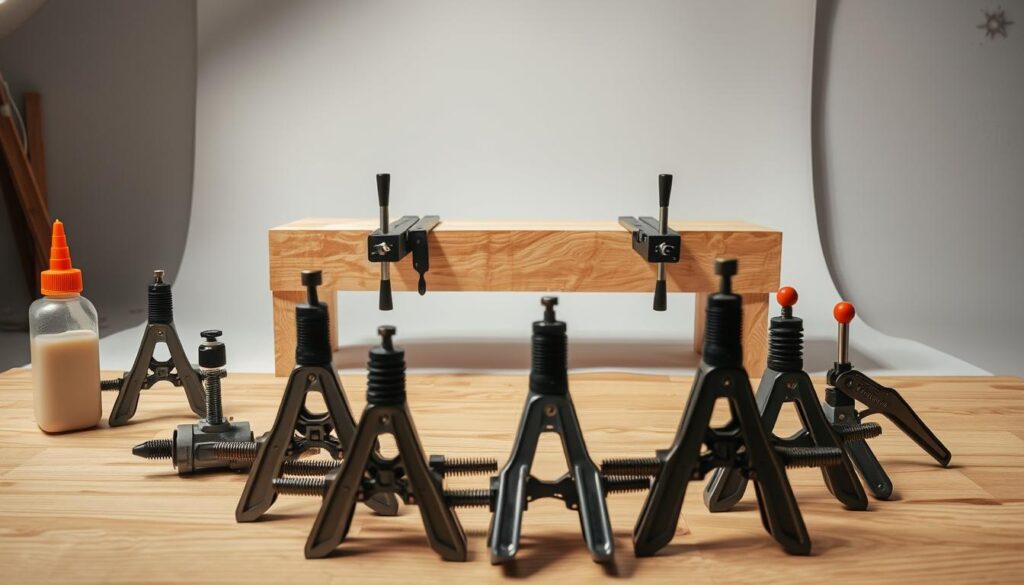
Gluing Process and Clamping Strategies
Work efficiently once you apply adhesive. Most wood glues begin setting within 10-20 minutes, giving you limited working time. Spread an even, thin layer across all mating surfaces.
Distribute clamps evenly along the joint length, alternating top and bottom placement. Use sufficient pressure to close gaps without starving the joint of adhesive. This step creates remarkably strong bonds.
| Clamp Type | Best Application | Pressure Control |
|---|---|---|
| Bar Clamps | Long edge joints | High, even distribution |
| Pipe Clamps | Large panel glue-ups | Adjustable tension |
| F-Clamps | Smaller sections | Quick, localized pressure |
Let your assembly dry overnight before proceeding. Immediately wipe away excess glue with a damp cloth while wet. This prevents finishing problems later and ensures your surface accepts stain evenly.
Shaping, Sanding, and Perfecting Your Surface
This phase brings your creation to life. It refines the raw construction into a polished piece of furniture.
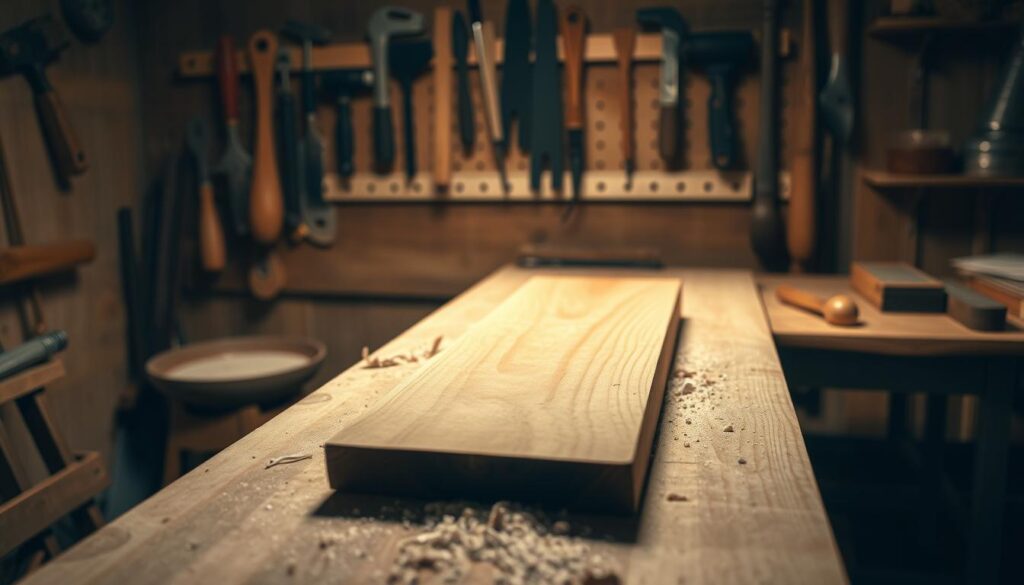
After the glue dries, unclamp your project. The first task is to establish perfectly straight edges where the boards meet. This ensures a seamless surface.
Creating Smooth, Straight Edges
Move your piece outside for sanding. Use a belt sander with 80 grit sandpaper to rough-flatten the top. This levels the wood effectively.
Progress to 120 grit for a smoother surface. This progression removes scratches from the coarser paper. Consistent pressure prevents dips.
Custom Curved Cuts for Unique Detail
For rounded ends, create a template. Use flexible, stiff material to draw perfect curves. Secure the template with temporary screws.
Make your cuts with a jigsaw, staying just outside the line. Then, sand precisely to the line with your belt sander. This way ensures symmetrical, round curves.
Flip the piece over. Use a palm router to add a chamfered edge to the bottom. This detail gives a professional look.
Sand the sides and curved edges with 80 grit paper. This removes any glue residue and smooths rough spots. Finish with an orbital sander using 180 grit for a final, smooth preparation.
This careful work on all sides and edges ensures a flawless base for your chosen finish.
DIY Coffee Table Top: How to Build and Style It
A well-designed base transforms your project from a simple surface into a complete furniture piece. This support structure provides both stability and visual appeal to your creation.
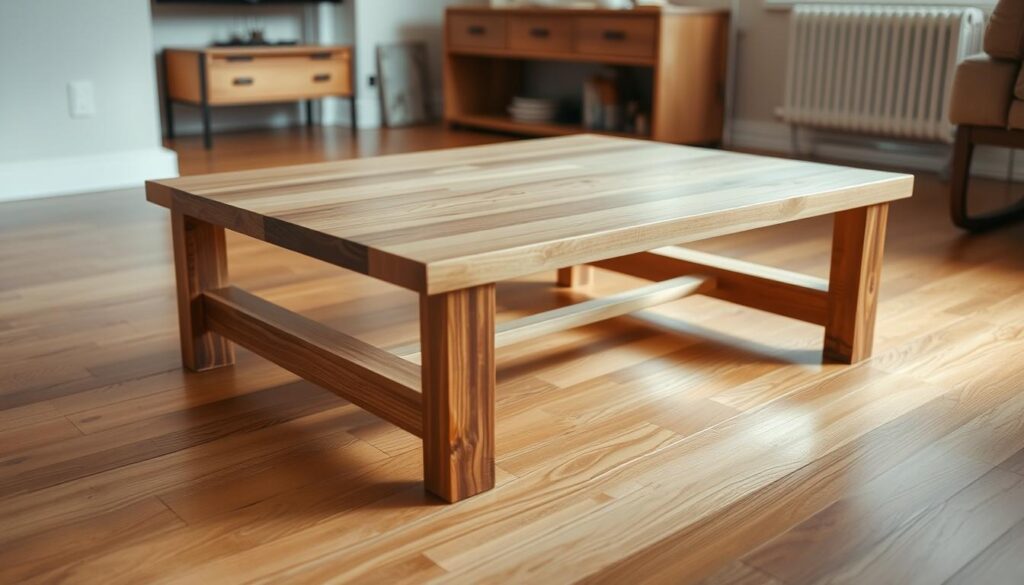
Building a Stable Foundation
Construct your support using stacked strips of maple plywood. Cut 2.5-inch wide pieces on your table saw to create the desired height.
For a modern appearance, maintain the height at 14 inches from the bottom surface. This measurement ensures comfortable use in your seating area.
Glue strips together in groups of three, clamping them securely. This approach accommodates band saw depth limitations while building strength.
Creating Secure Connections
Mark areas where the surface will rest on the foundation. Use a small rounded jar as a template for perfect curves.
Cut just outside your marked lines with a band saw. Sand precisely to the line for smooth, rounded edges.
Add a center brace using leftover plywood ripped in half. This element ties the foundation pieces together for maximum stability.
Styling Your Creation for Impact
Position your finished piece centrally in the seating arrangement. Allow 12-18 inches of clearance from sofas for comfortable movement.
Accessorize with carefully chosen items that complement your craftsmanship. A decorative tray or sculptural bowl adds personality without overwhelming the design.
The satisfaction of seeing your handcrafted piece as the centerpiece of your space makes the effort truly rewarding.
Assembly, Finishing, and Detailed Styling
Professional finishing applications elevate your project from raw construction to polished furniture ready for daily use. This final phase combines structural assembly with aesthetic refinement.
Final Assembly Techniques and Joining Pieces
Construct two rectangular frames using dimensional lumber for internal support. Cut four 11-inch and four 12-inch pieces of 2x4s to achieve your desired height.
Join these pieces using 2.5-inch wood screws, ensuring each joint receives two screws for maximum stability. Work on a flat surface to maintain square frames.
Use a 5/8-inch Forstner bit to create countersink holes for figure 8 fasteners. These holes allow connectors to sit flush against the wood surface.
Applying Finishes and Quality Touch-Ups
Begin the finishing step by wiping the wood with a damp cloth. This raises the grain fibers that water-based finish would otherwise highlight.
After drying, sand smooth with an orbital sander. Apply General Finishes High Performance Satin for a crystal-clear finish that preserves the natural wood color.
Three thin coats provide optimal protection. Sand lightly between each application for a glass-smooth result.
| Finish Type | Appearance | Durability |
|---|---|---|
| Water-Based Polyurethane | Natural wood tone | High scratch resistance |
| Oil Finish | Enhanced grain depth | Moderate protection |
| Lacquer | High gloss shine | Exceptional durability |
| Paint | Full color coverage | Varies by product |
Inspect all surfaces for imperfections before final use. Address any rough areas with additional sanding and finish application.
Conclusion
Your handmade creation now stands as a testament to your skills and vision for your living space. This rewarding project transforms approximately 10 hours of work into a durable centerpiece that serves your home for years. The significant savings—around $300 versus $2,700 for retail equivalents—make the investment of time truly worthwhile.
The techniques you mastered during this DIY endeavor provide a solid foundation for future woodworking projects. Your custom coffee table offers superior durability compared to mass-produced furniture, ensuring it remains a functional part of your home for decades.
Every gathering around your new table brings special meaning to ordinary moments. Family game nights and morning coffee become more memorable when enjoyed on furniture you built yourself.
The confidence gained from completing this project opens doors to endless possibilities for enhancing your living environment. Your creation represents both practical utility and personal achievement.