

Did you know that over 9 million tons of furniture end up in U.S. landfills each year? Many of these pieces are solid wood tables that could be beautifully restored with a little effort.
You can completely refresh your living space without a huge budget or hiring a pro. Transforming a worn-out centerpiece is a powerful way to add personality to your home.
This guide is your complete roadmap. You will learn how to revitalize tired or outdated pieces you already own or find affordably. Thrift stores and antique shops are full of potential.
The process is not just cost-effective. It allows you to create a custom piece that matches your unique style perfectly. You can turn a forgotten item into a stunning focal point.
Whether you are a beginner or an experienced enthusiast, this project offers creative fulfillment. Working with your hands to build something beautiful is deeply satisfying.
Key Takeaways
- Revitalizing existing pieces is an eco-friendly and budget-conscious choice.
- A personalized furniture project can dramatically change a room’s aesthetic.
- The necessary skills are accessible to people at all experience levels.
- Affordable materials and a bit of patience can yield professional-looking results.
- Creating a custom piece provides a unique sense of accomplishment.
- This project can turn a simple table into a central conversation piece.
Introduction and Inspiration for Your Makeover
The journey to creating a stunning focal point for your room begins with recognizing quality construction. Many mass-produced modern alternatives lack the durability of older items built from solid materials.

You can discover incredible potential in unexpected places. Thrift stores, estate sales, and even curbside finds often hide treasures that others have overlooked.
Why a DIY Approach is Ideal for Old Furniture
Choosing to restore existing pieces saves you substantial money compared to buying new items. The financial benefits are significant when you consider the high cost of quality furnishings.
Older items frequently feature superior craftsmanship and materials. Real wood construction offers longevity that particle board cannot match.
These hands-on projects help you develop valuable skills. The process provides both practical knowledge and creative satisfaction.
Understanding the Benefits of a Coffee Table Makeover
Restoration work contributes to sustainable living practices. You reduce waste by giving existing items renewed purpose instead of discarding them.
The creative process offers therapeutic value and personal fulfillment. You gain pride from showcasing your unique handiwork in your living space.
Your finished project becomes a conversation piece that reflects your personal style. Custom results surpass what commercial options can offer at similar price points.
Assessing the Table and Planning Your Project
A successful restoration starts with a careful and honest evaluation. This initial step is crucial for mapping out the entire project and avoiding costly surprises.
You need to know exactly what you’re working with before any real work begins.

Evaluating the Table’s Condition and Potential
Begin by inspecting every inch of your find. Look for scratches, dents, and water marks on the surface. Check for wobbly legs and test all joints for stability.
It is vital to identify if the piece is solid wood or veneer. This determination affects your approach to sanding and finishing. Veneer requires a gentler touch to avoid damage.
Assess structural integrity. Are there broken braces underneath? Is the frame secure? Some issues are simple fixes, while others might be beyond your current skill level.
Setting Realistic Goals and Safety Considerations
Be honest about your experience. Choosing a project that matches your abilities ensures a satisfying process. This prevents frustration and wasted resources.
Plan your timeline. Break the work into manageable phases. Estimate how much time each step will take from start to finish.
Always prioritize safety. Ensure proper ventilation for chemicals. Wear protective gear like gloves and safety glasses. Understanding these considerations protects you during the transformation.
A clear plan turns a complex project into an achievable goal. You will know what the final look should be and the effort required to get there.
Gathering Essential Tools and Materials
Proper preparation with quality tools ensures professional results from your furniture project. Having everything ready before starting saves time and frustration during the restoration process.

Must-Have Tools and Supplies
Begin with a quality electric sander for efficient surface preparation. You need various grits of sandpaper for different sanding stages.
Essential supplies include wood putty for repairs and a spatula for application. Paint brushes in multiple sizes handle different areas effectively.
| Sandpaper Grit | Primary Use | Best Application |
|---|---|---|
| 80 Grit | Remove old finish | Heavy material removal |
| 120 Grit | Smooth surfaces | Pre-paint preparation |
| 220 Grit | Final smoothing | Between coat sanding |
Choosing the Right Products for Sanding, Painting, and Staining
Select innovative 3-in-1 paint products that combine primer, paint, and topcoat. These self-leveling formulas cut project time significantly.
For wood tones, gel stain offers richer color and easier application than traditional options. Consider chalk paint for matte vintage looks.
Protective wax finish preserves your work for years. Make sure to have cleanup supplies like damp cloths for organized workspace maintenance.
DIY Coffee Table Makeover: Give New Life to Old Furniture
The transformation truly begins with surface preparation, a critical phase for achieving a flawless finish. This step determines how well your final coat will adhere and look.
Sanding and Preparing the Surface
Start by thoroughly cleaning your piece with wood furniture cleaner. Remove all dirt and old wax buildup. This ensures no contaminants interfere with your new finish.
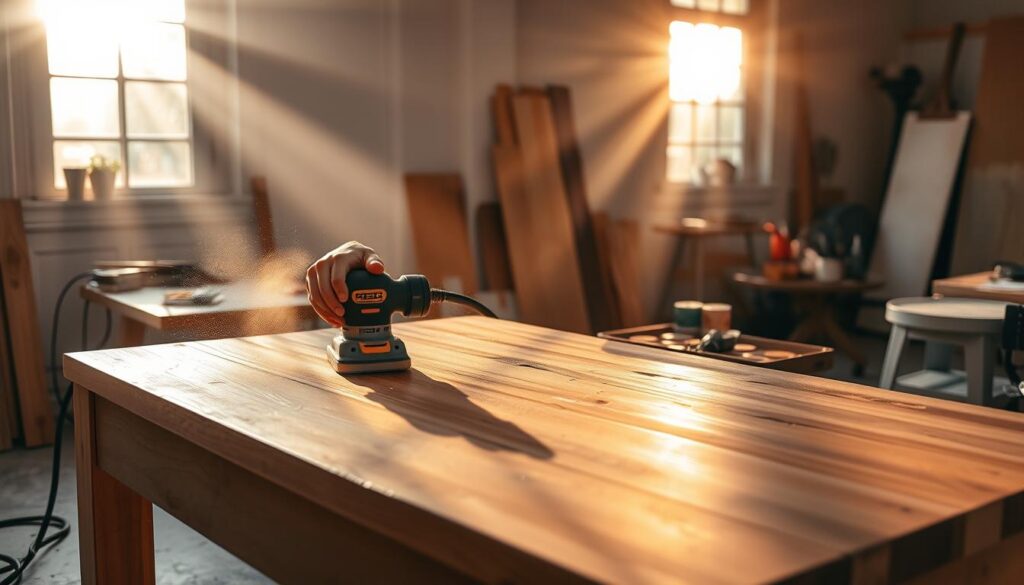
Begin sanding with 80 grit paper to strip the old finish from the top. Scuff-sand the remaining surfaces. Follow with 120 grit to create perfectly smooth wood ready for treatment.
Always wipe everything down with a damp cloth afterward. This eliminates all sanding dust before you proceed to the next stage.
| Sandpaper Grit | Primary Purpose | Surface Result |
|---|---|---|
| 80 Grit | Remove old finish | Rough, prepared surface |
| 120 Grit | Smooth imperfections | Ready for paint/stain |
| 220 Grit | Final polish | Glass-smooth finish |
Repairing and Securing the Legs
Address wobbly legs by removing them to check for obstructions. Drill pilot holes before securing with screws to the base. Use wood glue for additional stability if needed.
For significant structural issues like broken bracing, sometimes removal is better than repair. An electric jigsaw can cleanly remove damaged sections.
Fill any holes with wood putty using a spatula. Allow adequate drying time before sanding smooth for seamless integration.
Painting Techniques and Application Tips
Apply your first coat of 3-in-1 paint in your chosen color. These self-leveling formulas typically require two coats for complete coverage. Allow sufficient drying time between applications.
For creative accents like gold-dipped legs, measure and mark your desired height. Apply painter’s tape for clean lines before painting with metallic colors.
Highlight ornate detailing in contrasting colors so these beautiful features become focal points. This attention to detail elevates your entire project.
Adding Finishing Touches and Creative Details
Creative flourishes transform your piece from simply refinished to uniquely personalized. This phase adds character and protects your hard work for years of enjoyment.
Staining and Highlighting Key Areas
Apply gel stain to the top surface to create rich wood tones. This treatment enhances the natural grain for a professional look. You can also stain interior surfaces to improve less attractive wood.

Consider using furniture salve on drawer interiors. This conditions the wood while adding a pleasant natural fragrance. Your piece will smell as beautiful as it looks.
Decorative Stencil and Design Elements
Personalize your table with decorative stencils that complement your decor. Use a sponge roller for even application on the top or side surfaces. Intricate designs may require touch-ups with a small artist’s brush.
This process demands patience but yields stunning results. Your careful attention to detail creates a conversation-starting centerpiece.
Complete your project with protective furniture wax. Rub it thoroughly over all surfaces to seal and preserve your beautiful makeover. This final step ensures your refreshed coffee table maintains its elegant finish for years.
Maintaining Your Refreshed Coffee Table
The final phase of your project involves establishing a care routine that ensures lasting durability and visual appeal. Proper maintenance protects your investment of time and effort while keeping your centerpiece looking professionally crafted.
Your beautifully restored furniture deserves ongoing attention to maintain its pristine condition. Regular care prevents damage from daily use and preserves the vibrant appearance you worked so hard to achieve.
Long-Term Care Tips and Protective Finishes
Applying protective furniture wax creates a durable barrier against spills, scratches, and everyday wear. This finish not only safeguards your work but also enhances the rich appearance of stained surfaces.
Rub the wax thoroughly into all surfaces using circular motions. Allow it to cure completely before buffing to a gentle shine. This process seals your piece for extended protection.
| Timeframe | Maintenance Task | Primary Benefit |
|---|---|---|
| Weekly | Gentle dusting with soft cloth | Prevents abrasive particle buildup |
| Monthly | Inspection for wear spots | Early damage detection |
| 6-12 Months | Reapply protective wax | Renews protective barrier |
| As Needed | Quick touch-up for scratches | Maintains seamless appearance |
Use coasters and placemats to prevent heat damage and water rings. Clean spills immediately with a damp cloth to avoid staining. Avoid harsh chemicals that can damage your carefully applied finish.
Establishing this simple routine ensures your furniture remains a beautiful focal point in your home for many years. Minimal effort provides maximum protection for your handcrafted piece.
Conclusion
Your successful transformation demonstrates what’s possible with dedication and the right approach. You’ve completed every phase of this rewarding project, from initial assessment to final protective finishing.
This comprehensive guide has shown how furniture restoration saves substantial money while creating unique pieces that match your home’s decor. The detailed steps provide a reliable roadmap for future projects.
With basic tools and patience, anyone can achieve professional-looking results. This process encourages viewing worn items as opportunities rather than problems. Your beautiful coffee table makeover now serves as both functional furniture and a conversation piece.
Continue building your skills through manageable table makeover projects. Each completed piece develops your craftsmanship while enhancing your living space. The satisfaction of creating something beautiful with your own hands is truly priceless.