
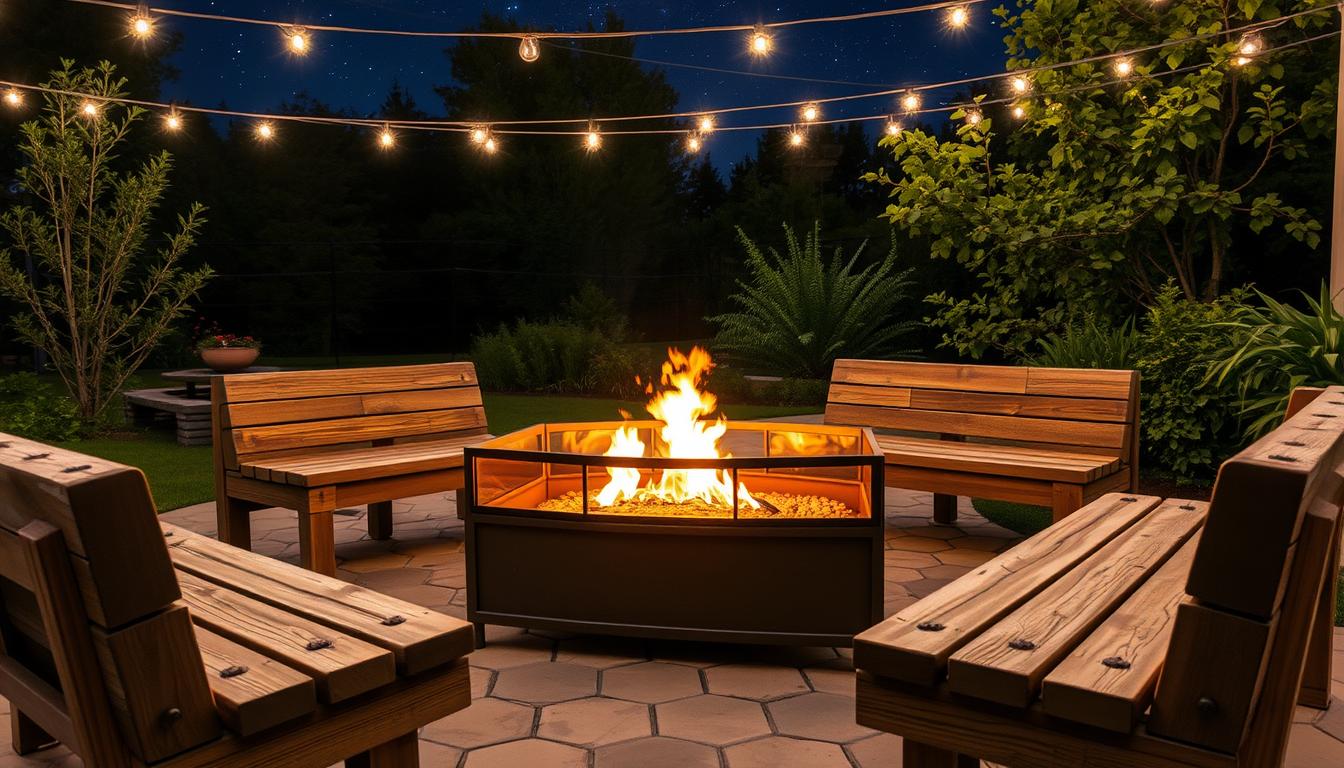
Did you know that a well-designed backyard can increase your property’s value by up to 20%? It’s a stunning figure that highlights the true power of a beautiful and functional exterior. This is where a unique creation comes into play, blending warmth and utility into one stunning centerpiece.
Imagine your patio or deck becoming the most sought-after spot in the neighborhood. This isn’t just about adding a source of heat; it’s about crafting an experience. You can build a versatile piece that serves as a surface for drinks by day and a cozy gathering point by night.
The beauty of this endeavor lies in its flexibility. You are not locked into a single design. Options range from a permanent fixture with convenient storage to a clever cover that adapts an existing feature for dual-season use. This allows you to tailor the final product to your specific needs and aesthetic preferences.
Your investment extends your living area, making it enjoyable from summer evenings well into the crisp autumn months. It’s a practical upgrade that delivers both immediate ambiance and long-term rewards for your home.
Key Takeaways
- This unique build significantly enhances your property’s appeal and functionality.
- It creates a versatile hub for social gatherings during different seasons.
- You have design choices, from permanent installations to adaptable covers.
- Customization allows it to fit your specific size and style requirements.
- The combination offers a practical surface and a warm, inviting atmosphere.
- Skill levels required can vary, making it accessible for many enthusiasts.
- It effectively extends the usable time you can spend in your yard.
Planning Your DIY Coffee Table Fire Pit: Outdoor Project For Entertaining
Before you pick up your first tool, thoughtful preparation will determine the success and safety of your build. This phase transforms your vision into a practical reality.
Understanding the Project Scope and Design
Your design choices impact both functionality and safety. For propane-based creations, you need specialized tanks designed for horizontal placement. Standard vertical tanks create hazards when tipped.
Grill installations require careful planning. Wood screws added to the center hole’s rim support the grill while creating essential air insulation. This prevents direct wood contact.
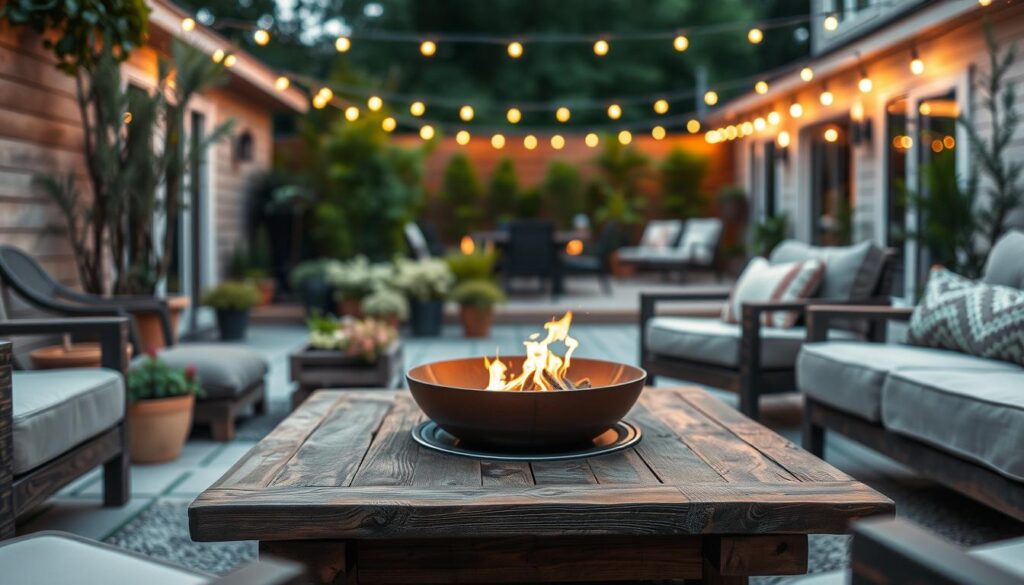
Identifying Space and Safety Considerations
Evaluate your available outdoor space carefully. Proper clearance from structures and combustible materials is non-negotiable. Local fire codes provide specific distance requirements.
Your seating arrangement should maintain 3-4 feet from the heat source. This allows guest comfort while minimizing spark risks. Consider wind patterns to avoid smoke drifting toward seating areas.
| Design Element | Safety Requirement | Planning Consideration |
|---|---|---|
| Propane Tank | Horizontal-use certified | Removable access panel |
| Fire Source | Adequate ventilation space | Air gap insulation |
| Location | Non-combustible surface | Level, stable foundation |
| Regulations | Local code compliance | HOA approval if required |
Make sure to verify local regulations before beginning. Permanent features often require specific permits. Your foundation must be stable and level for safety.
Gathering Materials and Tools
Quality components ensure your handcrafted piece will provide years of reliable service in various weather conditions. Proper selection prevents premature wear and maintains structural integrity.
Essential Lumber, Cedar Boards, and Plywood
Cedar offers natural resistance to moisture and insects, making it ideal for exterior applications. You need boards cut to specific dimensions for the frame and slats.
Exterior-grade plywood forms the base structure. Always verify thickness requirements match your design specifications.
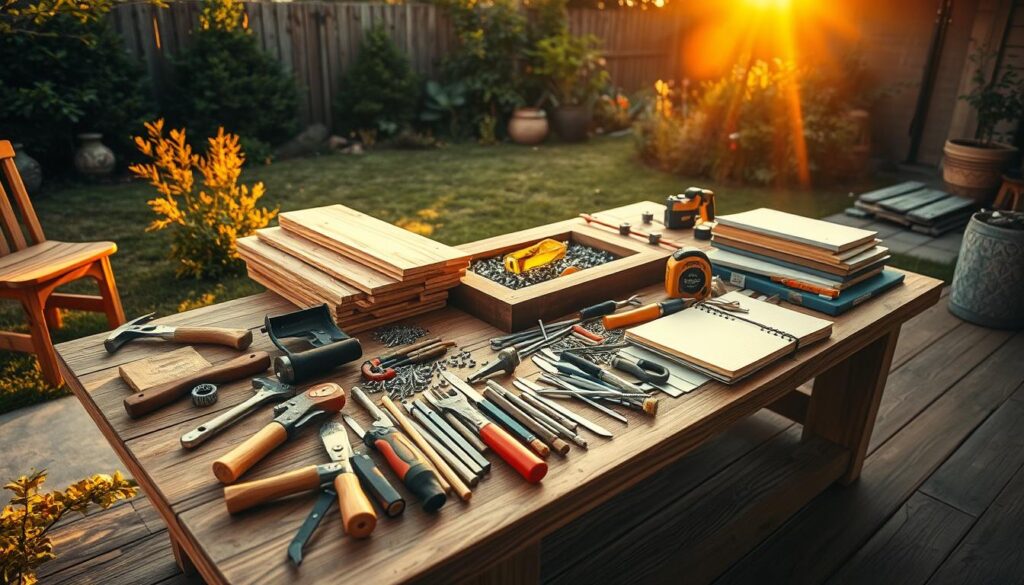
Adhesives, Screws, and Specialty Fasteners
Your adhesive choices are critical for longevity. Use exterior-rated wood glue for all joints exposed to elements. Standard interior glue fails under moisture and temperature changes.
Corrosion-resistant screws prevent rust stains on beautiful cedar surfaces. Trim head varieties work well with thin materials, reducing split risk.
Pocket hole joinery requires specific fasteners for hidden connections. Construction adhesive speeds up slat application while providing strong bonds.
Pre-drill holes in cedar to prevent splitting. Your fastener inventory should include various lengths for different material thicknesses.
Step-by-Step Build Process
The assembly process transforms raw materials into a functional centerpiece through systematic construction steps. Each phase builds upon the previous one, creating a sturdy foundation for your gathering space.
Constructing the Frame and Box Structure
Begin by assembling the main framework using your pre-cut cedar components. This forms the core support system for the entire piece.
Ensure all joints are square and secure with exterior-rated adhesive. The box structure must withstand outdoor conditions while maintaining its shape.
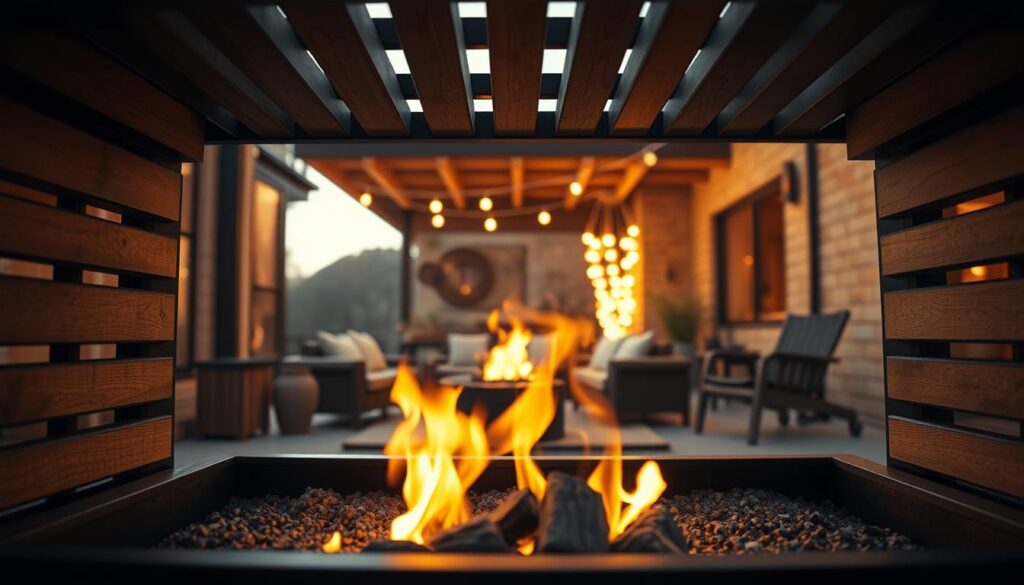
Creating the Slatted Design and Fire Pit Aperture
Rip your western red cedar boards lengthwise to create uniform slats. This technique maximizes material efficiency while achieving consistent proportions.
For mitered corners, set your saw blade to 45 degrees. Use a stop block positioned safely away from the blade to prevent kickback during cutting.
Apply construction adhesive to each slat before securing with brad nails. Maintain even spacing using a scrap piece as a consistent gap guide.
Mark the center opening on the innermost slat by tracing from inside the structure. Cut the aperture using a jigsaw or bandsaw for smooth curves.
Your circular cover requires precise measurement. Find the exact center point and use a string-and-pencil compass to draw the perfect radius.
Enhancing Your Outdoor Space with Finishing Touches
Finishing touches transform your handcrafted piece into a truly versatile addition to your outdoor living area. These final steps ensure durability while adding smart functionality.
Applying Paint, Stain, and Weatherproof Finishes
Protect your investment with quality exterior finishes. Apply stain or paint specifically formulated for outdoor use. These products shield wood from moisture and UV damage.
Choose finishes that complement your existing decor. Allow proper drying time between coats for maximum protection. Seal all surfaces thoroughly to prevent water penetration.
Adding Functional Elements like Casters and Fire Tray
Install heavy-duty locking casters on the bottom corners. This creates mobility for seasonal storage or rearrangement. Select casters with locking mechanisms for stability during use.
Design a magnetic access panel for propane tank maintenance. Counterbore magnets into the frame and attach corresponding washers to the door. This provides tool-free access while maintaining clean lines.
Position your fire tray in the center opening following manufacturer instructions. Ensure proper ventilation space around the unit. Use specialized propane tanks designed for horizontal operation.
For circular covers, cut support braces from scrap wood. Position these to fit inside your fire ring while accounting for depth. Add wood screws to grill cutouts for essential air insulation.
Consider electric starters like the HomeRight ElectroLight for quick, chemical-free ignition. These tools use heated air to light charcoal efficiently.
Conclusion
The completion of this build marks the beginning of countless memorable moments in your enhanced backyard setting. Your custom coffee table now serves as the perfect centerpiece for gatherings throughout the year.
This versatile piece offers dual functionality that maximizes your outdoor living space. During warm days, it provides a stable surface, while evenings transform it into a cozy gathering spot. The flexibility in design ensures it fits your specific needs and skill level.
Your attention to safety and quality materials guarantees years of reliable service. Make sure to follow local regulations for safe operation. The wood components and proper construction techniques create a durable final product.
This rewarding DIY project delivers substantial value compared to store-bought options. The skills you’ve gained can apply to future creations. Your investment of time pays dividends every time you enjoy your enhanced outdoor area.