
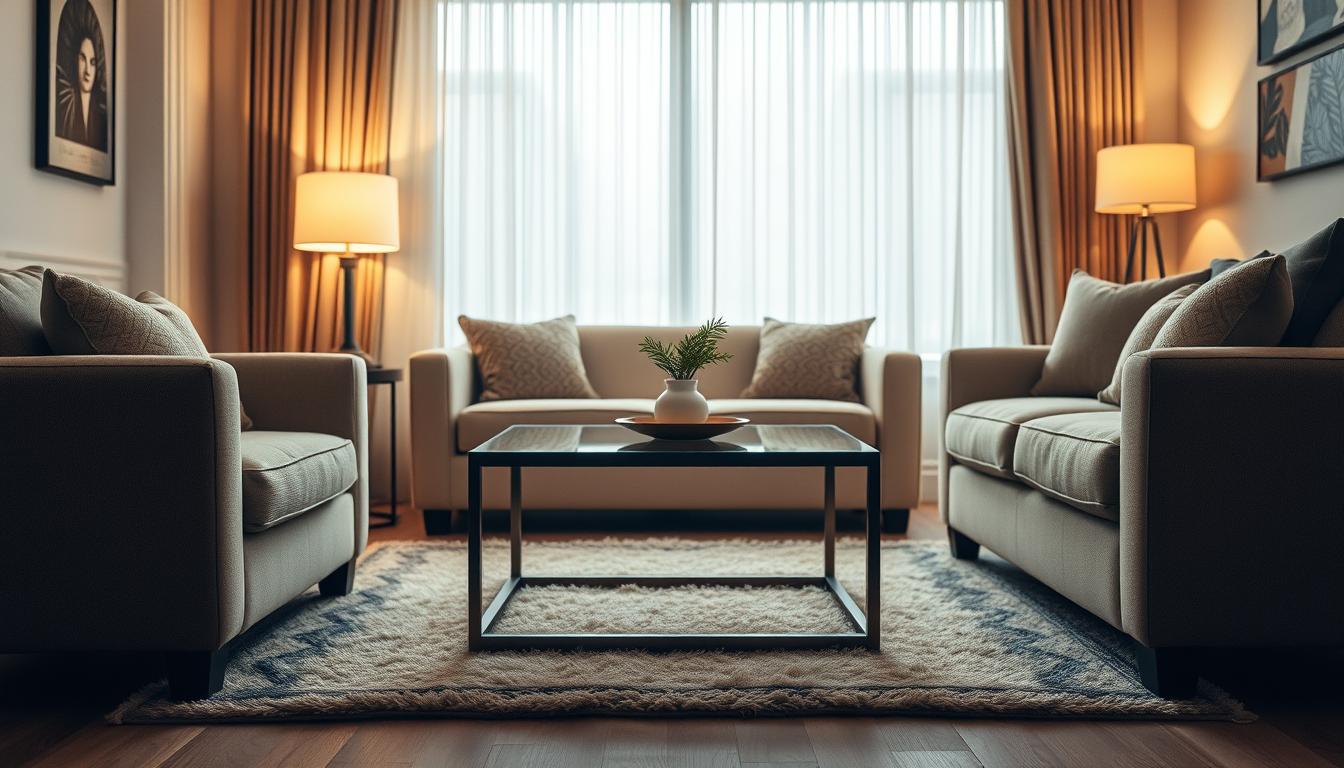
Surprising fact: nearly 70% of people rearrange their living room within a year because small spacing mistakes make daily use awkward.
Your coffee table sets tone and function. Pick the right spot and the room feels balanced, reachable, and welcoming.
Start with one simple rule: keep about 16–18 inches between the sofa front and the table. That gap secures legroom, allows easy reach, and keeps traffic flowing.
The practical layout here focuses on purpose first, then exact spacing and height. Use a three-part styling formula: base (books or trays), height (vase or candle), and personality (keepsakes).
This guide shows how to choose size, height, and placement so your table anchors the living space without crowding it. You’ll learn quick fixes, alternatives like ottomans or nesting tables, and how small adjustments improve comfort over time.
Key Takeaways
- Keep roughly 16–18 inches between seating and the table for reach and flow.
- Choose height near the sofa seat for comfort and easy use.
- Style with base, height, and personality to avoid clutter.
- Prioritize function first, then fine-tune spacing for balance.
- Consider ottomans or nesting tables when space is tight.
Start With Purpose: How You Use Your Living Room Drives Placement
Identify the activities that define your living area before moving any furniture. List what you do most: entertaining guests, lounging with a book, gaming, or watching shows. That simple step makes choosing a coffee table or ottoman practical, not guesswork.
If you host often, pick a hard surface that holds drinks and snacks without wobble. That surface must sit within easy reach of primary seating so people don’t lean or pass plates awkwardly.
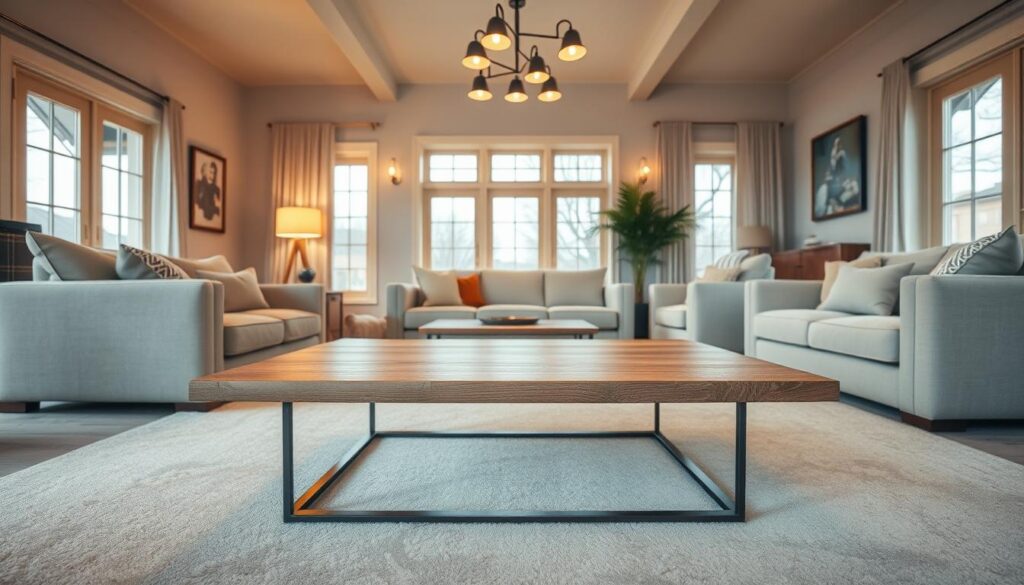
If relaxation wins, an ottoman or soft option gives foot comfort and hidden storage. You can also pair a small table with a pouf for flexible use.
Scale matters: large sectionals take larger pieces, while petite sofas need compact profiles to preserve flow. Keep about 16–18 inches between seating and the table or ottoman to balance reach and circulation.
| Primary Use | Best Surface | Size Tip | Placement Benefit |
|---|---|---|---|
| Entertaining | Hard table | Medium to large | Stable surface, easy reach |
| Lounging | Ottoman or soft top | Low and plush | Comfort, storage option |
| Mixed use | Table + nesting pieces | Flexible footprint | Adaptable access for all seating |
| Small spaces | Compact round table | Scale to sofa | Preserves flow and pathways |
Precise Placement Rules You Can Trust: 16-18 Inches, Length, and Height
Measure purpose and motion before you move anything; precision saves space and frustration. Start by checking how people sit and walk in your living room. This makes choosing the right coffee table size straightforward and practical.
The gold standard distance
Keep roughly16–18 inchesfrom the sofa front to the table. This gap balances legroom, reach, and clear movement through the seating area. For deeper sofas, aim closer to 16 inches so you can reach drinks and remotes without leaning.
Proportion rule
Aim for about two-thirds of the sofa length when picking table length. That ratio gives you usable surface area while keeping visual balance with seating. If chairs face the sofa, match spacing so everyone gets similar reach.
Height guidelines
Match the tabletop to the sofa’s seat cushions or place it slightly lower. That height keeps setting and picking items natural and reduces strain when you reach for objects.
“Measure from the front edge of cushions to the table edge; small adjustments now avoid returns later.”
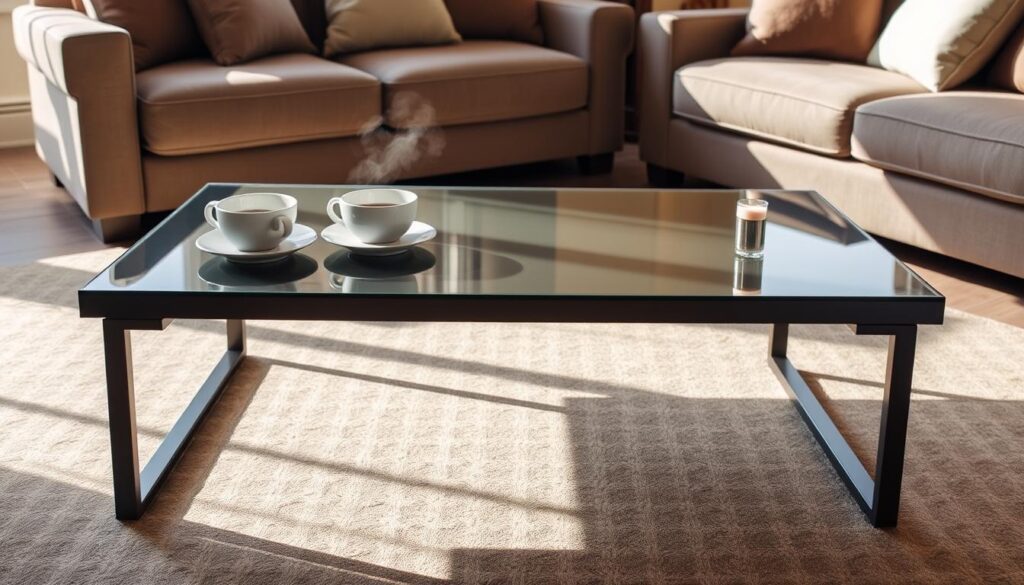
- Use a tape measure to validate distances before buying.
- Stay near the inches range but tweak for movement and comfort.
| Focus | Recommendation | Why it matters |
|---|---|---|
| Distance | 16–18 inches | Comfortable reach and clear pathways |
| Length | ~2/3 sofa length | Visual balance and useful surface |
| Height | At or just below cushions | Ergonomic access for items |
Where Should A Coffee Table Be Placed: Rules For Perfect Layout
Place your centerpiece so it connects seats and supports every conversation without blocking movement. Center the coffee table within your primary seating group so it acts as a shared hub for drinks, books, and daily items.
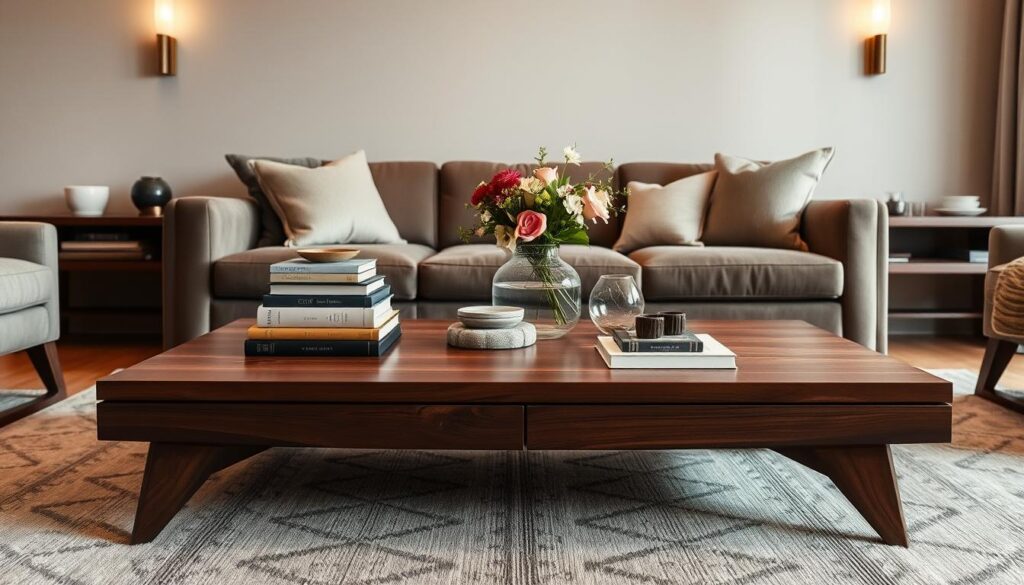
Balance functionality and visual harmony for a cohesive look
Respect the 16–18 inches rule to keep reach natural while preserving clear walking lanes. Size the table to about two-thirds of your sofa length so proportions feel intentional from any angle.
Align height to seat cushions or slightly below to make grabbing remotes and mugs effortless. Match visual weight: pair heavy upholstered seating with a lighter table, or use a solid piece to anchor airy furniture.
Calibrate spacing for comfort, movement, and conversation zones
- Center the table in the seating area so every seat has similar access.
- Maintain clear flow lines around the piece to avoid awkward traffic patterns.
- Keep surfaces styled but functional; leave open space for daily use.
- Mirror spacing across opposing seats to create symmetry and fair reach.
“Small tweaks in distance or size restore balance quickly—measure, test, and adjust.”
Room-by-Room Layouts: Tailoring Placement to Your Space
Let the room’s footprint guide where the coffee table sits for better balance and reach. Start by mapping seating, doors, and traffic lines so the piece supports use rather than blocks it.

Rectangular living rooms
Align the table parallel to the sofa to reinforce clean sightlines. Keep consistent spacing on both sides to preserve predictable movement and visual balance.
Square rooms
Center the coffee table within the seating cluster so every seat has equal access. This creates an easy focal point for conversation and keeps reach fair from all angles.
L-shaped seating and rooms
Place the piece where both seating legs can reach it. You can offset slightly toward the longer segment while keeping one side open for movement.
Open-plan spaces
Use the coffee table with a rug to define the living area without blocking circulation between zones. Keep pathways wide enough to avoid interrupting daily movement.
Irregular or angled walls
Pick round or oval tables to smooth corners and reduce collisions. Curved shapes help steady flow and make tight or odd rooms feel more natural.
“Scale matters—match size to room so the piece feels intentional, not lost or crowded.”
| Room Shape | Best Placement | Why it works |
|---|---|---|
| Rectangular | Parallel to sofa, centered | Reinforces lines and clear movement |
| Square | Centered in seating | Equal reach and strong focal point |
| L-shaped | Between legs, offset to long side | Shared access and open pathway |
| Open-plan | With rug to define area | Defines living zone, preserves flow |
| Irregular walls | Round or oval near center | Smooths traffic and reduces corner conflicts |
Sofa, Sectional, and Seating Pairings: Getting Scale and Reach Right
Match your centerpiece to seating scale so every person reaches the surface easily.
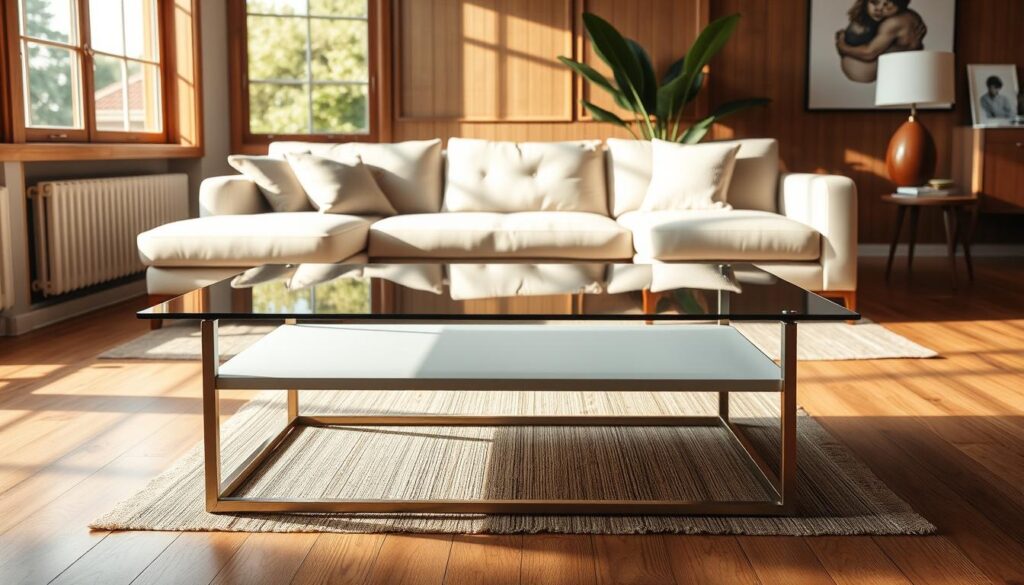
With standard sofas, aim for a coffee table about two-thirds of the sofa length. Keep roughly 16–18 inches between the sofa front and the table to protect legroom and maintain reach.
Height matters: set the tabletop at the seat cushions or slightly lower. That reduces strain when you pick up mugs, remotes, or books.
Large sectionals and mixed seating
For big sectionals, choose a longer or wider table so the chaise and main run share access. If seating wraps, keep comparable spacing on each face so no seat is left too far from the surface.
Balance visual weight by pairing deep, plush furniture with a table that has enough presence to feel proportional. In tight rooms, consider rounded corners to prevent bumps while preserving usable size.
“Test reach from every seat before final placement.”
| Seating Type | Recommendation | Benefit |
|---|---|---|
| Standard sofa | ~2/3 sofa length; 16–18 inches gap; cushion-height | Comfortable reach and visual proportion |
| Large sectional | Longer/wider surface; balanced spacing | Shared access without blocking aisles |
| Mixed seating | Complement with side perch or small table | Each seat gets accessible surface |
Shape, Materials, and Style: Choosing the Right Coffee Table for Your Room
Choose a form and finish that support traffic flow and echo your room’s personality. Your selection affects movement, scale, and the overall interior design. Start by matching shape to how the seating is arranged.
Which shape supports your layout
Rectangular and square pieces add structure to linear or modern plans. They work well with sofas and clear sightlines.
Round and oval tops ease circulation in irregular spaces and soften sharp corners near the sofa.
Materials and finishes: lighten, ground, or add texture
Use glass or acrylic to visually shrink the footprint and keep the living area airy.
Wood grounds the grouping with warmth. Metal or stone adds crisp definition and tactile contrast.
Visual balance: match weight and style to your furniture
- Coordinate finishes so the piece complements seating rather than competes with it.
- Balance mass by pairing light tables with heavy sofas, or choose an open-base table for bulky furniture.
- Match height and perceived size to the room so the surface neither overwhelms nor disappears.
“The right shape and materials make the surface feel intentional and useful from every seat.”
Style With Intention: The Three-Part Formula That Protects Functionality
Style with purpose so the surface supports daily use while still looking curated. Use a three-part formula to keep things simple and practical.
Base, height, personality: a simple styling guide that preserves surface use
Start with a base: place a tray or stacked books to anchor groupings and prevent small items from scattering across the surface. This creates zones you can move quickly when you need open space.
Add height with a vase, tall candle, or sculptural piece to create visual interest. Keep that element lean so it draws the eye without blocking sightlines or reaching paths.
Finish with personality—keepsakes or seasonal accents that make the table feel lived in. Limit these to one or two meaningful items so the look stays curated and practical.
Layering with trays and books to keep movement and flow clear
- Keep clear zones so you can set down drinks and devices without disturbing the display.
- Use trays to gather items for instant clearing when guests arrive.
- Mix materials—wood, glass, ceramic, metal—for depth while keeping proportions light.
- Edit often: two or three groupings usually preserve balance and surface use.
“Form should never block function—small edits over time keep your living surface useful and stylish.”
Smart Alternatives and Special Cases: Ottomans, Storage, and Small Spaces
When space is tight, prioritize pieces that move and adapt to daily life. An ottoman can act like a soft centerpiece while adding hidden storage and comfort.
Ottoman vs. table: choose an ottoman if you want cushioned edges and extra seating. Pair it with a firm tray to mimic a coffee table surface for drinks and books.
Light, movable options for tight rooms and busy paths
In compact spaces pick lightweight or nesting tables so you can clear paths quickly. Nesting sets give layered surface area without crowding the area.
Family-friendly layouts
Favor rounded corners and durable finishes to prevent bumps and stains. Keep roughly 16–18 inches around seating so people can sit and stand without hitting the side.
- Use built-in storage—lift-top ottomans or tables with drawers streamline functionality in small rooms.
- Split surfaces: two small tables beat one oversized piece when multiple seats need access.
- Choose slim profiles and open bases to keep sightlines clear and make the space feel larger.
“Pick pieces that move with your routine—comfort, storage, and quick reconfiguration matter most.”
| Scenario | Best option | Benefit |
|---|---|---|
| Small living area | Nesting tables | Flexible surface, easy storage |
| High-traffic zone | Light movable table | Fast clearance, better movement |
| Family room | Rounded ottoman with tray | Safer edges, hidden storage |
Conclusion
Use three simple measures—distance, proportion, and height—to finish your living-room setup with confidence.
Keep about 16–18 inches between seating and the coffee table to protect legroom and reach. Pick a table near two-thirds of your sofa length so the piece looks balanced and useful from every seat.
Aim for tabletop height at seat-cushion level or slightly lower to make everyday use effortless. Calibrate flow so traffic moves naturally and conversations stay centered.
Style with intention: combine base, height, and personality, but leave open surface for daily use. If you need flexibility, choose ottomans or nesting pieces for storage and safer edges.
Reassess over time. Small tweaks to spacing, orientation, or styling keep the setup working as your needs change and ensure the room feels welcoming and functional.