
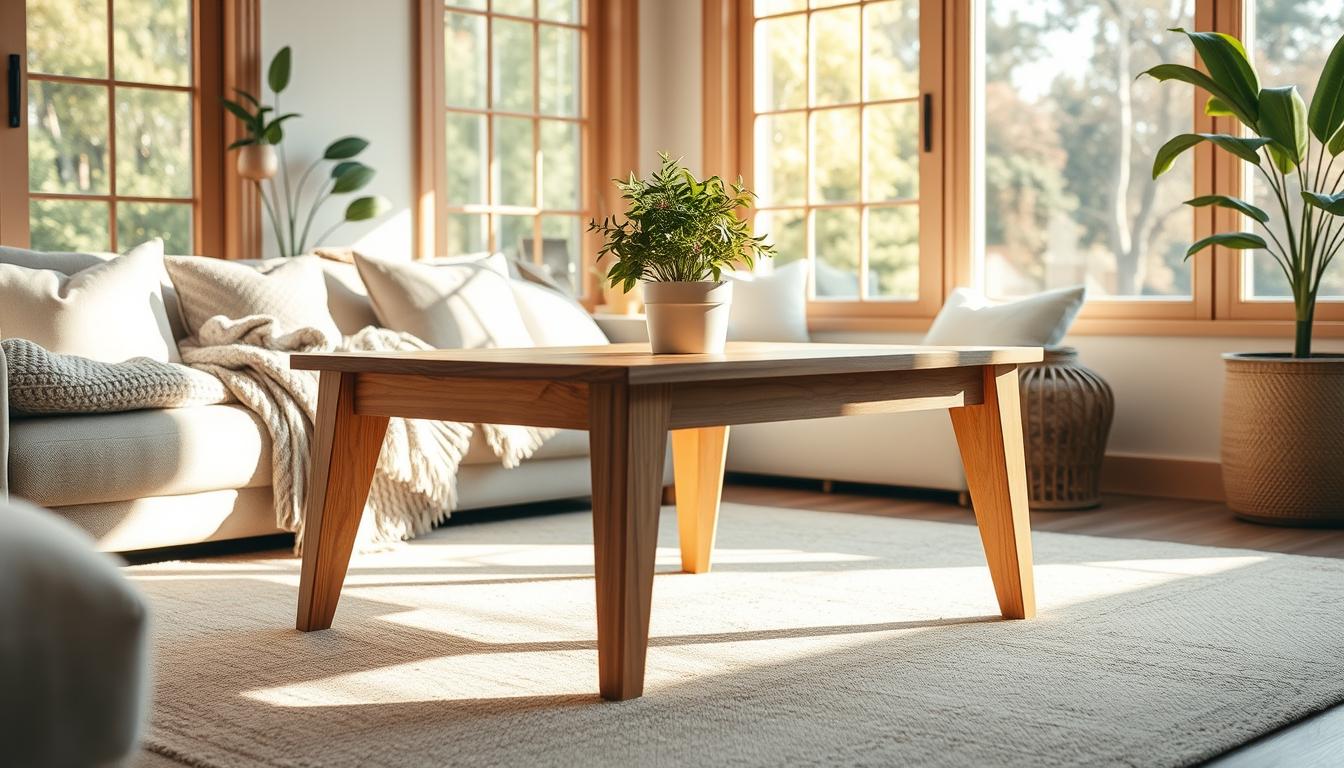
Did you know that over 40% of urban apartment dwellers report that standard furniture doesn’t fit their living areas? This startling statistic reveals a common frustration for those with limited floor plans. Your living space deserves furniture that works with its dimensions, not against them.
Creating your own centerpiece for your home allows you to maximize every inch effectively. This approach gives you complete control over the final product’s size and style. You can ensure it complements your existing decor perfectly.
The square shape offers distinct advantages in tighter environments. Its symmetrical design provides excellent functionality without dominating the room. This format often works better than other shapes in constrained layouts.
Following this guide will help you develop practical skills for future home projects. You’ll learn techniques that apply to various furniture creation endeavors. The process is designed to be accessible for beginners.
Key Takeaways
- Custom furniture creation maximizes space efficiency in limited areas
- Square designs offer superior functionality in tight environments
- Personalized projects ensure perfect integration with your decor
- Hands-on building develops practical woodworking skills
- Tailored dimensions prevent furniture from overwhelming rooms
- This project serves as foundation for future home improvements
Introduction to DIY Square Coffee Table: Compact Builds for Small Spaces
Personalized construction projects allow you to tailor every dimension to your specific room requirements. This approach ensures your furniture fits perfectly within your available space.
Overview of the Project and Its Benefits
Embarking on this creation combines practical functionality with visual appeal. Your centerpiece will serve as both a gathering spot and space-saving solution.
The build diy method offers significant cost advantages over store-bought options. You maintain complete creative control over the final design that matches your home’s style.
This endeavor introduces fundamental woodworking techniques you’ll use repeatedly. These skills apply to future home improvement projects.
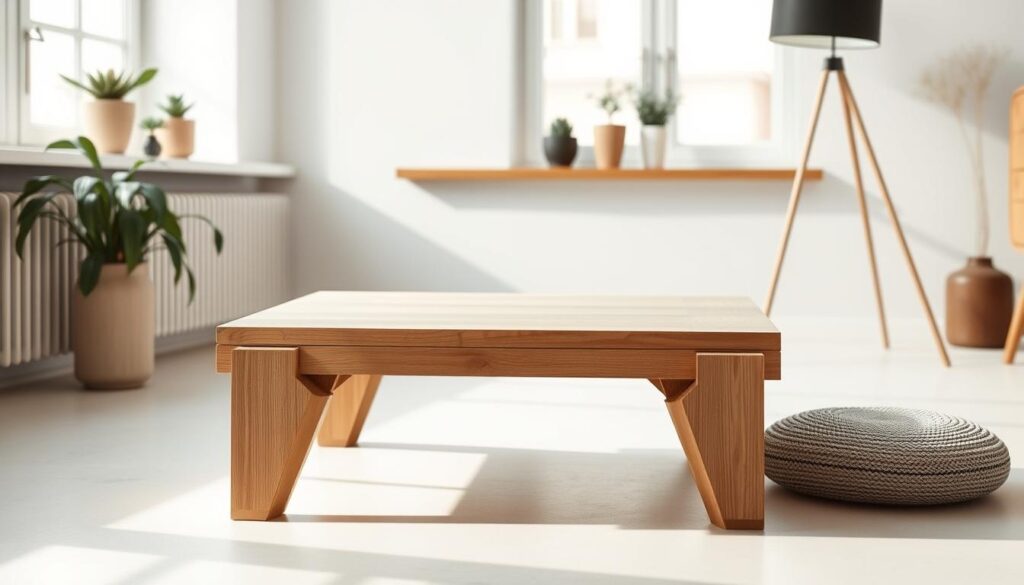
Understanding Compact Builds for Small Spaces
Compact construction means recognizing that every measurement matters. Your piece must provide adequate surface without making the area feel crowded.
The design prioritizes multi-functionality in limited square footage. You might incorporate hidden storage or convertible features.
You’ll learn to balance proportions carefully. This ensures visual harmony with your existing room elements.
This section establishes realistic expectations for time, skill level, and budget. Proper preparation sets you up for construction success.
Materials and Tools for Your Coffee Table Build
Selecting quality wood and reliable tools directly impacts your creation’s longevity and appearance. Proper preparation with the right material sets the stage for a successful build.
This section details everything you need to gather before starting. You can adapt this list based on your budget and available equipment.
Essential Woodworking Tools and Equipment
Your core set of tools forms the foundation of this project. A drill is perhaps the most versatile tool, handling both pilot holes and screw driving.
A sander creates smooth, professional surfaces. Clamps are indispensable for holding pieces securely during assembly.
For precise cuts, a miter saw is ideal. A Kreg Jig simplifies joinery with strong pocket hole connections.
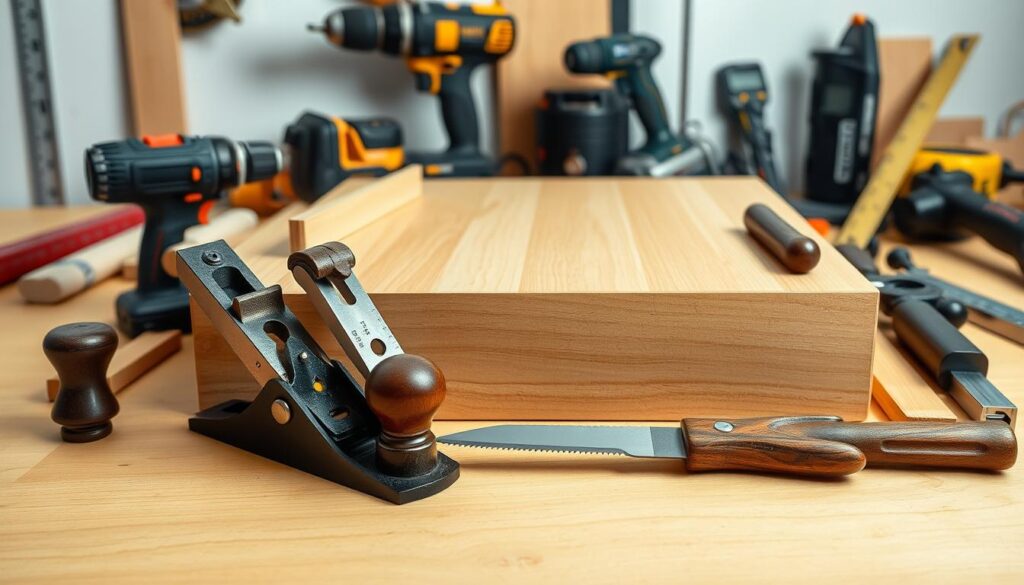
Budget-conscious builders can start with a circular saw, a drill, and sandpaper. You can upgrade tools as your skills grow.
Recommended Wood Types and Supplies
Your choice of wood dramatically affects the final product. Hardwoods like oak and maple offer superior durability for daily use.
Softwoods like pine are cost-effective and work well with protective finishes. For the surface, project panels or plywood provide a stable, flat material.
You will need lumber for the frame and wood glue for strong bonds. Having the right screws and nails on hand is crucial.
Clamps ensure tight joints during glue-up. This prevents misalignment that can compromise your table‘s structure.
Balancing aesthetics with practical considerations like cost is key. The right material selection makes the woodworking process smoother.
DIY Square Coffee Table: Compact Builds for Small Spaces – The Design Blueprint
Effective furniture design begins with understanding how your piece will interact with the existing elements in your living area. This planning stage transforms your vision into a practical reality that serves your specific needs.
Conceptualizing Your Layout and Using 3D Design Tools
Your blueprint starts with precise measurements of your room’s dimensions. Consider traffic flow patterns and seating arrangements to ensure comfortable movement.
Digital tools like Homestyler help visualize your creation in context before construction. This prevents costly mistakes and ensures proper proportions. One memorable case involved a multifunctional piece that nearly became unusable due to poor planning.
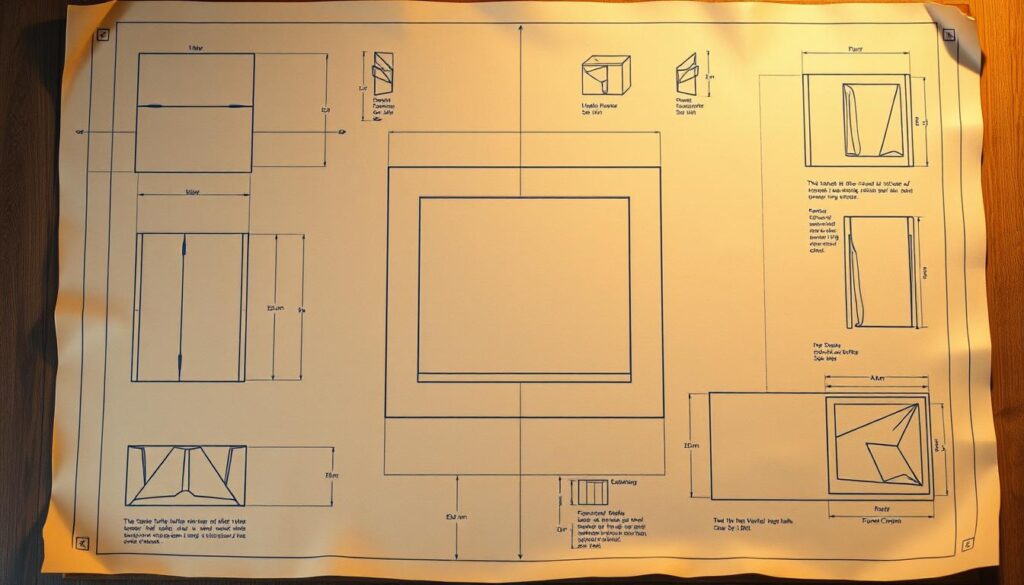
Planning for Space, Functionality, and Aesthetics
Thorough planning addresses both immediate needs and future flexibility. Consider how your design might adapt as your lifestyle changes over time.
Each design case demonstrates different priority balances. Some emphasize storage while others focus on visual appeal. Your blueprint should reflect your specific requirements.
Planning saves significant time by reducing confusion during construction. Detailed sketches with exact dimensions create a clear roadmap for your project.
Step-by-Step Guide to Building the Base
Building a solid base ensures your furniture will withstand daily use while maintaining its aesthetic appeal. This critical step establishes the foundation for your entire project’s stability and longevity.
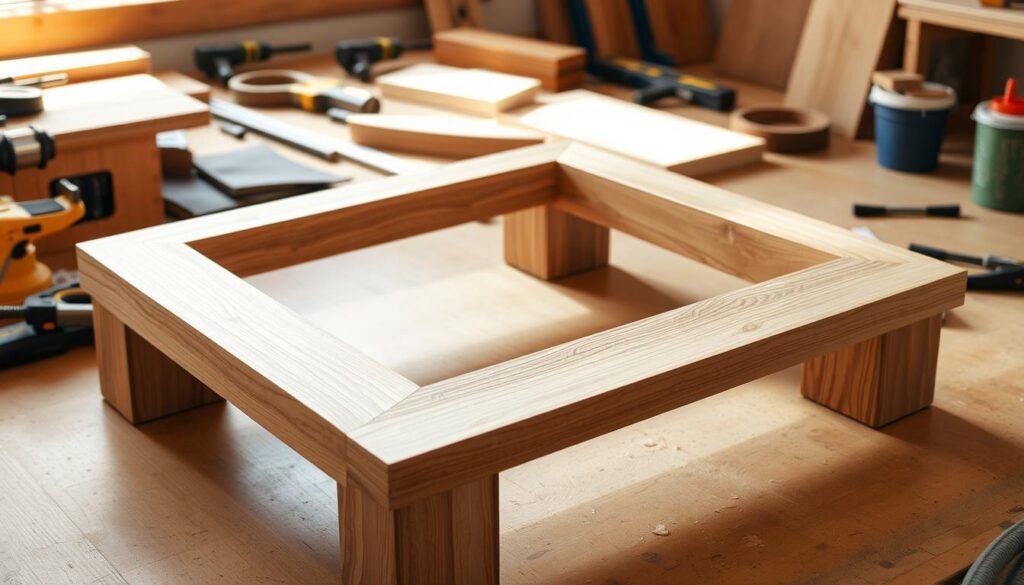
Constructing the Frame with Leg Pieces and Runners
Begin by cutting your leg pieces to exact specifications from your cut list. Precision here prevents wobbling in the finished structure. Drill 1½” pocket holes at the correct angle for hidden, strong connections.
Your first assembly step connects the bottom runner to two legs, forming an L-shaped corner. This defines your base‘s fundamental geometry. Add cross-support with short runners to increase resistance against racking forces.
Securing Components with Wood Glue, Screws, and Pocket Holes
Wood glue forms the primary bond in all joints, with screws providing clamping pressure during cure time. Never rely on fasteners alone for structural integrity. The adhesive creates a permanent connection stronger than the wood itself.
Flipping the base right-side-up allows gravity to assist alignment for subsequent layers. Use 2½” pocket hole screws initially, then switch to 2″ brad nails for positioning glued components. Each application of glue requires adequate pressure and proper cure time.
The final step integrates short leg pieces that provide additional support and create substantial appearance. Ensure they sit flush with runners for perfect alignment. This method leverages each fastener’s strengths for optimal results.
Step-by-Step Guide to Constructing the Table Top
The final construction phase focuses on creating a durable and visually appealing work surface. This critical stage transforms individual components into a unified piece that will serve as the centerpiece of your furniture.
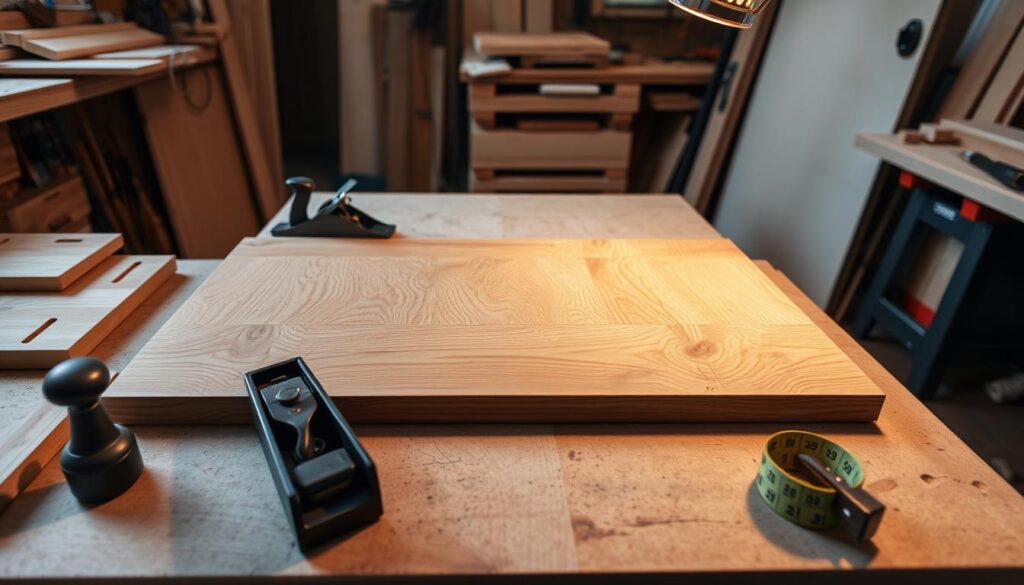
Joining Project Panels Efficiently
Your construction begins by cutting project panel pieces to exact dimensions. Precision at this step determines whether your finished surface appears professionally crafted.
Drill 3/4″ pocket holes around all edges of one panel and three edges of the other. This strategic placement ensures you can access screw heads during assembly while maintaining clean sight lines.
Join the panels using 1 1/4″ pocket hole screws and wood glue. The adhesive creates a bond often stronger than the surrounding wood itself, effectively transforming separate pieces into a single structural unit.
Ensuring a Robust and Level Surface
The second step involves inverting both the top and base for assembly. This technique uses gravity to assist alignment, ensuring connection points achieve perfect registration.
Attach the top to the short legs using 1 1/4″ pocket hole screws and wood glue. This distributed fastening method prevents concentrated stress points.
Cut a support piece to span the table top seam. Secure it with 2 1/2″ pocket hole screws and reinforce with 2″ brad nails. This final step ensures your surface remains level and stable for years of use.
Design Inspirations and Variations
The beauty of custom furniture lies in the ability to adapt designs to match your personal aesthetic. Your living area deserves a centerpiece that reflects your unique style preferences.
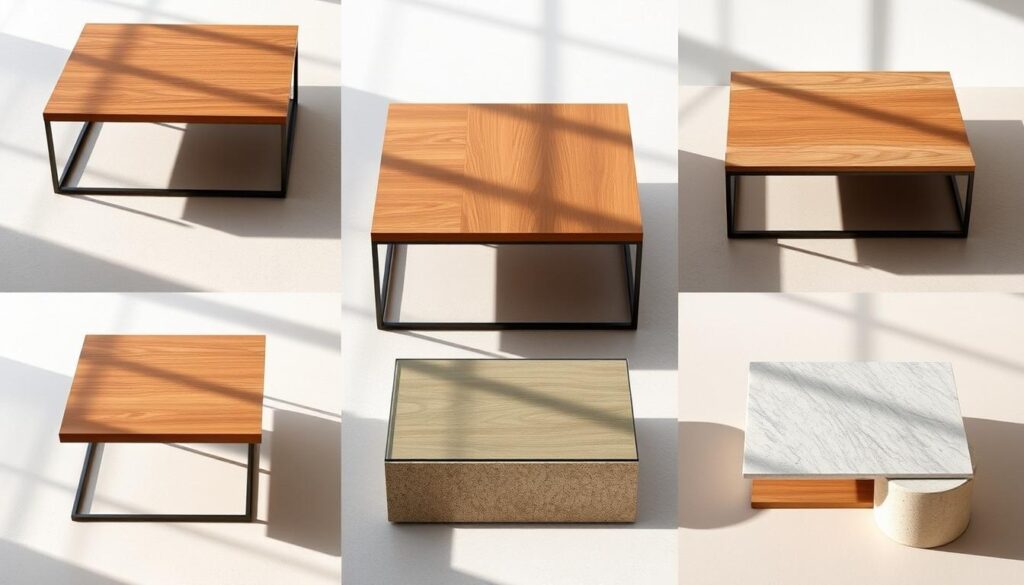
Minimalist Plank Square and Reclaimed Pallet Rustic Styles
Minimalist plank designs offer clean lines and straightforward construction. You can achieve a high-end look using affordable pine or birch materials. The simple metal base requires basic joinery skills.
Reclaimed pallet styles bring authentic character to your decor. Weathered wood provides texture that new lumber cannot replicate. This approach yields almost-free materials with rustic appeal.
Pallet wood requires careful inspection for embedded nails. The inconsistent thickness demands additional processing time. Your effort rewards you with unique, lived-in charm.
Mid-Century Hairpin Legs and Unique Tile Top Accents
Mid-century designs feature slender metal legs with walnut-stained tops. This style creates an instantly recognizable modern aesthetic. The hardware remains affordable from various suppliers.
Hairpin legs demand attention to stability considerations. Reinforce corners with blocks or cross bracing. This prevents wobbling in an otherwise elegant design.
Tile top variations inject personality through color and pattern. Ceramic or cement tiles forgive minor cutting imperfections. Your finished piece offers immediate visual impact.
Storage cube designs transform simple surfaces into multifunctional furniture. Hollow construction accommodates magazines and remote controls. This approach keeps your sofa area organized.
Joinery Techniques and Fastening Tips
Mastering fastening techniques separates amateur projects from professional-quality results. Your approach to connecting components determines the piece’s durability and stability over time.
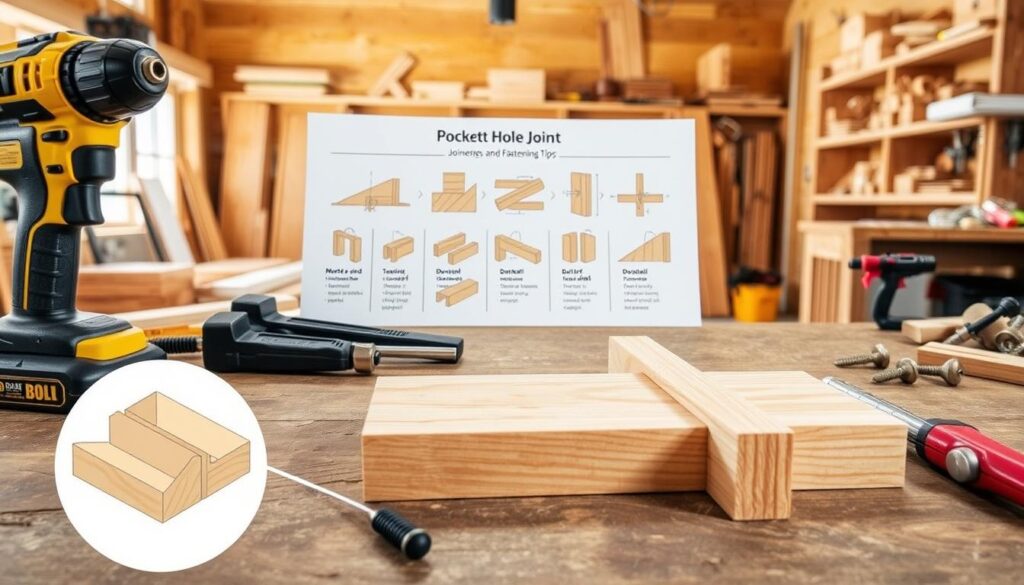
Using Pocket Holes and Reinforcement Strategies
Pocket hole joinery offers beginner-friendly connections without complex skills. This method creates mechanically strong joints that withstand daily use.
Apply wood glue to mating surfaces before driving screws. The adhesive fills micro-gaps and creates bonds stronger than the surrounding material.
Reinforcement becomes essential where stress concentrates. Pay special attention to edges and corners during assembly for lasting results.
Preventing Wobble with Corner Blocks and Cross Bracing
Corner blocks installed where legs meet the top distribute loads evenly. This strategy significantly reduces wobble compared to relying solely on screws.
Cross bracing beneath the surface creates triangulated geometry. This design resists racking forces more effectively than simple rectangular frames.
These tips help you build stable furniture that accommodates wood movement. Humidity changes cause expansion and contraction that proper joinery addresses.
Each piece benefits from considering both immediate strength and long-term performance. Your attention to these details ensures professional results.
Finishing Touches: Sanding, Staining, and Sealing Your Table
Applying the right finish not only enhances beauty but also protects your creation for years of use. This critical step transforms raw construction into polished furniture that withstands daily wear.
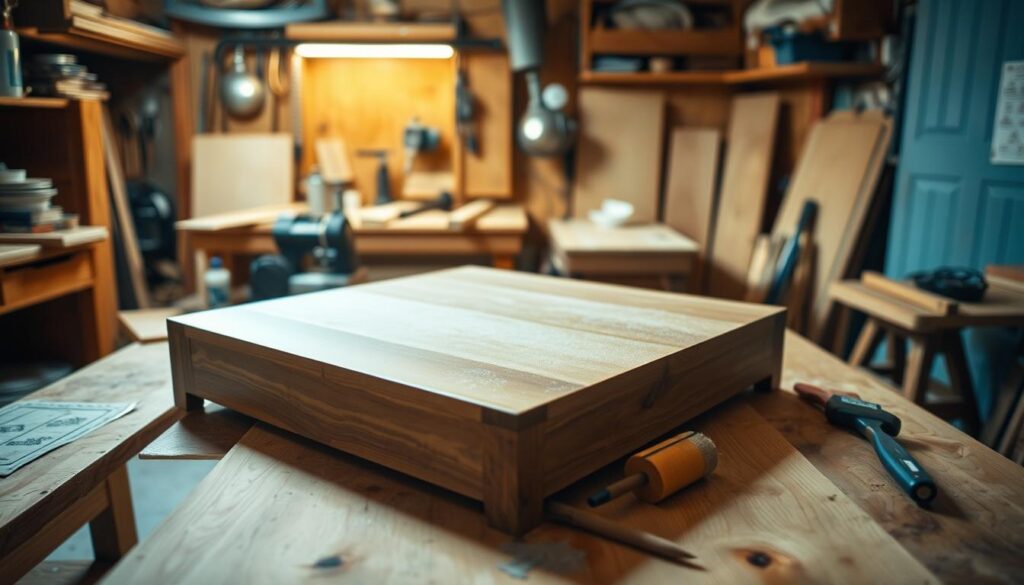
Step-by-Step Sanding and Pre-Stain Preparation
Begin by filling pocket holes and nail marks with wood filler. Sand systematically with 80-grit paper, then progress to 120-grit, and finish with 220-grit. This progression creates the smooth surface essential for professional results.
Apply Minwax pre-stain wood conditioner before staining. This step prevents blotchy absorption, especially important with softwoods like pine. Proper preparation ensures even color distribution across your wood surface.
Selecting and Applying Durable Finishes
For a custom stain, mix two parts Minwax Wood Finish in Golden Oak with one part Classic Gray. The new formulation requires only one coat and dries quickly. Always test your finish on scrap wood first.
Protect your stained table with Minwax Soft Touch Finishing Wax. Apply in circular patterns, wait 5-15 minutes, then buff with a clean cloth. For heavy-use surfaces like a coffee table, consider water-based polyurethane.
Apply two to three protective coats, sanding lightly between each layer. This final finish shields your table top from scratches and moisture. Allow adequate drying time for lasting durability.
Integrating Storage and Multifunctional Elements
Incorporating clever storage directly into your furniture design solves the persistent challenge of clutter in cozy rooms. This approach transforms a basic surface into a powerful organizational tool. Your creation gains hidden utility that keeps everyday items neatly contained.
https://www.youtube.com/watch?v=dgAmoKwSZqA
Creating Hidden Storage Options
A hollow cube construction is a popular method for adding concealed space. This design uses more plywood than a solid frame, increasing material needs. The payoff is significant internal storage capacity.
You can choose a lift-off top for large compartments or sliding panels for quick access. Integrate magazine slots and a remote tray to manage living room essentials. This keeps your sofa area tidy and functional.
Enhancing Design with Multifunctional and Decorative Accents
Your multifunctional table maximizes utility without crowding the room. It eliminates the need for separate furniture pieces. This diy project allows complete customization of compartment sizes.
The result is a cleaner visual field that makes the space feel larger. Hidden storage maintains the sleek look of your coffee table while providing practical benefits. This smart design is ideal for modern living.
Conclusion
Custom-built furniture offers unique advantages that mass-produced pieces cannot match. Your completed coffee table represents more than just a functional piece—it demonstrates your ability to create furnishings perfectly suited to your room.
This build diy project equipped you with fundamental skills applicable to future endeavors. Every precise cut and joined board contributed to your growing confidence as a maker.
The design choices you made reflect your personal style and priorities. Your custom table outperforms store-bought options in both function and satisfaction.
This experience marks a beginning rather than an end. The knowledge gained helps you evaluate quality and identify opportunities throughout your home. Your hands-on approach transforms your living space into a truly personalized environment.