

Surprising fact: nearly 70% of weekend woodworkers saved over $150 by making their own living-room surface instead of buying one prebuilt.
You will follow clear plans that cover materials, cut lists, and joinery choices so you end with a sturdy piece that fits your room and style.
Choose among four proven paths: a Rustic X design with solid wood top, a fast square base using 4×4 legs and an MDF top, a 36″ round option, or a slanted-base look. Each path lists tools like a miter saw, circular saw, drill, and a Kreg jig and explains pocket holes, predrilling, and glue for strong joints.
Plan your top size carefully and check for square at each step. Mark cuts, avoid warped boards, and use the right screws so the top sits flat and finishes cleanly.
Key Takeaways
- One clear plan leads to a sturdy tabletop you can finish to match your home.
- Four style options let you pick the look and cost that fit your room.
- Essential tools include a miter saw, circular saw, drill, and pocket-hole jig.
- Measure, predrill, and check square to avoid gaps and misalignment.
- Choose top dimensions—36″ round or a large square—based on flow and surface needs.
Why build a 2×4 coffee table for your living room
Making a simple table from standard boards gives you a durable piece that matches your living room and your budget. You get strong furniture and you learn skills that carry over to other projects.
Choose 36″ round tops if you want more surface area without sharp ends. A round top reduces bumped shins, pairs well with sectionals, and keeps traffic flowing through the room.
You can buy a ready-made round top or cut one from plywood. Use a string-and-pencil compass to mark a circle and a jig saw to cut it cleanly. A circular saw handles straight rip cuts for the frame and legs.
- 2×4 boards are inexpensive, strong, and easy to source.
- The frame adapts to farmhouse, modern, or softened round designs.
- Orientation of boards and placement of side stretchers control stiffness and scale.

| Top Option | Pros | Cons |
|---|---|---|
| Pre-made 36″ round | Fast, uniform edge, saves time | Less customization |
| Plywood cut-to-shape | Low cost, custom size, light weight | Needs edge banding or trim |
| Solid plank top | Rich wood look, durable | Heavier, more material prep |
| MDF top with veneer | Flat, stable surface, smooth finish | Sensitive to moisture |
Planning your project: materials, dimensions, and cut strategy
Map materials, dimensions, and a cut strategy before you touch the saw. Doing this first keeps your workflow tidy and reduces wasted pieces. Plan the footprint so the top and legs match the scale of your room.
Shopping list essentials
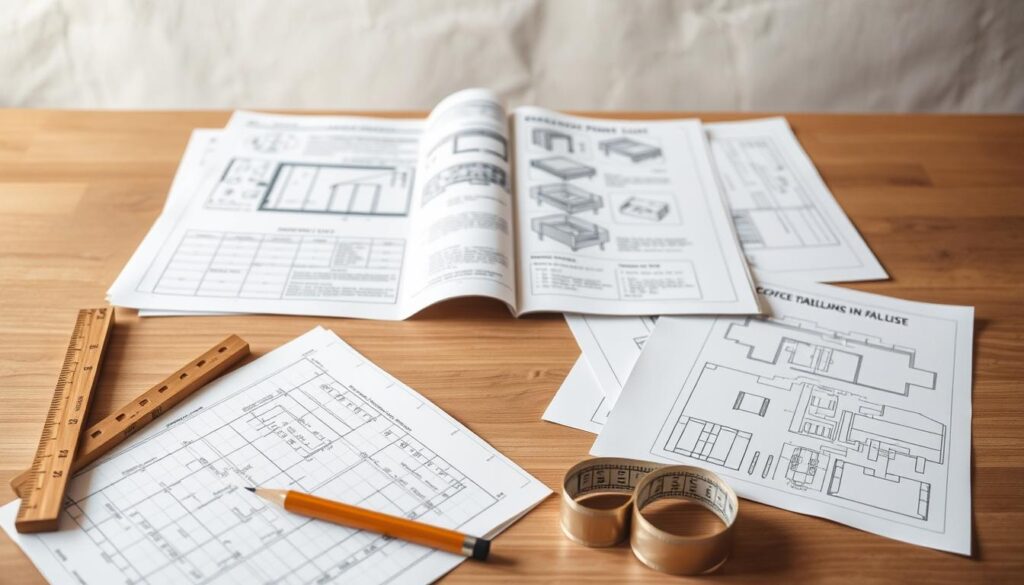
Choose the pack list that matches your chosen plans. For a Rustic X-style build you’ll pick up: 2 – 2×4 (8′), 4 – 2×2 (8′), 1 – 1×12 (8′), 5 – 2×6 (stud length), plus 1 1/4″ and 2 1/2″ pocket hole screws.
For a square base, buy five 2x4s, one 4×4 for legs, and a 1/2″ MDF top. For a round top, either use a 36″ pre-made top or a 4′ x 4′ plywood panel at 3/4″ and cut with a jig saw.
Cut list basics and layout tips
Draft a cut list that covers legs, ends, side trim, and top boards. Example cuts: 4 – 2×4 @ 16 1/2″ (legs), 4 – 2×2 @ 41″ (side trim), 4 – 2×4 @ 22 1/2″ (end trim), 5 – 2×6 @ 52″ (top boards).
Sort and sight boards for straightness, mark each piece, and plan pocket hole positions on stretchers and aprons. Set the cutting order—longest first—then dry-fit parts before glue and screws to confirm fit.
Tools, joinery, and safety essentials before you start
Before you cut a single board, gather the right setup so each joint goes together cleanly and safely. A tidy, level bench and the correct fastener lengths cut mistakes and speed the process.
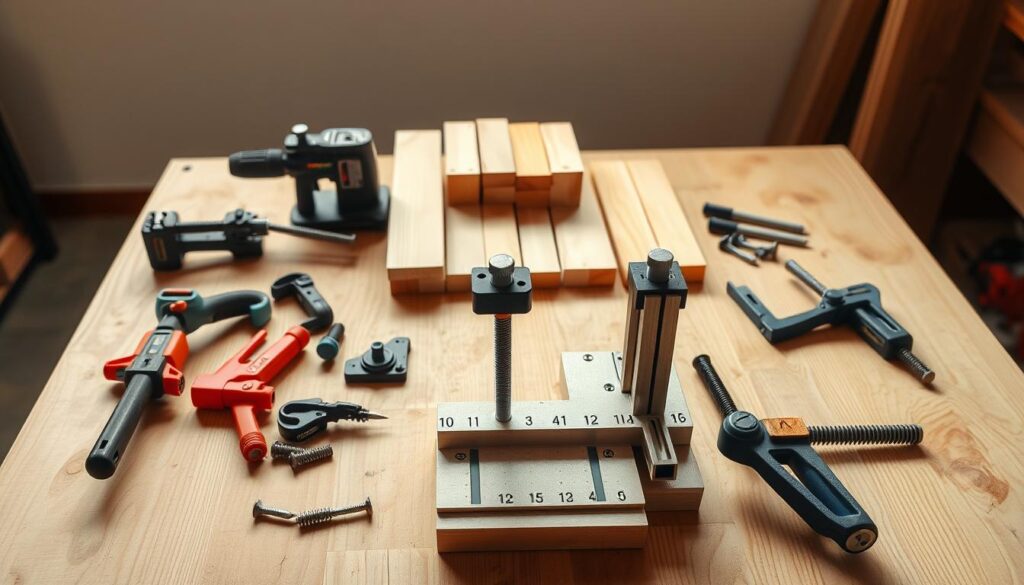
Kreg jig setup and fasteners: Set your kreg jig to the material thickness and choose pocket holes and screws that match. Use 1 1/4″ screws for thinner tops and 2 1/2″ screws for 2x-to-2x joinery so screws bite without poking through.
Drilling and bits: Drill pocket holes on the inside faces of stretchers and aprons, and place holes away from ends to avoid splitting. Prepare a sharp drill bit and a square drive bit to keep pilot holes clean and prevent stripping.
- Use a miter saw for accurate crosscuts and a circular saw for sheet goods.
- A jig saw handles a round top when you cut one yourself.
- Use a brad nailer to tack an MDF top, but rely on glue and screws for structure.
Final checks and safety: Clamp joints after glue, predrill and countersink visible fasteners, and check for square at each step. Wear safety glasses, hearing protection, and support long pieces when cutting to stay safe and precise.
DIY Coffee Table 2×4: Affordable Builds With Common Lumber
Pick a style path and follow measured cuts so each part fits and the finished piece sits flat in your home. Below are four reliable options and the key measurements you’ll need for each one.
Rustic X-inspired build
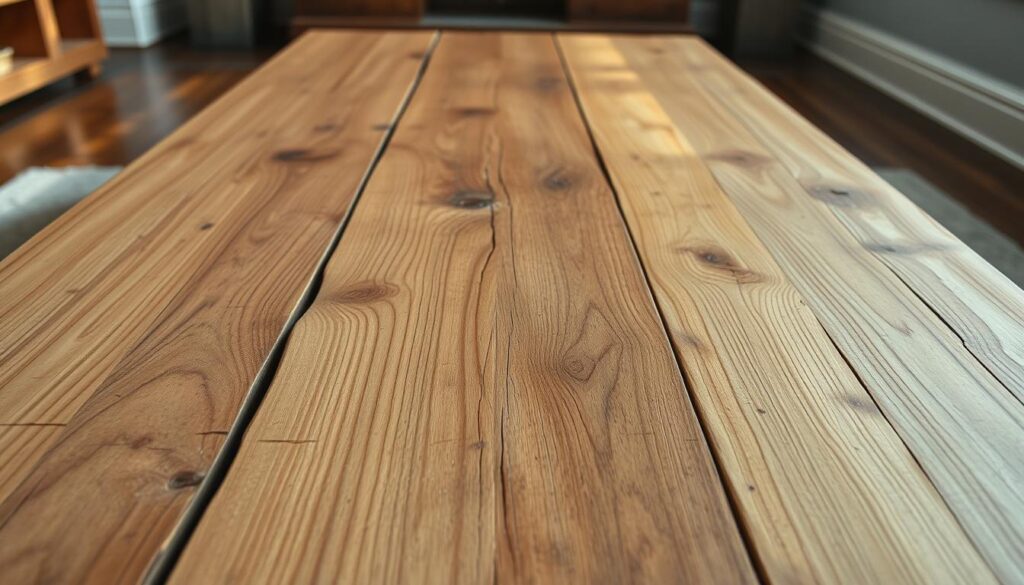
The Rustic X uses 2 – 2×4 (8′), 4 – 2×2 (8′), 1 – 1×12 (8′) and 5 – 2×6 (stud length).
Cut list highlights: 4 legs @ 16 1/2″, four 2×2 side trim @ 41″, four end trims @ 22 1/2″, two 1×12 shelf boards @ 41″, and five 2×6 top boards @ 52″. Cut X pieces at 60°/30° and join with pocket holes and screws to keep joinery hidden.
Square base with 4×4 legs (fast)
Frame measures 47″ x 47″ x 17.5″. Use five 2x4s and one 4×4. Cut eight 2x4s to 40″ for the frame and four 4×4 legs to ~17″. Attach a 1/2″ MDF top with a brad nailer for speed; total cost can run under $100 and finish in about 8 hours.
Round and hairpin options
Use a pre-made 36″ round top or cut one with a circular saw and jig saw. A simple 2×4 square base uses 14″ legs and 25″ / 10 3/4″ stretchers. For an ultra-simple route, bolt on 16″ hairpin legs to a 36″ top.
Slanted base design
Cut 2×4 legs and stretchers with 15° ends, legs about 14 1/2″ each side. Assemble angled pairs, fasten with glue and 1 1/4″ pocket hole screws at the top, and add stretchers to prevent racking.
- Tip: Pre-drill holes, sand mating faces, and use a Kreg jig to pull joints tight before final screws.
Assembly best practices for strong, clean joints
Start assembly by laying out parts and reference lines so each joint aligns before glue or fasteners touch the wood. This early check saves time and keeps errors from growing at later steps.
Pre-drilling, glue, and clamping
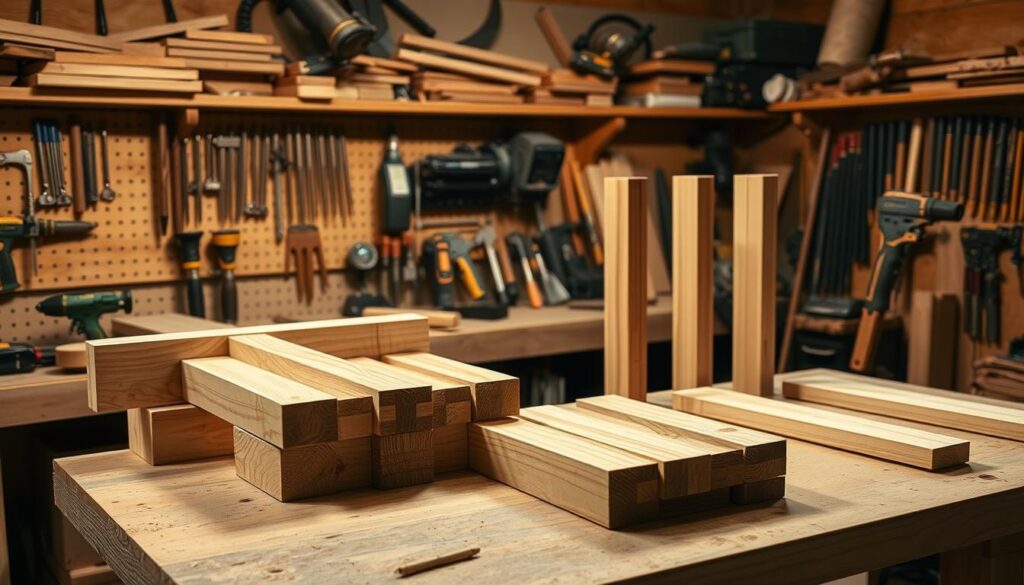
Pre-drill all holes to prevent splitting and to keep fastener drives smooth. Use a sharp driver bit and the correct size pilot hole for the screw you select.
Apply an even bead of glue along mating faces so the screw acts as a clamp while the joint cures. Wipe any squeeze-out immediately to ease sanding and finishing.
Clamp assemblies before driving screws, especially at side stretchers and ends, to keep faces flush and avoid creeping misalignment.
Checking square and pocket hole placement
Check for square at every step so small errors do not compound. Dry-fit pieces, mark reference lines, then assemble with glue and clamps.
Set pocket hole locations on the inside faces of aprons and stretchers so holes stay hidden while a driver bit still has clearance. Use pocket holes sparingly where strength and concealment matter most.
Attaching tops and final fixes
Center the base, then attach the top by driving screws up from stretchers into the underside of the top. Use 2″ screws for most tops and 1 1/4″ screws where thin material or pocket holes are used.
For MDF tops, tack with brad nails then follow with screws as needed. Let glue cure fully before moving to the final step so the base is solid and the coffee table sits flat.
| Step | Action | Recommended fastener |
|---|---|---|
| Dry-fit | Layout parts, mark lines | None |
| Pre-drill | Pilot holes for screws | Appropriate bit for screw |
| Glue & clamp | Apply glue, clamp faces | Clamps |
| Fasten | Drive screws; set pocket holes | 2″ or 2 1/2″ screws; 1 1/4″ where needed |
| Attach top | Screw from stretchers or pocket holes | 2″ or 1 1/4″ per top thickness |
Finishing, stain, and style: get the look you want
The last steps—filling, sanding, and finishing—are where a project becomes true furniture for your room. Take time here and the result will last.
Wood filler, sanding sequence, and surface prep
Fill visible fastener holes with wood filler and let them dry fully. Sand along the grain starting at 120 grit, then step up grits until the surface feels even.
Vacuum dust, wipe with a damp cloth, and test your chosen finish on scrap or a hidden area before you commit to the whole top.
Stain, paint, or chalk paint: sheen and style choices
Stain highlights wood grain for a farmhouse look. Paint gives a crisp modern feel. Chalk paint produces a matte finish if you need to tone down unexpected gloss.
Use a wood conditioner under stain on soft or blotchy boards and match sheen across the top and base so the furniture reads as one piece.
Round vs square: flow and room balance
Round tops improve flow and reduce bumped shins; square tops maximize usable surface and anchor seating areas. For plywood tops, apply 3/4″ edge banding to get a seamless look before you stain or paint.
“A test coat saved me a redo when an eggshell finish looked glossier than I expected.”
- Protect high-touch areas with a clear topcoat suited to daily use.
- Let finishes cure the recommended time before styling the top.
Conclusion
Conclusion: This final note pulls together the plans, timing, and finish choices so you can complete the project with confidence.
Plan your time and expect a square base with 4×4 legs and an MDF top to come together in about 8 hours and under $100. Measure twice, pre-drill, use glue at structural joints, and check for square after each step.
Place pocket holes where they stay hidden, use 1 1/4″ screws for thin material and 2 1/2″ where full-thickness joinery needs bite, and choose a 36″ round top if you want easy install and smooth flow.
You now have a clear path to finish a reliable coffee table project that looks right, feels solid, and teaches skills for future projects.