

Surprising fact: nearly 40% of homeowners refresh a room by adding a small piece of furniture in a single afternoon, and you can join them without a big budget or long time.
You’ll explore three fast build paths: a solid wood X-base using 1×6 and 2×2 parts, a quarter-sheet plywood rail-and-shelf option with precise cut sizes, and a no-tools planter stack that needs only glue and a small wood plaque top. Each approach maps to different tool access, budget, and the finish you want—natural wood or painted base.
Follow simple joinery like pocket screws, half-laps, or glue-only assembly, then attach the top with countersunk or 2-inch screws, or hot glue for the planter design. By the end, you’ll know which design fits your home, how long each one takes, and the key cuts and fasteners to get a clean result.
Key Takeaways
- Three build methods suit different tools and time constraints.
- Exact dimensions are provided for reliable cuts and fit.
- Simple joinery choices make assembly predictable.
- Finishing tips help a budget build look high-end.
- You can adapt height and shelf placement to match your room.
Why a quick DIY side table is the perfect weekend project
You can transform an empty spot beside your sofa into a functional piece with minimal materials and modest time. Pick the path that matches your tools and schedule, then finish it in hours or less than 30 minutes.
No-tools planter builds take under 30 minutes and cost about $15 using two 10-inch ribbed planters and a round wood plaque top attached with hot glue. That route gives fast impact with almost no equipment.
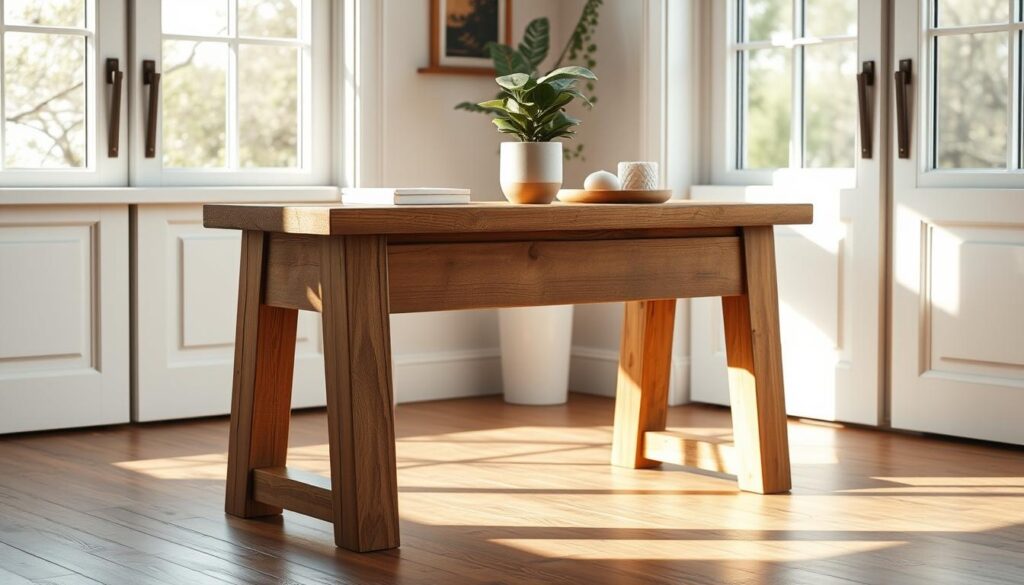
The quarter-sheet plywood option uses laminated legs, rails, shelf supports, and a screwed-on top for a sturdy end piece in a few focused hours. A solid wood X-base uses 1×6 boards, 2x2s, half-laps or pocket holes, and 2–2½” screws for a durable, classic look.
- Finish in a weekend: under 30 minutes to a few hours, depending on the build.
- Low cost: off-the-shelf materials save money versus retail.
- Skill growth: simple steps—measuring, clamping, glue-ups, and basic fasteners—boost your confidence.
DIY Side Table Easy: Quick Accent Projects For Beginners — plan, tools, and materials
Decide whether you want a classic wood X-base, a plywood rail-and-shelf piece, or the planter pedestal before you cut or buy anything. That single choice shapes your shopping list, workspace, and the finish you’ll plan.
Choose your build path
Solid wood X-base: uses a 1×6 top and 2×2 legs. Typical cuts: legs (4 @ 22″), base X pieces (4 @ 13″), top (3 boards @ 16″). Fasteners include 2″ wood screws and 2½” pocket hole screws.
Plywood rail-and-shelf: uses 3/4″ cabinet plywood. Parts include a 14″ x 16″ top, 11½” x 13 3/8″ shelf, rails and laminated legs. Store cutting is an option if you lack a table saw.
No-tools planter pedestal: two 10″ ribbed planters and a round wood plaque top attached with hot glue and stained with water-based Rustic Brown.
Beginner tools and materials checklist
- Basic tools: drill, miter or circular saw, jigsaw, pocket hole jig (optional), clamps.
- Fasteners and adhesives: 2″ and 1¼” wood screws, pocket hole screws, and glue or hot glue.
- Finishing: sandpaper, stain or primer, and spackle for plywood end grain.
“Measure twice, cut once, and dry-fit assemblies before glue-ups.”
Safety, workspace, and sizing tips
Work on a flat, well-lit bench. Clamp before drilling or cutting and support plywood fully during crosscuts. Pre-drill holes to prevent splitting and mark top-facing surfaces to avoid mixing faces.
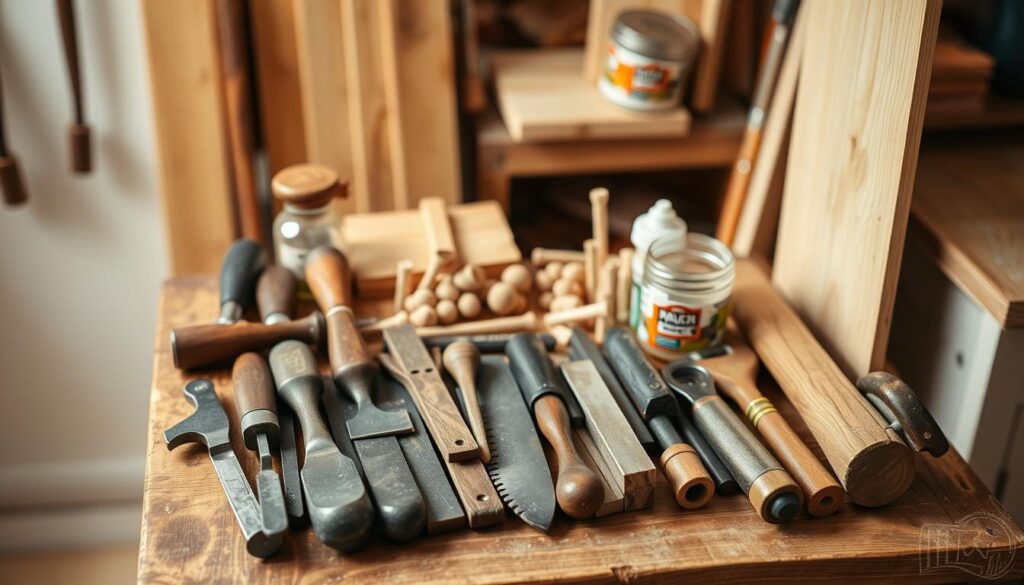
Step-by-step builds: three fast designs from woodshop to no-tools
This section walks you step by step through each construction path, from joinery to final fastening. Read each short build sequence and pick the flow that matches your tools and materials.
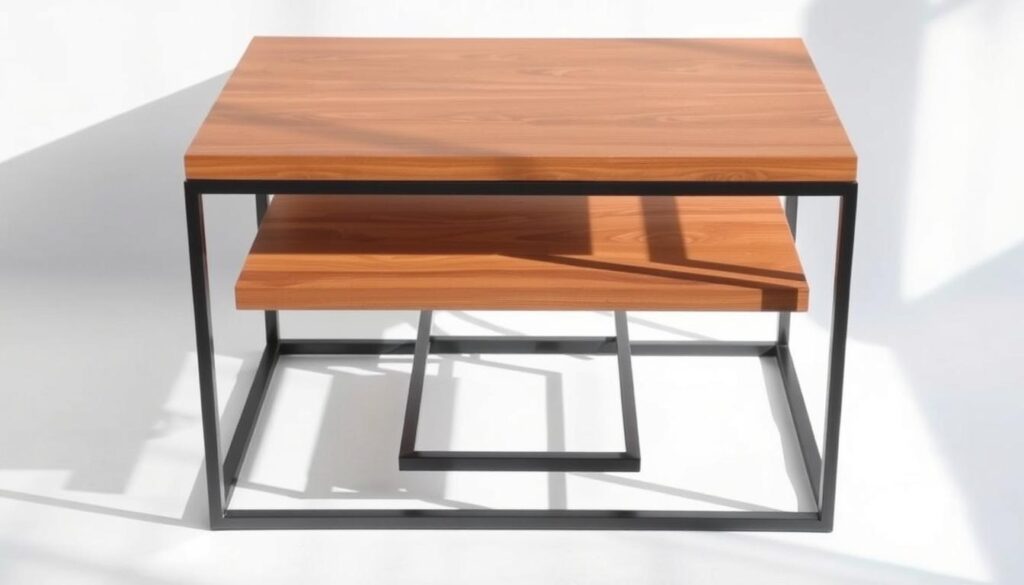
Solid wood X-base (half-lap joinery)
Cut (3) 1×6 tops to 16″ and (4) 2×2 legs to 22″ plus (4) 2×2 base pieces at 13″. Glue and clamp the three top boards or join them with 3/4″ pocket holes and 1 1/4″ pocket screws.
Mark each 13″ base piece at center, 3/4″ to either side, and 3/4″ from the end. Cut notches with a jigsaw and clean with a chisel so the two rails cross flush. Glue the halves and, if desired, drive a 1 1/4″ screw from below for extra strength.
Drill 1 1/2″ pocket holes in each X, then attach the 22″ legs using 2 1/2″ pocket hole screws. Keep the lower X leg bottoms set 2″ up from each leg end to maintain uniform height. Center the base under the top and secure with 2″ wood screws. Sand and break sharp edges.
Plywood rail-and-shelf end build
Rip 3/4″ cabinet plywood to parts: legs (four 1.5″ x 24″ and four 3/4″ x 24″), rails, shelf, top, and supports as listed. Laminate legs by gluing and nailing a 3/4″ strip to a 1.5″ strip for a sturdy profile.
Glue and nail longer rails between leg pairs. Add shorter rails with pocket screws or toenails. Mark 5″ up for shelf supports, glue and nail supports, then glue and nail the shelf in place.
Finally, countersink, apply glue under the top, and screw the 14″ x 16″ top for a rattle-free end piece.
No-tools planter stack
Peel planters, hot glue two 10″ ribbed planters base-to-base using Gorilla glue sticks, and let the bond cool. Stain the round wood plaque Rustic Brown with a water-based stain and let it dry fully.
Center the plaque on the planter stack and attach with hot glue. Add a clear outdoor coat if the piece will sit outside. This path uses minimal tools and materials and finishes in minutes.
Pro tip:Adjust leg length or shelf height to match sofa arms or storage needs while following the same step flow.
Finish like a pro: paint, stain, and protective topcoats for a stylish table
How you paint, stain, and seal will define how the end piece wears and feels. Prep is the secret: fill plywood end grain (not the top edge) with drywall spackle, sand smooth, then prime. This step gives a furniture-grade base so the paint lays flat and uniform.
Spackle and sand plywood edges for a smooth furniture-grade finish
Apply drywall spackle to exposed end grain, let dry, then sand with 120–150 grit. Edge-band the top with 1/8″ pine strips glued and brad-nailed, then sand flush. Prime the base before you paint to avoid blotchy coverage.
Paint the base clean white; keep the top natural or stained
Paint the base with a white flat primer-and-paint combo for a crisp look. Keep the top natural or stain it to show wood character and contrast the white base.
Stain options and sealing
Gel stain gives controlled application on the top and limits drips onto a painted base. Use a red mahogany gel stain in two thin coats for even color and a subtle darker perimeter ring if you want a worn effect. For the planter plaque, pick a water-based Rustic Brown stain for low odor and fast dry.
Seal it right
Protect both surfaces with two coats of water-based polyurethane or a sprayed water-based topcoat. These won’t yellow white paint. Sand lightly between coats and consider a linseed oil beeswax polish for a silky hand finish.
Design ideas
Two-tone schemes, stenciled tops, or a faint worn ring at the perimeter add personality while staying durable in daily use.
| Surface | Recommended product | Coats | Key tip |
|---|---|---|---|
| Plywood base | Primer + white flat paint | 2 | Spackle end grain, sand, then prime |
| Solid-wood top | Red mahogany gel stain | 2 | Apply thin coats, wipe excess, leave darker perimeter if desired |
| Planter plaque | Water-based Rustic Brown stain | 1–2 | Fast dry, low odor for indoor work |
| Clear protection | Water-based polyurethane (spray optional) | 2 | Sand between coats; satin sheen for easy cleaning |
Conclusion
A well-planned end piece comes together in a few clear steps. Plan your cuts, set the base square, and confirm the top fits the height you want next to seating.
Pick the solid wood X-base, the quarter-sheet plywood rail-and-shelf, or the no-tools planter stack based on tools and time. Each way yields a durable finish when you use water-based clear coats.
, You now have a reliable project roadmap. Use the same step flow to make matching pairs, tune dimensions to your home, and repeat this tutorial as your skills grow.