

Surprising fact: nearly 40% of living room makeovers start with swapping or updating a coffee table, and that single change can transform a room’s whole look.
Your living room doesn’t need a big budget to feel new. This guide lays out clear project paths—from simple paint-and-hardware refreshes to tiled or faux-marble tops—that help your furniture perform for daily life and guests.
Expect practical steps on tools, finishes, and sizing so the final piece fits the space and height for comfort. Real-world case studies show how builders turned affordable materials into designer-style plinths, round dupes, and tiled tops without overspending.
Key Takeaways
- Start with purpose: pick a plan that fits your room and how you live.
- Prioritize a stable base and proper height for daily use.
- Small finish tweaks—wax, Rub ’n Buff, or two-tone paint—change the look fast.
- Choose surface treatments (tile, faux marble, mirror) for focal impact.
- Compare makeover vs. full build to match time, skill, and budget.
Why Pinterest‑Inspired DIY Coffee Tables Are Trending Right Now
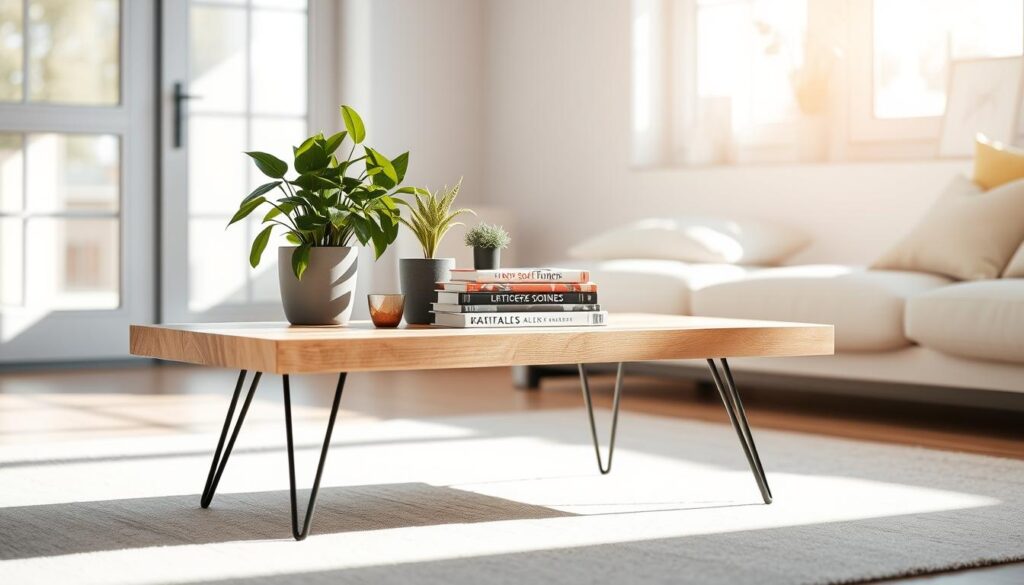
Transparent costs and short timelines have made at-home builds a go-to for homeowners updating their living rooms.
Savings add up. Examples on social feeds show huge gaps: a tiled MDF plinth by Luke Arthur Wells cost about £165 versus a £1,600 designer piece. A custom pine build listed at roughly $50 and a hairpin-leg round dupe at $70.83 prove the point.
Social posts include full parts lists, exact hours, and final totals. That clarity lowers risk and lets you plan budget for the rest of the room and home.
“Seeing step-by-step prices and timeframes made the project feel doable.”
| Project | Approx Cost | Key Materials | Time |
|---|---|---|---|
| MDF plinth tiled | £165 | Porcelain tile, MDF, grout | Weekend |
| Custom pine build | $50 | Pine boards, screws, stain | Weekend |
| Round hairpin-leg dupe | $70.83 | Top, hairpin legs, sealer | Afternoon |
Standard sheet goods and common hardware let these styles scale from farmhouse to modern without exotic tools. Using quality drills and clamps—brands like Ryobi are often recommended—improves safety and fit so the final piece furniture lasts.
DIY Coffee Table Pinterest: Trending Ideas You Can Recreate
Weekend-friendly builds let you match finish, storage, and side profiles to your room.

Swipe‑worthy looks you can build over a weekend
Fast projects: color‑block paint tops, tile‑clad plinths, and a hairpin‑leg round are all doable in two days.
Options range from a $50 pine build to a $70.83 round‑top dupe. Many makers list exact supplies and step sequences so you follow a clear path.
Cost, skill level, and time at a glance for each idea
Pick a project based on budget and comfort with tools. Beginner paint refreshes use chalk paint and light sanding. Intermediate builds include edge banding and plywood joinery.
| Build | Approx Cost | Skill | Time |
|---|---|---|---|
| Color‑block paint top (Annie Sloan) | $40–$120 | Beginner | Afternoon |
| MDF plinth with porcelain tile | £165 | Intermediate | Weekend |
| Cross‑leg oak plywood (edge banding) | $75–$180 | Intermediate | Weekend |
| Hairpin‑leg round top dupe | $70.83 | Beginner–Intermediate | Afternoon–Day |
- Size & fit: adjust length, width, and height to leave clear pathways in your living room.
- Storage options: add a lower shelf or hidden compartment to keep the top clear for coffee trays.
- Finish tips: test stain and sealer on scrap and allow full dry time between coats.
Paint and Finish Upgrades that Transform Any Coffee Table
A smart coat of paint or a new finish shifts a piece from tired to tailored in a single afternoon. Start by assessing surface type, grain, and wear so you pick the right prep and products.
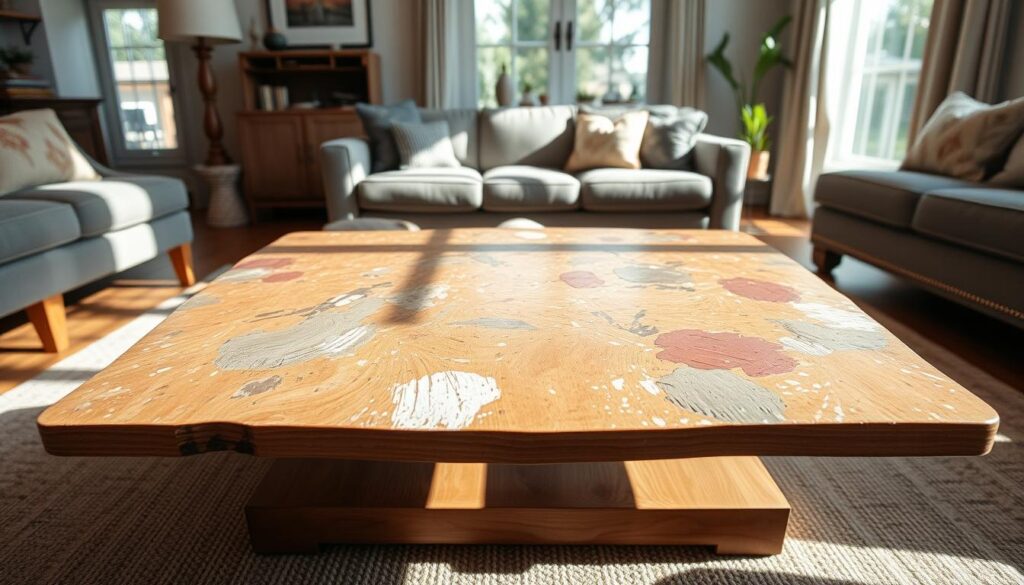
Chalk paint charm and distressed elegance
Chalk paint gives a soft, matte farmhouse look and requires minimal sanding. After the top coat dries, lightly distress edges to reveal the base color and add age without sanding through the primer.
Two‑tone bases and tops for modern contrast
Pair a painted base with a stained table top to modernize an heirloom piece. Or flip the scheme: paint the apron and leave the top natural to highlight wood grain and keep lines crisp.
Whitewash, lime wax, and bleached wood for beachy vibes
Whitewash or bleached wood brightens small rooms and suits coastal decor. Seal with a water‑based topcoat to avoid yellowing. Lime wax nests in pores for warmth and a lived‑in sheen.
Metallic accents and Rub ’n Buff for glam details
Use metallic spray or Rub ’n Buff on feet, trim, or hardware for a luxe flash. Tape carefully, apply thin layers, and burnish for an even brushed finish.
Stencils, transfers, stripes, and decoupage for pattern play
Stencils and transfers let you add custom pattern to the top or apron. Lock designs with a durable lacquer to resist coffee rings and daily wear.
| Technique | Best For | Protection |
|---|---|---|
| Chalk paint + distress | Farmhouse coffee or vintage look | Satin wax or matte polyurethane |
| Two‑tone paint + stain | Modern contrast, highlight grain | Satin polyurethane |
| Whitewash / lime wax | Coastal and light interiors | Water‑based clear coat |
| Metallic accents | Glam accents on legs/trim | Thin lacquer or clear wax |
- Laminate surface? Scuff-sand, use a bonding primer, then paint for durable adhesion.
- Quick refresh: Swap hardware, casters, or corner brackets to match the new finish.
Tile, Faux Marble, and Stone Looks on a Budget
Transforming an MDF core into a high‑end surface is more about technique than cost. A tiled plinth or painted marble top gives a luxe look while keeping materials affordable.
Tile‑clad plinth quick guide:
- Cut MDF to: 1×1200×600 mm, 2×1200×288 mm, 2×576×288 mm. Glue and nail into a box, trim excess glue.
- Top and sides: use 2×600×600 mm and 6×600×300 mm porcelain tiles for clean coverage.
- Hide raw edges with mitered beaded wood, glue, sand, paint black, and grout with charcoal for seamless corners.
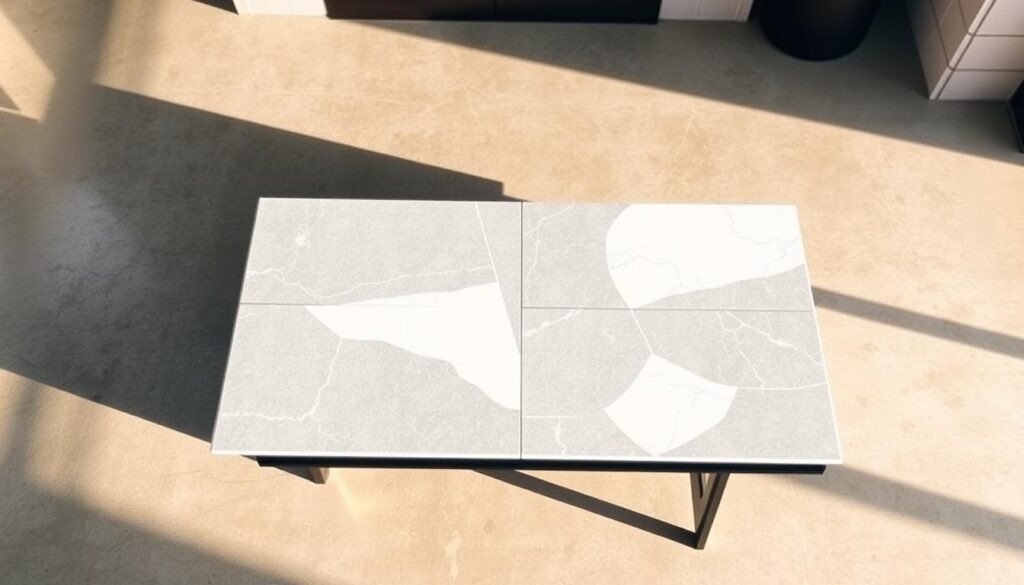
Faux marble and mosaic methods
Faux marble needs soft veining, contrasting tones, and feathered transitions. Layer paint, blend with a dry brush, then seal with two hard topcoats for durability.
Mosaic or faux stone tops use broken tile, glass, or pebbles set in thinset and grouted. Seal the surface to resist stains and daily coffee spills.
| Approach | Weight | Finish |
|---|---|---|
| Porcelain‑clad plinth | Heavier | Charcoal grout, painted beading |
| Faux marble paint | Light | Two clear coats |
| Mosaic top | Medium | Grouted & sealed |
- Pro tips: dry‑fit tiles, tape spacers, and plan tile sizes to control seams.
- Use flexible adhesive and keep weight in mind for small spaces; thin tiles reduce mass.
Plywood & Built‑From‑Scratch Designs
Stacking sheets of furniture‑grade plywood produces a hefty, refined coffee surface without solid slabs. This approach keeps cost down while letting you control every joint and edge for a clean, modern design.
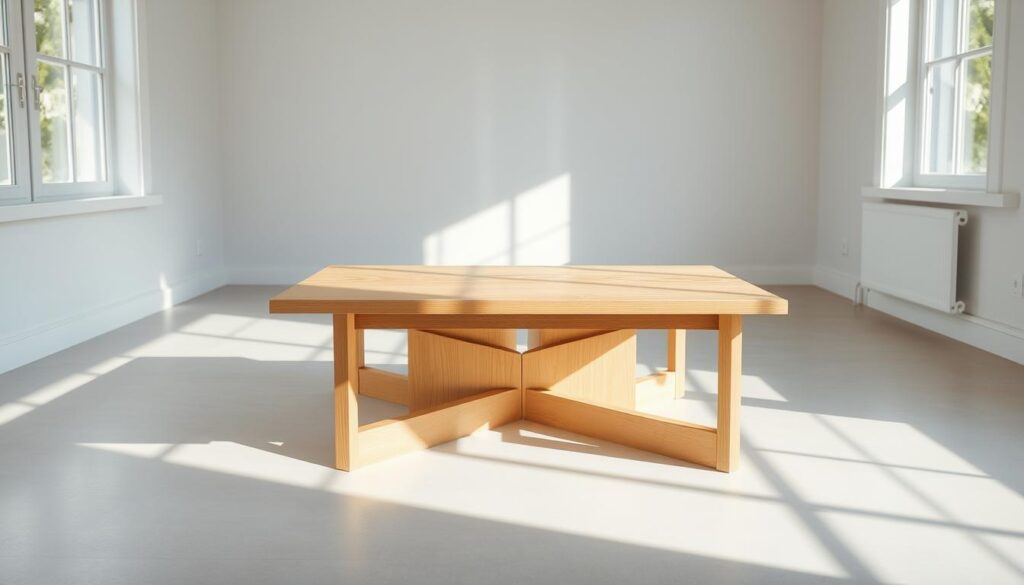
Cross‑leg plywood table with edge banding and braces
Start with flat oak plywood that takes stain evenly. Laminate two sheets for the top and legs to create visual heft. Sprinkle table salt between layers while clamp‑up to limit slipping, then wipe squeeze‑out with a damp rag.
Cut all leg parts together so each pair is identical. The cross‑leg geometry keeps sightlines open and gives strong lateral support without bulky aprons. Attach the legs with corner braces hidden inside the cross for a tidy interior.
Choosing oak plywood, sanding, and stain like Pickled Oak
Edge band exposed ply with an iron‑on band, trim, and sand lightly so seams disappear. Sand all surfaces to 220 grit; this step rewards you with a smooth feel and an even absorbency for stain.
Stain with Minwax Pickled Oak to mute red tones and modernize the wood. Finish with a satin topcoat for protection that avoids a plastic look. Dry‑fit parts first, then disassemble for stain and seal to prevent blotching and ensure correct size and alignment for the final assembly.
Round Coffee Table Ideas: From Farmhouse to Modern
A round surface can change traffic flow and make small living areas feel more open. Use a circular top to soften corners and create an inviting focal point in your living room.
Hairpin‑leg round top dupe: start with a 36‑inch precut wood top and four 16‑inch black hairpin legs. Stain (Golden Oak, pickled, or limed) and seal to match a farmhouse or Scandi look. Pre‑drill leg pockets and test screw length on scrap so fasteners don’t pierce the top.
Cut‑down dining table option: trim an old dining base or shorten pedestal legs to hit a slightly lower height than sofa cushions. This gives you a perfect coffee table scale while keeping the character of the original piece.
Liming wax brightens oak for a Nordic feel and pairs well with black legs for contrast. Add felt pads under legs to protect floors and improve stability on rugs.
- Proportion tip: 16‑inch legs plus top thickness typically reach the perfect coffee table height.
- Finish note: choose a soft matte topcoat for a farmhouse coffee table or a clear satin for a modern wood coffee table look.
| Approach | Top | Legs | Best For |
|---|---|---|---|
| Hairpin‑leg dupe | 36″ wood round, stained/sealed | 4 × 16″ black hairpin | Modern or Scandi living room |
| Cut‑down dining base | Original dining top or recut round | Shortened pedestal or reduced leg height | Characterful farmhouse coffee table |
| Limed finish option | Oak or ash, liming wax | Contrasting dark metal legs | Light-filled, high‑contrast spaces |
Dowel, Fluted, and Waterfall‑Style Tables
Textured profiles turn a basic piece into a focal point. Small vertical elements — dowels or flutes — add depth without complicated joinery. These finishes suit both modern and coastal schemes and work on round or rectangular forms.
Drum base wrapped in dowels for a sculptural silhouette
How it works: glue cut oak dowels around a cylindrical core, clamp in tight courses, then sand ends flush. Fix a round table top from beneath for a clean rim. Lime the wood with liming wax to soften tone and highlight grain.
Ikea tabletop + dowel “waterfall” hack in Swiss Coffee
Use a ready tabletop as the starting surface. Attach 2″ dowels (~16″) with Liquid Nails, prime, then paint in Behr Swiss Coffee for a monolithic finish. Add a weighted core inside the drum if the top is heavy or glass.
Add fluting for instant texture and high‑end impact
Fast option: apply reeded MDF or flexible fluted panels. Use a jig for consistent spacing, caulk seams, and coat with your chosen finish. Off‑whites emphasize the rhythm; deep hues deepen shadow lines.
| Approach | Materials | Finish | Time |
|---|---|---|---|
| Dowel‑wrapped drum | Oak dowels, drum core, clamps | Liming wax + clear coat | Weekend |
| Ikea waterfall hack | Ikea top, 2″ dowels, Liquid Nails | Primer + Swiss Coffee paint | Afternoon–Day |
| Fluted panels | Reeded MDF or flexible molding | Paint or stain | Afternoon |
Farmhouse Coffee Table Ideas with Real Wood Character
Real wood character gives a farmhouse coffee table warmth that lasts. Small finish changes make a big difference.
Combine a painted base with a stained top to show grain while keeping a calm palette. Golden Oak or Pickled Oak stains bring classic warmth without heavy gloss.
Add rough‑sawn planks to refresh a tired surface. Sand the edges, stagger seams, and seal for a durable, family‑ready wood coffee piece.
Choose gray wash, whitewash, or bleached finishes for a lighter mood that still highlights knots and texture. Lime wax imparts timeworn charm without over‑distressing.
- Swap hardware to black or antique brass to tie metals across the living room.
- Cut down a hand‑me‑down dining table for the right farmhouse proportions.
- For a modern edge pair a deep black base with a natural top and a low‑sheen protective coat.
| Upgrade | Best For | Protection |
|---|---|---|
| Painted base + stained top | Showcase wood grain, calm palette | Satin polyurethane |
| Rough‑sawn plank top | Durable, rustic surface | Water‑resistant sealer |
| Gray wash / whitewash / lime wax | Light, airy farmhouse look | Clear topcoat |
Keep proportions generous but not oversized so the piece fits the living space and leaves clear walkways. Seal well to resist rings and crumbs, especially if the home doubles as a family hub.
Industrial, Glass, and Mixed‑Materials Coffee Tables
Industrial and mixed‑material builds blend raw finishes and clever supports to create durable, low‑maintenance living room centers. These pieces balance weight, texture, and light so the surface reads as both practical and styled.
Wood‑and‑metal builds with reclaimed elements
Combine reclaimed wood with metal pipe frames for a sturdy industrial table that ages well. Use exposed bolts and welded joints for a robust look.
Hidden brackets and flush hardware keep the silhouette clean. Add felt pads under legs to protect floors and stop wobble.
Recycled foam cube base with repurposed glass top
Stabilize a recycled foam cube with large bolts and a simple subframe, then sit a repurposed glass top on discreet bumpers. This method saves on materials and gives an airy effect while showing off an artful base.
- Use mirror‑effect spray or polished metal accents to brighten a darker room.
- Balance weight: ensure flat, level supports and anti‑skid discs so the glass won’t slide.
- Round or eased edges protect knees and high‑traffic side paths.
- If you’re chasing a sold‑out store dupe, hairpin legs plus a round top often replicate the look at half the price.
Small‑Space Coffee Table Tips: Size, Storage, and Safety
Smart ergonomics and clever storage keep a tight footprint feeling generous. Start by setting the right height so the surface is easy to reach from seating without leaning forward.
Get the height right: follow the cushion rule—set the coffee table slightly lower than the sofa cushions for comfortable reach. Test height with a bucket or stack of books if you don’t have the final top yet.
Get the height right: couch cushion rule and leg clearance
Leave 16–18 inches of side clearance around the table to keep clear pathways. Scale length to roughly two‑thirds of your sofa for visual balance.
Built‑in storage, compact footprints, and lightweight materials
Prioritize storage with a lower shelf or hidden cubbies to stash remotes and chargers. That keeps the top tidy and usable for daily coffee and snacks.
Choose lighter materials—hairpin legs, slim metal frames, or foam cores—so the piece is easy to slide for cleaning or hosting. Round or oval profiles reduce sharp corners in tight paths and cut down on bumping.
| Tip | Why it matters | Quick fix |
|---|---|---|
| Height (cushion rule) | Comfortable reach, better ergonomics | Use a bucket/book to test |
| Side clearance | Flow and safety in the living room | Keep 16–18″ around |
| Storage | Declutters surface, stores chargers | Add lower shelf or cubbies |
| Lightweight design | Easy to move and clean under | Choose hairpin legs or slim metal |
Safety and durability: use non‑skid pads under feet and radius edges for family homes. Pick a sealed surface that wipes clean fast when you entertain.
Tools, Materials, and Finishes: What You’ll Need to Get It Done
Good prep—tools at hand, materials staged—keeps assembly fast and finishes clean. This short checklist focuses on reliable gear and finish products that make most weekend builds run smoothly.
Core tools
Cordless drills/drivers (Ryobi ONE+ HP 18V) and a right‑angle drill are essential for tight spots. Pack a selection of bits and a quality driver set to avoid stripped fasteners.
Sanders—random orbit and sheet—plus a range of grits help you get a silky top before stain or paint. Add clamps, a miter saw for repeatable cuts, and a nail gun to speed apron and beading assembly.
Always have safety gear: eye and ear protection, dust masks, and cleanup rags.
Go‑to materials and adhesives
Pick oak plywood for crisp modern lines, pine boards for warmth, and MDF for tiled cores. For stone‑look tops use porcelain tile, tile adhesive, and grout.
- Wood glue for laminations and Gorilla Glue for tough bonds.
- Liquid Nails for panels and dowel work.
- Edge banding, wooden beading, and quality fasteners sized to your project and legs.
Finishes and protection
Stains like Minwax Pickled Oak or Golden Oak set tone. Use Annie Sloan Chalk Paint or Behr Swiss Coffee for painted bases. Metallics such as Rub ’n Buff and liming wax add detail.
Seal with polyurethane, lacquer, or a water‑based matte topcoat to resist rings and daily wear.
“Plan fasteners and leg placement before final assembly; it saves time and avoids misdrills.”
| Item | Purpose | Recommendation |
|---|---|---|
| Drill/Driver | Joinery | Ryobi ONE+ HP 18V |
| Sander | Finish prep | Random orbit + sheet |
| Adhesives | Bonding | Wood glue, Liquid Nails |
Conclusion
Strong, clear planning is the fastest route from concept to a finished living centerpiece.
From reclaimed wood to porcelain cladding, this guide shows how modest budgets yield high‑end results. Mix finishes like Pickled Oak, liming wax, or metallic accents with smart hardware to match your home style.
Pick a round top, dowel wrap, or cross‑leg build based on scale and flow. Prioritize height, clearances, and storage so the piece works in daily living and small space layouts.
Measure twice, prep well, and seal thoroughly. With the parts lists and cost examples here, your perfect coffee table is achievable—and the right surface, whether glass, stone-look tile, or sealed wood, will stand up to real life.