

One in three homeowners says clutter affects how they use their living space, and that was the spark for this project.
You approached this as an intermediate furniture project to create a modern coffee table that adds real storage without visual bulk. The build used sheet breakdown with a circular saw, refined cuts on the table saw, and double-panel faces for a chunky profile.
The design balances style and function: a discreet access panel, a pull-up outlet to hide cords, LED channels, and chrome feet for a polished result. You’ll get clear plans, materials lists, cut sequencing, and time estimates so you can scope the work before you start.
This guide treats the instructions as both a blueprint and a checklist so you won’t miss safety steps or finishing tips. It also shows how the modular layout lets you tweak dimensions to suit your room and storage needs.
Key Takeaways
- Intermediate skill level: plan for careful measuring and methodical steps.
- Clear sequencing: sheet breakdown, table saw refinement, assembly, then finish.
- Practical features: access panel, pull-up outlet, LED channels for everyday use.
- Design focus: sleek furniture that anchors a living room without clutter.
- Modular plans: adjust dimensions to fit your home and timeline.
Plan Your Build: Dimensions, Materials, Tools, and Safety for a Successful Project
Before you cut a single board, a clear shopping and cut list kept the build efficient and predictable.
The shopping list pulled from proven plans listed 3/4″ MDF or hardwood plywood ripped to 15-7/8″ x 48″ strips, 1×6 lengths, 1×3 and 1×2 stock, plus wood glue, filler, and finishing supplies.
A concise cut list mapped the core box pieces and inserts so you could get started without gaps. Label parts and stage them in a dedicated area to avoid mix-ups.
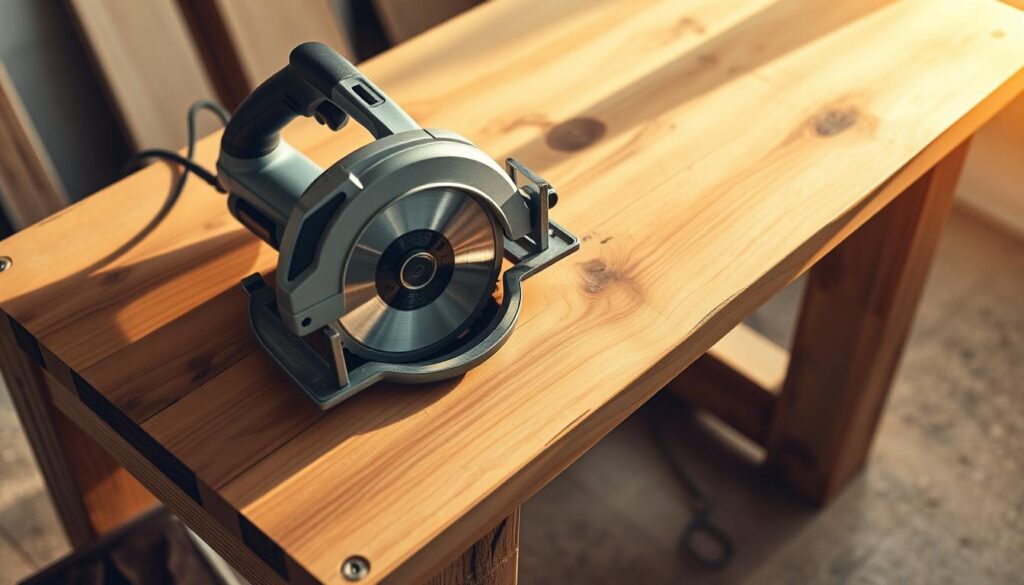
Tools, joinery, and technique
Use a circular saw to break down sheets when space is tight, then refine rip and cross cuts on a table saw for square edges.
A pocket hole jig and pocket hole screws made inner joins clean, and self-tapping screws reduced the need to pre-drill holes.
Workspace, safety, and timing
Set up stable supports, clear outfeed, dust collection, and clamps for glue-ups. Budget dry fits and finish cure time.
“Plan the cuts, label the pieces, and the rest becomes a steady sequence of steps.”
- Make sure to stage parts and note where hardware and wiring will run.
- Ask questions early if a detail in the plans is unclear.
Step-by-Step Build: From Breaking Down Plywood to Secret Compartment Access
Your first step was to rough-cut the plywood into usable panels, then true each edge on the table saw for precision. This kept edges straight while you worked inside a compact shop and set accurate baseline dimensions for every part.
Moving section: glue two panels together to form the thick top. Pin the assembly with a nailer for speed, then clamp it until the adhesive cures. That double-paneled top reads as a solid piece and hides mounting hardware cleanly.
Fixed box assembly: lay out pocket hole locations on hidden faces and drive pocket hole screws to secure the inner panel. The approach yields a rigid box with clean outside faces and no visible holes.

Slide support, access cuts, and electronics
Relocate the drawer slide support inside the box if initial alignment feels off. Shim and test cycle the drawer until travel is smooth and racking is eliminated.
Cut the access panel and center divider, drill the outlet hole and a lower pass-through hole for cord routing, then close the end after confirming clearances. These openings make the compartment practical for charging and devices.
Finish, wrap, and final hardware
Sand, apply body filler, and prime. A first coat of oil-based primer makes the modern profile crisp and reveals any low spots before vinyl.
Clean the surface thoroughly, apply vinyl from one side across, and trim edges in stages to avoid bubbles. Mount the actuator to the bottom plate with a bolt and 1/8 in plate at the moving end, wire it to a 4-channel receiver, and run LED strips in aluminum channels for polished lighting.
“Keep an eye on time at slide alignment and finish cure—small adjustments add up.”
| Step | Key Action | Typical Time |
|---|---|---|
| Rough cuts | Break sheets with circular saw; true on table saw | 1–2 hours |
| Moving top | Glue double panel, pin, clamp | 30–60 minutes + cure |
| Fixed box | Pocket holes, drive screws, install inner panel | 1–2 hours |
| Slides & electronics | Fit slides, mount actuator, wire LEDs | 1–3 hours |
| Finish & wrap | Sand, fill, prime, apply vinyl | 2–6 hours (includes dry time) |
Finishing Like a Pro: Durable Coats, Vinyl Wraps, and Hardware Choices
A proper finish seals the work and protects high-touch surfaces for years. You used an oil-based primer under a white gloss coat to create a hard, wipeable surface that resists scuffs on the top and sides.
Sand, fill, and prime each piece in sequence so the base is smooth before color. That sequencing helps the furniture look machined once the finish cures.
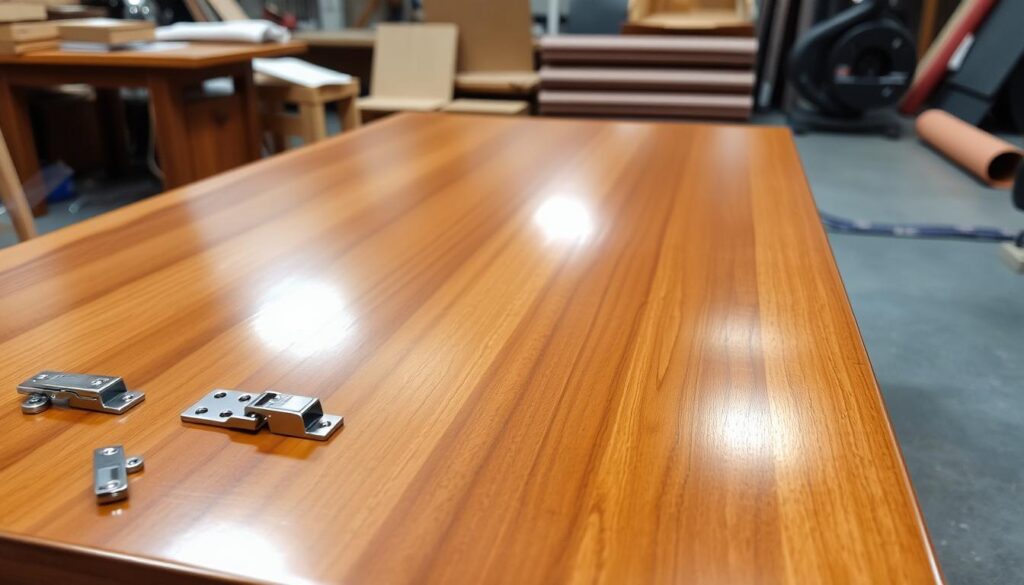
Vinyl wrap best practices
Clean every surface right before applying vinyl; dust ruins adhesion. Work the wrap from one side across large spans and break complex corners into smaller pieces to avoid trapped air or stretched edges.
Hardware, lighting, and cable management
Install LED channels before closing the box so placement stays straight and serviceable. Locate cable runs in a controlled area, use strain relief, and keep connectors accessible through the access panel.
“Confirm actuator and outlet clearances after the final coat and wrap to prevent rub points.”
| Finish Task | Why it matters | Tip |
|---|---|---|
| Primer + gloss coat | Creates a durable, wipeable surface | Use oil-based primer; allow full cure |
| Vinyl application | Provides consistent color and texture | Work from one side; section corners |
| LED channels & feet | Elevates design and simplifies service | Fit channels early; add chrome feet last |
DIY Coffee Table With Hidden Storage Plans: Secret Compartments Made Simple
Scale and proportion determine how well a low-profile center piece fits into a living area and still offers practical room functions.
Dimensions and plan variants
Start by mapping a scaled footprint for your living room. Measure sofa clearance and traffic paths, then pick a length and height that leave at least 18 inches of walk space on main routes.
You can scale widths in 6″ increments and keep the internal divider and slide clearances constant so hardware aligns across variants. These plans work for a narrow bench-style piece or a wide center unit.
Smart ideas inspired by recent trends
Sliding tops, slim floating shelves with concealed drawers, and bookcase-style fronts are current ideas that help you store remotes, chargers, and small electronics without visible clutter.
Use shallow trays and a central channel for cords so you can store and charge items quickly.
Skill, joinery, and project timing
This is an intermediate project. Expect accurate rips, consistent pocket holes, and careful hardware alignment. Match 2″ screws for frame joins and 1-1/4″ for face materials to avoid blow-through on thin edges.
| Aspect | Recommendation | Why it matters |
|---|---|---|
| Footprint | Mock up with cardboard | Prevents crowding and checks sight lines |
| Internal zones | Remotes, chargers, cables | Keeps daily items organized and accessible |
| Fasteners & joinery | 2″ frame screws; pocket holes | Strong joins without visible fasteners |
| Time | Material prep, assembly, finish cure | Plan two to three days or staged weekend work |
If you have questions about hinge alternatives, compact slides, or outlet placement, send them along so you can refine the plans without compromising structure.
Conclusion
The last phase is about protection and polish—confirm fit, protect edges, and test electronics before the piece sees daily use.
Check the double-paneled top, the reinforced box, and magnetic catches for smooth operation. Run the drawer and verify clearances so the access compartment opens cleanly.
Confirm wiring, actuator mounts at the bottom, and LED channels work as expected. Revisit pocket hole alignments and the placement of screws so the finish stays flawless over time.
When you size the unit for your living room, tweak length or internal layout to store what you need. This project turns plywood and measured cuts into a refined furniture piece you’ll use every day.
If you have questions, ask about slide choices, outlet placement, or finishing steps. The plans include wiring, pocket spacing, and slide placement so you can return to specific steps as you build.