
DIY Coffee Table

Can You Put Two Coffee Tables Together: Design Tips For Double Layouts

Surprising fact: designers often choose multiple small surfaces in place of one large table, and this shift shows up in many high-end living rooms.

Pairing two smaller tables creates the look of a bigger piece while keeping mobility when guests arrive. Buying matching shorter tables lets you push pieces to form one broad surface. Nesting sets add layered height and can be pulled apart without a mismatch.

Clusters of different tables work when they share a finish, shape, or tone. Repeat a wood hue elsewhere — a mirror frame or rug border — to make mixed tables feel unified. In long rooms, two surfaces help anchor seating and improve flow.

Key Takeaways

  • Smaller paired tables give upscale flexibility and easy mobility.
  • Choose matching elements—color, shape, or finish—to create cohesion.
  • Nesting options offer staggered heights and quick separation when needed.
  • Repeat materials in the room to tie different pieces together.
  • Two surfaces solve layout problems in wide or long seating plans.

Why Two Coffee Tables Work in a Modern Living Room

Using multiple modest tables can improve traffic flow while keeping every seat within reach.

Flexible layouts let your living area adapt. Two small coffee table pieces slide apart to serve opposite seats or push together to read like one broader surface. That way the room shifts easily from quiet nights to a busier gathering without heavy lifting.

Split surfaces also clear circulation. In rooms with several pathways, you can angle or separate tables so people move freely around furniture and avoid bumped knees.
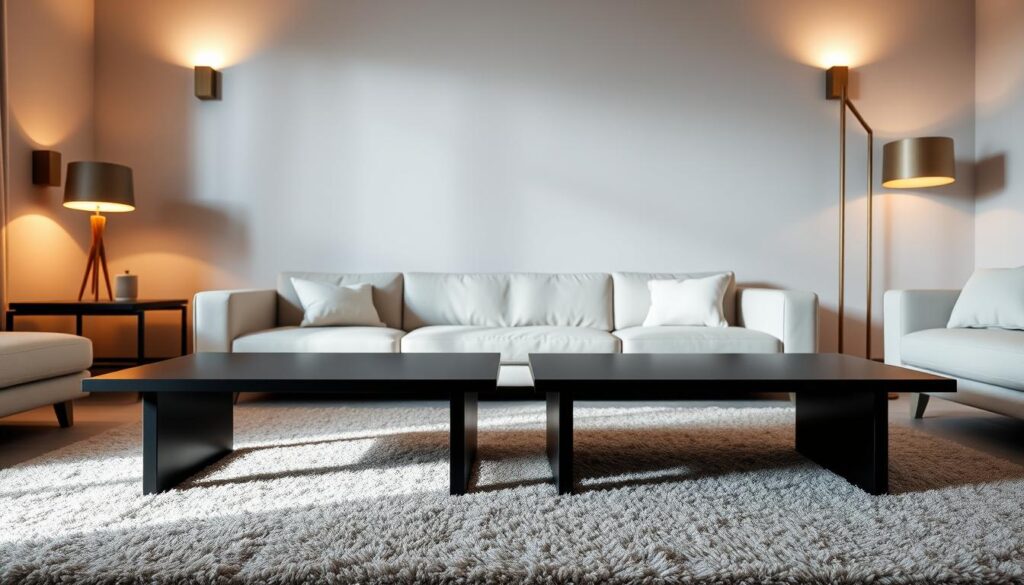
A pair of sleek, contemporary coffee tables placed side by side in a modern, minimalist living room. The tables have a low, rectangular profile with clean lines and a smooth, matte black surface. Soft, indirect lighting from wall sconces and floor lamps creates a warm, inviting atmosphere, casting a gentle glow on the tables. The room features neutral-toned walls and furniture, allowing the tables to take center stage as the focal point. Subtle textures, such as a plush area rug and throw pillows, add depth and visual interest to the space. The overall scene conveys a sense of balance, harmony, and a sophisticated, yet cozy ambiance.

When this setup helps most

Large or long rooms gain balance when surfaces are distributed across the seating plan. Odd arrangements—say, a sectional plus chairs—call for placing one table near the chaise and another by the chair area so every seat has a handy surface.

Budget-smart and movable

Choosing two modest pieces or a nesting set often costs less than one oversized designer table. Nesting options coordinate finish and height, so you tuck one away for daily life and pull it out when hosting.

  • Repeat a wood tone elsewhere—frame, rug edge, or shelf—to tie pieces together.
  • Add a compact side table next to a deep sofa so every spot has a landing place.

Plan Your Double-Table Layout like a Designer

Start by mapping how each surface will sit in the space so furniture feels intentional, not accidental.
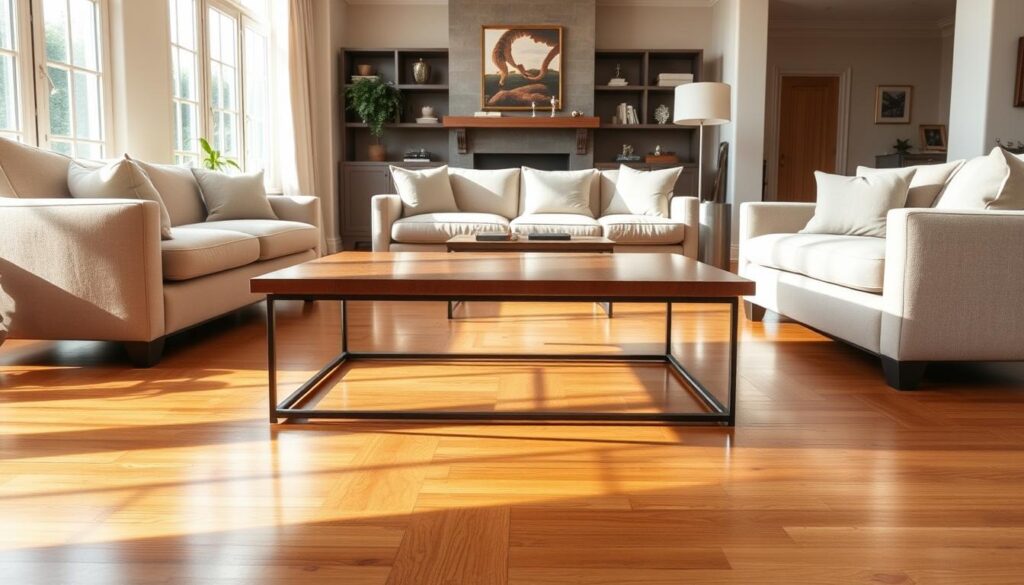
A well-designed coffee table set on a hardwood floor, bathed in warm, natural light from large windows. The table features a sturdy, minimalist metal frame with a smooth, polished wood top that reflects the surrounding decor. Placed in the center of a spacious, airy living room, the table is complemented by plush, neutral-toned sofas and armchairs. The overall atmosphere is one of sophistication and balance, perfectly suited for planning a cohesive double-table layout that enhances the room's functionality and aesthetic appeal.

Measure the room, sofa, and pathways

Begin with simple measurements. Aim for the front edge of each coffee table to sit about 14–18 inches from the sofa. This range keeps drinks and books within easy reach.

Leave roughly 16–18 inches of walkway between the table edges and adjacent furniture so circulation stays smooth. Use blue tape to map footprints on the floor before committing to size or placement.

Shapes, heights, and materials

Mix shapes with intention: pair a rounded piece with a soft-corner square to soften lines, or choose matching rectangles for a linear seating plan.

Target table heights within 1–2 inches of the sofa seat for ergonomics. If you use a nesting set, stagger heights so books, remotes, and decor remain visible and accessible.

  • Repeat a wood tone at least twice—either across both pieces or in a frame or rug detail—to tie varied elements together.
  • Anchor tops with a low tray, keep one or two stacks of books, and add a slim side table near deep seats the table can’t reach.

Can You Put Two Coffee Tables Together: Design Tips For Double Layouts

A matched pair creates a seamless, larger surface while staying nimble for shifting guests.

Matched pair approach

Push two identical small units edge-to-edge so the seam reads intentional. This gives the look of one broad coffee table while letting you split the set quickly when hosts arrive.

Line up heights and finish, and repeat a wood tone elsewhere in the living room to make the arrangement feel deliberate.

Nesting table strategy

Nesting sets are great when you need a compact footprint most days. Tuck the smaller table under a larger one, then slide it forward to extend usable surface during games or snacks.

Staggered heights keep books, a remote, and a mug visible without crowding a single table surface.

Mix-and-match cluster

Choose different pieces that share a throughline—shape, leg style, or a repeated color—to keep the look cohesive. Slightly overlap edges and vary heights to add depth and flexible placement in a wide room.

Styling two levels and surfaces

Anchor at least one table with a tray to corral items and protect soft finishes. Group objects in threes: low bowl, medium candle, tall vase.

Keep larger items and stacks of books on lower tiers. Use thin, tall decor like orchids or taper candles on top to add height without blocking sightlines.

  • Try matched pairs for symmetry and fast split options.
  • Use nesting to tuck away extras and pull out when needed.
  • Echo a wood tone or color in pillows or a frame to tie mixed tables to the room palette.
  • Add a nearby side table if a seat sits beyond arm’s reach of main tables.
Approach When to use Key benefit
Matched pair Symmetry or wide sofas Large look, easy split
Nesting set Small space, flexible hosting Compact daily footprint
Mix-and-match Layered, eclectic rooms Visual depth, varied heights

Conclusion

Layered tables offer reach from every seat while keeping a curated, lived-in look.

Using paired pieces—matched, nesting, or mixed—gives a room both flexibility and style.

Keep proportions and spacing tight so each table feels easy to use. Repeat a wood tone or a material across furniture and finishes to unify the setting. Anchor a surface with a tray, edit accessories in threes, and place larger items lower to keep sightlines open.

When you need change, move pieces until the layout, function, and aesthetic match how you live. This simple approach transforms small surfaces into a cohesive coffee table solution that adapts from quiet mornings to lively gatherings.

FAQ

What basic layout should you follow when placing two coffee tables in front of a sofa?

Start by measuring the sofa length and leaving about 18 inches of walking clearance behind each table. Aim for tables that together span roughly two-thirds the length of your seating. Keep surface reach in mind so drinks and remotes stay within easy arm’s length.

How do you choose compatible shapes and heights for a double-table setup?

Pick at least one shared element—finish, color, or curve—to tie the pair together. Vary heights for visual interest: a low rectangular piece beside a slightly taller round table works well. Repeat wood tones or metal accents to avoid clashes.

Are identical tables always better than mismatched pieces?

Not always. A matched pair gives symmetry and a cohesive look, ideal for formal or minimalist rooms. Mix-and-match pieces bring personality and suit eclectic or layered interiors. Use color or material repetition to unify a mismatched pairing.

What styling rules help make two tables feel intentional rather than cluttered?

Anchor the arrangement with a tray on one table and a taller sculptural item or lamp on the other. Group decorative objects in odd numbers and keep negative space around each surface. Balance function and decor so both tables remain usable.

How much clearance should you leave between two tables when pushing them together?

If you push them flush, aim for seamless edges and level tops. If you want a slight gap, leave 1–2 inches to show separation and allow easy lift-out. Ensure the combined height doesn’t block sightlines across the room.

Can you use nesting tables as a long-term double-table solution?

Yes. Nesting tables offer flexibility: keep them stacked for minimalism, staggered for layered styling, or spread out to serve multiple seating zones. Choose sturdy constructions like solid wood or metal for frequent reconfiguration.

What flooring and rug considerations affect a two-table layout?

Place both tables fully on a rug or fully off it to avoid visual awkwardness. For large rugs, center the pair on the rug’s middle and maintain 8–12 inches between table edge and rug border. Hard floors benefit from felt pads under table legs.

How do you maintain balance when one table is much larger than the other?

Counterbalance size differences with height, texture, or color. A small table can carry a taller lamp or vase, while the larger piece stays low with a tray and books. Keep visual weight distributed across the pair rather than clustered on one side.

What materials work best for high-traffic living rooms with two coffee tables?

Durable options include sealed hardwoods, powder-coated metal, tempered glass, and engineered stone. Choose finishes that resist scratches and stains. Opt for rounded corners if you have kids or pets to reduce bump hazards.

How should you arrange seating when using two tables across a wide seating area?

Align the tables with the main sofa and add side chairs or a loveseat opposite. Leave at least 14–18 inches between table edges and chair fronts for legroom. Use the tables to delineate zones without blocking conversation flow.

Can you use two small tables instead of one large one to save money?

Absolutely. Two budget-friendly pieces can mimic the footprint of an expensive large table. Mix one higher, sturdier piece for function with a decorative, lower table for styling to achieve both utility and a curated look.

What decorative elements help unify two different tables visually?

Repeat materials such as a brass accent, a woven basket, or a similar wood stain across both pieces. Use a consistent color palette in tabletop accessories—books, candles, and small plants—to create cohesion across surfaces.

How do you prevent tabletop clutter when you have double surfaces?

Assign a primary function to each table—one for drinks and trays, the other for magazines and decor. Regularly edit items, store remotes in a small dish, and use trays or boxes to group small objects for tidy surfaces.

Is it better to align two tables flush with the sofa or stagger them off-center?

Both can work. Flush alignment offers symmetry and a clean look, while staggered placement feels more dynamic and lived-in. Choose based on your room’s traffic paths and the visual balance you want to create.

How do light and color affect the perception of two coffee tables in a room?

Lighter colors and glass reflect light and make the arrangement feel airy, while dark woods add grounding weight. Position tables near natural light to highlight finishes, and use contrasting accessories to define each surface.

What safety tips should you follow with multiple tables, especially with kids or pets?

Secure wobbling legs, avoid sharp corners, and keep fragile items out of reach. Choose stable bases and non-slip pads. For families, prefer rounded edges, washable finishes, and easy-to-clean surfaces.