

Did you know a smart living room upgrade can cut clutter by up to 40% while adding usable work and dining space?
This project taught builders how to turn a plain surface into a versatile piece of furniture that raised to a comfortable height and held essentials out of sight.
You’ll use durable wood like ash and a 3/4-inch plywood bottom to make a sturdy body. The materials list includes four 1×8″ ash boards, one 3/4″ plywood sheet, pocket-hole screws, a lift mechanism, and hairpin legs.
With a clear cut list—six 1×8 @ 39″, four 1×8 @ 24″, plus a 37 1/2″ x 24″ plywood panel—you can plan size and style to match your seating layout and decor.
Key Takeaways
- You’ll build a durable coffee table that converts for dining or laptop use.
- Pick hardwood like ash, or an alternative for budget-friendly results.
- Follow the sample cut list to estimate cost and materials in one trip.
- Use a proven lift mechanism for smooth, safe motion every time.
- Plan size and style so the piece complements your living room and functions well.
Plan Your Build: Size, Style, and Hidden Storage for Your Living Room
Begin your plan by checking clearances and deciding on final length, width, and closed height for the piece.
Measure the footprint between sofas and chairs first. Aim for a coffee table length about two-thirds of your sofa. Leave 16–18 inches of walking space on each side so the room stays easy to use.
Use the template dimensions as a starting point: 16×40 in long sides, 16×24 in short sides, with a 28×44 in top. A 3/4-inch thickness gives good rigidity for the body and top.
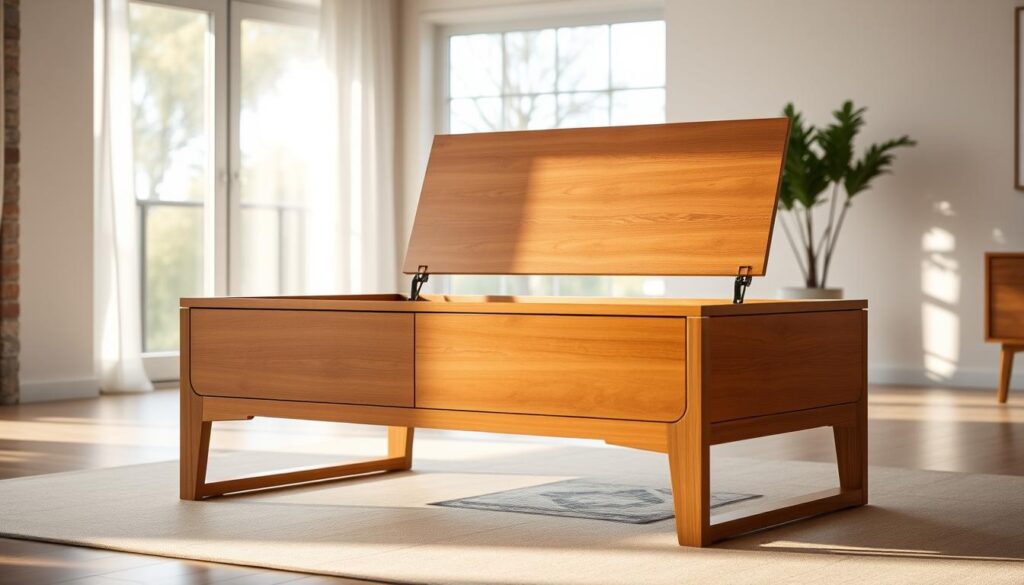
Choose size, look, and interior options
Pick a style early—modern slab, rustic farmhouse, industrial metal accents, or mid‑century legs—so hardware and finish choices align.
If you want drawers, cut openings in the side panels before assembly so slides and holes line up perfectly. Leave extra clearance at the top if you plan a deep tray beneath the lift top coffee surface.
- Match closed height to sofa cushions; confirm open height works for typing or dining.
- Plan grain direction across pieces to make the body appear higher-end.
- Factor caster wheel diameter into closed and open heights; choose locking, low‑profile casters for stability.
Materials, Hardware, and Tools You’ll Need for a Durable Lift Top Coffee Table
Start by choosing quality boards and a tested mechanism so parts fit and the work flows without surprises.
Wood choices and cut list
Pick hardwood like ash for crisp edges and even stain absorption. You’ll need four 1×8″ @ 8 ft ash boards and a 3/4″ plywood sheet (4×4 ft).
Follow the cut list: (6) 1×8 @ 39″, (4) 1×8 @ 24″, and (1) plywood 37 1/2″ x 24″ for the bottom. Alternative materials include 3/4″ ply, MDF, or timber panels if you want to save cost.
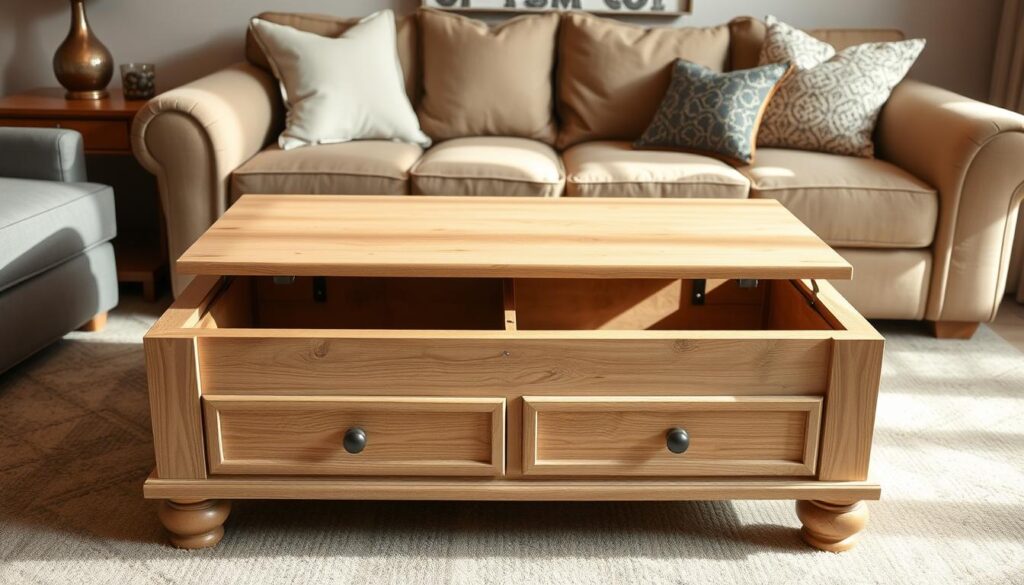
Hardware, fasteners, and finishes
Order a proven lift top mechanism and confirm its mounting pattern before drilling holes. Pick 8″ hairpin legs or low‑profile casters for the base, depending on mobility needs.
- Fasteners: 1 1/4″ pocket‑hole screws, 1 1/2″–2″ wood screws, bolts and Nyloc nuts.
- Finishes: stain or paint plus polyurethane; sand from 120 to 220 grit for a smooth top coffee surface.
- Tools: table saw, miter saw, planer, Kreg Jig, clamps, belt sander, and paint brush.
“A good shopping list cuts mistakes and keeps the project on schedule.”
DIY Lift Top Coffee Table: Hidden Storage And Function In One
Prepare carefully so panels align and the mechanism works without interference. Start by thicknessing your hardwood, then rip four 39″ 1×8 boards to 6 3/8″ and keep two at 7 1/4″. Drill pocket holes in the ends of the 24″ side pieces and in the plywood bottom.
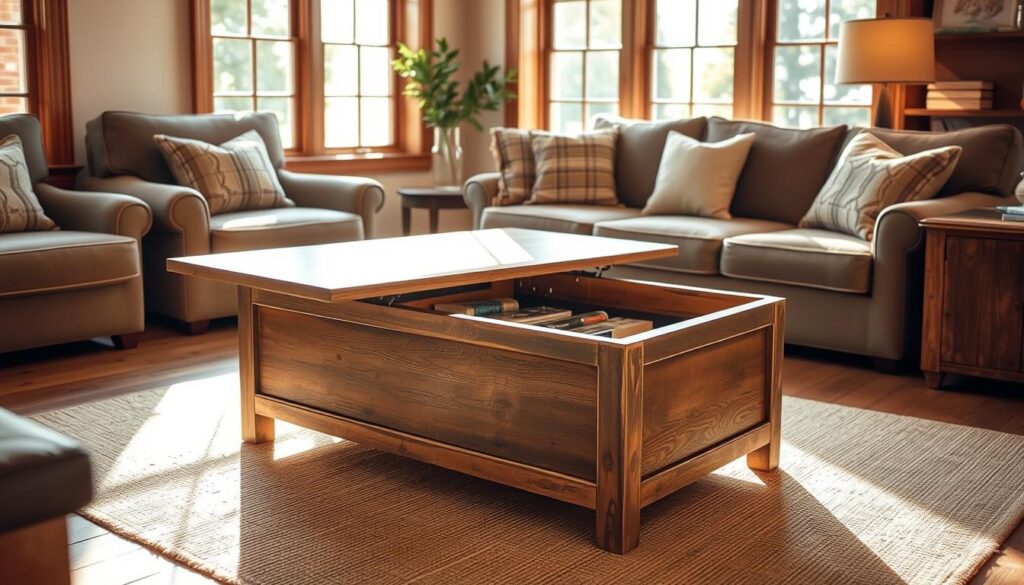
Cut and prep your pieces
Thickness first, rip second. That ensures a flat surface and tight glue joints. Mark and drill pocket holes now so assembly is faster.
Assemble the main body
Place the two 7 1/4″ 39″ rails with two 24″ boards around the plywood bottom. Use glue and pocket screws, clamp for 30 minutes, and verify diagonals to keep the body square.
Build and dry-fit the top
Lay the remaining 39″ boards on top to test fit. Trim edges for even reveals. Drill pocket holes in the bottom of three 39″ pieces, glue, and clamp overnight for a stable top.
Install the mechanism and optional add-ons
Add two 24″ ash pieces aligned with the hardware and four 2×4 anchors for secure mounting. Position the top carefully, mark holes, fasten lightly, and cycle the lift top mechanism several times before final torque.
- Cut drawer openings before final glue-up.
- Pre-plan cable pass-throughs with grommets.
- Sand, stain, and seal after a successful dry run.
“Make sure anchor spacing protects end grain and the lift path remains clear.”
Finish and Hardware: Make Your Coffee Table Look and Work Its Best
Finish work makes the piece look like shop-quality furniture and ensures the mechanism runs smoothly. Start by sanding in stages and prepping every piece before final assembly.
Sand through 120–220 grit to flatten glue lines and soften edges. This helps stain lay on the wood evenly and gives a refined feel under hand.
Apply stain or paint thinly and let each coat dry. Seal with polyurethane or varnish for a durable finish on the top coffee surface. Lightly sand between coats to remove dust nibs and keep the sheen uniform.
Add legs, corner straps, and handles after finish coats are cured. Choose hairpin or tapered wood legs to match the look you want. If you plan casters, mount diagonal corner blocks inside the body so 2″ screws bite into solid wood. Pick lockable, low-profile casters to keep the piece stable.
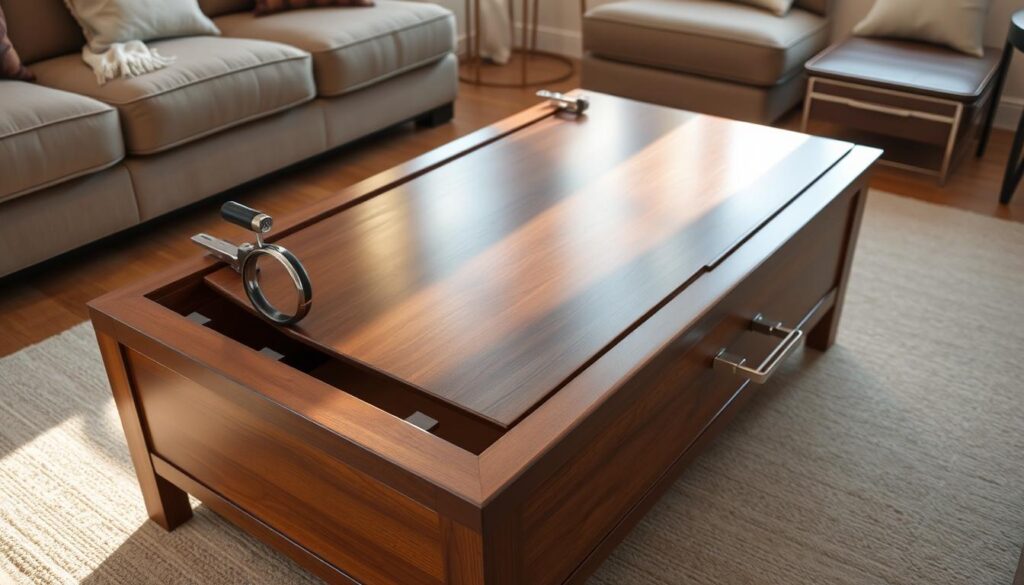
Quick care and checks
- Recheck fasteners after a week; wood can settle as finishes cure.
- Wipe the finish with a damp cloth and mild soap; avoid harsh cleaners.
- Use felt pads under legs or casters to protect floors and reduce noise.
“Stain and varnish components before final assembly for cleaner results.”
| Task | Why it matters | Tip |
|---|---|---|
| Sanding 120→220 | Removes glue lines, evens grain | Use a sanding block for flat surfaces |
| Finish coats | Protects high-touch top coffee surface | Light sand between coats for a glass-smooth layer |
| Legs & casters | Determines height and mobility | Block corners for secure caster mounting |
| Hardware check | Keeps mechanism smooth | Tighten after one week of normal use |
Design Variations and Smart Upgrades for Your Lift Top Mechanism
Think about how style and tech can change how you use the piece every day. Small design choices shift the look from minimalist to rustic or industrial while upgrades boost usefulness for work, media, and charging needs.
Style tweaks: Go minimalist with flat panels and consistent grain for a clean look. Or mix wood and metal for an industrial vibe. Distressed finishes, wire‑brushing, and iron straps give a farmhouse feel. Mid‑century legs or Scandinavian lines will keep the piece airy in your living room.
Function upgrades: Consider a double lift so each side rises independently or deepen the tray shelf to hold remotes and chargers. Use slides with tip resistance so drawers open smoothly without spilling contents. If you add casters, check wheel size versus stability before final mounting.
Tech integration: Hide wireless charging coils beneath a shallow cavity and test coil alignment for reliable phone charging. Embed Bluetooth speakers in the body with a rear cable channel, or mount a small power strip behind a grommeted pass‑through to keep cords tidy. These additions keep the mechanism clear and the room clutter‑free.
- Finish: For painted pieces, scuff‑sand between coats; for hardwood use a satin varnish for balanced wear resistance.
- Scale: Match size and panels to your room so the top does not overwhelm seating.
“Smart upgrades make a practical piece act like intentional furniture.”
Conclusion
By following the steps, you’ll end up with a functional piece suited for work, meals, and daily use.
You now have a clear plan to build a lift top coffee centerpiece that rises to dining or laptop height and closes cleanly as an everyday table.
You sized parts, chose durable materials, and followed a repeatable workflow: cut, assemble the body, build the top, install the mechanism, then finish. This order kept the project efficient and reliable.
Finish smart with stain or paint and a protective topcoat to protect contents and keep the top coffee surface looking good. Regular hardware checks will keep the lift action smooth to the end.
The result is a versatile table that organizes essentials, matches your style, and proves careful planning pays off for any piece furniture.