

Surprising fact: nearly half of home woodworkers report their first big project failed until they learned one key trick to align drilled holes accurately.
You built a solid coffee table by laminating thick wood faces into a single top, then secured the pieces with threaded rod, washers, and nuts. You sanded, applied Danish oil, and learned to mark all faces when beams were too thick for one cut.
The project also offered a lighter option: a planed project panel top attached with aluminum angle brackets sized to allow seasonal movement. One finish route used TotalBoat Halcyon Clear Varnish with no sanding between coats.
Safety matters: drill from both faces for alignment, glue between laminations with construction adhesive, and tighten hardware after the glue cures. You can also choose a storage variant that uses corner posts, plywood panels, and a hinged top.
Key Takeaways
- Plan your top: laminated slab or project panel each have trade-offs in weight and look.
- Drill from both sides and use a slightly oversized bit for perfect alignment.
- Allow glue to cure before final tightening and finish with oil or varnish per your needs.
- Use oversized, countersunk bracket holes to permit wood movement.
- Consider a hinged top variant for hidden storage and added function.
Plan Your Build, Materials, and Tools for a Strong DIY Coffee Table
Good planning starts here. Create a clear materials and cut list before you touch wood. Confirm final length and top style so every cut matches your plans.
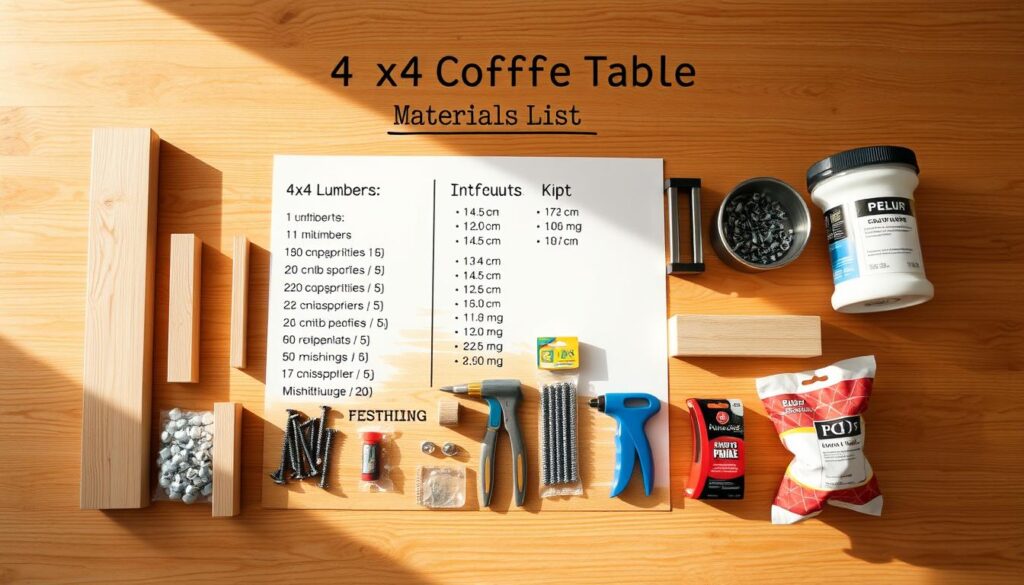
Materials list
Gather the essentials: 4×4 posts or larger beams, a project panel or planks for the top, construction adhesive (LePage PL Premium), threaded rod, washers, and matching nuts. Make sure your screws and hardware match panel thickness.
Cut list and sizing
Decide the table length and width. Note leg lengths, top panels, and any storage panels. Use a stop block for repeatable crosscuts so every piece is identical.
Tools you’ll need
Primary tools include a circular saw, drill with long bits, clamps, and a sander. Consider a pocket-hole jig for framed pieces. Pick a slightly oversized bit to ease rod alignment through multiple holes.
Safety first
Clamp work before cutting, sand edges and break sharp corners with sand paper, and mark faces to drill from both sides when a bit won’t reach through. Only use a torch outdoors and have extinguishing means ready.
4×4 Coffee Table DIY: Strong And Simple Build With Lumber
Accurate cuts and straight holes set the tone for a flat, stable top. Start by marking each timber on all four faces so every crosscut stays square and matches your length plan.
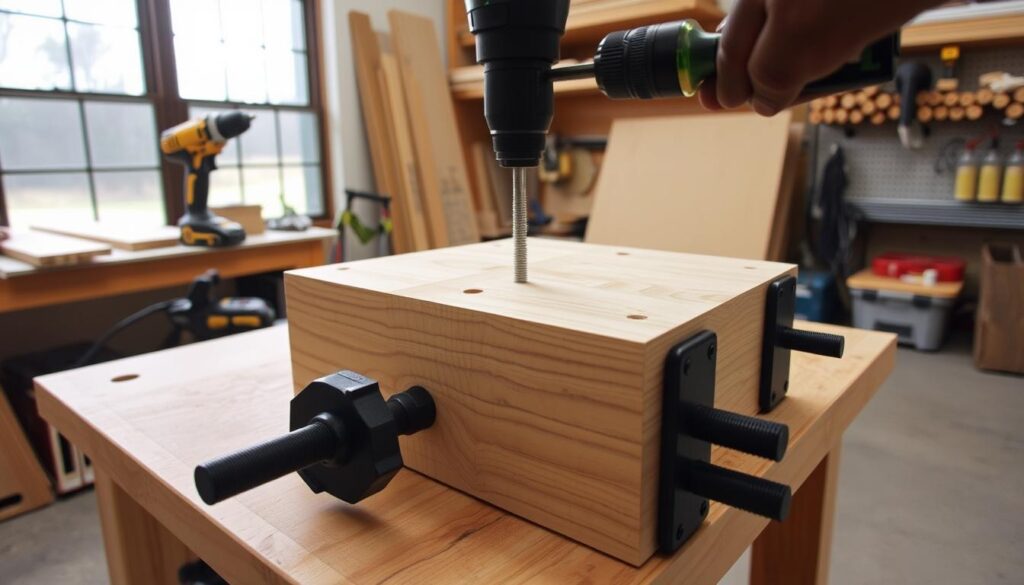
Cut the wood
Score deeply with a circular saw, then finish the cut by hand for a clean end. This two-step method keeps edges square and prevents tear-out.
Drill it
Lay out hole locations centered and set in from the ends (about 8 inches is common). Drill from both faces and use a bit slightly larger than the rod to allow alignment tolerance. Drill slow and steady to keep the hole straight.
Glue-up and clamp
Spread construction adhesive in a thin film, set back from the edges to limit squeeze-out. Slide threaded rod through the first beam, stack the next pieces, then use washers and nuts plus clamps to bring laminations tight.
Sand it smooth
Start at 80 grit to remove high spots, then move to 120 grit to refine the surface. Break sharp edges so hands don’t catch on corners during everyday use.
Add sturdy legs
Use prefabricated heavy-duty legs or glue-up leg stacks. Place legs several inches in from the perimeter and anchor with screws sized to the thickness so they bite without poking through.
Quick reference
| Step | Key detail | Tip |
|---|---|---|
| Cut | Mark all faces; score with circular saw; finish by hand | Use a stop block for repeatable length |
| Drill | Drill from both faces; use slightly oversize bit | Test-fit rod and ream tight spots |
| Glue-up | Apply adhesive set back from edges; clamp and thread rod | Retighten nuts after glue fully cures |
| Finish prep | Sanding progression: 80 → 120; ease edges | Check for racking and correct before finishing |
Finish, Attach the Top, and Smart Variations for Your Table
Finishing and fastening define how the top performs over time and how the piece fits your space. Choose an oil finish for warmth or a film finish when you want faster durability. Watco Danish Oil soaks in for a rich tone; TotalBoat Halcyon Clear Varnish forms a protective layer and can be applied without sanding between coats. You used four coats of the varnish to get long-lasting protection.
Stain, paint, and seal options
Pick the finish that matches use: stain then seal if you want color, or oil for a natural look. Let stain cure fully before applying any clear finish. For varnish, follow manufacturer dry times and coat counts to avoid tacky layers.
Burn technique and surface prep
For dramatic grain, torch the surface outdoors and keep a fire extinguisher handy. After charring, sand lightly with 120 grit paper to remove high soot and reveal contrast, then seal the surface with your chosen finish.
How to attach the top
Cut aluminum angle into brackets, use a center punch to prevent bit wander, drill pilot holes, then enlarge bracket holes slightly bigger than the screws to allow seasonal wood movement. Add a small countersink and deburr with sand paper so screws seat cleanly.
Storage-friendly variant
Build a base from four 18-inch posts with 1-inch grooves, slide in 1/2-inch plywood side panels (38 x 14 in) and end panels (20.5 x 14 in), add 1×2 frames and bottom supports, then hinge the top. Make sure hinge screws bite into framing and that the lid clears the sides when opened.
- Match stain and paint choices to the room and test on scrap first.
- Verify screw length to avoid punch-through at the ends or on the top.
- Review your plans before final assembly to prevent rework.
Conclusion
, You finished a durable coffee table that reflects careful cuts and clean hole layout.
You used straight drilling, a slightly larger bit where needed, and even glue spread to avoid gaps. Tighten hardware after the adhesive cures and check each edge for flatness so the table sits level.
Finish choices—Danish oil or a no-sand varnish—protect the wood and set the tone. Deburr bracket holes, use the right screws and pilot holes for legs, and verify hinge placement for any side storage variant.
Keep your measurements and plans in one place and pack sand paper, a spare bit, and extra screws before the final assembly. That way this project becomes a repeatable way to make matching pieces and future projects that last.