

Did you know that the average person looks at their coffee table over 50 times a day? This central piece of furniture is more than just a surface for your remote and mug. It anchors your entire living space and expresses your personal style.
Today’s interior design embraces bold, unconventional shapes. The traditional four-sided table is getting a fresh, geometric update. This innovative approach brings a unique aesthetic to contemporary homes.
A three-sided design creates immediate visual interest. It serves as a natural conversation starter while offering full functionality for daily use. This piece beautifully bridges the gap between artistic sculpture and practical furniture.
Choosing the right centerpiece is essential for a cohesive room. You need a balance of strong aesthetics and everyday utility. This guide will help you understand the appeal of this distinctive option.
We will explore design elements, materials, and styling strategies. You will learn practical considerations for incorporating this standout piece into your home. Get ready to transform your living area with a focal point that truly reflects your individuality.
Key Takeaways
- The coffee table is a highly frequented focal point in your living space, viewed dozens of times daily.
- Modern interior design is increasingly favoring unconventional and geometric furniture shapes.
- A three-sided design offers a unique aesthetic that stands out while remaining fully functional.
- This style of table acts as a blend of artistic statement and practical household item.
- Selecting the right piece is crucial for achieving a balanced and cohesive room design.
- Understanding materials and styling techniques is key to integrating this furniture successfully.
Modern Coffee Table Trends and Styles
Contemporary interior spaces are witnessing a revolution in centerpiece furniture that challenges conventional rectangular shapes. Homeowners now seek pieces that blend artistic expression with everyday functionality.
Contemporary Design Elements
Natural materials like travertine and oak bring organic warmth to living areas. These substances create a connection to nature within urban environments.
Sculptural bases transform functional items into artistic focal points. Designers craft bases that serve as standalone sculptures beneath table surfaces.
Mixed textures create visual depth through contrasting finishes. Wood combines with metal, while glass pairs elegantly with stone accents.
| Design Trend | Key Features | Primary Benefits |
|---|---|---|
| Organic Shapes | Asymmetrical forms, curved edges | Visual interest, flow movement |
| Low-Profile Silhouettes | Minimal height, clean lines | Space openness, modern aesthetic |
| Mixed Material Construction | Combination of wood, metal, stone | Textural richness, durability |
| Sculptural Bases | Artistic foundation elements | Statement piece, conversation starter |
Latest Market Offerings
The concept of functional art dominates current collections. Pieces serve practical needs while making strong aesthetic statements.
Market diversity ensures options for various budgets and preferences. From mass-produced designs to artisanal creations, choices abound.
Clean lines and intentional negative space define sophisticated interiors. These elements contribute to uncluttered, harmonious living environments.
3 Sided Coffee Table: Unique Design For Modern Living Rooms
The angular silhouette of a triangular centerpiece transforms how you interact with your seating area. This geometric approach moves beyond traditional rectangular and square options.

Why This Design Stands Out
Triangular furniture creates dynamic visual lines that guide the eye around your space. Unlike conventional shapes, this form adds movement and energy to your layout.
The functional advantages are significant. An angular form fits perfectly into corner spaces or nestles against sectional sofas. This versatility makes it ideal for various room configurations.
Consider the Alphie Brown 38″ Wide Triangle model. Priced at $395 with free shipping, it combines a honed marble top with a wood base. This piece delivers both premium materials and geometric innovation.
Despite breaking traditional conventions, this shape maintains full functionality. It holds drinks, books, and decorative objects with stability and balance. The unconventional geometry doesn’t compromise practical use.
This distinctive option works particularly well in contemporary settings. It celebrates architectural interest and bold choices. Your guests will notice and comment on this memorable focal point.
The triangular form reflects a confident design sensibility. It demonstrates your willingness to embrace innovative furniture solutions. Your living area gains both style and conversation-starting appeal.
Materials and Craftsmanship Behind Unique Coffee Tables
The foundation of any truly remarkable piece of furniture lies in the quality of its materials and the skill of its construction. Your choice directly influences the mood, durability, and overall aesthetic of your space.
Premium Materials and Finishes
Natural wood options like solid oak or rich walnut bring warmth and organic texture. Light natural oak offers a bright, airy feel, while deep ebony tones create a dramatic statement.
A marble top introduces timeless elegance and unique veining. Each slab is one-of-a-kind, offering a touch of luxury. Honed finishes provide a sophisticated, matte look.
For a lighter visual impact, a glass top is an excellent choice. It maintains sightlines, making rooms feel more open. This is ideal for smaller living areas.
Specialized finishes expand your design possibilities. Textured matte white suits contemporary minimalism. Hammered gray metal adds an industrial edge to the base.
Artisanal Crafting Techniques
Live edge woodworking preserves the natural contour of the tree. This technique creates organic, character-filled pieces that are truly unique.
Using reclaimed materials like solid pine adds history and patina. It’s a sustainable choice that appeals to eco-conscious homeowners.
Precise joinery is especially important for geometric shapes. Quality craftsmanship ensures stability in unconventional designs. The base and top must be perfectly balanced.
Mixed-material construction combines textures for visual interest. Imagine a sleek glass surface on a sturdy wood base. These contrasts define modern, sophisticated furniture.
Comparing Different Coffee Table Shapes
Selecting the right silhouette for your living area involves balancing aesthetic appeal with practical considerations. Each form creates a distinct atmosphere and serves specific functional purposes.

Advantages of Varied Silhouettes
Round tables promote excellent traffic flow by eliminating sharp corners. This makes them particularly safe for homes with children or pets.
Their circular design creates a soft, inviting atmosphere. This shape works beautifully with curved seating arrangements.
Square options provide modern simplicity and visual balance. They complement symmetrical room layouts perfectly.
Rectangular pieces offer maximum surface area for entertaining. These tables pair naturally with longer sofas and sectionals.
Triangular designs provide unique architectural interest. They fit perfectly into corner space while maintaining full functionality.
Your choice should consider both room dimensions and lifestyle needs. Each silhouette offers distinct advantages for different configurations.
Round, Square, and Rectangular Coffee Table Options
Your living space deserves a centerpiece that complements both your furniture arrangement and personal style, with classic shapes providing reliable solutions.
Design Inspirations for Each Shape
Round options create soft, flowing spaces that work beautifully with curved seating. The Stratus Grey 49″ model combines concrete and metal for industrial elegance at $595. More affordable choices like the Lakeland Brown 36″ wood piece start at $250.
Center styling works best for circular surfaces. Layer trays, stack books, and add sculptural objects to create visual interest. This approach maintains the organic flow of the shape.
Square designs excel in symmetrical room layouts. The Devin Modern Brown Wood 36″ option proves style doesn’t require large investment at just $135. Balance decorative elements across all four corners for harmonious organization.
Rectangular pieces offer maximum surface area for entertaining. Options range from the Christina Grey 52″ wood model at $225 to the substantial Satori Natural 60″ reclaimed pine at $550.
Apply the “rule of thirds” when styling longer surfaces. Divide the area into sections for books, decor, and functional items. This creates organized visual appeal while maintaining practicality.
Each silhouette serves different room proportions and lifestyle needs. Consider how your choice relates to surrounding furniture and daily activities.
Innovative Storage and Lift-Top Designs
Today’s most practical centerpieces combine elegant aesthetics with clever organizational features. These pieces address the common challenge of living room clutter while maintaining visual appeal.
Integrated Storage Solutions
Modern furniture offers various storage configurations to keep your space organized. You can choose from hidden drawers, open shelving, or enclosed cabinets.
These features allow you to stow away remotes, magazines, and blankets efficiently. The right configuration depends on your specific organizational needs.
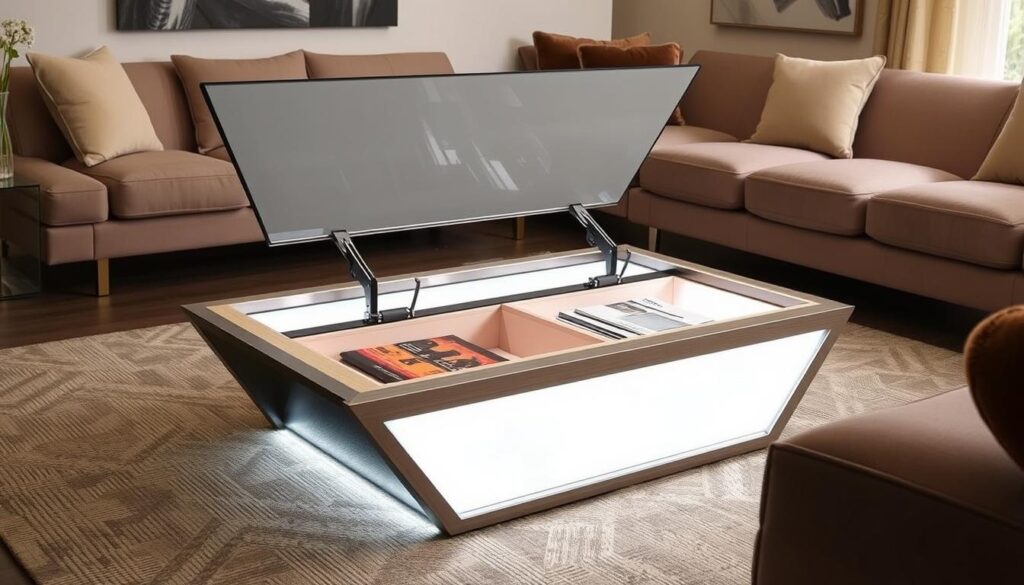
Versatile Lift-Top Mechanisms
Lift-top tables transform your centerpiece into a multi-functional surface. Gas pistons or spring-loaded hinges enable smooth elevation.
This mechanism raises the surface to a comfortable height for laptop work or casual dining. The hidden compartment beneath provides additional coffee table storage.
Consider the Chelsey Brown 48″ model at $195 for budget-friendly functionality. For premium options, the Hampton Brown at $450 offers robust construction with ample concealed space.
Selecting the Perfect Coffee Table for Your Living Room
Finding the ideal centerpiece for your seating area requires thoughtful consideration of both form and function. The right piece should enhance your room’s flow while serving your daily needs effectively.
Space Planning Strategies
Start with the fundamental proportion rule: your centerpiece should measure approximately two-thirds the length of your sofa. This creates visual balance and appropriate scale within the room.
Height is equally important. The ideal piece sits at the same height or 1-2 inches lower than your sofa cushions. This ensures comfortable reach for beverages and items.
Leave adequate clearance around your furniture—typically 14-18 inches between the table edge and seating. This allows comfortable movement and leg room throughout your living area.
Balancing Function with Style
Consider your primary uses when selecting features. Do you need surface area for entertaining, display space for decor, or hidden storage for everyday items?
Room dimensions significantly influence your choice. Smaller spaces benefit from compact or transparent designs that don’t overwhelm. Larger rooms can accommodate substantial statement pieces.
For sectional sofas or larger seating groups, consider oversized options or multiple smaller tables. These maintain visual proportion while serving the entire seating arrangement.
Always measure your space carefully before shopping. Consider traffic patterns, door swings, and natural movement through your living environment. The perfect piece integrates seamlessly while meeting practical household needs.
Styling Tips for a Contemporary Living Space
Your coffee table’s styling transforms it from functional furniture to a personal design statement. This process lets you express your taste while adding beauty to your home environment.

Creating a Striking Focal Point
Build visual interest through height variation. Combine tall vases with stacked books and sculptural objects at different elevations.
Follow the odd numbers rule for arrangements. Groups of three or five items create more appealing displays than even-numbered collections.
| Table Shape | Styling Approach | Recommended Items |
|---|---|---|
| Round | Central focal point | Tall vase, circular tray |
| Square | Symmetrical corners | Matching objects, plants |
| Rectangular | Rule of thirds | Books, decor, functional items |
Accessorizing with Care
Choose accessories that reflect your personal interests. Decorative trays, art books, and natural elements like plants work beautifully.
Leave adequate negative space for functionality. Avoid over-styling to maintain daily usability for drinks and items.
Rotate accessories seasonally to keep your space feeling fresh. This approach maintains personal meaning without replacing furniture.
Exploring Wood and Marble Coffee Table Options
When selecting furniture for your living area, the material composition plays a crucial role in defining the overall character of your space. Your choice between natural substances creates distinct atmospheres and functional benefits.
Wood Coffee Table Benefits
A wood coffee table brings organic warmth and timeless versatility to any room. Solid construction offers exceptional durability and the ability to refinish over time.
Different wood types provide unique characteristics. Oak delivers traditional warmth and strength, while pine offers affordability with light tones. Exotic options like mango wood feature distinctive grain patterns.
Specific wood options include the Dakota Natural 44″ model at $295 and the Dunkin Brown 38″ piece with live edge mango at $450. These tables showcase the material’s natural beauty through specialized treatments.
Marble Elegance and Durability
Marble introduces sophisticated elegance with its cool visual contrast and unique veining patterns. Each piece becomes a one-of-a-kind statement in your living area.
This material offers practical benefits including heat resistance and easy cleaning. Proper sealing helps maintain its luxurious appearance over years of use.
The Alphie Brown 38″ model at $395 demonstrates how marble combines with geometric shapes. It features a honed marble top on a wood base, creating an elegant yet functional centerpiece.
Your decision between wood and marble should consider existing décor, desired aesthetic, and maintenance preferences. Both materials create beautiful, lasting tables for your home.
Navigating Size and Scale: Coffee Table Dimensions
Proper sizing transforms your furniture from an awkward addition to a perfectly integrated centerpiece. Getting the proportions right ensures your piece enhances rather than disrupts your room’s flow.

Scale considerations prevent common mistakes like selecting pieces that overwhelm or disappear in your space. The right measurements create visual harmony and practical functionality.
Determining the Right Dimensions
Follow the two-thirds rule for ideal proportions. Measure your sofa length and multiply by 0.66 to find the perfect coffee table length. This creates balanced scale throughout your seating area.
Height matters just as much as width. Your table should sit at the same level or slightly lower than your sofa cushions. This ensures comfortable reach for drinks and items.
Leave 14-18 inches of clearance around your furniture. This space allows comfortable movement and leg room. Consider your base structure carefully—wide legs may need more floor space than the top suggests.
Available size options range from compact 28-inch rounds to substantial 60-inch rectangles. Round tables typically measure 40-49 inches across. Square pieces often span 36-42 inches per side.
Use painter’s tape to outline proposed dimensions on your floor. This simple trick helps you visualize the space your new coffee table will occupy before making a purchase.
Color and Finish Options to Enhance Your Space
Beyond shape and material, the surface treatment of your centerpiece furniture plays a transformative role in room ambiance. Your finish selection dramatically impacts the overall aesthetic and mood of your living area.
Light natural wood finishes like White Oak and Washed Old Oak create airy, Scandinavian-inspired atmospheres. These options brighten spaces with their clean, minimalist appeal.
Medium-toned wood selections such as Walnut and Fawn offer versatile warmth. They complement diverse color palettes and decorating approaches beautifully.
Dark dramatic finishes including Ebony and Black Marble anchor spaces with sophisticated depth. They create striking contrast in light-filled rooms.
The right finish transforms furniture from functional to phenomenal, creating harmony throughout your living space.
Specialty treatments expand your design possibilities significantly. Hammered Gray delivers industrial appeal, while Textured Matte White suits contemporary minimalism.
| Finish Type | Primary Characteristics | Best Room Applications |
|---|---|---|
| Light Wood Finishes | Bright, airy, minimalist | Coastal, Scandinavian spaces |
| Medium Wood Finishes | Warm, versatile, transitional | Most decorating styles |
| Dark Finishes | Dramatic, sophisticated, anchoring | Contemporary, formal rooms |
| Specialty Finishes | Textured, distinctive, statement-making | Industrial, minimalist designs |
Your color choice should coordinate with existing elements like flooring and upholstery. Lighter tones make spaces feel larger, while darker options create intimacy.
Consider both current trends and timeless appeal when selecting your perfect finish. Choose a treatment that will remain visually satisfying as your personal style evolves over time.
Practical Considerations: Shipping, Price, and Warranty
Beyond design considerations, logistical factors significantly influence the overall value proposition of your furniture purchase. Understanding these practical elements ensures your investment delivers both immediate satisfaction and long-term value.

Understanding Shipping and Pricing Policies
Most retailers offer free shipping on furniture items, representing substantial savings. Delivery options range from expedited “Get it Fast! Tomorrow” service to standard 1-2 week windows.
The market offers diverse price points to suit various budgets. Entry-level pieces start around $135, while premium selections reach $699. Most quality products fall between $195-$595.
Financing options make higher-priced items more accessible. Many retailers provide 60-month payment plans with manageable monthly installments.
Evaluate true value by considering material quality and construction durability alongside initial cost. Premium materials like solid wood and genuine marble justify higher prices through extended lifespan.
Always review return policies and warranty coverage before purchasing. These protections ensure peace of mind with your furniture investment.
Customer Favorites and Bestseller Insights
Best-selling items often represent the perfect balance between innovative style and practical functionality. These popular selections reveal what resonates with today’s furniture buyers.
Top-Rated Selections Reviewed
The Stratus Grey 49″ round concrete top piece combines industrial materials with organic form. This bestseller demonstrates how texture and shape create visual impact.
At $530, the Rodin Modern Natural fluted drum design offers distinctive detailing. Its sculptural base provides both stability and artistic appeal.
Budget-friendly options like the Devin Modern Brown Wood square model prove style doesn’t require luxury pricing. At just $135, it delivers clean aesthetics and reliable construction.
Curator picks like “Shea’s Pick” indicate professional approval for exceptional quality. These designations highlight pieces with outstanding value and craftsmanship.
Successful products typically feature neutral palettes and versatile shapes. These characteristics ensure compatibility with various room configurations and décor styles.
Reviewing bestseller lists helps narrow overwhelming choices. Focus on proven designs that have satisfied numerous customers with similar needs.
Always check customer reviews for real-world performance insights. This feedback reveals durability, assembly ease, and how items function in actual homes.
How to Choose the Right Coffee Table for Your Home Layout
Choosing furniture for your home requires matching pieces to your specific layout and daily routines. Your centerpiece should enhance both aesthetics and functionality in your personal environment.
Begin by evaluating your room’s architectural features. Consider dimensions, ceiling height, and natural light sources. Focal points like fireplaces significantly influence placement decisions.
Personalized Selection Tips
Your seating arrangement dictates the ideal shape for your space. L-shaped sectionals work beautifully with square or round options positioned in the corner angle.
Parallel sofas benefit from rectangular pieces that provide ample surface area. Conversation groupings often function best with circular designs that promote flow.
Map traffic patterns to ensure your choice doesn’t create obstacles. Leave clear pathways for natural movement through your environment.
Ensuring Layout Compatibility
Consider whether your piece will primarily serve decorative purposes or accommodate entertainment needs. Storage requirements and family activities also impact your decision.
Balance multiple priorities when no single option meets all criteria. Identify non-negotiable features versus nice-to-have additions.
Create a prioritized list of requirements before shopping. Include size constraints, material preferences, and budget limits. This prevents impulse purchases that don’t truly fit your home layout.
Integrating a Coffee Table with Your Sofa and Decor
Your centerpiece should feel like a natural extension of your seating, not an afterthought in the room’s design. This integration creates a cohesive environment where every element works together harmoniously.
The right selection blends visual appeal with everyday practicality. It helps your space feel both beautiful and thoughtfully designed.
Maintaining Visual Balance in Your Living Room
Proportion is key when pairing your sofa with a centerpiece. Aim for approximately two-thirds the length of your seating for ideal scale.
Consider height, depth, and visual weight relative to your sofa’s dimensions. A delicate sofa needs a lighter piece, while substantial sectionals can handle more mass.
Style coherence ensures your furniture speaks the same design language. Modern sofas pair well with contemporary centerpieces, creating intentional harmony.
Coordinate materials and finishes throughout your space. Matching wood tones or complementary metal finishes create visual continuity.
Your centerpiece serves as an anchor that ties together disparate elements. It bridges the gap between seating, accent chairs, and other furnishings.
Step back and evaluate the entire room after placement. Ensure visual weight feels balanced and traffic flow remains clear.
Conclusion
Your final selection should reflect both your personal taste and practical household needs. The ideal centerpiece strikes this important balance perfectly.
Geometric designs offer fresh alternatives to conventional furniture shapes. These innovative pieces deliver full functionality while making strong aesthetic statements.
Today’s market provides incredible variety in materials, finishes, and price points. You can find options that align with any budget and design vision.
Remember the crucial sizing guidelines for harmonious integration. Proper proportions ensure your choice enhances rather than disrupts your space.
Consider practical features like integrated storage and durable construction. These elements contribute to long-term satisfaction with your investment.
Your furniture should integrate seamlessly with existing decor and support natural traffic flow. This creates a cohesive, functional environment.
View your selection as both a necessity and an opportunity for creative expression. Explore diverse options from classic shapes to contemporary innovations.
Take time to measure carefully and consider how your choice will serve your home for years to come. The right piece becomes a beloved focal point in your daily life.