
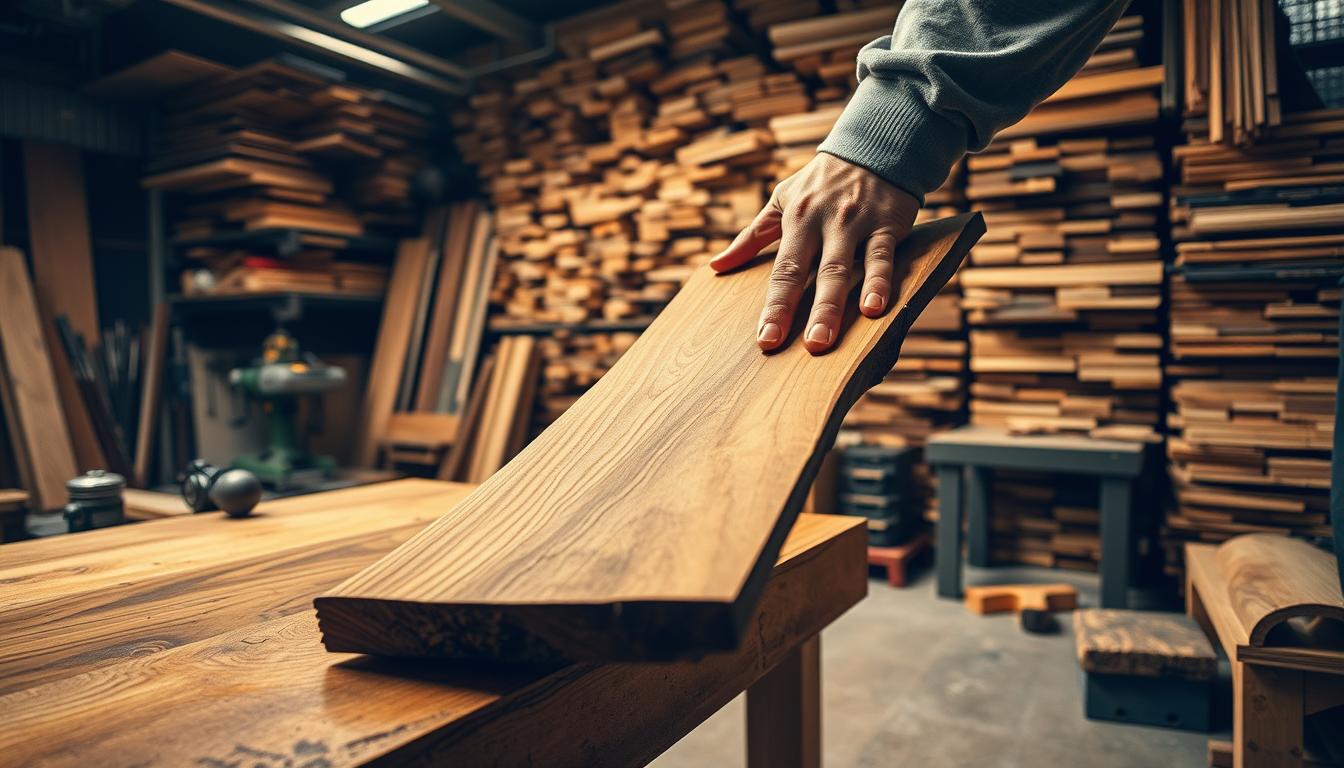
Surprising fact: a single live-edge slab can retain the original tree grain and strength while still weighing less than many engineered tops when cut to 1.5–2 inches thick.
You want a coffee table that fits your room and lasts through daily use. This intro helps you pick the right wood species, thickness, and edge profile so the piece looks intentional and functions well.
Hardwoods like oak, maple, walnut, and teak score high for durability and resistance to dents. You’ll learn when a premium slab makes sense or when a budget-friendly species meets your design goals.
Practical details matter: ideal heights sit around 16–18 inches, and allow about 18 inches of clearance around seating. Leg options range from hardwood and metal to acrylic or stone, so finish and material choices shape the final character.
Next: you’ll get clear steps on buying slab sizes, translating big-box lumber dimensions, and choosing finishes that prevent water rings and sun fade.
Key Takeaways
- Choose slab thickness of 1.5–2 inches for a balance of strength and weight.
- Pick oak, maple, walnut, or teak for durable tabletops that resist wear.
- Aim for 16–18 inch height and ~18 inch seating clearance for comfort.
- Match leg material and finish to your design—metal or hardwoods give different feels.
- Decide early if you want an heirloom piece or a budget-friendly trend item.
Why Your Coffee Table Wood Choice Matters Right Now
Picking the right species and size changes how well a coffee table holds up and fits your living space. Your wood choice controls daily performance, from dent resistance to how the piece affects circulation in a small room.
Practical rules help: aim for about 16–18 inches in height and leave roughly 18 inches between seating and the table for easy access. These measurements keep the table comfortable and balanced with other furniture.
Hardwoods such as oak, maple, walnut, and teak offer higher durability and last for years under heavy use. Softwoods like pine wear faster and show dents sooner, which matters in busy homes and high-traffic space.
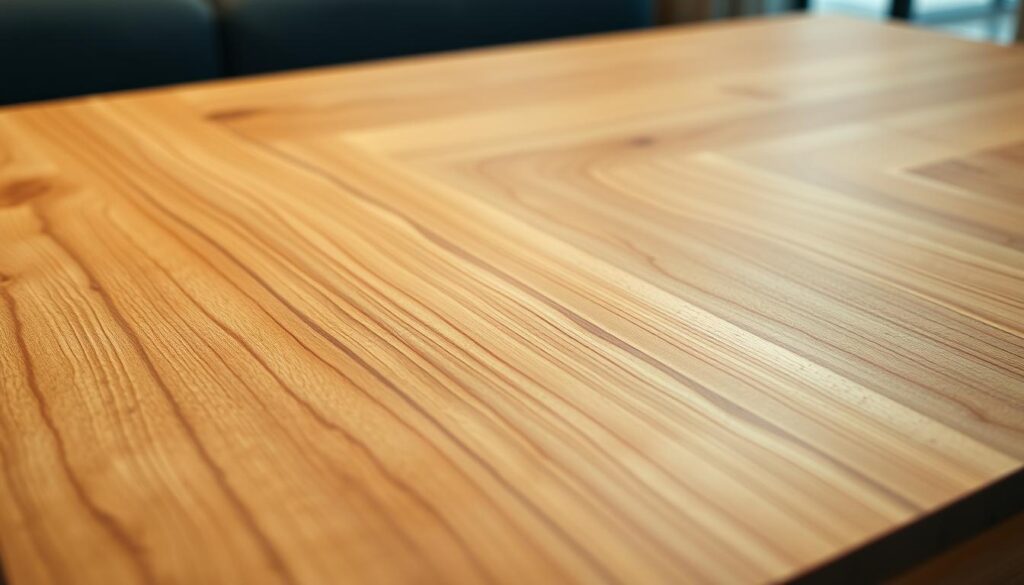
- Everyday wear: harder species resist dents and stay stable when guests lean or place heavy books.
- DIY ease: choose stock that sands and cuts predictably so you hit dimensions the first time.
- Style and flow: grain and tone shape the look so the table complements existing furniture and decor.
Thinking about types, durability, and sizing now saves you time later by cutting refinishing and repairs. Make this choice thoughtfully and your coffee table will feel right in the room for a long time.
Wood 101: Hardwoods vs. Softwoods and What You’ll Find at U.S. Stores
A quick grasp of species and store options saves time and prevents costly misbuys on your build.
Hardwoods like oak have denser fiber and stronger grain. That means better dent resistance and a more stable surface for a coffee table. Softwoods such as pine cut easily and cost less, but they dent faster and can stain unevenly.
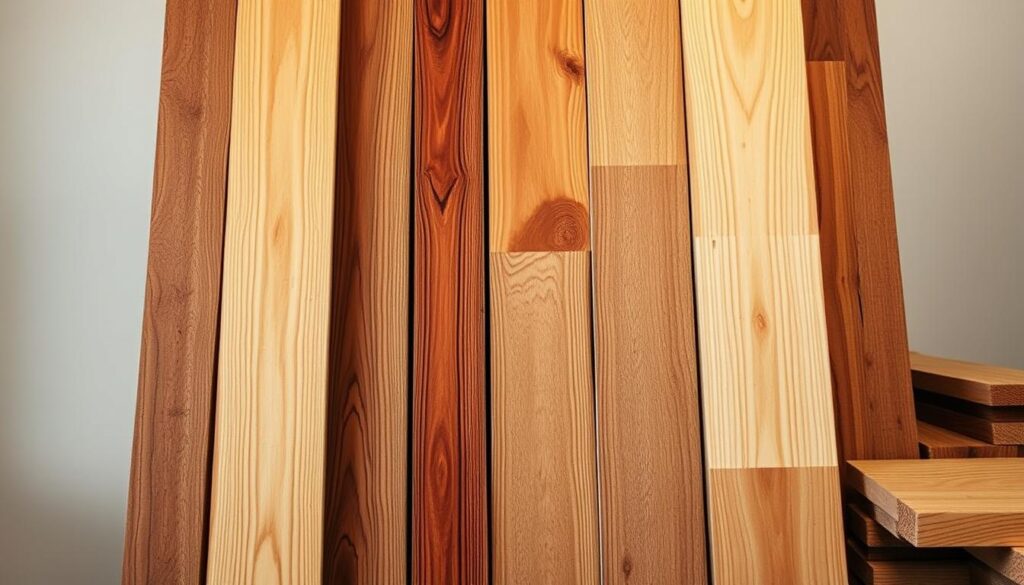
Home Depot/Lowe’s vs. lumber yards
Big-box stores simplify buying with standardized lengths and common species. This makes them ideal for beginners and quick projects.
Lumber yards offer more species, custom thickness, and wider boards. Expect more complex pricing and a bit more work picking stock.
Appearance lumber vs. dimensional lumber
Appearance lumber (typically 1-inch or less) is meant for visible faces and finish work. Use it for tabletops and trim.
Dimensional lumber (like 2×4 or 4×4) is for hidden frames and bases. Know nominal vs. actual sizes—1×4 usually measures 0.75″ x 3.5″, while a 2×4 is about 1.5″ x 3.5″.
| Category | Where to Buy | Best Use |
|---|---|---|
| Hardwoods (oak, maple) | Lumber yard | Visible tops, durable furniture faces |
| Softwoods (pine, SPF) | Big-box or lumber yard | Budget tops, framing, prototypes |
| Appearance lumber (1x) | Big-box & yards | Table faces, trim, final surfaces |
| Dimensional lumber (2x, 4x) | Big-box | Frames, bases, structural parts |
When choosing wood for DIY pieces, start with easier big-box options. Then move to a lumber yard as your project needs grow and you want more precise sizes and species.
Durability Deep Dive: Oak, Maple, Walnut, Teak, Pine, and Poplar Compared
Durability matters most when a table faces kids, pets, and daily coffee cups. Match how you use the room with the right species, and you’ll avoid frequent repairs.
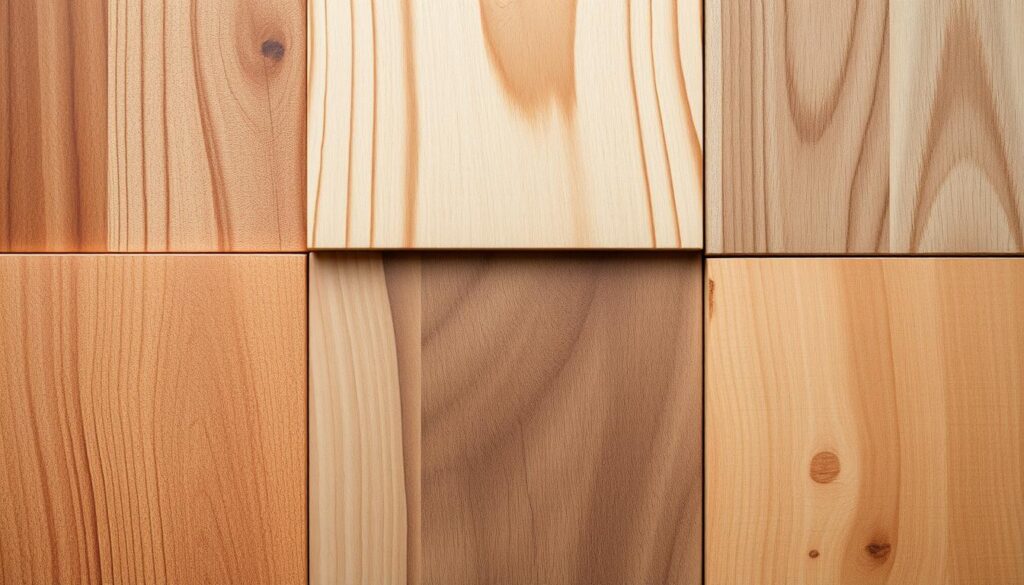
Scratch and dent resistance: everyday living and high-traffic areas
Oak and hard maple stand out for resistance to dents and knocks. They hold up in family rooms and keep a flat, usable surface for years.
Teak resists moisture and decay thanks to natural oils. It’s low-maintenance and ideal when longevity matters.
Soft pine dents easily and shows wear. Poplar machines well and paints cleanly, but it won’t hide rough use like denser species.
Grain and appearance: bold oak, rich walnut, tight maple, and more
Oak offers a bold grain that gives character and hides light damage. Maple reads cleaner with tight grain and a modern look. Walnut brings deep color and figure, so it’s often chosen for heirloom furniture.
When to splurge vs. save: heirloom pieces vs. trendy designs
- Splurge: oak, walnut, or teak for heirloom-quality table tops that last decades.
- Save: pine or poplar for trendy builds, painted pieces, or quick room updates.
| Species | Durability | Best use |
|---|---|---|
| Oak | High | Daily coffee table, family rooms |
| Maple | High | Smooth modern tops |
| Walnut | Medium-High | Premium furniture, heirlooms |
| Teak | Very High | Moisture-prone areas, low maintenance |
Weigh availability and price locally. Big-box stores often stock red oak, poplar, and pine. Specialty woods may need a lumber yard visit, which can be worth it for the right choice.
Size, Thickness, and Fit: Get the Measurements Right the First Time
Get sizing right early and you avoid wasted cuts, heavy rework, and awkward gaps in the finished piece.
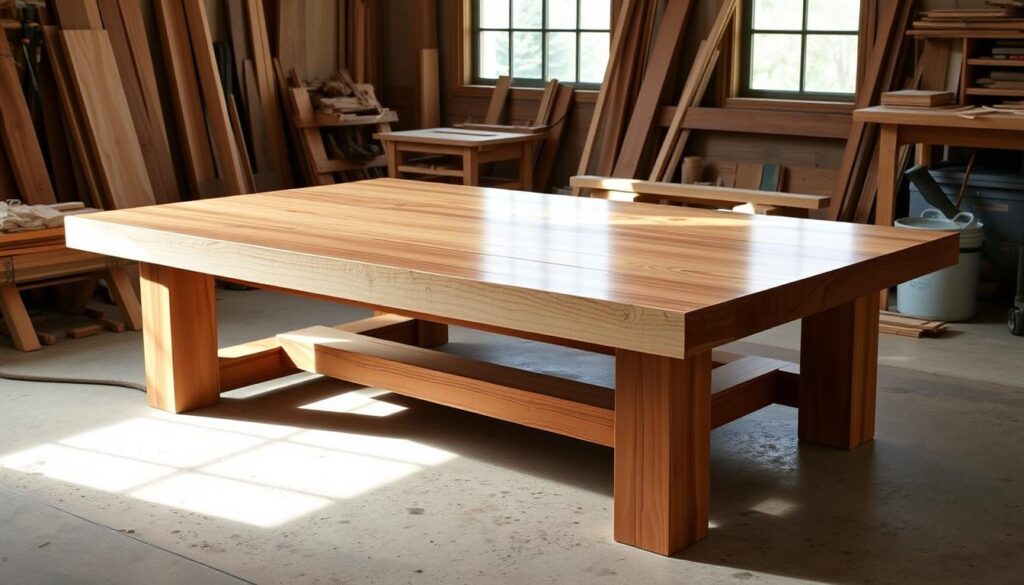
Optimal slab thickness usually sits between 1.5 and 2 inches. That range gives a solid top feel but keeps weight manageable and joinery straightforward.
Nominal vs. actual sizes
Convert nominal dimensions before cutting: a 1×6 measures about 0.75″ x 5.5″, a 2×6 is roughly 1.5″ x 5.5″, and a 4×4 runs near 3.5″ x 3.5″.
Clearances, height, and footprint
Map your room and leave ~18 inches of clearance around seating so people can move and reach the top comfortably.
Match coffee table height to sofa seat height—aim for about 16–18 inches—so mugs and remotes sit within easy reach.
- Plan edges and overhang: decide apron depth and leg placement early to avoid an unintended lip.
- Use actual sizes: build a cut list based on actual board dimensions to reduce waste and misfits.
- Consider weight: thicker tops and dense wood need sturdier bases and wider leg stances.
Dry-fit parts before final assembly and pre-check board widths to cut down glue-ups and seams. These small steps keep your diy furniture piece efficient and accurate.
Style, Grain, and Color: Matching Wood to Your Room’s Design
Your table’s grain and color steer a room’s mood more than shape or hardware. Pick wood that complements existing furniture so pieces feel intentional. A clear direction early saves refinishing later.
Modern, farmhouse, and mid-century looks through grain and tone
Modern favors tight grain like maple or straight-grain oak and lighter tones for a clean look.
Farmhouse welcomes visible grain, knots, and rustic oak or common SPF boards for warmth.
Mid-century pairs well with walnut’s deep color and simple lines for an elegant, balanced appearance.
Live edge vs. straight edges: choosing the right profile
Live-edge slabs celebrate natural contours and texture for organic pieces. Straight edges give crisp, tailored profiles for formal designs.
| Look | Recommended wood | Why it works |
|---|---|---|
| Modern | Maple, straight oak | Tight grain; light tones enlarge space |
| Farmhouse | Rustic oak, SPF | Visible grain and knots for warmth |
| Mid-century | Walnut | Rich color and balanced grain |
Tip: if you plan to paint, choose poplar or pre-primed pine for a smooth finish with minimal grain telegraphing.
Budget and Sourcing: Smart Choices Without Sacrificing Quality
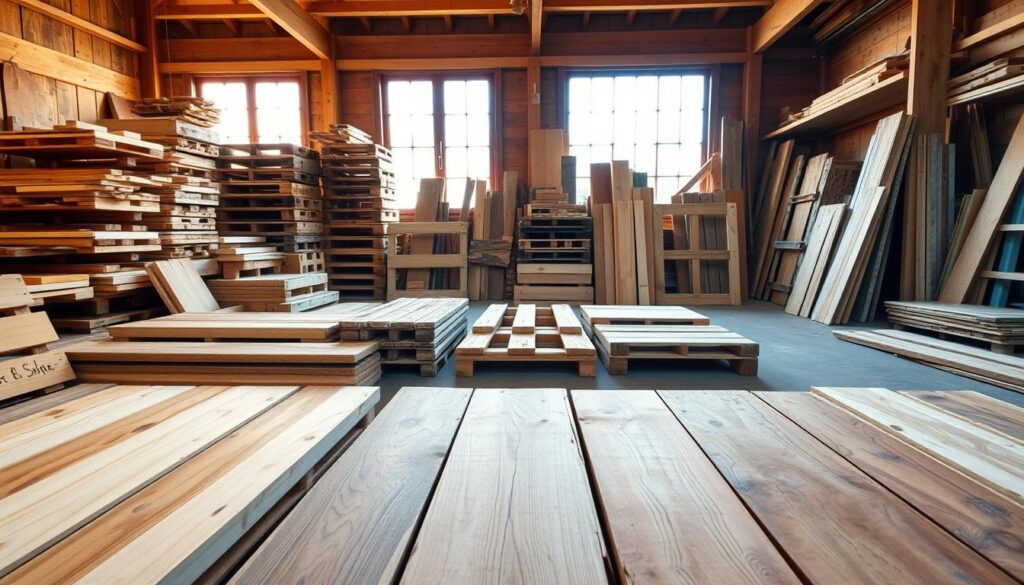
Smart buys and quick board checks save time and prevent costly mistakes on a furniture build. Plan what visible pieces deserve better stock and where you can economize on hidden supports.
Common board, select pine, and pre-primed pine — when they make sense
Common board (SPF/whitewood) is the cheapest option and works for rustic looks. It has knots and variable grain, so expect dents and uneven stain.
Select pine gives straighter boards and fewer knots. It’s a good mid-price choice when you want better appearance without using hardwood.
Pre-primed pine saves time if you plan to paint. You skip initial priming and reduce sanding while getting consistent coverage.
How to spot defects before you buy
- Skip furring strips for furniture; they often warp and stay rough.
- Sight along a board edge to find bow or twist; lay boards flat to check for cupping.
- Bring a tape and measure thickness and width—expect slight variance from nominal sizes.
- Buy a bit extra and keep receipts so you can return any bad boards and keep your diy schedule on track.
Balance cost and quality: invest in visible tops, save on internal frames, and learn how each wood type behaves as you gain experience. That choice protects your time and yields a better coffee table for your home.
The Ultimate Guide to Choosing Wood for Your DIY Coffee Table Project
Match how you use the space with a wood species that stands up to daily life and looks right. Start by listing traffic, kids, pets, and any moisture risks.
Match use-case to species
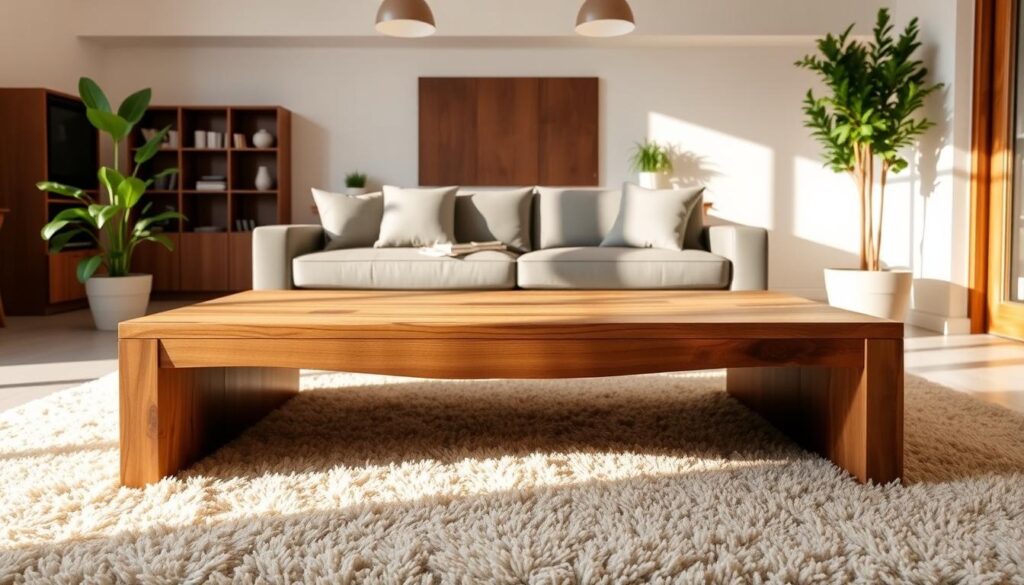
Busy rooms: choose oak or maple for dent resistance. Walnut balances premium look with solid durability. Teak works best where moisture is a concern.
Finish intentions: paint vs. stain
If you plan to paint, pick poplar or pre-primed pine for smoother prep and fewer blotches. For stain, oak gives even color and shows grain well; pine may blotch unless sealed first.
Pick legs that suit the top
Legs shape style and strength. Use hardwoods (oak, maple, cherry) for warmth. Choose stainless or wrought iron for an industrial feel. Acrylic adds airiness and stone adds weight.
- Finish choice: varnish for tough protection, oil to highlight grain, wax for soft touch.
- Tool note: harder species need sharper blades and slower feeds during your diy build.
- Design tip: echo existing furniture materials so the piece reads cohesive in the room.
Build Paths: Live-Edge Slab or Rustic Farmhouse Frame
A smart start splits options between a single live slab or a built-up farmhouse frame. Choose the route that matches your skill, tools, and how the piece will be used.
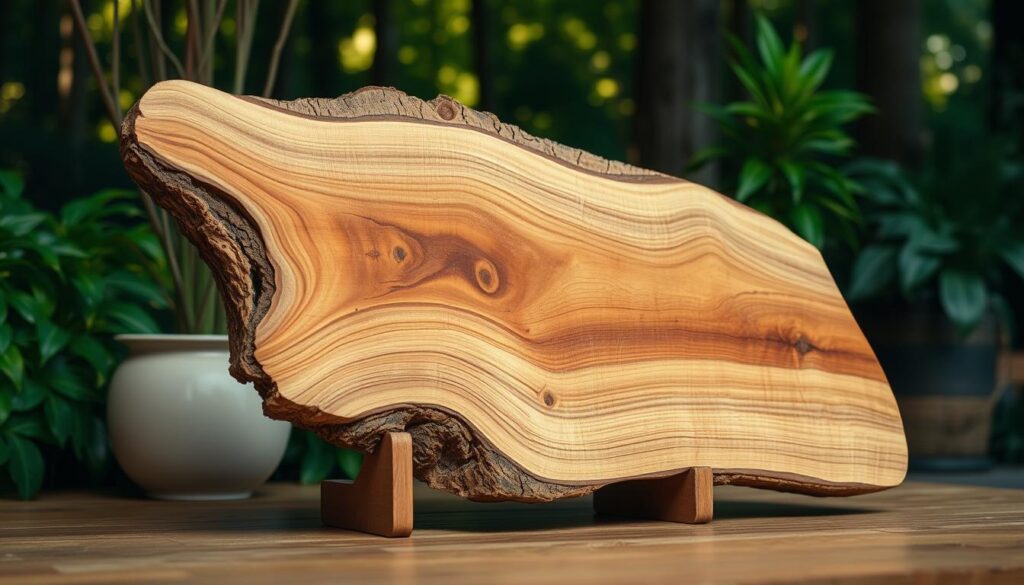
Live-edge slab essentials
Source a slab with stable moisture content and minimal checks. Target 1.5–2 inches for a sturdy top that isn’t overly heavy.
Flatten with a router sled or wide drum sander to get a true plane. Pair the slab with legs that fit your look: steel hairpins, square tube frames, or chunky hardwood posts.
Farmhouse build basics
For a 44″ x 44″ farmhouse coffee table, use eight 2x4s to form top and bottom rectangles. Add 11″ verticals between frames for roughly 18″ total height.
Fast joinery: framing nailer plus glue. For cleaner alignment use pocket holes. Create a waterfall effect by cutting 45° miters so grain wraps the side.
Storage-friendly designs
Add a lower shelf, shallow drawers, or a hidden lift-top for remotes and cables without increasing footprint.
- Fill gaps with fine sawdust mixed with wood glue for a matched color repair.
- Finish choices preserve texture: leave rustic raw with a clear matte or apply stain plus clear coat.
Finishing and Protection: Stain, Sealers, and Long-Term Care
Your choice of topcoat sets the balance between beauty and long-term durability. Pick a system that matches how much use the wood coffee table will see and how often you want to care for it.
Varnish, oil, or wax — protection levels and upkeep
Varnish builds a hard film that resists scratches and moisture. Use it when you need maximum surface durability on frequently used tables.
Oil finishes (tung, Danish) penetrate and enrich color and grain. They need occasional reapplication but keep the surface natural and warm.
Wax gives a soft sheen and quick touch-ups. It suits low-traffic areas but offers the least long-term protection.
Preventing sun fade, water rings, and scratches
- Use coasters and trays to stop water rings. Wipe spills promptly.
- Limit direct sun or apply UV-resistant topcoats to reduce color fade and warping in bright areas.
- Add felt pads under decor and ask guests not to slide items to reduce scratches.
- Clean with mild wood-safe products; avoid harsh chemicals that strip protection.
- Refresh light wear with a fine scuff and an extra coat to keep the finish working for years.
| Finish Type | Protection | Look | Maintenance |
|---|---|---|---|
| Varnish | High (scratches, moisture) | Gloss to satin | Low—lasts years before recoating |
| Oil | Medium (penetrating) | Natural, richer color | Periodic re-oiling |
| Wax | Low | Soft, low sheen | Frequent touch-ups |
Quick tip: test stain and finish on an offcut, especially with oak or darker species. Small trials prevent surprises in final color and sheen.
Conclusion
You now have a practical guide for picking species, thickness, and finish so your coffee table fits your room and your life at home.
Prioritize durability, grain, and color so the finished piece gives the look you want. Hardwoods like oak, maple, walnut, and teak deliver strong performance while softer woods save money but need care.
Keep slab thickness near 1.5–2 inches, aim for about 16–18 inches in height, and allow ~18 inches of clearance around seating. Match legs and hardware with top material so the whole furniture unit reads cohesive.
Choose a finish that fits your upkeep plans, use coasters, and avoid direct sun to limit scratches and color shifts. With these options in hand, your right wood choice will balance budget, style, and long-term durability for a wood coffee table that works at home.