

Did you know that over 70% of woodworking projects see their final appearance determined by the initial stain selection? This single choice profoundly influences the beauty and durability of your hard work.
Selecting the right finish is a fundamental step for any builder. The decision between the two primary categories of finishes significantly impacts your project’s look and longevity. Understanding the core differences is essential for achieving a professional-quality result.
Each type offers distinct advantages and limitations. These affect application ease, durability, and long-term maintenance needs. Modern formulations have evolved, challenging old assumptions about which product is superior.
The ideal choice is not universal. It depends on your specific project’s requirements. Factors like the wood species, interior or exterior use, desired aesthetic, timeline, and environmental conditions all play a critical role.
Key Takeaways
- The initial stain selection is a critical decision that affects both the appearance and longevity of a wood project.
- There are two main categories of wood finishes, each with unique properties and performance characteristics.
- Understanding the fundamental differences between these finishes is key to achieving professional results.
- Modern products have improved significantly, making traditional rules of thumb less reliable.
- The best choice depends on multiple project-specific factors rather than a single recommendation.
- Key considerations include the type of wood, the project’s location, and the desired final look.
Introduction and Project Overview
Before selecting a specific stain type, it’s crucial to grasp the fundamental roles stains play in woodworking. These products serve multiple functions that extend far beyond simple color application.
Purpose of Using Wood Stains
Wood stains provide essential protection against environmental elements. They create a protective layer that shields the surface from moisture damage and UV radiation. This barrier prevents warping and extends your project’s lifespan.
Color enhancement represents another key function. Stains can dramatically transform wood’s appearance or subtly highlight natural grain patterns. This versatility allows you to achieve any desired look, from rustic charm to modern elegance.

The aesthetic transformation capability makes stains invaluable for design consistency. Whether matching existing decor or creating a specific atmosphere, the right stain helps make your vision reality.
Key Considerations for Your DIY Build
Several factors influence your stain selection process. The wood species determines how deeply the product penetrates the surface. Hardwoods and softwoods absorb stains differently, affecting final results.
Project location significantly impacts your choice. Interior applications have different requirements than exterior projects exposed to weather elements. Consider drying times and ventilation needs during planning.
| Consideration Factor | Interior Projects | Exterior Projects |
|---|---|---|
| Moisture Resistance | Moderate protection needed | High protection essential |
| UV Protection | Minimal requirement | Critical for longevity |
| Drying Time | Flexible timeline | Weather-dependent schedule |
| Application Environment | Controlled conditions | Variable temperatures |
Your experience level and available tools also matter. Some application methods require specific equipment and skills. Proper preparation ensures professional-looking results while maintaining safety standards.
Understanding Oil-Based Stains
The molecular structure of oil-based stains gives them unique properties that distinguish them from other finishing options. These formulas contain smaller molecules that penetrate deep into wood fibers, creating protective barriers beneath the surface.

Unique Benefits of Oil-Based Formulas
Oil-based stains deliver exceptional durability through deep penetration into the wood’s cellular structure. This creates an added moisture protection layer that significantly extends your project’s lifespan.
These products produce rich, darker colors that bind with wood fibers to create light-reflecting films. The result enhances visual dimension within the grain, providing that traditional lustrous appearance many builders prefer.
For exterior applications exposed to weather elements, oil-based stains offer superior performance. Their deep penetration makes them ideal for decks, siding, and outdoor furniture where maximum protection against moisture and UV rays is essential.
| Feature | Oil-Based Stains | Water-Based Alternatives |
|---|---|---|
| Penetration Depth | Deep cellular penetration | Surface-level absorption |
| Color Development | Rich, dimensional tones | More uniform coverage |
| Exterior Durability | Excellent weather resistance | Moderate protection |
| Grain Enhancement | Significant dimension added | Subtle grain highlighting |
Potential Drawbacks and Application Challenges
These stains typically take longer to dry than other options—often requiring up to 24 hours between coats. The slow oil evaporation rate demands careful project planning as it extends your timeline.
You may require multiple coats to achieve uniform color coverage with oil-based stains. The exact number depends on your wood type porosity and desired color intensity.
Strong fumes during application and drying can affect people with sinus sensitivities. Always work in a well-ventilated area when using these products, particularly for indoor projects.
Exploring Water-Based Stains
Modern water-based formulas have revolutionized wood finishing with their unique combination of convenience and safety. These products offer distinct characteristics that make them ideal for specific applications and user preferences.

Advantages of Quick Drying and Easy Cleanup
Water-based stains dry remarkably fast, often within 1-2 hours. This rapid drying allows you to apply multiple coats in a single day. The quick evaporation of water accelerates your project timeline significantly.
These formulas contain fewer volatile organic compounds than traditional options. This makes them safer for indoor use and better for your respiratory health. The lower VOC content means fewer fumes during application.
Cleanup becomes incredibly simple with just soap and water. You avoid harsh chemical solvents that can be expensive and toxic. This convenience extends to brushes, tools, and accidental spills.
Cost-effectiveness represents another significant benefit. Water is an abundant and inexpensive base material. The pigments used in these stains typically cost less to produce.
Limitations in Penetration and Durability
Water-based stains may not penetrate wood fibers as deeply as other options. The polar nature of water molecules limits their ability to enter wood pores. This can result in color that sits more on the surface.
Exterior applications present durability challenges. These finishes are less naturally resistant to weather elements. They may require more frequent reapplication unless specially formulated.
A common issue involves grain raising. Moisture causes wood fibers to swell, creating a rough surface. You may need additional sanding between coats to achieve a smooth finish.
Despite these limitations, modern formulations continue to improve. Many now include UV absorbers and protective ingredients. This enhances their performance for various project types.
Oil vs. Water-Based Stains: Which Is Best for Your DIY Build
Wood porosity and environmental exposure create distinct requirements that guide your selection between different stain technologies. The ideal option depends entirely on your specific circumstances rather than universal superiority.
Matching Stain Types to Wood and Weather Conditions
Your wood’s natural porosity fundamentally affects how stains perform. Porous species like pine absorb significantly more product, displaying grain patterns prominently. Less porous woods like oak may require different application approaches.
Environmental conditions heavily influence your decision for outdoor applications. Harsh weather demands maximum protection against moisture and UV exposure. Certain formulations excel in these challenging settings.

Pros and Cons Comparison for Your Specific Project
Each option presents distinct advantages and limitations. Traditional formulations offer deep penetration and rich color development. Their protective qualities make them suitable for demanding exterior applications.
Modern alternatives provide convenience through rapid drying and easy cleanup. These characteristics benefit projects with tight timelines or limited ventilation. The trade-off involves different performance characteristics.
Consider your wood type, desired appearance, and environmental exposure when choosing. More vulnerable species benefit from enhanced protection. Your aesthetic preferences and working conditions also play crucial roles in determining the optimal solution.
Ultimately, your specific requirements should drive the decision process. Weigh protection needs against application convenience and environmental factors. This balanced approach ensures you select the most appropriate product for your unique situation.
Performance, Durability, and Environmental Impact
The lasting performance of your wood finish depends heavily on understanding long-term durability factors. Both protection longevity and ecological considerations play crucial roles in your selection process.
Long-Term Protection and Maintenance Needs
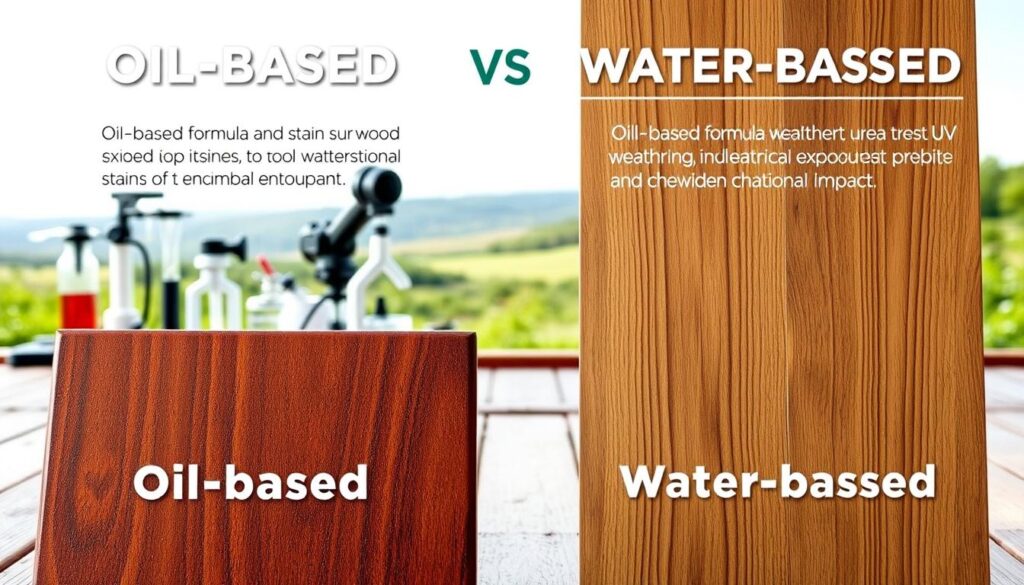
Oil-based formulas offer superior durability through deep wood fiber penetration. This creates robust barriers against moisture, UV damage, and wear in high-traffic applications.
These stains typically require reapplication every 2-5 years. They resist dust accumulation and maintain protection under harsh weather conditions. However, they may develop yellowish tones over time.
Water-based alternatives provide good initial protection but may need more frequent maintenance. Expect to reapply every 1-3 years depending on exposure levels. Their advantage lies in consistent color retention without yellowing.
VOC Levels and Eco-Friendliness Considerations
Environmental impact differs significantly between these wood stains. Oil-based options contain higher volatile organic compounds (VOCs). These contribute to air quality concerns and require careful disposal.
Water-based stains feature lower VOC levels, reducing harmful emissions. They promote better indoor air quality during application. Their water-based composition and easier disposal make them more sustainable choices for eco-conscious projects.
Your decision should balance protection needs with environmental responsibility. Consider both long-term performance and ecological footprint when selecting stains for your specific conditions.
Application Techniques and Expert Tips
Proper application methods can make the difference between an amateur-looking finish and a polished professional result. Mastering these techniques ensures your chosen product performs optimally.
Preparation and Proper Stain Application
Surface preparation varies significantly between different types of wood stains. Traditional formulas require more thorough preparation for proper adhesion.
You can apply these products with a brush, cloth, or sprayer. Their longer open time allows for even application and proper blending.
Modern alternatives demand quicker, more precise work. Their rapid drying requires maintaining a wet edge to avoid lap marks.
| Application Factor | Traditional Formulas | Modern Alternatives |
|---|---|---|
| Preparation Needs | Thorough surface preparation | Standard cleaning required |
| Working Time | Longer open time | Quick drying demands speed |
| Coverage Efficiency | Often fewer coats needed | May require multiple coats |
| Blending Ease | Easy color blending | Requires careful technique |
Cleanup, Finishing Touches, and Safety Guidelines
Cleanup processes differ dramatically between product types. Traditional options require special solvents for thorough cleaning.
Modern wood stains offer easy cleanup with just soap and water. This convenience extends to brushes and accidental spills.
Always work in a well-ventilated area with proper protective equipment. Follow manufacturer instructions for optimal results and safety.
Test your wood stain on scrap pieces first. Apply thin, even coats following wood grain direction for professional-quality finishes.
Conclusion
Ultimately, your project’s success hinges on matching stain characteristics to your specific requirements. The key differences between oil-based stains and water-based stains create distinct pathways to beautiful results.
Traditional formulas offer deep penetration and exceptional weather resistance, ideal for exterior applications. Modern alternatives provide convenience through rapid drying and eco-friendly composition, perfect for interior projects.
Your wood type, location, and desired aesthetic look should guide your final selection. Proper preparation and application techniques ensure your chosen wood stains deliver lasting protection and beauty.
For complex projects or uncertainty, professional guidance can be invaluable. At Lakeside Painters, we provide expert staining services to help achieve your vision. Contact us today to discuss your specific needs and find the perfect solution.