

Imagine saving an entire weekend on your deck refinishing project. That’s the powerful promise driving the popularity of modern finishing products. For DIYers and pros alike, time is a precious resource.
This guide dives deep into a critical question for anyone tackling a refinishing job. We will explore if these efficient solutions truly deliver on their bold claims. The goal is to see if you can achieve a beautiful, durable finish without the long wait.
Choosing the right product is more than just about speed. Factors like how deep it soaks in, the richness of the final color, and how well it protects your surfaces are vital. A poor choice can lead to disappointing results and extra work.
We will compare different formulations available today. You’ll get a clear look at water-based and oil-based options. Our analysis is based on real-world use and professional insights to help you make the best decision for your next project.
Key Takeaways
- Modern finishes offer significant time savings for both DIY enthusiasts and professional contractors.
- The core promise is a high-quality, protective coat with a drastically reduced drying period.
- Success depends on key factors like penetration, final color appearance, and long-term durability.
- The market offers various formulations, including water-based and oil-based products.
- Informed decisions are based on practical application and expert experience.
- This guide provides a detailed comparison to help you select the ideal product.
Overview of Fast-Drying Wood Stains
When selecting a protective coating, drying speed has become a critical deciding factor for many. These specialized products are designed to minimize waiting periods between applications. This makes them perfect for projects with tight deadlines or areas that need quick return to service.

What Sets Fast-Drying Stains Apart
The key distinction lies in their chemical composition. Water-based options use pigments dissolved in water, which evaporates rapidly from surfaces. This process can yield a touch-dry finish in as little as one hour.
Oil-based alternatives penetrate deeply but dry more slowly. Their petroleum distillates evaporate at a much slower rate. Gel formulas offer a thicker consistency that controls absorption.
Comparing Oil-Based, Water-Based, and Gel Stains
Each type operates through different mechanisms to achieve its results. Your choice depends on project requirements and desired working properties.
| Stain Type | Drying Time | Key Characteristics |
|---|---|---|
| Water-Based | 1-4 hours | Rapid water evaporation, easy cleanup with water |
| Oil-Based | Up to 24 hours | Deep penetration, rich color development |
| Gel Stain | 4-8 hours | Thick consistency, minimal dripping, mineral spirits cleanup |
This comparison helps you match the product to your specific needs. Consider surface orientation and wood type when making your selection.
Fast-Drying Wood Stains: Are They Worth It
The true value of a modern finishing product becomes clear when you see how it performs in real-world situations. These solutions are designed for efficiency without sacrificing the final look.

Defining Key Attributes and Benefits
The main advantage is the rapid drying time. This lets you complete your work much faster. You can often apply a second coat on the same day.
This speed also means your fresh finish is exposed to dust and debris for a shorter period. The result is a smoother, higher quality surface. For professionals, this time efficiency is a major productivity boost.
For weekend projects, it offers great convenience. You can transform a room without a long disruption. It also reduces the risk of environmental contamination.
Common Projects and Applications
These products excel on interior wood surfaces. They are perfect for updating cabinets, furniture, doors, and trim. The quick turnaround is essential for these living spaces.
Water-based formulas offer significant health and safety perks. They are non-flammable and resist mold. They emit fewer odors and VOCs, making them ideal for indoor use.
Cleanup is simple with just soap and water. A product like SamaN Interior Water Based stain can provide solid coverage in one coat. This works well on raw wood, delivering professional results efficiently.
Advantages and Disadvantages for Your Projects
Your project’s success depends on choosing the right finish for your specific application. Each formulation offers unique benefits that make it better suited for certain situations.

Benefits for Interior and Exterior Surfaces
Water-based options excel for indoor projects. They dry quickly, allowing multiple coats in one day. Cleanup is simple with just soap and water.
These products emit fewer fumes, making them safer for enclosed spaces. They’re also non-flammable and resist mold growth effectively.
For outdoor applications, oil-based formulations provide superior performance. They penetrate deeply into the wood grain, creating richer colors. This deep penetration offers exceptional weather resistance.
Potential Drawbacks and Limitations
Water-based products may not penetrate as deeply as oil alternatives. They can raise the wood grain, creating a rougher surface texture. Outdoor durability may be limited without special additives.
Oil-based options require longer drying times between coats. They often need multiple applications to achieve uniform color. The fumes can affect people with sensitivities.
Gel stains offer a middle ground for vertical surfaces and tricky hardwood. They minimize dripping but require chemical solvents for cleanup.
Your choice should balance timeline requirements against location and durability needs. Consider both immediate results and long-term performance for your projects.
In-Depth Comparison with Traditional Wood Stains
Choosing between traditional and modern wood finishes involves balancing time savings against long-term durability. Each formulation offers distinct advantages for different project requirements.
Durability and Drying Times
Traditional oil-based stains typically require 8-24 hours to dry completely. Modern water-based alternatives can become touch-dry in just 1-4 hours.
The difference stems from molecular structure. Oil molecules penetrate deeper into wood fibers, creating superior protection. This makes oil-based products ideal for exterior applications where durability matters most.
Water-based stains remain closer to the surface. Their polar molecules limit deep penetration but allow faster drying. Gel stains offer a middle ground with moderate drying times and consistent performance.

Impact on Wood Grain and Finish Quality
Water-based formulations often raise wood grain as moisture causes fibers to swell. This creates a rougher surface that may need extra sanding between coats.
Oil-based stains typically don’t raise grain but develop richer, darker colors. They bind with wood to create light-reflecting films that add depth. This makes them perfect for showcasing premium hardwood.
Gel stains provide consistent texture across different wood types. They excel at smoothing crevices and preventing blotching on problematic surfaces like pine. Your choice depends on whether you prioritize speed or maximum visual impact.
Application Techniques and Best Practices
Proper application technique is the final bridge between selecting a quality product and achieving a flawless finish. The right approach varies significantly depending on which formulation you choose.
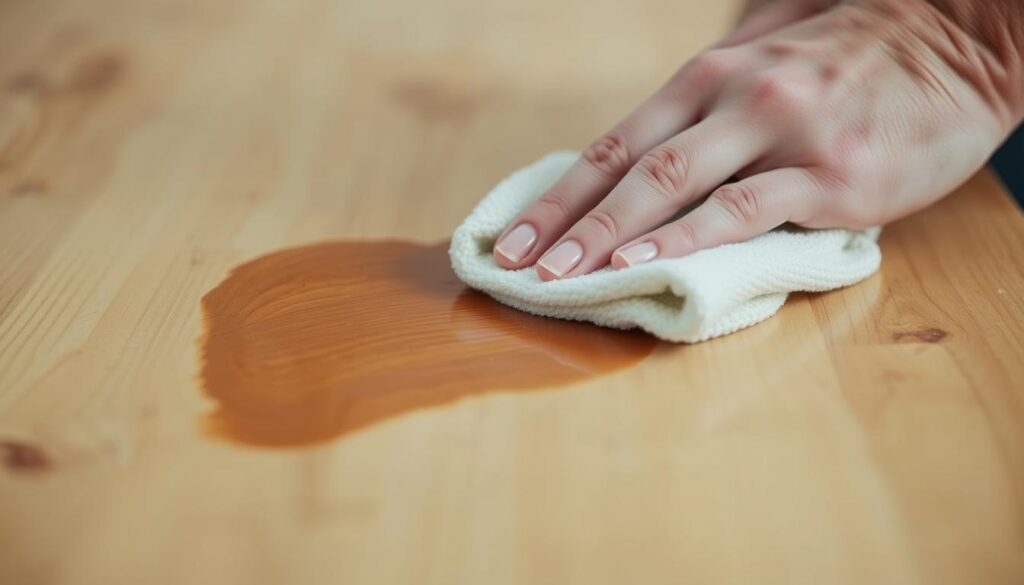
Preparation: Sanding and Surface Cleaning
For water-based products, start with raw, unfinished timber. Use fine-grit sandpaper (180-220) to create a smooth surface. This prevents scratches and allows even penetration.
Gel formulations require opposite preparation. Roughen the wood with coarse sandpaper (100-120 grit) for better grip. The texture helps the thick formula bond properly.
Always remove all dust with a tack cloth after sanding. Wipe with a slightly damp cloth and ensure complete dryness before applying your stain. Work in a clean space to avoid contamination.
Tips for Achieving an Even Coat
Water-based options need quick application. Use quality brushes or foam applicators, working with the grain. Maintain a wet edge to prevent lap marks.
Gel products offer easy apply benefits on vertical surfaces. Their thickness prevents dripping. You can cover entire projects without repositioning.
Some thick types like Minwax PolyShades cannot be wiped off. Let each side dry completely before moving. Others like Ready Seal allow brush, cloth, or spray application without between-coat sanding.
Lightly sand between coats when using water-based products. This smooths raised grain and ensures subsequent layers spread evenly across your furniture or other wooden items.
Choosing the Right Wood Stain for Your Needs
Your final selection process should begin with understanding how different wood species interact with various stain formulations. The porosity and grain characteristics of your material will determine which product delivers optimal results for your specific situation.
Criteria Based on Wood Type and Project Goals
Hard-to-stain varieties like pine and maple require special consideration. These woods absorb finishes unevenly, making gel formulations ideal for preventing blotching.
More receptive hardwoods work well with penetrating liquid stains. Your project location also influences the best choice between interior and exterior options.
| Wood Type | Recommended Stain | Key Benefits | Ideal Applications |
|---|---|---|---|
| Pine & Maple | Gel Stain | Even coverage, prevents blotching | Furniture, interior trim |
| Oak & Walnut | Penetrating Oil Stain | Deep penetration, rich color | Hardwood floors, exterior projects |
| General Hardwood | Water-Based Stain | Quick drying, low odor | Interior cabinets, DIY projects |
| Outdoor Surfaces | Exterior Wood Stain | Weather resistance, UV protection | Decks, fences, outdoor furniture |
Insights from Wood Stain Reviews and Expert Opinions
Professional finishers consistently recommend specific products for different scenarios. General Finishes Water Based Wood Stain receives praise for hardwood applications.
Minwax Penetrating Wood Finish excels on raw wood projects. Reviewers note its deep penetration and rich color development.
For exterior protection, DEFY Extreme Semi-Transparent Exterior Wood Stain stands out. Its zinc-reinforced pigmentation provides excellent durability against weather elements.
Always consult multiple professional reviews before making your final decision. Real-world performance can vary based on application conditions and wood characteristics.
Conclusion
Modern finishing solutions have transformed what’s possible for both weekend warriors and professional contractors. The primary advantage lies in significant time savings without sacrificing final quality when you match the product correctly to your specific needs.
Your choice should prioritize project requirements over drying speed alone. Consider the wood’s characteristics and intended location. Today’s water-based stain formulations offer dramatically improved performance compared to earlier versions.
Always test different stain type options on a small section of your wood surface. This helps you evaluate the final color and application ease before committing to your entire project. The right wood stain delivers both efficiency and excellent results.