

Nearly 60% of U.S. homeowners say a single furniture update changed how they use a living room — and it often starts with the centerpiece: the coffee table.
You can refresh your room without spending a lot by reworking a worn piece. Simple finishes like chalk paint, black paint, or a two-tone stain create big impact. Swapping hardware, adding a tile or mirror top, or adjusting height can improve both form and function.
Upcycling also cuts waste and opens creative paths: rustic wood planks, faux marble, fluting, or industrial wood-and-metal builds let you match style and durability to family life. Some projects wrap up in a weekend; others need more careful steps.
In this guide, you’ll find practical approaches that fit your space, budget, and skill level so you can move from idea to polished makeover with confidence.
Key Takeaways
- Small changes like paint or hardware swaps can refresh a room fast.
- Choose tops—tile, mirror, or planks—to make the surface a focal point.
- Adjusting height and proportions improves flow and comfort.
- Balance durability and style for family-friendly results.
- Start with easy projects and build skills toward more complex makeovers.
Why Upcycle Your Coffee Table Right Now
A modest surface update can cut waste, save money, and become the focal point of your home. It’s a practical way to refresh your living room without a full remodel.
Simple techniques like chalk paint or swapping hardware deliver high impact for minimal cost. Many projects finish in a weekend, so you’ll see results fast.
“A single, well-planned table makeover often gives more style and function than a new mass-produced piece.”
You reduce waste and stretch your budget by updating existing furniture. Hunting a sturdy piece at a thrift shop or in your garage is a smart way to start.
- Custom fit: You can size and style the result to suit your seating and flow.
- Low risk: Try finishes and topcoats to boost durability for daily coffee use.
- Skill growth: Each diy project builds the techniques you’ll reuse on future updates.
Plan Your Makeover: Style, Function, and Living Room Fit
Start by picturing how a single surface can anchor seating, lighting, and everyday flow in your living space. A clear plan saves time and helps you buy the right supplies in one trip.

Choose a design direction
Pick a style lane—farmhouse, modern, coastal, or industrial—so the piece complements existing furniture. Popular routes include coastal whitewash or bleached wood, farmhouse chalk paint with distressed edges, industrial reclaimed wood with metal, and modern sleek black paint with clean lines.
Match color and finish to your room’s palette
Decide on a color strategy and sheen that suits your room’s light. Use bright whites in dim corners and deeper tones where sunlight highlights texture.
- Function first: Think daily use—serving trays, feet-up lounging, or kids’ activities—and choose finishes for durability.
- Two-tone option: A stained top with a painted base creates contrast and visual depth.
- Practical details: Plan for storage, casters, or a lower shelf if you need mobility or extra surface area.
- Signature detail: Pick one standout feature—a plank top or fluted base—to make the table feel custom.
Finalize your choice so you can shop once and execute the project with confidence. When you match finish, color, and size to your textiles and metal accents, the result will feel polished and intentional.
Tools, Materials, and Safe Work Practices
Good results begin with the right kit—assemble tools and safety gear before you begin. Start by laying out sandpaper, a drill, quality brushes, screwdrivers, and a reciprocating saw (sawzall) for controlled cuts. These will help when you shorten legs or trim a pedestal to coffee table height.

Finishes matter. Choose between chalk or milk paint paired with wax or polyurethane depending on wear. Miss Mustard Seed’s Milk Paint (Ironstone), Milk Wax (White), and Milk Coat (Matte) create a durable, whitewashed look when you need a soft finish.
- Prep and strip: Use Ready-Strip to remove old coatings, then clean residue with GreenEZ Strip and Clean for best adhesion.
- Safe cutting: Use the sawzall for cutting and sand edges smooth to avoid sharp edges on any pieces you reattach.
- Protect yourself: Always work outdoors or in a well-ventilated area when stripping or bleaching. Wear a respirator, safety goggles, and gloves to protect lungs, eyes, and skin.
- Plan time: Test finishes on a hidden spot, allow full cure time for waxes and topcoats, and keep small parts labeled to speed reassembly.
For more detailed guides and supply lists, see this helpful resource: coffee table makeover guide.
Step-by-Step: Turn an Old Dining Table into a Coffee Table
With measured steps and the right tools, a dining surface can become a sturdy, well-proportioned low table. Start by testing heights: stack books or boxes in front of your sofa until you find a comfortable reach. Standard coffee table height ranges from 12″ to 24″.
Measure twice before you cut. Remove the tabletop from the base so you can work safely. Measure from the floor to the top, subtract your target height, and mark the base clearly.

Safe cutting and reassembly
Cut the pedestal or legs with a sawzall in one steady step. Sand the cut edges smooth to eliminate splinters and create clean lines.
Consider adding casters for mobility or swapping in new legs to match your seating height and style. Replace any damaged stretcher board beneath the top and reattach the base securely for a wobble-free result.
- You’ll keep hardware organized and photograph parts during disassembly to speed reassembly.
- You’ll confirm final height after reassembly so the coffee table aligns with cushion height.
- You’ll allow sufficient time for drying and adjustments before the finish coat.
Final check: Inspect stability and alignment, then choose your paint or stain system to make this piece furniture feel durable and polished. This measured approach keeps the project safe and on schedule.
Strip, Clean, and Bleach for a Light Wood Look
Begin by stripping finishes so you can see the true color and grain beneath the surface. Apply a thick layer of Ready-Strip and wait until the product turns whitish and chalky before scraping. Work in a well-ventilated outdoor area and wear a respirator, goggles, and gloves for safety.

Use safer paint remover and thorough cleaning before finishing
After scraping, scrub the surface with GreenEZ Strip and Clean, then rinse thoroughly. Let the wood dry fully in the sun; this reduces trapped moisture and speeds the next steps.
Bleach old oak in gel form with multiple dry times for a coastal tone
For orange-toned oak, apply a gel bleach in consecutive rounds. Allow each coat to dry overnight—three sessions often give a soft, weathered look. Sand lightly after the final rinse to smooth raised wood grain and remove rough spots.
Finish with white wax or diluted milk paint and a matte clear coat
Decide between white wax for a subtle veil or diluted milk paint for a softer whitewash. Try Miss Mustard Seed’s Ironstone mixed 2:1 water to paint for a translucent coating that still shows wood texture.
- Finish: Protect the surface with three coats of matte clear coat, allowing full drying time between each coat.
- Workflow: Strip, clean, bleach, sand, then seal—keeping consistent steps ensures a cohesive look.
- Safety & time: Work outdoors, follow dry times, and allow ample cure time to avoid trapped moisture under the final coat.
Paint and Stain Finishes That Transform an Old Coffee Table
The right paint and stain choices will make a modest top read like a designer piece. Pick a finish that fits how you use the piece and the room’s palette.
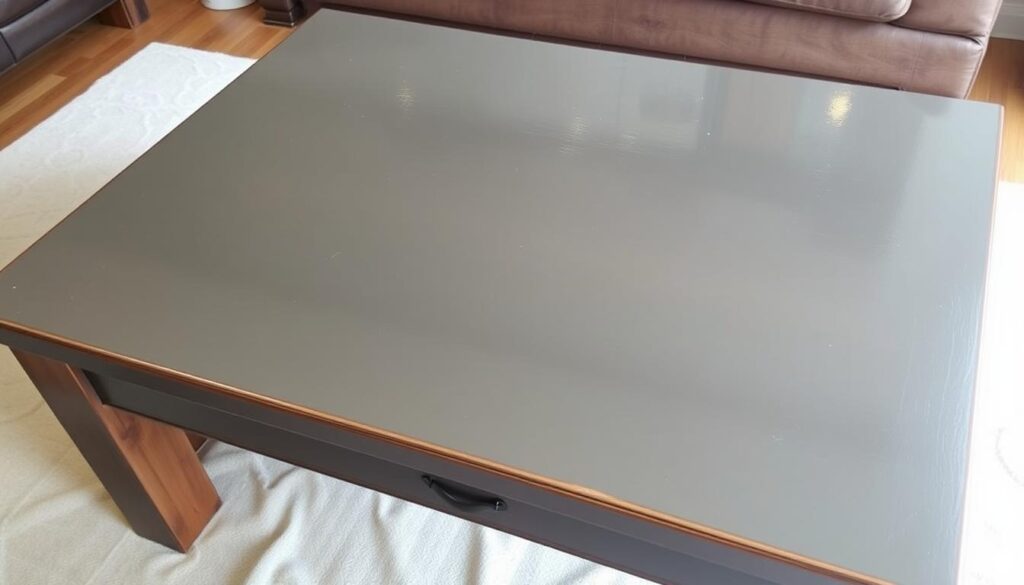
Chalk paint charm and distressed edges for vintage appeal
Chalk paint offers fast coverage and a soft, matte look that suits farmhouse and cottage styles.
Distress edges sparingly to reveal wood or a base color and create authentic age without overdoing it.
Black paint sophistication to ground a modern room
A deep black paint provides a dramatic anchor and works well on legs or bases to balance lighter tops.
Two-tone combinations: stained top with painted base
Pair a stained top with a painted base to add contrast and depth. Keep the top natural if you want warmth, and paint only the base for a subtle update.
Whitewash and lime wax to highlight wood grain
Whitewash or lime wax mutes orange tones and brings out grain. Seal with wax for a soft hand or polyurethane for high traffic.
Quick finish guide
- Select paint systems by goal: chalk paint for matte charm, enamel for sleek lines.
- Sample color on a hidden area to check undertones and coordination with fabrics.
- Choose sheen: matte hides flaws, satin balances care and appearance, gloss adds drama.
| Finish | Best Use | Wear Resistance | Sealer |
|---|---|---|---|
| Chalk paint | Matte vintage look, easy layering | Medium | Wax or polycrylic |
| Black enamel | Modern bases, high-contrast accents | High | Polyurethane |
| Stain + painted base | Contrast and depth | High (with proper sealer) | Polyurethane or oil-based topcoat |
| Whitewash / lime wax | Highlight grain, neutralize warm tones | Low–Medium | Wax or matte poly |
DIY Upcycled Coffee Table Ideas: Turn Old Furniture Into Fresh Designs
A few targeted changes will turn a basic top into a standout focal piece.
Rustic wood planks add instant farmhouse texture. Attach narrow reclaimed boards across the top, sand to a soft edge, then seal with a low-sheen poly for a warm, durable surface.
Industrial style with reclaimed wood and metal
Pair a weathered plank top with a simple metal pipe base to create an industrial profile. The mix of warm wood and cool metal gives strong visual contrast and holds up to daily use.
Hardware swaps: knobs, pulls, and leg updates for a quick refresh
Quick wins include swapping knobs or pulls on drawers, replacing feet with casters, or changing legs to shift scale. These small moves modernize pieces fast and often finish in an afternoon.
- You’ll unify mismatched pieces by repeating one finish, like black hardware or a single stain.
- You’ll add storage by installing a lower shelf or slatted rack for baskets and blankets.
- You’ll transform a dated silhouette into a table new favorite with minimal tools and time.
“Small, deliberate updates often yield the biggest style returns.”
Pattern and Personality: Stencils, Stripes, Transfers, and Decoupage
Add pattern to your top to give the room an instant personality boost. Small repeats and balanced scale make a surface read as intentional rather than busy.
Stenciled borders and center medallions
Stencils let you add intricate motifs without freehand work. Map a border or medallion to frame the top and keep motifs proportional to the surface size.
Painter’s tape stripes and color blocking
Use painter’s tape for crisp stripes or geometric color blocking. Coordinate palette and colors with nearby textiles and metal finishes for a cohesive look.
Image transfers and decoupage for custom art
Transfers and decoupage make it simple to apply typography, botanical prints, or abstract art under a sealed finish. Practice on a board, refine registration, then seal the top thoroughly to protect against rings and wear.
- You’ll balance pattern scale so motifs read clearly without overwhelming the surface.
- You’ll elevate touch points with smooth topcoats so patterns feel pleasant and cleanable.
- You’ll combine a patterned top with a quiet base color to keep the piece balanced.
| Method | Best For | Durability |
|---|---|---|
| Stencil | Repeatable patterns, medallions | High with sealed top |
| Painter’s tape | Stripes, color blocking | High with proper paint |
| Decoupage/transfer | Custom art and imagery | Medium–High when sealed |
Statement Surfaces: Tile, Mirror, Faux Marble, and Faux Stone
Choose a striking surface to give your seating area instant personality and durability. You can pick a tile, mirrored glass, or a faux stone finish to change how the room reads and performs under daily use.
Tile tops for color and resilience
Tile creates a wipe-clean, heat-resistant top that adds pattern and long-term wear. Prepare a flat substrate, use the correct adhesive, and grout to prevent lippage and chipping.
Mirror-effect glass for high-glam shine
Apply mirror-effect spray to tempered glass for a reflective look that enlarges the space. Seal the underside and protect edges so the surface resists scratches and keeps a clean side profile.
Faux marble and mosaic faux stone techniques
Paint soft veining for a marble look or craft mosaic faux stone for artisanal texture at low cost. Test your method in a corner, then seal with the appropriate clear coat to lock in the finish and add durability.
- You’ll validate weight and stability so added materials won’t overload the table.
- You’ll mitigate sharp side transitions with trim or rounded edges for a smooth feel.
- You’ll polish cured surfaces and apply a final clear coat for longevity and sheen.
| Surface | Best Use | Sealer |
|---|---|---|
| Tile | High-traffic, hot items | Polyurethane or epoxy grout sealer |
| Mirrored glass | Reflective, glam accent | Clear exterior-grade coat |
| Faux marble/stone | Budget luxe look | Water-based clear coat |
Soft-Top Solutions and Texture Upgrades
A cushioned top paired with architectural trim updates both comfort and profile.
Upholstered tops add a softer touch while keeping the surface useful for living rooms. Use performance fabric and a medium-density foam to balance comfort with stability. Add a thin batting layer to smooth seams and keep edges neat.
Protect fabric with a stain-resistant spray and keep a removable tray on hand for drinks. This keeps the piece practical for daily use and easy to maintain.
Applied trim and fluting modernize plain bases. Glue and pin narrow trim, then paint or stain it to match the core finish. Fluting creates subtle vertical rhythm that reads like custom millwork.
Secure upholstery staples under the top and hide raw seams with upholstery tape for a clean result. Combine soft tops with solid bases to blend comfort and durability across pieces.
| Upgrade | Material | Benefit |
|---|---|---|
| Upholstered top | Performance fabric + foam | Comfort, tailored look |
| Removable tray | Wood or metal | Protects fabric from spills |
| Applied fluting | Trim or moulding | Architectural depth |
Sizing, Proportions, and Everyday Use
Measure and test before you cut to make sure the final piece fits how you live. A quick mock-up with books or boxes helps you confirm height and reach in your living room.
Height, length, and flow in your living room layout
Comfortable height usually falls between 12″ and 24″. Align the top with sofa cushions so sitting and reaching feel natural.
Size length to about two-thirds of your sofa width. Keep at least 16–18 inches of clear walking space on each side for easy flow.
Pick a shape—round, oval, or rectangular—that places surfaces within easy reach from every seat. Check that legs or a pedestal still look balanced after any reductions.
Topcoat choices for high-traffic durability
Choose tough finishes if the table sees daily use. Apply multiple coats of a hard-wearing sealer to protect against scratches, spills, and heat from mugs.
Use trays or coasters to reduce maintenance and preserve the surface. Consider adding casters for mobility or a lower shelf for storage when you need extra place for remotes and baskets.
- Confirm height between 12 and 24 inches to match seat cushions.
- Keep two-thirds sofa length and 16–18 inches side clearance.
- Verify leg or pedestal proportions remain visually balanced.
- Apply multiple topcoat layers for lasting protection.
- Plan modest maintenance time so the finish stays looking great.
| Concern | Recommendation | Why it matters |
|---|---|---|
| Height | 12″–24″ | Comfort and reach |
| Length | ~2/3 sofa width | Scale and flow |
| Finish | Multiple durable coats | Scratch and spill resistance |
“A well-proportioned surface saves time and makes the room feel intentional.”
Smart Sourcing and Budget Tips for Thrift Store Finds
Look beyond scratches: great makeovers begin with solid bones and good scale. Start by checking joinery, leg stability, and flatness of the top before you lift or load anything.
Seek solid wood or sturdy frames so you spend time on styling, not structural repair. Small veneer chips are easier to fix than loose joints or sagging tops.
What to inspect
- Scan for tight joints and sound legs; weak glue lines mean big fixes.
- Prefer a flat, solid top and a stable base to speed up your table makeover.
- Note scale—measure width and height so the piece fits your home before you buy.
Quick wins to stretch your budget
Some projects finish in a weekend. A spray paint refresh or a gel stain overlay can hide surface flaws quickly.
- Swap or update small hardware for immediate polish and better function.
- Choose simple overlays or a new topcoat if the frame is strong but the finish is tired.
- Bring a tape measure and blanket to transport finds safely and confirm fit.
“Many successful makeovers start with thrifted pieces, keeping costs low while achieving custom results.”
Filter by what you can complete with your tools and time. Build a shortlist of ideas and projects that match your skill level so the final result outperforms big-box options at a fraction of the cost.
Conclusion
Careful measuring and a clear finish plan will turn a standard top into a long-lasting focal point. You can convert a dining piece by cutting or shortening legs, sanding edges, and reassembling with secure joinery.
Choose your finish to match daily use: chalk paint, milk paint, stain, bleaching, or white wax, then seal with matte clear coats for durability. Apply multiple protective coats on the top to resist rings and wear.
Pick the approach that fits your time and budget—rustic planks, industrial wood-and-metal, patterned tops, or a tile or mirror surface can all work. With measured steps and the right materials, you’ll enjoy a confident table makeover that suits your room and home.