

Did you know that nearly 70% of homeowners feel their living space lacks truly personalized furniture? You can change that starting today.
You are about to begin a rewarding woodworking journey. It transforms basic materials into functional furniture for your home. Building your own piece offers an excellent entry point into furniture making. It combines a manageable scope with practical results.
This guide walks you through multiple beginner-friendly projects. Each one is designed with different skill levels and style preferences in mind. You will discover that creating custom furniture is not just about saving money. It is about crafting items that perfectly fit your space and express your personal aesthetic.
Whether you want a simple weekend activity or wish to develop foundational skills, these builds provide the perfect starting point. You will learn essential techniques including cutting, joining, and finishing. These skills apply to countless future endeavors.
Key Takeaways
- Building your own furniture is a great way to add personal style to your home.
- Starting with a small project helps you learn fundamental woodworking skills.
- Custom-built pieces can be designed to fit your exact space and needs.
- This guide offers a variety of designs suitable for different experience levels.
- Learning these techniques provides a foundation for more advanced projects.
- Creating something yourself brings a deep sense of accomplishment.
Introduction: Kickstart Your DIY Journey
Your journey into woodworking starts by envisioning how a custom piece will enhance your living environment. This initial planning phase sets the foundation for a successful build that combines practicality with personal expression.
Project Overview and Inspiration
Creating furniture yourself allows for complete control over the final result. You determine the exact dimensions, materials, and aesthetic details. This approach ensures your piece fits perfectly in your space.
The skills you develop during this endeavor provide a solid foundation for future creations. Measuring accurately and joining pieces securely become second nature. These techniques apply to countless other furniture builds.
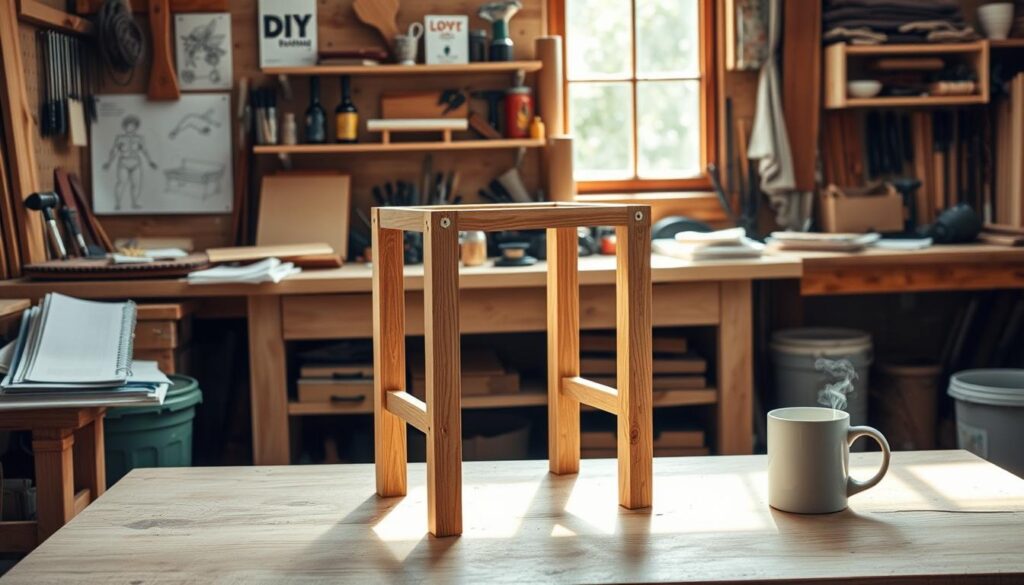
Various design approaches offer inspiration for your unique creation. From straightforward plywood constructions to sophisticated tapered-leg designs, you can choose what matches your skill level and personal taste.
Understanding the Purpose of Your Side Table
Before cutting any wood, consider how you’ll use your finished piece. Will it primarily hold drinks and lamps beside your sofa? Or might it serve as an attractive plant stand with multiple display levels?
Defining the primary function guides your design choices. It influences shelf configuration, overall height, and material selection. This thoughtful planning ensures your creation meets your specific needs.
The beauty of building yourself lies in this customization. You craft furniture that serves your lifestyle perfectly while expressing your unique style. This personal touch transforms basic materials into something truly special for your home.
Materials & Tools: The Foundation for Your Build
Before cutting your first board, gathering the essential materials and tools ensures a smooth building process. This preparation phase prevents frustrating interruptions that can disrupt your creative momentum.
Essential Wood, Hardware, and Finishing Supplies
Your materials list forms the backbone of your project. For a plywood construction, you’ll need 3/4-inch cabinet grade plywood. Poplar works excellently for this application.
Edge banding creates a polished look on exposed edges. Basic hardware like screws and wood glue completes your supply list. Quality adhesive forms the foundation of strong, lasting joints.

Alternative approaches require different materials. The fir decking method uses 2-by-2 stock for sturdy legs. You’ll also need 5/4-by-6-inch fir decking for an attractive tabletop.
Required Tools for a Smooth Assembly
Your essential tool collection should include a drill with various bits. A saw—whether table saw, miter saw, or circular saw—handles precise cutting tasks.
A pocket hole jig creates professional-quality joints with minimal experience. Clamps secure pieces during assembly for accurate results. Having the right tools makes the difference between frustrating struggles and satisfying progress.
Many home improvement stores offer cutting services for precision results. This eliminates the need for a table saw if you don’t own one. It ensures your boards start with accurate dimensions.
Planning and Measuring: Preparing for Success
Careful planning separates amateur results from professional-looking furniture. This critical step ensures every component fits together perfectly.
Before diving into your project, take time to visualize the final outcome. Proper preparation prevents wasted materials and frustration.
Designing Accurate Measurements and Layout
Your project’s success begins with precise measurements. For the plywood design, you’ll need specific cuts including four 1.5-inch by 24-inch pieces for the legs.
Consider the overall size carefully. Will it fit your intended space? Measure twice, cut once is the golden rule.
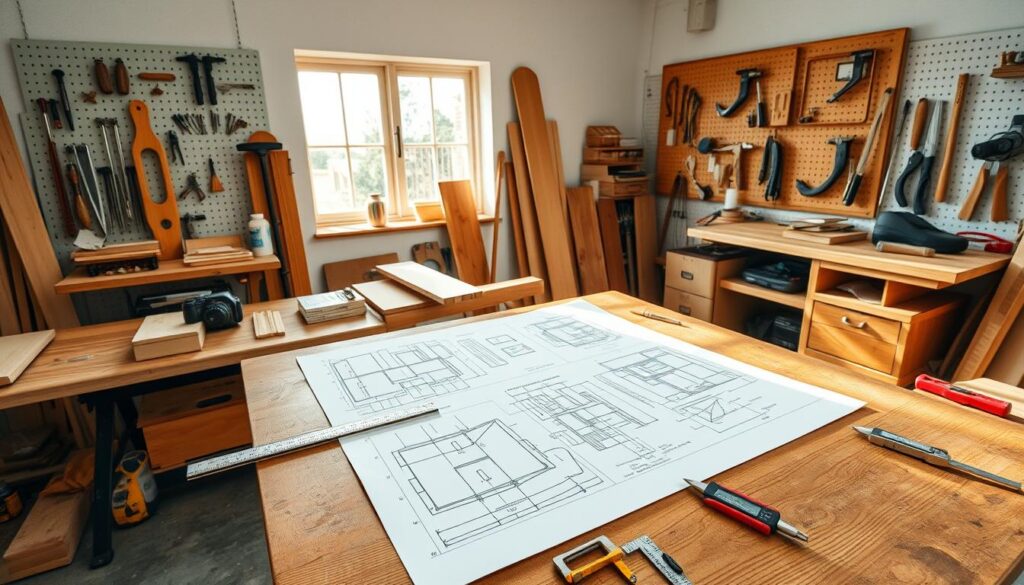
Creating a detailed cut list is essential. This helps you purchase the correct amount of materials and visualize how pieces fit together.
Creating Blueprints and Customizing Your Design
Drawing simple sketches with labeled dimensions keeps you organized. These plans serve as a reference throughout construction.
“Measure with precision, build with confidence. The extra time spent planning pays dividends in the final result.”
You have complete freedom to customize dimensions. Adjust height, width, or depth while maintaining structural proportions.
| Component | Quantity | Dimensions | Material |
|---|---|---|---|
| Leg Pieces | 4 | 1.5″ x 24″ | Plywood |
| Rail Pieces | 2 | 1 3/8″ x 13 1/2″ | Plywood |
| Table Top | 1 | 14″ x 16″ | Plywood |
| Shelf Support | 4 | 3/4″ x 3/4″ | Plywood |
Remember to account for reveals between elements. A 1/4-inch spacer creates consistent spacing.
DIY Side Table for Beginners: Easy Projects to Start With
Building the structural framework requires precision joining techniques that ensure long-term stability and professional results. This phase transforms your cut pieces into a unified furniture base.
Step-by-Step Assembly of Legs and Rails
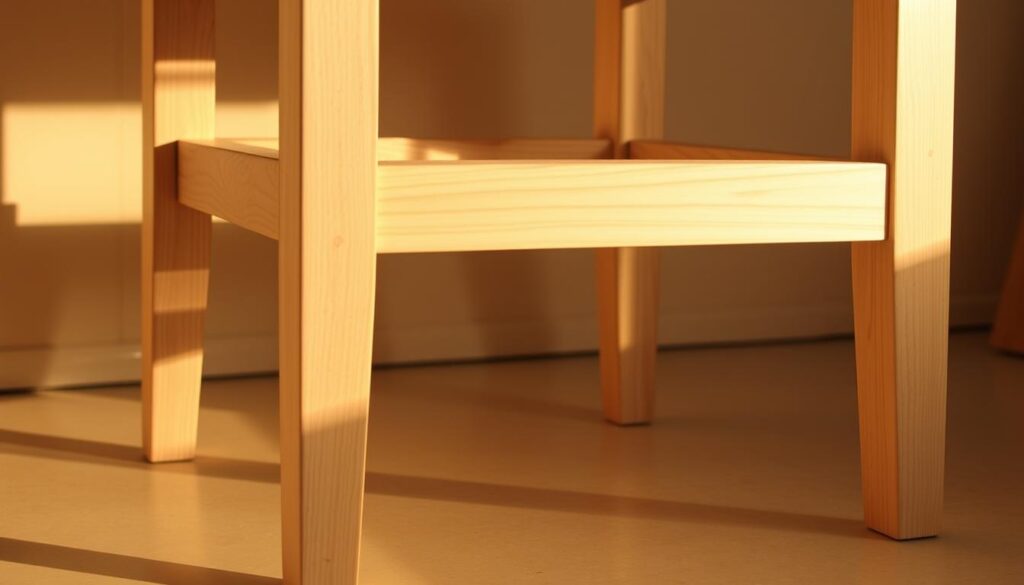
Begin by constructing the four legs that form your table’s foundation. Apply wood glue to each 1 1/2-inch piece before attaching the 3/4-inch component with a nail gun.
The rail assembly connects your legs together securely. First attach the longer rails between two legs using glue and nails. Then work on the shorter sides with pocket hole screws or careful toenailing.
Effective Joining Techniques Using Glue, Screws, and Pocket Holes
Pocket holes create incredibly strong joints that remain nearly invisible. Drill them at rail ends using your pocket hole jig before assembly. Strategic placement keeps them hidden once shelves and the top are added.
For shelf support, measure 5 inches from the bottom and glue/nail in 3/4-inch square pieces. These create stable platforms for your shelf installation.
Attach the top by countersinking screw holes to keep fastener heads flush. Apply glue before driving screws through the base into the underside. This combination creates joints stronger than either method alone.
Finishing Touches: Sanding, Staining, and Edgebanding
The final stage of your furniture project brings all your hard work together through expert finishing techniques. This process transforms raw construction into a polished piece that reflects your careful craftsmanship.
Smoothing and Preparing Surfaces for a Polished Look
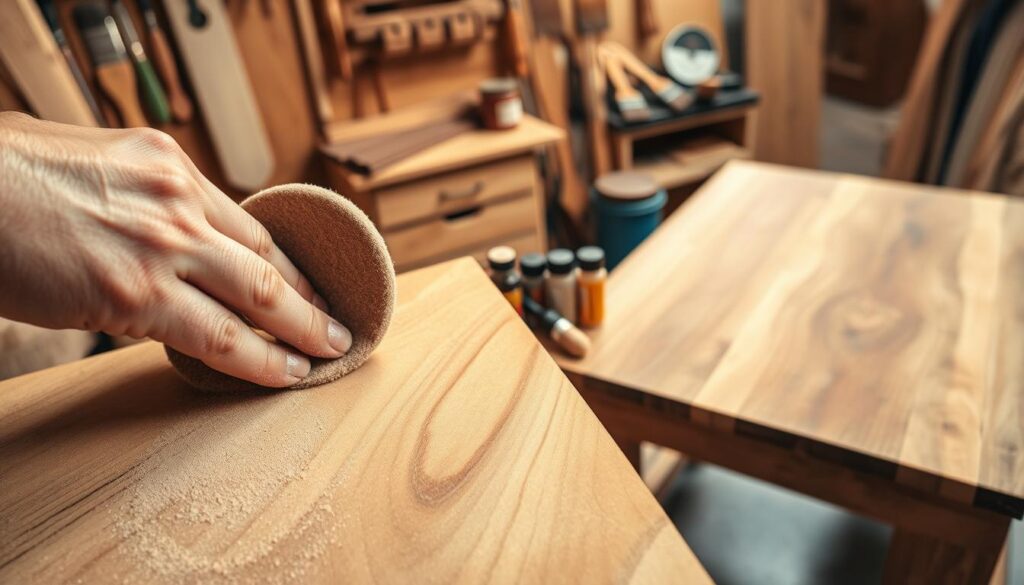
Begin by applying drywall spackle to all end grain surfaces except the top’s edges. This crucial step creates smooth edges that conceal the plywood’s layered construction.
After the spackle dries, sand thoroughly with fine-grit sandpaper. This removes imperfections and creates an even surface that accepts paint and stain beautifully.
For the base, use white flat paint and primer in one. Work carefully to avoid getting any paint on the top surface. This two-tone approach creates visual interest.
Applying Stain and Protective Coatings for Longevity
Edgebanding conceals raw plywood edges on your tabletop. Cut 1/8-inch thin pine strips and glue them sparingly to prevent squeeze-out. Secure with a staple gun for clean results.
For the top, red mahogany gel stain offers excellent control. Apply two coats, creating a slightly thicker ring around the outskirts for an authentic worn appearance.
Once the stain dries completely, apply water-based polyurethane as a protective finish. This prevents yellowing on white surfaces. Complete with linseed oil beeswax polish for extra protection and smoothness.
| Finishing Step | Material Used | Application Method | Key Benefit |
|---|---|---|---|
| Surface Preparation | Drywall Spackle | Apply to end grain | Conceals plywood layers |
| Base Coating | White Paint/Primer | Brush application | Creates clean foundation |
| Edge Treatment | Pine Strips | Glue and staple | Professional edge appearance |
| Top Finish | Gel Stain | Two-coat application | Controlled, drip-free results |
| Protective Layer | Water-Based Polyurethane | Spray or brush | Prevents yellowing |
Creative Customizations and Design Variations
Customization transforms a basic furniture project into a piece that perfectly reflects your individual style and functional needs. You can easily adjust the dimensions and shape to match your specific requirements. This approach ensures your creation serves both practical purposes and aesthetic preferences.
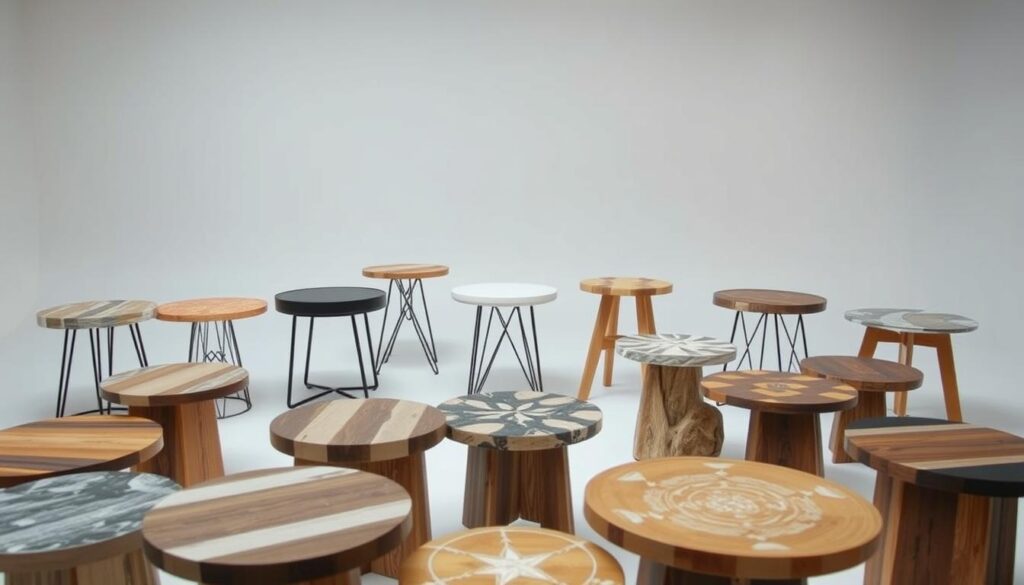
Beginner-level assembly makes this an excellent weekend endeavor. You have complete freedom to tailor every aspect according to your vision.
Adapting the Project to Fit Your Style and Space
Consider modifying the overall size to accommodate your room layout. Increase the height for use beside taller seating or reduce the footprint for compact areas. These adjustments ensure your piece fits perfectly in its intended location.
You can choose between square and round shelf designs based on your preference. For circular shelves, mark a 14 3/4-inch diameter and cut smoothly with a jig saw. This option creates a softer, more organic appearance.
Innovative Ideas for Personalizing Your Side Table
Finish selection dramatically impacts your table’s character. Natural wood showcases beautiful grain patterns, while stains add rich color depth. Paint creates bold statements or subtle neutrals that complement your room’s decor.
Experiment with different wood species for varying aesthetics. Add personal touches like decorative hardware or contrasting finishes between components. These elements make your creation truly unique to your home environment.
The two-shelf design adapts beautifully as a plant stand, end table, or display piece. Adjust proportions to create matching sets or coordinate with other furniture in your space.
Enhancing Your Build with Video Guides and 3D Tools
Video tutorials and 3D design platforms revolutionize how beginners approach furniture construction. These digital resources provide visual clarity that written instructions alone cannot match.
Leveraging How-To Videos for a Better Perspective
Watching construction videos gives you a significant advantage. You see proper tool handling and assembly techniques from multiple angles.
Real-time demonstrations show joint assembly and finishing applications clearly. This visual learning complements written guides perfectly.
Visualizing Your Project with HomeByMe and MakeByMe
MakeByMe lets you design your perfect side table in 3D before cutting wood. This saves time and materials by testing design options digitally.
HomeByMe places your virtual creation in your actual home environment. You confirm size, style, and finish choices confidently.
Create multiple variations to compare different configurations. The platform generates detailed plans for accurate construction.
This digital planning prevents common mistakes. Your final piece will fit your space perfectly and match your decor.
Conclusion
The satisfaction of stepping back to admire a piece you built with your own hands is truly unmatched. Your completed furniture stands as tangible proof of developing woodworking abilities.
You’ve explored various construction methods, from straightforward plywood builds to sophisticated designs. Each approach teaches valuable techniques with tools like your drill and saw. These skills transfer directly to future endeavors.
This hands-on experience develops confidence and precision. Every cut, hole, and finish application builds understanding of how wood behaves. Your personalized creation fits your space perfectly.
Gather your materials from the list and begin transforming raw boards into functional furniture. The journey from planning to completion teaches lessons that extend far beyond the workshop.