
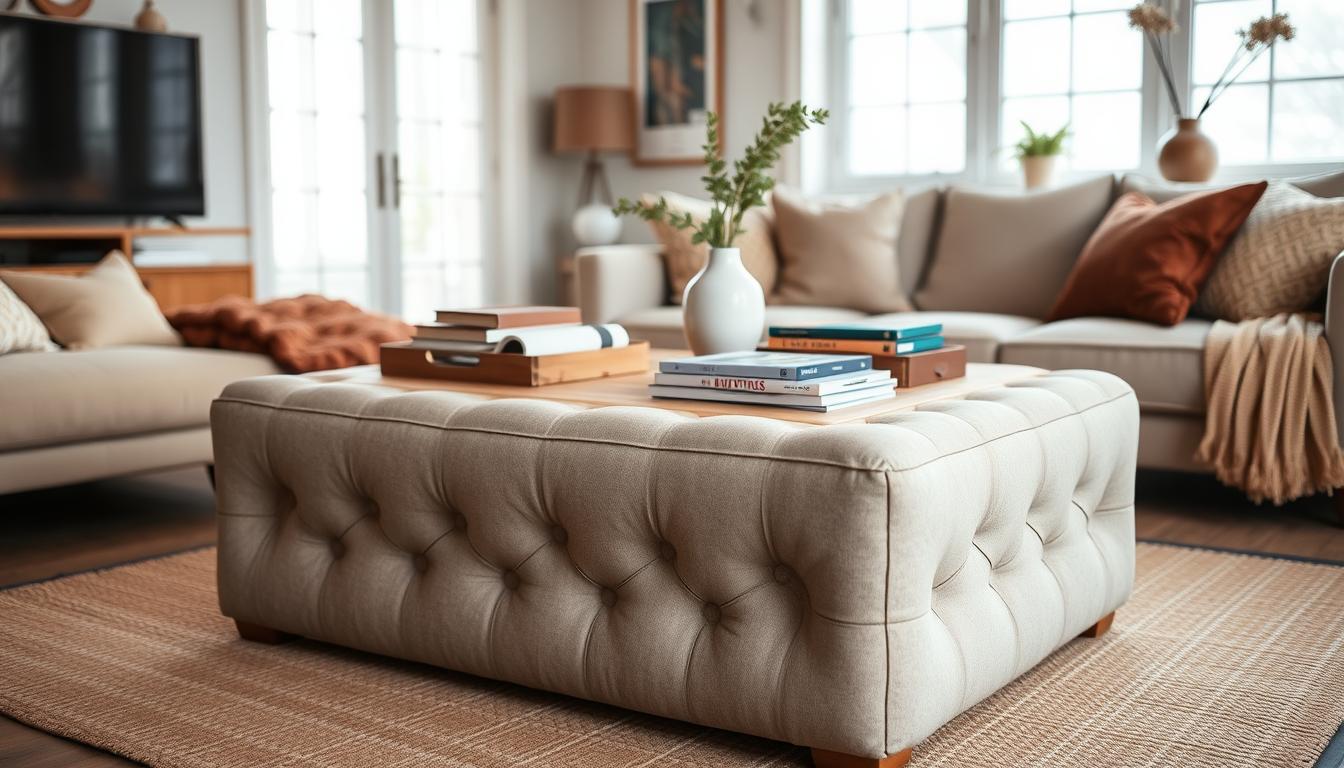
Did you know that the average American living space has shrunk by nearly 30% over the past four decades? This surprising statistic highlights why multi-functional furniture has become essential for modern homes. Your living area deserves a centerpiece that works as hard as you do.
Many homeowners face the same dilemma: wanting comfortable seating for relaxation while needing a stable surface for daily use. This creative project solves both needs in one elegant piece. You can build something that serves dual purposes without sacrificing style.
The beauty of this approach lies in its flexibility. Whether you’re working with existing pieces or starting from scratch, the process adapts to your skill level and space requirements. You’ll create a custom piece that perfectly matches your room’s dimensions and aesthetic.
This guide walks you through every stage, from planning to finishing touches. You’ll discover that achieving professional results requires only basic tools and moderate skills. The transformation is more accessible than it might appear at first glance.
Key Takeaways
- Multi-functional furniture maximizes limited living space effectively
- Dual-purpose pieces eliminate the need to choose between comfort and utility
- Custom dimensions ensure perfect fit for your specific room layout
- Basic woodworking and upholstery skills are sufficient for successful completion
- Professional-looking results are achievable with careful planning and execution
- The finished piece adds both practical function and aesthetic warmth to your space
- Safety improvements include eliminating sharp corners from traditional tables
Understanding the Project and Key Benefits
What if your most comfortable piece could also handle your daily needs without compromise? This transformation bridges the gap between relaxation and practicality in your home.
Why Convert Your Ottoman?
Many people love their large seating pieces but struggle with limited functionality. One homeowner with a 51-inch square piece found it perfect for creating a bed-like movie area but had nowhere to place drinks.
This project solves that exact problem. You gain a stable surface for beverages and essentials while keeping the cozy appeal. The hybrid approach eliminates the need to choose between comfort and utility.
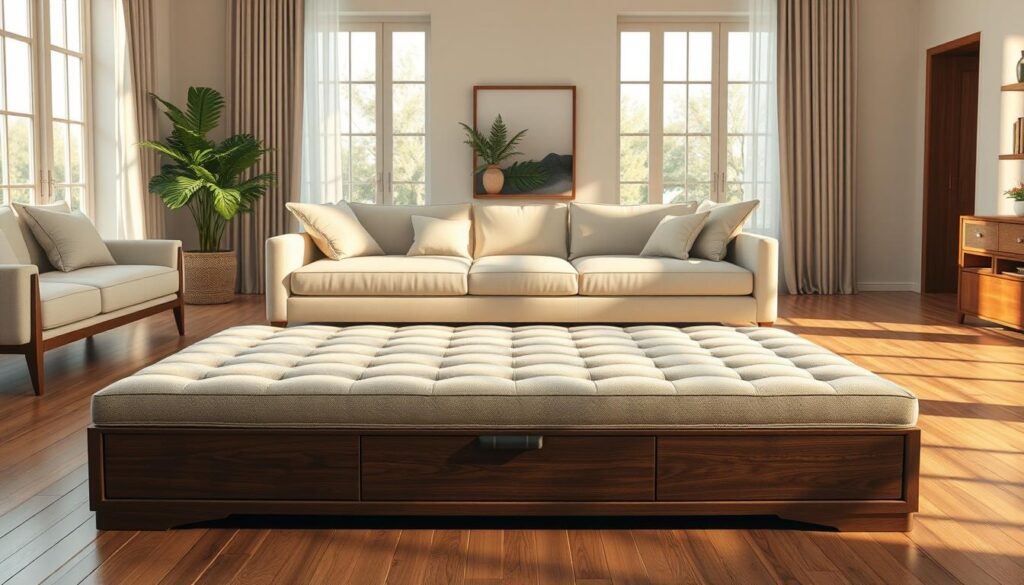
Enhancing Comfort and Functionality
Adding fabric elements through simple upholstery introduces warmth to your space. This creates a cohesive look that ties your design together beautifully.
Families with young children appreciate the safety benefits. The conversion removes dangerous sharp corners found on traditional furniture. Your living room becomes both stylish and child-friendly.
You’ll create a versatile centerpiece that adapts to different occasions. Whether entertaining guests or relaxing solo, this piece serves multiple purposes in your area.
Planning and Preparing Your DIY Ottoman Coffee Table: Convert Comfort into Function
A successful build starts long before the first cut is made, with careful preparation being the cornerstone of any great furniture project. This phase ensures efficiency and a high-quality finish.
Proper planning minimizes material waste and prevents frustrating errors. You will lay the groundwork for a smooth construction process.
Gathering Materials and Tools
Begin by selecting your core materials. For the wood surface, red oak plywood offers a beautiful and durable option. A standard 4′ x 8′ piece can be cut to your desired size at stores like Home Depot.
For cushioning, you will need high-density foam, ideally 4 inches thick. Upholstery fabric, typically 54 inches wide, should complement your room’s decor.

Essential tools include a staple gun, adhesive spray like 3M Super 77, a utility knife, and a measuring tape. Do not forget safety gear such as goggles.
Measuring and Visualizing Your Design
Accurate measurements are non-negotiable. Record the exact dimensions of your existing piece to determine the final table top size.
Calculate your fabric needs by adding the top dimensions plus the foam thickness on all sides, plus extra for stapling.
Sketching a simple diagram on paper is a powerful step. It helps you visualize how components fit together, preventing costly trial and error during your project.
Step-by-Step Construction and Assembly
With your materials gathered and design planned, the construction stage brings your vision to life. This phase focuses on precision cutting and creating strong, stable joints.
Following each step carefully ensures a professional result.
Cutting and Shaping Wood Components
Begin by laying out your wood and confirming all measurements. Accurate cuts are crucial for a perfect fit.
When cutting materials like red oak plywood, use a blade designed for fine cuts. This prevents splintering along the edges.
Place the finished side of the piece face down on your saw. This technique protects the visible surface. Cut the main table top and the legs to your specified dimensions.
Using Adhesives and Fasteners for Stability
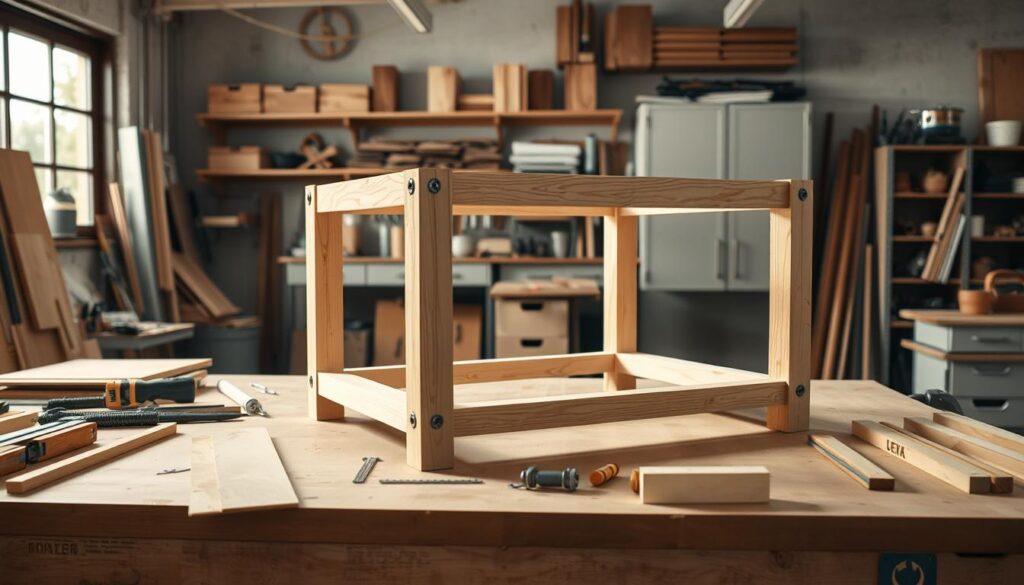
Join your wood pieces using a strong adhesive like liquid nails. Corner clamps hold everything securely while it sets.
Reinforce the joints for maximum stability. You have two primary options:
- Wood screws from the top: Effective but visible. Fill the holes later.
- Pocket holes: Hidden fasteners for a cleaner, more professional look.
After assembly, fill any imperfections with wood filler. Sand the entire surface smoothly, starting with 120-grit paper and finishing with 220-grit.
The final step is applying edge banding. Iron it on to conceal the plywood layers. This detail makes your table look like a solid piece of furniture.
Customizing with Upholstery and Finishing Touches
The finishing stage transforms your project from basic construction to a polished centerpiece for your living space. This phase allows you to inject personality through material choices and protective coatings.
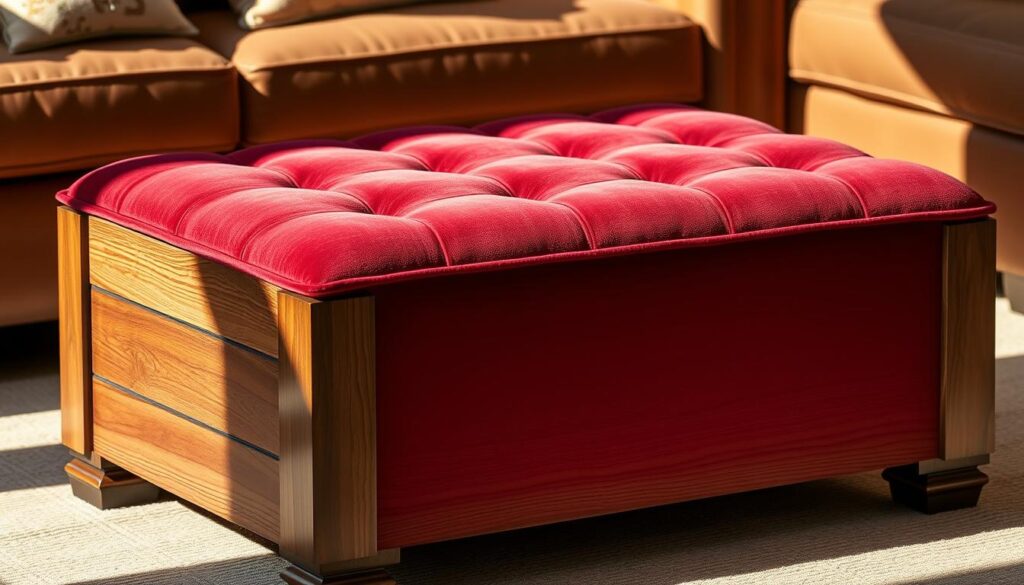
Selecting Fabric, Foam, and Batting
Your choice of fabric determines the piece’s visual impact. Consider durability and pattern direction when selecting your cloth material. Textured fabric adds depth without complex techniques.
For cushioning, select foam thickness based on comfort needs. Two inches provides moderate padding while four inches creates a plush top surface. Wrap the foam in polyester batting before upholstery for a smooth finish.
Applying Stain, Edge Banding, and Sealants
Oak accepts stain beautifully, showcasing natural wood grain. Test color options on scrap wood first. Apply wood conditioner before staining for even absorption.
Iron edge banding carefully to conceal plywood layers. This creates a seamless look on every side. For protection, consider polyurethane sealant over the stained top surface.
| Material Type | Best Use | Application Tips |
|---|---|---|
| Upholstery Fabric | Main surface covering | Pre-wash to prevent shrinkage |
| 2-inch Foam | Moderate cushioning | Cut with sharp utility knife |
| 4-inch Foam | Luxurious padding | Use electric knife for clean cuts |
| Polyester Batting | Smoothing layer | Wrap tightly before fabric application |
Troubleshooting and Common DIY Challenges
When working with materials like oak and fabric, certain challenges frequently arise that require specific techniques to overcome. Anticipating these issues helps you achieve professional results.
Proper preparation prevents most problems before they start. Understanding material behavior is key to success.
Avoiding Splintering When Cutting Oak
Oak tends to splinter during cutting if not handled correctly. Use a blade with fine teeth designed for hardwoods.
Position your wood with the finished side facing down on the saw. This protects the visible surface from damage.
Any small cracks can be filled with wood filler. Remember that filled areas may stain differently than natural wood.
Be careful with adhesive application near visible edges. Excess glue won’t accept stain and creates permanent marks.
Securing Upholstery for a Clean Finish
Start by stapling the center of one side of your fabric. Then pull tight and staple the opposite center point.
Work outward from the center, spacing staples about two inches apart. This prevents wrinkles and ensures even tension.
Master corner folding techniques for smooth results. Create neat “flaps” that pull fabric taut around edges.
This step is really easy to correct if needed. You can remove staples and reposition fabric before completing the perimeter.
| Common Issue | Solution | Pro Tip |
|---|---|---|
| Splintering oak edges | Fine-tooth blade, finished side down | Use wood filler for minor cracks |
| Fabric wrinkles | Center-to-edge stapling pattern | Pull fabric taut before securing |
| Bulk corners | Double-fold flap technique | Trim excess fabric before stapling |
| Adhesive stains | Careful application near edges | Wipe excess immediately |
Pro Tips for a Professional and Durable Look
The difference between amateur and professional-looking furniture frequently lies in the details of construction and finishing methods. Mastering a few advanced techniques can elevate your project significantly.
Using Alternative Techniques for Hidden Fasteners
Pocket hole joinery creates invisible connections that enhance the clean look of your piece. This method hides screws within the wood rather than on the visible surface.
For decorative elements like upholstery tacks, create a cardboard template with 1.5-inch spacing marks. This ensures uniform placement around your furniture piece.
Applying multiple thin coats of stain achieves richer color depth on the top and sides. Always test your stain on scrap wood first to confirm the final look.
| Technique | Professional Benefit | Application Tip |
|---|---|---|
| Pocket Hole Joinery | Completely hidden fasteners | Use specialized jig for accuracy |
| Cardboard Spacing Template | Uniform decorative elements | Measure perimeter before marking |
| Multiple Thin Stain Coats | Even, rich color coverage | Light sanding between coats |
| Felt Furniture Pads | Floor protection and mobility | Apply to all contact points |
When time is limited, choose straightforward designs. Simple upholstery without complex tufting creates beautiful results that are really easy to achieve.
Always prioritize safety with goggles and ear protection during cutting operations. Corner clamps ensure perfect 90-degree angles while adhesive sets.
Conclusion
Your newly completed furniture piece now stands as a testament to your craftsmanship and vision for versatile home design. This project has transformed your living space with a custom creation that perfectly balances style and utility.
Through careful planning and execution, you’ve gained valuable skills in construction and finishing techniques. These abilities will serve you well in future home improvement endeavors. The attention to detail you applied ensures a professional-looking result.
Your finished work provides both comfortable seating and practical surface area. It demonstrates how personalized furniture can enhance daily life. The knowledge you’ve acquired empowers continued creative exploration.
This accomplishment reflects your commitment to quality and customization. Enjoy the satisfaction of creating something uniquely suited to your home’s needs and aesthetic preferences.