

Did you know that high-end retail furniture stores can charge over $4,000 for a single coffee table? That’s more than many people spend on their entire living room setup. This staggering price point has sparked a significant shift in how people approach furnishing their spaces.
More homeowners are discovering the satisfaction of creating their own custom furniture pieces. This approach blends functionality with clean aesthetic principles. You can craft items that perfectly match your space’s unique requirements.
Low-profile furniture has become a hallmark of contemporary living areas. These pieces offer clean lines and unobtrusive design. They enhance your room without dominating it. The financial benefits are substantial, with projects ranging from under $75 for upcycled creations to around $150 for new builds.
Building your own furniture provides complete creative control over dimensions, materials, and finishes. This ensures your final piece aligns perfectly with your existing decor. It’s both a practical solution and a rewarding project that showcases your craftsmanship.
Key Takeaways
- Custom furniture creation is growing in popularity as an alternative to expensive retail options
- Low-profile designs help maintain clean sightlines in contemporary living spaces
- Building your own pieces can save significant money compared to store-bought furniture
- DIY projects offer complete control over size, materials, and aesthetic details
- Creating furniture can be a satisfying craft that results in unique, personalized items
- Proper planning ensures your finished piece complements your existing home decor
- Even beginners can successfully complete furniture projects with the right guidance
Introduction to Modern Coffee Table Trends
In today’s living spaces, the humble centerpiece has evolved significantly. This piece of furniture serves as the anchor of your seating area. It provides a practical surface for daily items while establishing a strong visual focal point.

Current trends favor minimalist designs with clean lines and low profiles. These styles reflect a shift towards functional simplicity in interior decor. The emphasis is on pieces that enhance a room without overwhelming it.
The Role of a Coffee Table in a Living Room
Your coffee table is arguably the most crucial element in your living room. It offers a practical spot for drinks, books, and remotes. More importantly, it anchors the entire style of the room.
This piece brings together your sofa, chairs, and other furnishings. It creates a cohesive look and feel. The right choice acts as a central hub for interaction and daily life.
Why DIY Coffee Tables Are a Game-Changer
Creating your own piece offers unparalleled advantages. You gain complete control over dimensions to fit your specific space. This customization ensures a perfect match for your existing furniture.
The financial benefits are substantial. Projects typically cost between $67 and $150. This is a fraction of the price for designer pieces with similar aesthetic appeal.
You also select materials and finishes that align with your color palette. The result is a unique creation that showcases your personal style. It becomes a conversation piece that reflects your craftsmanship.
Materials and Tools for DIY Projects
Before beginning your build, careful selection of components and implements ensures a smooth creation process. The right choices impact both the appearance and longevity of your finished piece.
Essential Lumber, Hardware, and Finishes
Your primary material decision involves the table surface. You can purchase pre-cut 36-inch round tops from hardware stores like Lowe’s or Ace Hardware. Specialty retailers offer larger options up to 50 inches for more substantial projects.
Hardwood dowels measuring 2.5 inches in diameter serve as excellent leg components. These provide sturdy support and clean lines. Expect to pay around $45 for three pieces from specialty wood suppliers.
| Wood Type | Best Use | Durability | Cost Range |
|---|---|---|---|
| Teak | Outdoor projects | Excellent | $$$ |
| Mahogany | Indoor/Outdoor | High | $$ |
| Cedar | Outdoor focus | Good | $ |
| Redwood | Weather-resistant | Very Good | $$ |
Finish options include gel stains that sit on the wood surface, minimizing blotchiness. Oil-based stains like Rubio Monocoat penetrate deeper for richer color. Gel stain typically costs around $22 per container.
Must-Have Tools for a Successful Build
A drill is essential for hardware installation and assembly. Choose a random orbital sander for surface preparation without circular marks. This tool creates the smooth finish needed for professional results.
A miter saw provides precise cuts for dowels and other components. While hand saws work as an alternative, they require more time and effort. Proper tools make your project more enjoyable and efficient.
For outdoor pieces, select weather-resistant hardwood species. Teak, mahogany, and cedar withstand environmental elements well. Always use exterior-grade sealers to protect your investment.
DIY Low Coffee Table Designs for Modern Minimalist Homes
Drawing inspiration from classic design movements can transform your furniture projects into timeless pieces. The right blend of historical elements with contemporary needs creates furniture that feels both familiar and fresh.

Inspiration from Mid-Century and Farmhouse Styles
Modern farmhouse coffee table designs beautifully merge rustic charm with clean contemporary lines. These pieces typically measure 43.5 inches long by 33 inches wide, creating a substantial yet unobtrusive presence. The fusion creates warmth while maintaining minimalist principles.
Mid-century modern influences continue to shape contemporary table designs with their timeless appeal. Sleek profiles and tapered legs remain relevant in today’s minimalist spaces. This vintage inspiration brings character without clutter.
For those seeking farmhouse authenticity, consider pieces measuring 46 inches long by 22 inches wide. These designs often incorporate simple storage shelves while maintaining the classic aesthetic. They work equally well indoors or outdoors.
Vintage-inspired creations blend traditional craftsmanship with modern functionality. X-leg constructions combining wood with iron pipe elements create a modern-industrial style. These ideas appeal to eclectic design sensibilities while serving practical needs.
You can adapt these various designs to suit different minimalist home styles. From Scandinavian simplicity to Japanese-inspired minimalism, the low-profile characteristic remains essential. Explore more creative coffee table designs that balance visual interest with clean lines.
Step-by-Step Guide to Building Your Coffee Table
The actual construction phase transforms your materials into a functional piece of furniture. This process requires careful attention to detail for a professional result.

Start your project by planning the dimensions. Standard height ranges from 16 to 18 inches. A low-profile design around 11 inches creates a modern aesthetic.
Planning, Measuring, and Cutting
Measure and cut your legs from 2.5-inch diameter hardwood dowels. Use a tape measure to mark 11-12 inches before making precise cuts with a miter saw.
You can adjust the final height after initial assembly. This flexibility allows for customization based on your preferences.
Sanding Techniques and Assembly Tips
Thoroughly sand each leg before attachment. An orbital sander makes this preparation step significantly easier. It ensures professional-looking results.
Attach small wood scrap pieces to the top of each leg. Use countersunk wood screws positioned through the center. Ensure screws sit below the wood surface for a clean appearance.
Turn the tabletop over to expose the base. Locate the center point and use a protractor to mark precise 120-degree spacing between legs. This ensures optimal stability.
The assembly process involves screwing the wood mounting pieces to the underside. Use one screw on each side in your marked positions. Apply wood glue for additional security in high-use scenarios.
This project suits intermediate builders but remains attainable for ambitious beginners. Check leg stability before final tightening and ensure even weight distribution.
Creative Customization and Finish Options
Custom finishes elevate your furniture project from functional to extraordinary, adding character and protection. The right choice transforms basic construction into a personalized piece that reflects your unique style.
Your selection determines the final aesthetic and durability of your creation. Consider how each option complements your existing decor.
Staining, Veneering, and Painting Ideas
Staining offers rich color enhancement while preserving wood grain visibility. Gel stains sit on the surface and minimize blotchiness for consistent results.
Oil-based options like Rubio Monocoat penetrate deeper for durable color. Always use wood conditioner before applying liquid stains for even absorption.
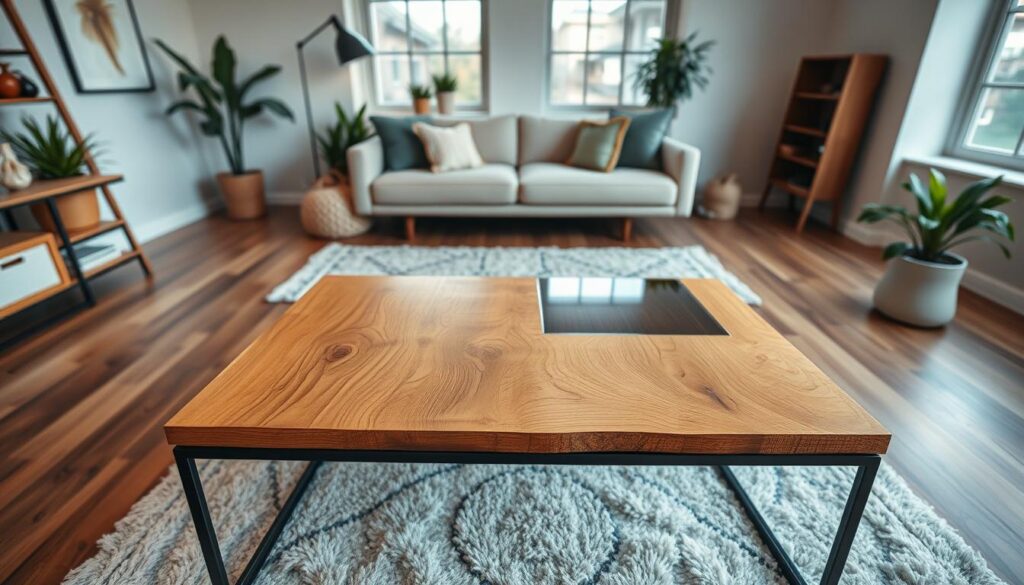
Veneering provides high-end appeal with specialty wood sheets. You can wrap both the top and legs for a cohesive professional finish.
Painting opens creative possibilities for color contrasts. Pair natural wood tops with painted bases or fully coat your piece.
Creative finishes include tile mosaics or dimensional wood cuts. These elements personalize your design while maintaining clean lines.
Always apply protective topcoats after staining or painting. Thin coats shield the surface from daily wear and moisture damage.
For outdoor placement, use exterior-grade sealers on all surfaces. This includes table feet to prevent ground moisture absorption.
Practical Tips for Ensuring Stability and Functionality
Achieving perfect balance in your furniture creation requires thoughtful planning of both structural support and practical features. Your piece must remain steady while offering smart solutions for everyday use.
Integrating Storage and Concealed Compartments
Hidden storage compartments maximize your furniture’s functionality without compromising aesthetics. A flip-top design measuring 48 inches long by 24 inches wide provides concealed space for remotes and books.
Consider specialized compartments for board game pieces in designs measuring 36 inches long. Farmhouse styles often include simple open shelves positioned 18 inches from the ground.
| Storage Type | Dimensions | Best For | Accessibility |
|---|---|---|---|
| Flip-top compartments | 48″L × 24″W × 24″H | Remotes, blankets | Hidden access |
| Gaming compartments | 36″L × 24″W × 17.75″H | Board game pieces | Specialized use |
| Open shelves | 46″L × 22″W × 18″H | Magazines, decor | Easy reach |
| Modular hexagon | Variable dimensions | Versatile storage | Flip functionality |
Securing the Base for Longevity
Proper leg spacing ensures optimal stability. Position three legs at 120-degree angles for balanced weight distribution. This prevents wobbling and enhances durability.
Use countersunk wood screws that sit below the surface for a clean appearance. Apply wood glue between mounting pieces and the tabletop for additional security.
For outdoor use, seal all surfaces including the bottom of feet with epoxy. This prevents moisture absorption that causes warping. Standard heights between 16-18 inches provide comfortable access while maintaining visual appeal.
Incorporating Indoor and Outdoor Versatility
Versatile furniture designs that work equally well in your living room and garden area offer practical advantages for modern living. You can create pieces that transition between spaces with simple adaptations.
Adapting Your Design for Different Spaces
The Indoor/Outdoor Farmhouse creation measures 46 inches long by 22 inches wide. This beginner-friendly project takes only a few hours to complete.
For exterior placement, comprehensive sealing is essential. Apply epoxy or varnish to all surfaces, including the feet. This prevents moisture absorption from ground contact.
Compact options suit small patios and balcony areas. Square patio designs with slatted tops allow rainwater drainage. This prevents pooling and extends your furniture’s lifespan.
Select weather-resistant wood species like teak, mahogany, or cedar. These materials naturally resist rot and insect damage. They maintain integrity in various environments.
Consider shape for different conversation areas. Round pieces work well in flexible arrangements. Rectangular options better suit defined seating zones.
Modular designs offer maximum flexibility across settings. Hexagonal units can group together or separate. This adapts to both large gatherings and intimate arrangements.
Balancing Aesthetics with Practical Design Considerations
The true test of any furniture piece lies in how well it balances visual appeal with everyday functionality. This balance becomes especially important in spaces where beauty must coexist with heavy use.
Choosing the Right Wood and Finish for Minimalist Homes
Selecting appropriate materials is crucial for long-lasting furniture. Hardwoods like oak and walnut withstand daily wear far better than softwoods like pine. They resist dents and dings while maintaining their aesthetic appeal.
Proper finishing dramatically improves durability. A well-stained surface resists water marks and spills effectively. Even after months of heavy family use, quality finishes allow easy cleaning without permanent damage.
Consider gel stains for protective surface coating in high-traffic areas. Oil-based penetrating stains offer richer color enhancement for showcase pieces. Both options protect your investment while enhancing natural wood beauty.
Maintaining Style without Sacrificing Function
Thoughtful design choices ensure your furniture remains both beautiful and useful. Curved edges create safer corners than sharp 90-degree angles. This maintains clean lines while improving safety.
Japanese minimalism principles inspire refined joinery methods. These techniques eliminate visible hardware for seamless aesthetic appeal. The result is furniture that combines structural integrity with visual harmony.
Consider your room’s scale when determining dimensions. Your piece should provide adequate surface area without overwhelming the space. Neutral wood stains offer flexibility to refresh finishes as styles evolve.
Conclusion
Handcrafted furniture projects deliver substantial savings while allowing complete customization to your specific needs. Building your own centerpiece offers financial benefits with projects costing $75-$200 versus retail pieces exceeding $4,000.
These creations withstand daily use beautifully. Properly finished pieces maintain their appearance through spills and impacts over time. They require only simple cleaning to stay looking fresh.
You can choose from diverse styles including farmhouse, minimalist, and storage-focused designs. Select the perfect shape, wood type, and finish to complement your living room. The creative freedom ensures your piece fits both your space and aesthetic preferences.
Begin with simpler projects matching your skill level. Gather quality hardwood, essential tools, and finishing supplies. Plan dimensions carefully before starting construction.
The satisfaction of completing functional furniture that serves your home uniquely is unmatched. Your handcrafted piece becomes a long-term investment that adapts as your needs evolve.