

Did you know that over 70% of urban apartment dwellers now prioritize flexible furniture with built-in organization? This surge, noted by Harvard housing experts, highlights a critical need in modern homes.
Your living room’s centerpiece should be more than just a pretty surface. It needs to handle daily life—holding drinks, remotes, and books while keeping clutter out of sight. This is where smart storage transforms basic furniture.
A well-planned coffee table becomes a command center for your space. It solves the chaos of charging cables, kids’ toys, and spare blankets. You gain a clean, organized area that reflects your personal design taste.
Building your own piece through a diy project offers unmatched benefits. You control the size, style, and internal features to match your exact needs. The result is a custom piece that fits your budget and your life perfectly.
Key Takeaways
- Custom-built furniture allows you to perfectly match your space’s dimensions and style.
- Integrating storage directly into your coffee table tackles everyday clutter effectively.
- This guide provides a complete walkthrough for creating a stylish and practical centerpiece.
- Expert tips help blend functionality with aesthetics, from modern to rustic looks.
- A versatile storage table adapts to lifestyle changes, serving as a work surface or game hub.
Introduction to Your DIY Project
The challenge of limited space calls for innovative solutions that maximize every square inch. This project guides you through creating a piece that combines smart organization with personal design expression.
What Makes a Coffee Table with Storage Unique
Standard furniture often leaves you with visible clutter. A storage-enhanced piece transforms this problem. Integrated compartments and hidden spaces keep your essentials accessible yet out of sight.
This approach works exceptionally well in open-plan layouts and compact apartments. It addresses the rapid accumulation of daily items. Your living area maintains a clean, organized appearance that reflects your taste.

Benefits of a DIY Approach
Building your own furniture gives you complete control over the final product. You determine the exact dimensions to fit your specific room layout. This customization ensures a perfect match for your space requirements.
The personalization extends to material selection and storage configuration. You can design compartments for board games, tech accessories, or reading materials. This tailored solution meets your household’s unique organizational needs.
Creating your own piece offers significant cost savings compared to retail options. More importantly, it provides the satisfaction of crafting something uniquely yours. The result is furniture that perfectly balances function with personal style.
Understanding Your Space and Design Requirements
Proper planning transforms a simple furniture project into a perfectly integrated home solution. Begin by observing your daily routine to identify what items frequently clutter your living area.

Remote controls, reading materials, and charging cables often need convenient hiding spots. Understanding these needs helps you create compartments that serve real purposes.
Measuring Your Room and Determining Dimensions
Accurate measurements ensure your creation fits perfectly within your available floor area. Consider traffic patterns and seating arrangements when planning the overall size.
Most living areas work well with pieces standing 16-18 inches tall. This height aligns comfortably with standard sofa seating. The length typically ranges from 40-48 inches depending on your existing furniture.
Maintain 14-18 inches of clearance between your piece and surrounding seating. This spacing allows comfortable movement and access. Balance your storage requirements with the room’s scale to avoid overwhelming smaller spaces.
Sketch a simple floor plan to visualize how everything fits together. This step helps you create proportional furniture that enhances your room’s flow and function.
DIY Coffee Table with Storage: Function Meets Design – A Comprehensive Guide
Four distinct design approaches offer unique ways to integrate storage into your furniture. Each option provides a different balance of accessibility and visual impact.
Your choice will depend on your daily routine and the overall style of your room.
Blending Functionality with Aesthetics
Lift-top models feature a surface that raises hydraulically. This reveals a spacious cavity perfect for hiding larger items. The elevated top can even serve as a temporary desk.
Drawer-based pieces provide concealed, organized storage. Smooth-gliding compartments keep everyday clutter neatly tucked away. This option maintains a clean tabletop look.

Basket cubby designs incorporate open shelving underneath. You can use decorative bins for quick cleanup solutions. This is ideal for families needing flexible organization.
Repurposed chests transform vintage trunks into unique furniture. Adding modern legs creates an eclectic centerpiece. This approach adds instant character to your design.
Consider which configuration aligns with your interior aesthetic. You might even combine features for maximum versatility in your custom piece.
Planning Your Project and Creating Detailed Designs
The blueprint phase separates amateur attempts from professional-looking results in woodworking. Before cutting any materials, comprehensive planning ensures your vision translates into a functional piece. This stage prevents costly mistakes and streamlines your entire building process.
Digital tools like SketchUp and Homestyler offer powerful visualization capabilities. They help you experiment with proportions and material choices in 3D space. This virtual testing identifies potential issues before you commit to physical construction.
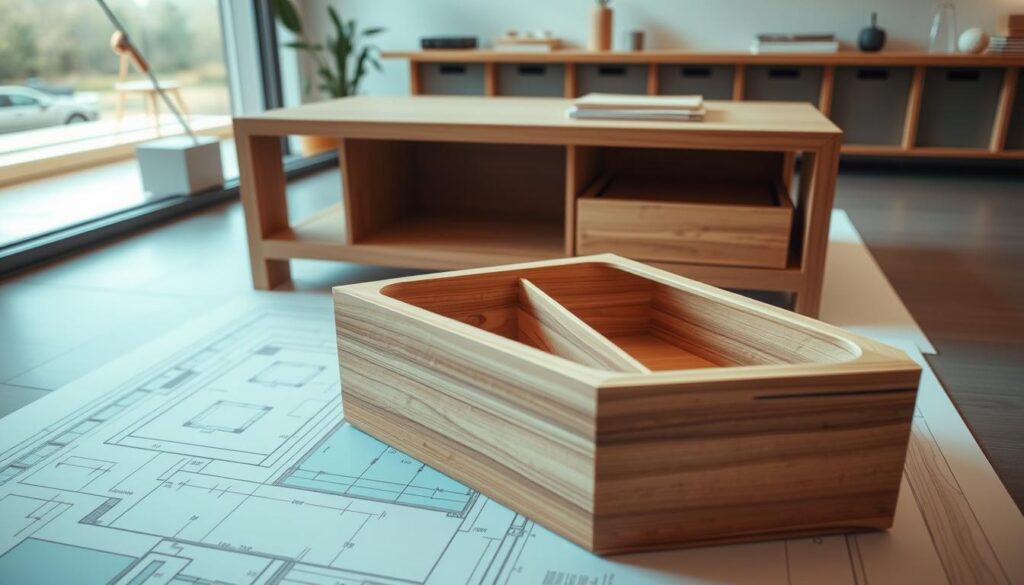
Sketching Your Layout and Storage Solutions
Begin with detailed sketches showing all dimensions and structural elements. Map out drawer depths and shelf heights based on the items you’ll store. Every compartment should serve a practical purpose in your daily routine.
Consider traffic flow and accessibility when positioning storage features. Draw multiple views to understand how pieces fit together. Clear instructions emerge from these comprehensive plans.
Choosing the Right Configuration for Drawers, Shelves, and Compartments
Your storage configuration balances aesthetics with functionality. Drawers offer concealed organization for frequently used items. Open shelves provide quick access for books or decorative objects.
Evaluate your specific needs to determine the optimal mix. Consider reinforcement requirements for each storage type. Proper planning ensures your final furniture creation meets both design and practical expectations.
Selecting Quality Materials and Essential Tools
Your project’s success begins with selecting the right foundation of materials and equipment. The choices you make here determine both the construction process and the final result’s durability.

Overview of Wood Options, Plywood, and Hardwoods
Understanding different wood types helps you match materials to your project’s needs. Hardwood varieties like oak and maple offer superior strength for visible surfaces. These dense board materials create lasting furniture pieces.
Plywood provides excellent stability for structural components. Use 3/4-inch thickness for shelves and side panels. Thinner 1/2-inch and 1/4-inch sheets work well for drawer construction.
Sustainable choices like FSC-certified lumber support environmental responsibility. Reclaimed hardwood adds unique character while reducing waste.
| Wood Type | Best Uses | Durability | Cost |
|---|---|---|---|
| Oak Hardwood | Table tops, visible surfaces | Very High | $$$ |
| Maple Hardwood | Drawer fronts, legs | High | $$$ |
| 3/4″ Plywood | Shelves, structural frames | High | $$ |
| Pine Board | Secondary elements, trim | Medium | $ |
Key Tools Needed for Cutting, Assembling, and Finishing
Proper tools transform challenging construction into manageable steps. Cutting equipment includes circular saws for straight cuts and jigsaws for curves. A miter saw ensures perfect angle cuts for joinery.
Assembly tools like drills and pocket hole jigs create strong, hidden connections. Clamps hold pieces securely during glue-up. An 18-gauge brad nailer quickly fastens trim and molding.
Finishing equipment includes sanders for smooth surfaces and routers for decorative edges. Quality brushes apply stain and sealer evenly. Having these tools ready before starting saves time and improves results.
Step-by-Step Building Process: From Cutting to Assembly
The assembly stage brings your design plans to life through precise cutting and systematic joining techniques. Each step builds upon the previous one, creating a solid foundation for your furniture piece.
Preparing and Cutting Your Wood Pieces
Begin by ripping your 1×6 and 1×8 boards to create frame stretchers and legs. Remove rounded edges using a table saw for clean, straight cuts. This initial preparation ensures all pieces fit together perfectly.
Cut four legs to exactly 17.5 inches in length. Use wood glue and brad nails to assemble each leg from 1.75″ and 2.5″ strips. This creates sturdy 2.5″ square legs that provide stable support.
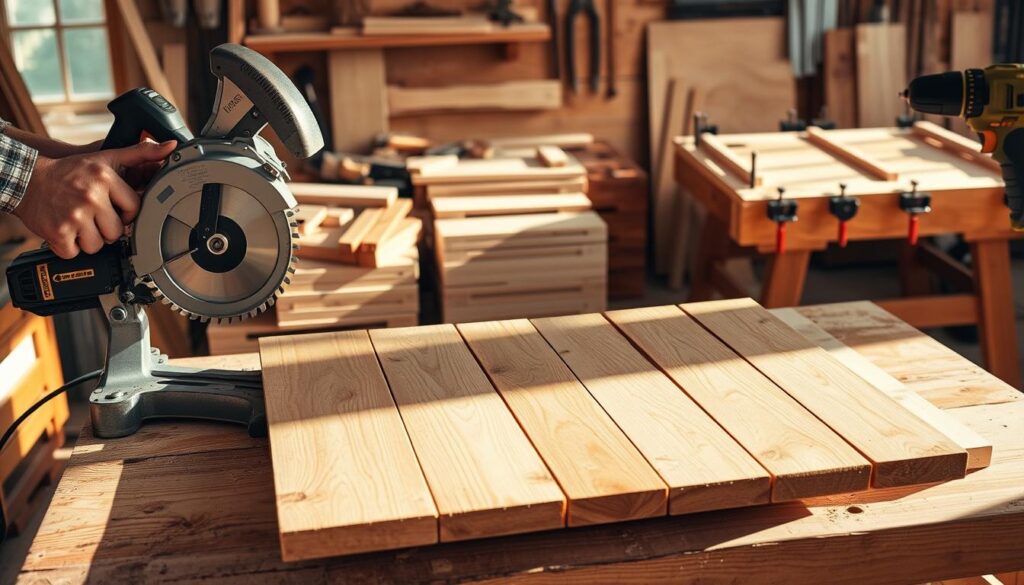
Assembling the Base, Legs, and Storage Compartments
Construct the frame by cutting stretchers to precise measurements. Short pieces measure 17 5/8″, while long ones reach 39 7/8″. Drill pocket holes in each end for concealed joinery.
Follow this assembly sequence for best results. First, build two side panels by connecting legs with stretchers using pocket screws. Then join the side panels with long stretchers to complete the frame structure.
| Tool | Primary Use | Critical Step |
|---|---|---|
| Table Saw | Precise board cutting | Initial preparation |
| Pocket Hole Jig | Concealed joinery | Frame assembly |
| Brad Nailer | Leg construction | Initial assembly |
Measure twice, cut once. This timeless advice remains the golden rule for successful woodworking projects.
Apply wood glue to all joints before fastening for maximum strength. Use clamps to hold assemblies square during construction. Check measurements at each step to ensure accuracy.
Construct the center drawer cubby from 3/4″ plywood panels. Cut them to 22 5/8″ x 14 1/4″ size, notching corners to fit around top stretchers. Secure with pocket holes and add dividers for organized storage.
Enhancing Functionality and Design Details
The final construction phase focuses on integrating smart storage solutions that elevate your furniture’s practicality. These features transform your piece from basic to brilliantly organized.
Installing Storage Features like Drawers and Magnetic Compartments
Begin your drawer construction using 1/2″ plywood ripped to 4″ height. Cut four side pieces to 19″ length and four front/back pieces measuring 12 5/8″.
Apply edge banding to the top edges for a clean finish. Join the pieces using wood glue and 1.5″ brad nails, creating sturdy boxes. Attach 1/4″ plywood bottoms to square the assemblies.
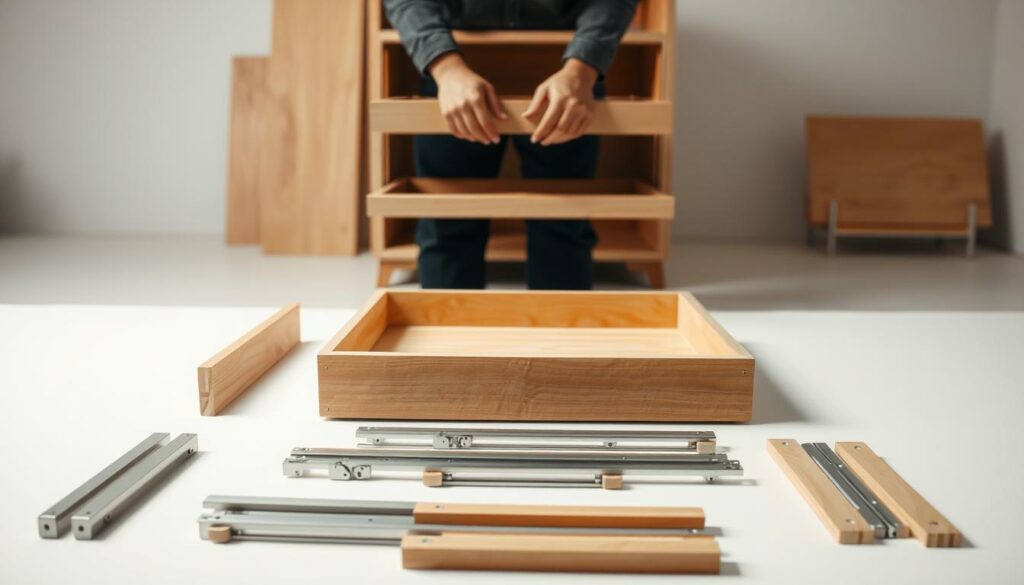
Install drawer slides by shimming the bottom slide up 1/4″ from the opening’s edge. Space the upper slide 6 1/4″ above using a spacer block. Test the fit before final mounting.
Cut false fronts from fence picket material, leaving an 1/8″ gap around each opening. This creates a professional appearance that conceals the storage compartments.
Innovative magnetic compartments occupy the four corners of your base. These removable units serve as individual boxes or combine into larger containers. They provide flexible organization for small items.
Position these versatile compartments to keep your tabletop clear. They’re perfect for remote controls, charging cables, and other frequently used objects. This step maximizes your furniture’s utility.
Customizing Your Finish and Style Options
Surface treatments elevate basic construction into professional-grade furniture with lasting beauty. This final phase allows you to express your personal aesthetic while protecting your hard work.
Selecting Stains, Paints, and Sealers
Begin with thorough preparation for optimal results. Sand all surfaces progressively up to 120 grit, or 220 for ultra-smooth texture. Wipe everything with a water-dampened cloth to remove dust particles.
Your finish choices create different visual effects. Wood stains enhance natural grain patterns beautifully. Water-based polyurethane offers durable protection with low odor. Oil-based options like Danish oil penetrate deeply for rich color.
Creative combinations add visual interest. Consider painting the frame while staining the tabletop. This two-tone approach highlights different elements of your coffee table.
Applying Finishing Touches for a Designer Look
Professional tips transform your piece into something special. Choose water-resistant topcoats if you have children or pets. These finishes withstand daily wear while maintaining beauty.
Color psychology matters in small spaces. Pale neutrals and soft earth tones make rooms feel more spacious. Add a bold accent color inside compartments for a delightful surprise.
Texture mixing creates sophisticated appeal. Combine wood warmth with metal hardware and woven elements. This layered approach achieves a designer look that feels curated.
Practical enhancements complete your project. Install removable casters if you frequently rearrange furniture. Add felt pads to protect flooring surfaces. These final touches ensure your coffee table fits perfectly in your living space.
Conclusion
As you stand back to admire your completed furniture masterpiece, the true value of this hands-on endeavor becomes clear. Like Sarah’s Brooklyn transformation, your custom creation now serves multiple purposes while maintaining a clean aesthetic.
You’ve gained comprehensive knowledge to design and build organizational solutions tailored to your household. The detailed plans covered everything from initial assessment through professional finishing techniques.
Your project demonstrates how sustainable materials and proper tools create lasting pieces. The final installation of drawer slides and secure tabletop attachment ensures professional results.
This functional centerpiece organizes daily clutter while enhancing your living space. It serves your family for years while showcasing personal craftsmanship. You’re now equipped to tackle future projects with confidence.