

Surprising fact: a 1956 convertible table patent inspired a remake that let small apartments gain full dining capacity without adding extra pieces.
You followed that mid-century idea and refined it for today. The build used a 1-1/2″ piano hinge, walnut plywood, toggle clamps, and simple fasteners to make a stable, multi-mode piece.
This project turns a living-room coffee table into a dining-ready table in moments. You get real seating and serving room while keeping your floorplan open and uncluttered.
With careful material choices and clear measurements, the conversion feels solid every time. Whether you worked with a basic shop or a well-equipped garage, the steps were accessible and the result looks like thoughtful furniture built to last.
Key Takeaways
- You modernized a vintage hinged-leg concept to fit compact living.
- The build balances strength and clean lines for lasting appeal.
- Materials and hardware choices make the conversion feel stable.
- The design supports dining, work, and leisure without extra pieces.
- The project matched weekend schedules and typical U.S. toolsets.
Why a convertible coffee-to-dining table maximizes your small space
The 1956 hinged-leg concept shows a smart way to stretch a single piece of furniture across daily needs. You get full dining capacity without adding bulk, and the method fits modern life.
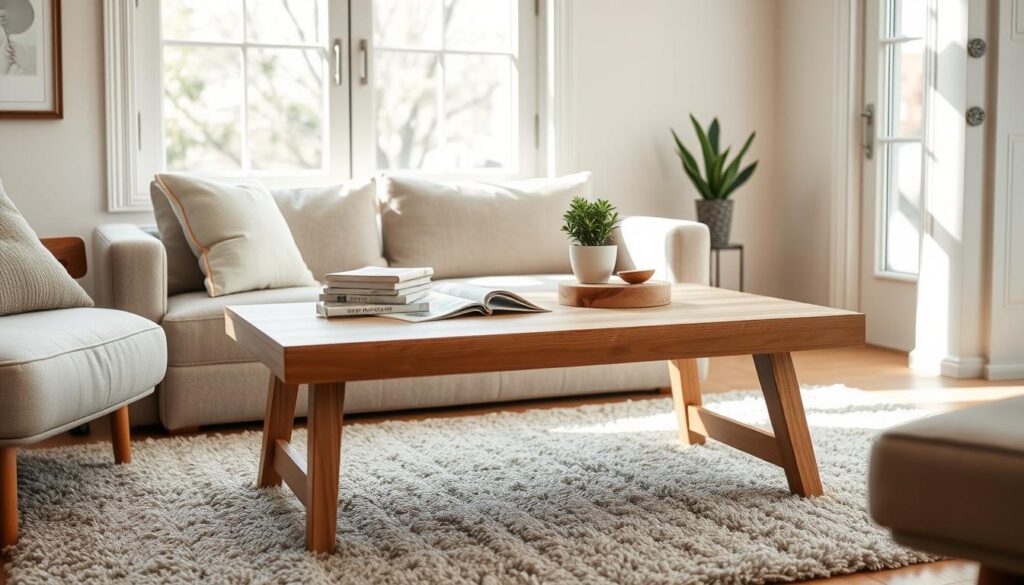
How you gain dining capacity without sacrificing living room comfort
You keep the same footprint while adding seating for family or guests. A three-panel top with folding sides flips up in moments, so you avoid moving the sofa or rearranging the room.
Planning leg clearances and overhangs preserves lounge proportions but gives proper ergonomics when raised. A dual-height leg variant adds a second hinged set for coffee and dining heights, plus hidden storage for devices.
From vintage inspiration to modern functionality for today’s homes
The original quick-change hardware proved the concept decades ago. Your updated build uses better materials, cleaner joinery, and smoother action for reliable operation over time.
- Same footprint, more use — open living stays intact.
- Fast, repeatable mode shifts with solid stability.
- Sleek look and practical storage that fits modern needs.
| Feature | 1956 Concept | Modern Update | Benefit |
|---|---|---|---|
| Top | Single hinged panels | Three-panel plywood with folding sides | Fast transitions, stable surface |
| Legs | Simple flip-up legs | Dual-height hinged leg set | Coffee and dining heights, better ergonomics |
| Hardware | Basic hinges | Piano hinge, toggle clamps, improved fasteners | Smoother action and long-term reliability |
| Extras | None | Hidden storage for remotes and devices | Cleaner living area, added function |
What you’ll need: tools, materials, and hardware for this project
Start by gathering the right kit so each step runs smoothly and every cut lands true. A compact toolset speeds work and improves accuracy. Keep hand-tool alternatives if you lack power gear.
Essential tools
- Power: drill, table saw or handsaw alternative, miter saw, jigsaw, and a random orbital sander.
- Shop support: 23‑gauge pin nailer, flush‑cut saw, tape measure, and clamps for glue‑ups.
- Backups: sandpaper, hand drill, paint brush, and roller when power options aren’t available.
Materials list
- Sheet goods: 3/4″ x 4′ x 8′ walnut plywood or 18mm plywood for the main top and panels.
- Matching boards: 3/4″ x 2″ and 3/4″ x 3‑1/2″ walnut boards for edging and accents.
- Finishes and small supplies: glue (DAP Weldwood or Rapid Fuse), pin nails, stain, wax or paint, and rubber furniture feet.
Hardware choices
- Hinges: 1‑1/2″ x 4′ piano hinge for even support, or paired standard hinges centered on the seam.
- Fasteners: 2″ trim‑head screws, wooden dowels (8mm), jig knobs and toggle clamps for repeatable alignment.
- Tip: keep clamps ready during laminations to control alignment and ensure the top pieces meet square for a clean hinge installation.
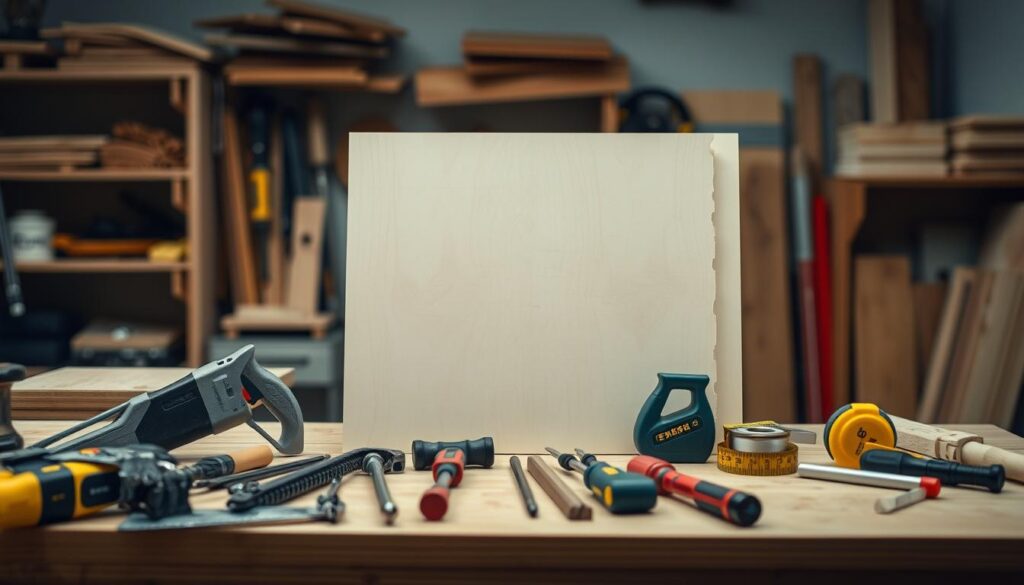
DIY Coffee Table To Dining Table: Convertible Designs For Small Spaces
Start with a clear layout that maps the center panel and each folding side before you touch the stock. Transfer measurements to your plywood and mark leg locations so every piece lines up when open and closed.
Cut the top panels precisely: one center at 70×60 cm and two sides at 60×35 cm. Make sure seams are flush so the hinge sits flat along the joint.
Design a modern leg profile and cut eight matching leg blanks from 18mm plywood. Laminate them in pairs with glue and clamps to form four sturdy legs. Keep the final leg length slightly under 70 cm (about 69.5 cm) and the width under 35 cm for clearance.
Attach each leg to its fold-out side using glue and temporary screws from the top. After the glue cures, remove the screws, drill 8mm holes, and set wooden dowels with glue for a cleaner finish and extra strength.
Install hinges with the knuckles centered on the seam. Use a 1-1/2″ x 4′ piano hinge for continuous support or two standard hinges per side. Add small adhesive rubber feet at the joint to reduce play.
Sand all edges and plywood edges smooth, then finish with stain, oil, wax, or paint. Test the conversion carefully: open and close each side, check leg swing and level, and make sure there is no binding.
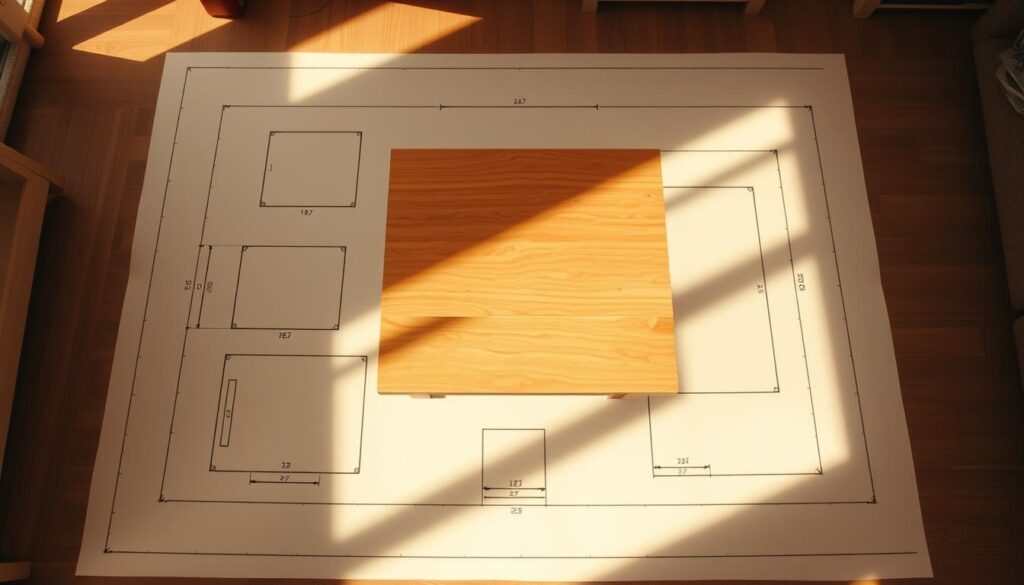
| Step | Measure / Cut | Fasten / Finish |
|---|---|---|
| Top layout | Center 70×60 cm; sides 60×35 cm | Flush seams; hinge alignment |
| Legs | 8 blanks; laminate into 4 (69.5 cm) | Glue + temporary screws, then dowels |
| Hinges & stability | Knuckles centered; piano or paired hinges | Rubber feet at joint; test swing and level |
Design upgrades, safety checks, and pro tips for a furniture-grade result
Smart hardware and careful edge work lift the project from a prototype to a finished product. Start by planning dual-height legs so the same piece offers low lounge use and standard dining heights without extra risers.
Dual-height leg sets: mount short and tall leg sets on independent hinges. This lets you flip between modes quickly. Use quality hinges with smooth knuckles and add adhesive rubber feet at the hinge place to reduce play.
Hidden storage: integrate a slim bay under the top for remotes and chargers. Place it where it stays accessible when the top is closed, and use small holes for cable exit so items stay tidy.
Joinery and hardware tips
Choose dowels where shear strength matters and screws for initial positioning. Use pin nails to tack laminations before glue cures.
Glue strategy: pair a slow-setting wood glue like DAP Weldwood for full bond with a fast-setting adhesive to hold parts while clamps do their work.
Safety and durability checks
Perform a load test by adding a lot of weight at center and near edges. Make sure legs resist racking and the joint opens level every time.
Use reliable tools and clamps such as a Triton Track Saw, sander, Armor Dog Clamps, and a sturdy workbench. ISOtunes helps protect hearing during long sessions.
| Area | Upgrade | Why it matters |
|---|---|---|
| Legs | Dual-height hinged sets | Serves lounge and dining heights without added parts |
| Storage | Slim hidden bay | Keeps remotes and chargers out of sight but reachable |
| Joinery | Dowels + screws + pin nails | Clean look, high shear strength, and quick temporary hold |
| Adhesives | Slow-setting wood glue + fast adhesive | Maximum bond area and immediate positioning |
| Checks | Load testing & hinge tuning | Confirms stability, reduces play, improves feel |
Conclusion
The completed piece shows how careful planning and hardware choices pay off. You combined a proven hinged-leg concept, exact panel sizing, and doubled-up legs so the top feels solid when set for eating or work.
Smart joinery—dowels, strong adhesives, and either a piano hinge or paired hinges with rubber feet—gives the mechanism long-term reliability. Optional dual-height legs and a slim hidden bay add versatility without widening the footprint.
You followed a clear project path from layout and cutting through hinging, finishing, and testing. The result is a compact, capable coffee table that converts into a sturdy table, ready for daily use and easy maintenance.
Keep refinement options in mind: tune hinge play, service hardware access, and adjust finishes over time so the project stays useful and looks like it belongs in your home.