

Surprising fact: nearly 70% of U.S. homes report needing multifunctional furniture to make small living rooms feel roomy and organized.
You’ll build a high-function coffee table that quietly doubles as storage, adding usable surface and hidden compartments without crowding your room. This guide shows practical options—from lift-top mechanisms to hinged lids and nested pieces—so the piece works for your daily routines and for guests.
We cover materials like PureBond oak and plywood, finishes such as Behr Pure White and Minwax Special Walnut, plus hardware choices including gas springs and torsion hinges. You’ll also get tool guidance, cost ranges near $100–$300, and renter-friendly assembly tips.
Plan carefully—test mechanisms, size the table to seating heights, and pick durable fabrics or trims so the finished piece feels furniture-grade and lasts.
Key Takeaways
- Function first: choose a mechanism that fits your budget and safety needs.
- Size the piece to protect circulation and match sofa heights.
- Use forgiving plywood like pine or birch for budget builds.
- Test gas springs and reinforce nested parts before final assembly.
- Finish choices and trim make a home project look professional.
Start Here: What You’ll Build and How It Maximizes Your Living Room Space
Start by picking a centerpiece that adapts to how you live—work, lounge, or host—so the unit becomes an active element of your living room.
Pick the concept that matches your routine. Lift-top compartments keep clutter hidden and stabilize laptops. Nested sets add quick surfaces when guests arrive. Fold-outs convert the piece into a dining spot in tight studios.
Balance weight and mechanism cost. Gas springs add convenience but increase mass and price. Test any spring kit before you finalize the top to avoid rework.

- The right design creates hidden volume for throws and remotes while freeing the place from overflow.
- You’ll learn when lightweight frames win and when a sturdier project is necessary due to frequent opening.
- Tools and checkpoints are mapped so you can stage materials, schedule a build window, and finish with a clean, professional look.
| Concept | Key Advantage | Typical Drawback | Best Use |
|---|---|---|---|
| Lift-top | Stable work surface; concealed compartment | Higher cost; heavier top | Home office + living room |
| Nested sets | Flexible extra surfaces; stacks away | Less hidden volume | Small gatherings, modular layouts |
| Fold-out | Converts to dining-size surface | More moving parts; setup time | Studio apartments |
Plan Your Space: Measurements, Flow, and Ergonomics for a Living Room in the present
Check sofa height and walkway clearances first; a well-sized unit improves comfort and flow. Before you cut, confirm how the piece will sit in your living room and how people will move around it.
Measure your sofa, walkways, and wall clearances
Measure from the sofa seat to set a target table height within one to two inches for easy reach. This prevents hunching and keeps remotes and laptops accessible.
Map walkways and wall clearances so lids, lift-tops, or sliding trays can open without blocking paths. Mark door swings and media cabinet drawers too.
Dial in dimensions and validate ergonomics
As a rule, size the footprint to about two-thirds of the sofa length, but confirm with actual room measurements. Check the side access: lamps, plants, or speakers should not interfere with lids or slides.
Quick mockups work: use cardboard or a 3D model to test sightlines, knee clearance, and how the coffee table fits the group before you cut.
- Tip: mark final dimensions on the floor with painter’s tape to verify reach from every seat.
DIY Coffee Table Storage: Clever Builds For Extra Space
Choose a convertible unit that offers a steady work height, tuck-away trays, or soft edges for family life.
Lift-top options hide a roomy compartment under a stable top so you can work or dine without clearing the surface. These mechanisms add weight and cost, so test a gas spring kit early and confirm the top balances well.
Nested and sliding pieces give modular surfaces when you need them. Reinforce the smallest pieces with stronger legs or interlocking notches to prevent wobble when guests lean on them.

Practical fold-outs and soft hybrids
Fold-out leaves transform a small footprint into a mini dining surface. Place hinges and a locking support leg to keep the top solid and match heights with the nearby kitchen counter.
Ottoman hybrids pair a cushioned body with a removable wood tray. Pick stain-resistant textiles and a sturdy tray so the piece works around kids and pets.
- Minimal metal frames lower weight and make swapping wood slats easy so you can change style without rebuilding the frame.
- If you want drawers, hide them in the apron or use side-access trays to keep the front clean and functional.
Materials, Tools, and Budget: From Plywood Choices to Hardware That Works
Material and tool decisions set the tone for a clean, long-lasting build. Choose plywood that balances cost, finish, and stability before you order stock.

Smart material choices
Pick pine or birch plywood for consistent faces and easier cutting. Hardwood plywood like PureBond oak gives richer grain if you plan to stain.
Use edge banding on exposed edges to hide end grain and deliver a furniture-grade board appearance.
Essential tools and joinery
Equip yourself with a table saw or circular saw and a guide, a drill/driver, sander, clamps, and a pocket-hole jig. A router helps with hinge mortises.
Keep screws organized and predrill where needed. Use glue at key joints, then reinforce with pocket screws on hidden faces.
Budget and planning
Expect a hinged-lid project near $100–$200. Lift mechanisms and gas springs push costs toward $200–$300 or more. Factor in time for sanding and finish details.
“Seal all sides and use kiln-dried stock to reduce seasonal movement.”
Build Option A: Hinged-Lid Coffee Table Chest with Safe, Stay-Open Torsion Hinges
Start the build by laying out precise reference marks on each board so corners align and the lid sits even. This approach saves time and prevents rework when you cut four body panels from plywood and label faces.
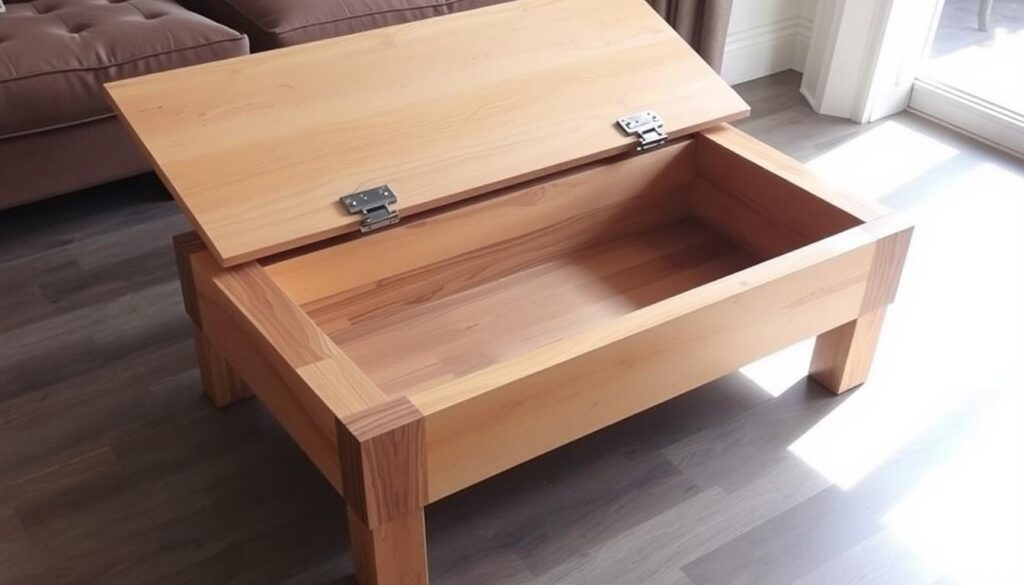
Cut and assemble the box
Cut the box sides and ends, mark reference lines, and drill pocket holes on hidden faces. Apply glue along each seam, clamp the joint, then drive screws so the box stays square.
Edge banding and trim
Edge band visible top edges before final assembly to hide plywood end grain. Add trim or mill a custom moulding with a router and fill nail holes for clean furniture-level details.
Install torsion hinges
Mortise for torsion hinges if trim increases thickness; use a torsion hinge jig and a self-centering bit to predrill exact hole positions. The stay-open action protects fingers and keeps the lid from slamming. If you prefer, a piano hinge avoids mortising.
Sand, stain, and topcoat
Dry-fit the lid, confirm overhang, then sand progressively and wipe dust. Finish with ZAR Moorish Teak and a water-based poly for durable protection in living areas. Total cost for this build was about $193.
Build Option B: Lift-Top Coffee Table with Concealed Storage and Gas Springs
A lift-top design gives you quick, ergonomic access to a hidden compartment while keeping the surface usable for work or meals.
Choose a straightforward gas spring kit and verify clearances. Pick hardware rated for your top’s weight and depth. Measure fully open and closed positions so hinges and arms clear the sides and interior trays.

Construct a robust frame and balanced top
Build a rigid frame and add stretchers so the mechanism stays square. Center mass on the top and use plywood or a thicker panel with stiffeners to prevent sag.
Test the lift mechanism before finalizing
Mount the gas springs temporarily and cycle them. This step lets you tweak bracket positions without marring the finished surface.
- Glue and screw reinforcement blocks at mounting points; predrill and use washers per the kit.
- Confirm open height for laptop use or to match a nearby kitchen counter.
- Keep interior trays shallow so items don’t hit the linkages.
- Record a quick test video so you can reproduce bracket settings after finishing.
“Test motion early; adjustments are far easier before you finish the top.”
Finish and Style: From Farmhouse to Modern Industrial
How you finish a piece sets its personality and performance. Choose finishes that match your routine so the unit wears well and ties into nearby furniture.
Finishing tips and durable coatings
For a farmhouse vibe, pair Behr Pure White Semi-Gloss on the base with Minwax Special Walnut on the top. For richer grain, use ZAR Moorish Teak and seal with a water-based poly.
Sand through the grits, raise the grain before water-based coats, then wipe and apply thin, even layers. This way the board reads like solid wood and resists daily wear.
Styling: keep surfaces tidy and practical
Use trays to corral remotes and coasters so the coffee surface stays clear. Add slim drawers or internal dividers to organize small items and keep the place uncluttered.
For an industrial design, mount a minimal metal base with interchangeable wood inserts so you can refresh the look without rebuilding the whole piece.
“Pick a consistent palette so the piece anchors the room and complements existing furniture.”
Pro Tips, Safety, and Renter-Friendly Ideas
A short dry-fit session will save you time and prevent costly rework when you finalize hinges and legs. Test lift kits and hinge positions before you sand or finish so you can shift brackets without marring a final surface.
Measure twice and plan hinge clearances. Leave expansion gaps and seal all faces to limit seasonal wood movement. Follow USDA Forest Products Laboratory guidance when you select and seal panels.
Avoid common missteps
- Budget time for a full dry fit; test motions and confirm that screws won’t protrude through thin sides.
- Align fold-out heights with nearby counters and walls so hinged pieces close cleanly.
- Record a short video during tricky steps like hinge alignment to replicate settings later.
Safety and hardware selection
Torsion hinges keep lids open and reduce slam risk. Piano hinges are simpler to fit when you don’t need a stay-open lid. Pre-drill with a self-centering bit so hinge leaves sit flush.
Renter-friendly, flat-pack designs
Design modules that break down: use knock-down fasteners, lighter pieces, and levelers on legs so the unit carries easily around tight walls or stairs. Label pieces and bag hardware per subassembly to speed reassembly and protect finishes.
Conclusion
Close the project by checking fit, motion, and finish so the unit performs without wobble and reads like a designed piece.
You now have a clear path to make a coffee table that doubles as storage and fits your living routine. Test hinges and gas springs early, then tune alignments one small step at a time.
Pick a project scope that matches your tools and schedule: a simple board-and-band approach saves time, while trim and moulding reward the extra effort with a furniture-grade result.
Keep a sharp saw blade, square guides, and labeled parts to reduce mistakes and protect the finish. Thanks for building carefully and for following safety and planning tips that keep the piece useful for years.