

Surprising fact: over 70% of mid century modern fans say a low, airy wood top with slim metal supports makes the biggest design impact in a living room.
You’ll learn how a classic hairpin design from the mid-20th century pairs with warm wood to create a clean, modern look for your home. The V-shaped supports are strong, minimalist, and ideal for a coffee table that feels light in the room.
In this short guide, you’ll get a high-level process: choose or cut a wood top, glue and clamp boards, add battens for strength, sand from coarse to fine, apply stain or sealant, then attach preset legs with the right screws. The steps are approachable for a first-time project, needing basic tools and clear measurements.
By the end, you’ll understand key placement and finishing tips that make the piece look professional and fit your space.
Key Takeaways
- Hairpin supports offer strength and a sleek, modern look for a living room focal piece.
- Use three 1×8 pine boards, glue, battens, and predrilled holes for a sturdy top.
- Sanding in stages and a quality finish protect the wood and improve the final look.
- Predrilling and correct screw length prevent splitting and ensure secure attachment.
- This project scales easily—adjust top size or leg height for side tables or a bench.
Plan Your Mid‑Century Modern Coffee Table Build
Begin with a plan that balances seating layout, proportions, and the look you want to achieve.
Understand your project goals and living room needs
Decide how the piece will function: measure clearance around sofas and chairs and choose a size that lets people move freely. Pick a height that matches cushion tops; 16–18 inches often works best for standard seating.
Choose your tabletop style
Reclaimed slab adds character. A round cut-down (30–36 inches) can yield about a 35 inch length by ~18 inch width for compact rooms. A 1 in. x 24 in. x 36 in. pine panel can be trimmed for a rectangular top.
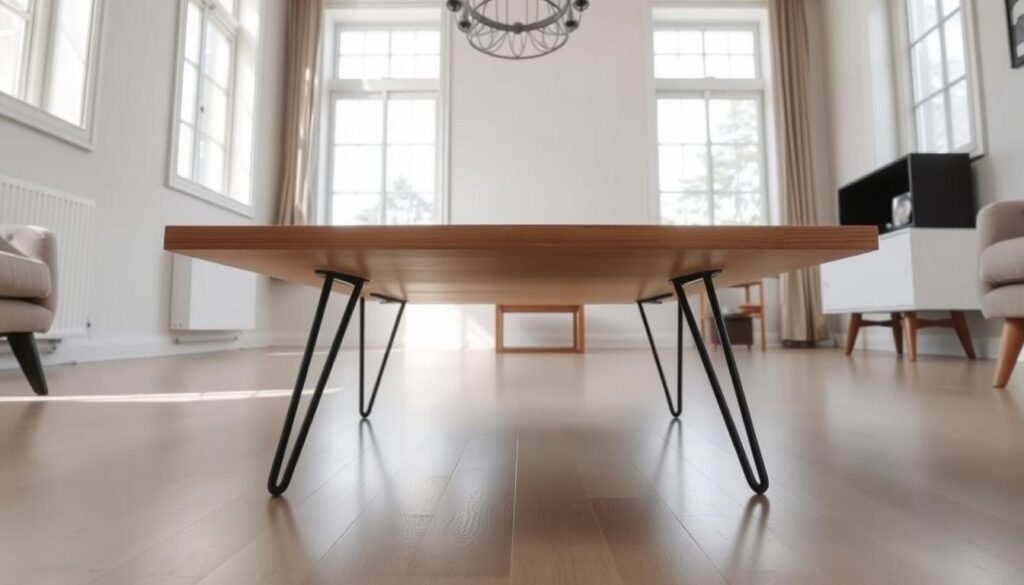
| Top Type | Typical Size | Considerations |
|---|---|---|
| Round cut-down | 30–36 in. diameter | Soft corners, good for small rooms |
| Rectangular panel | Trim from 24×36 in. pine | Crisp lines, easy to clamp and finish |
| Reclaimed slab | Varied | Unique grain; place legs for balance |
Tip: use at least 1 inch thickness so screws bite securely and the top stays rigid during daily use.
Materials, Tools, Sizes, and Safety for Hairpin‑Leg Tables
A correct parts list, clear layout, and basic safety prep set the stage for a reliable, long‑lasting project.
What you’ll need: four hairpin legs (16–18 inches is standard), three 1×8 pine boards for the top, wood glue, and a protective finish such as polyurethane or paste wax. Use 1 1/4 inch screws for battens and 2 inch screws where extra hold is needed.
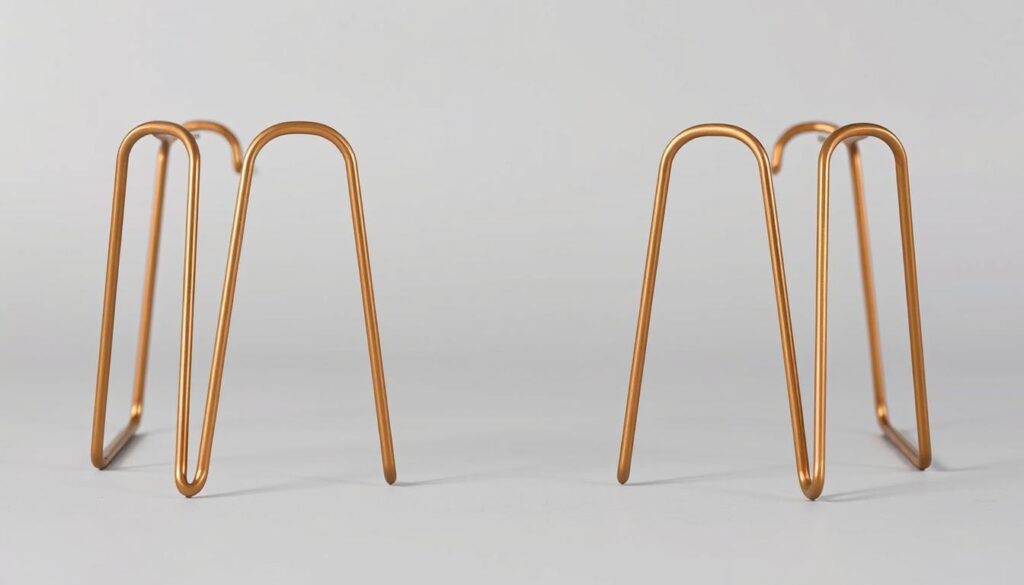
Tools and prep
Assemble tools: a circular saw for cuts, clamps for glue‑up, a drill/driver for pilot holes, and a brad nailer for trim. Keep a measuring tape, pencil, and a square handy for layout.
Size, support, and fasteners
Pick 16–18 inch leg height to match seating. Ensure the tabletop is at least 1 inch thick so screws bite securely. Add two end battens sized to accept the mounting plates; add a center batten for long spans.
Smart drilling and safety
Predrill with the correct bit and tape the bit for depth control. Mark hole centers to prevent wandering. Always wear safety glasses and a dust mask when cutting or sanding. Work on a protected bottom surface and keep clamps clear of hands.
- Wood choices: pine is easy to shape; oak or maple give more durability.
- Metal finishes: raw steel, black powder coat, or brass tones pair well with most finishes.
- Staging: lay out tools and parts to speed the build and reduce mistakes.
DIY Coffee Table Hairpin Legs: Mid‑Century Style Made Simple
Careful prep of the wooden top makes sanding, staining, and mounting the metal supports far easier. Cut three 1-by-8 pine boards to final length, then rip 1 1/2 inch strips for edge trim. Shorten two boards by 1 1/2 inches so the trim wraps with mitered corners and hides end grain.
Glue-up and battens: glue the face down and clamp for even pressure. After cure, add two end battens sized to accept each leg plate; include a center batten for longer spans.
Sand in stages: flatten with 120 grit, refine through 180–220, and finish near 320. Vacuum and tack cloth between steps so the stain sits cleanly.
Trim, stain, and seal
Attach mitered edge trim with glue and an 18-gauge brad nailer, then break sharp corners for a smooth hand-feel. Test stain on the bottom to confirm tone before applying coats on the top.
Apply thin coats of stain with a clean rag, wiping back to taste. Allow full dry time between layers. Use water-based polyurethane for a clear, non-yellowing finish and sand lightly between coats.
Mounting the legs
Measure equal offsets and trace each plate. Use an awl to dimple hole centers, tape the drill bit for depth control, and predrill all holes. Fasten the provided screws in a cross pattern so plates seat flat to the battens.
Flip the piece upright and verify level. Add adjustable footpads if the room floor is uneven and tighten batten screws without over-driving them.
| Step | Key Action | Tip |
|---|---|---|
| Cut & prep | Trim three 1×8 boards; rip 1.5″ edge strips | Shorten two boards 1.5″ for miter wrap |
| Glue-up | Glue face down; clamp until cured | Add end battens; optional center batten for long tops |
| Sand & finish | 120→180–220→320; wipe before stain | Test stain on bottom; use water-based polyurethane |
| Leg layout | Trace plates; awl dimple; tape drill bit | Keep plates ~1.5″ from edges and drive screws crosswise |
Conclusion
A thoughtful finish and precise mounting yield a functional piece that enhances your living space and holds up over time.
With a minimum 1‑inch top, predrilled holes, and supports in the 16–18 inch range, you assembled a sturdy coffee piece by gluing boards, adding battens, sanding through grits, staining, sealing, and fastening plates with the correct screws. You matched height to seating and ensured screw bite for long‑term strength.
You turned measured prep and smart sequencing into a polished furniture upgrade that improves your living room without wasting time or budget. Use this repeatable approach to scale the build for other pieces and keep refining your finish routine.