
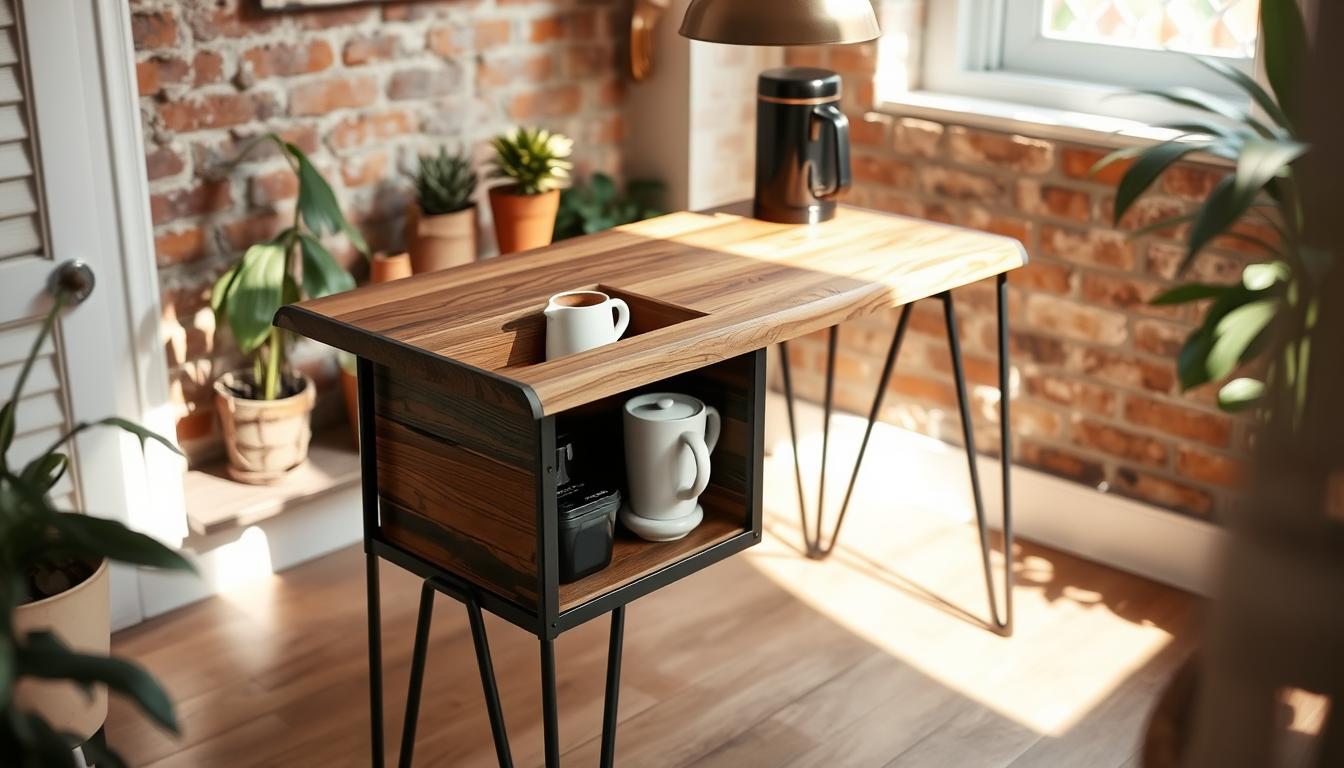
Americans consume over 400 million cups of coffee every single day, yet most people lack a dedicated space to prepare their favorite brew. This daily ritual deserves more than just scattered counter space.
Creating a personalized area for your morning routine can transform how you start each day. A well-designed setup brings organization and elegance to your kitchen or dining area.
This guide shows you how to build a functional centerpiece that serves your needs perfectly. You’ll discover smart storage solutions that keep everything within reach while maintaining a clean, attractive appearance.
Whether you have ample room or limited square footage, we’ll explore options that work for your specific situation. From compact carts to custom-built furniture, you can create the perfect spot for your daily ritual.
Learn to select materials that balance durability with visual appeal. We’ll cover organization techniques that prevent clutter and decorative elements that reflect your personal taste.
Key Takeaways
- Transform your daily routine with a dedicated space for beverage preparation
- Maximize functionality through intelligent storage and organization solutions
- Adapt designs to fit any available space in your home environment
- Select materials that offer both durability and aesthetic appeal
- Create a personalized area that reflects your unique style preferences
- Maintain a clutter-free workspace with proper organization techniques
- Combine practical elements with decorative touches for a balanced look
Introduction to Your DIY Coffee Station Table Project
A designated area for your brewing essentials transforms chaos into calm efficiency. This approach revolutionizes how you interact with your kitchen environment each day.
Understanding the Benefits of a Dedicated Coffee Zone
Organizing your kitchen into specific zones creates remarkable time savings. Your morning routine becomes effortless when everything remains within arm’s reach.

You eliminate the frustration of searching through cabinets for supplies. This system also provides visual inventory management. You can instantly see when items need replenishment.
When entertaining guests, this setup offers significant advantages. Visitors can serve themselves beverages while you handle other hosting duties. This creates a more relaxed atmosphere for everyone involved.
How This Guide Helps You Achieve a Functional Setup
This resource breaks the creation process into manageable stages. You’ll learn to build a area that works perfectly for your available space.
The instructions focus on practical results rather than purely decorative elements. Your investment yields daily returns through improved organization and time management.
Whether you prefer a permanent installation or seasonal arrangement, the principles adapt to your needs. The goal is creating a personalized hub that enhances your daily experience.
Defining Your Vision and Planning Your Coffee Bar
Your dream setup starts with a practical plan that considers both available room and personal style. This initial phase ensures your final creation is both beautiful and highly functional for your daily routine.

Identifying Your Space and Placement Options
Begin by walking through your kitchen and home. Look for underutilized areas that could serve your needs. A small nook or a spare cabinet might be the perfect spot.
Think about your workflow. Placement near a water source or trash bin saves time. Positioning close to where you relax with your drink adds convenience.
You do not need a large area. A compact section of countertop, about two feet wide, works well. Even a modest corner measuring 24 by 24 inches can host an efficient station.
Consider a dedicated cabinet to hide supplies and maintain a clean look. A rolling cart offers flexibility for gatherings. An open countertop arrangement provides easy, daily access.
Balancing Functionality with Style
Your plan should merge practical needs with aesthetic appeal. The design should feel like a natural part of your kitchen’s decor.
Choose between a permanent fixture or a movable setup. A built-in solution becomes a seamless part of your home. A flexible arrangement allows for seasonal changes.
The goal is a harmonious blend that makes your morning ritual a pleasure. Every element, from storage to finish, should reflect your taste while serving a purpose.
Essential Tools, Materials, and Equipment
Quality materials and well-chosen appliances form the backbone of any highly functional beverage preparation space. Selecting durable components ensures your investment withstands daily use while maintaining aesthetic appeal.

Begin with construction essentials that create a sturdy foundation. You need basic woodworking tools, quality lumber, and reliable fasteners. Organizational components like shelving brackets and drawer slides complete the framework.
Must-Have Supplies for Construction
Your building materials should balance strength with visual appeal. Choose hardwood or quality plywood for lasting durability. Surface finishes must resist moisture and heat from your equipment.
Storage solutions include canisters for beans and sweeteners. Appropriate glassware accommodates both hot and cold beverages. Utensils like stirrers and spoons keep everything within reach.
Choosing the Right Appliances for Your Needs
Select your primary brewing machine based on daily usage and budget. A simple drip coffee maker suits straightforward morning routines. For variety seekers, pod-based systems offer convenience.
Enthusiasts might prefer an espresso machine for authentic beverages. Consider supplementary items like grinders for fresh beans and frothers for specialty drinks. Electric kettles provide quick heating for various preparations.
Prioritize appliances you will use regularly versus occasional extras. This approach creates an efficient setup without unnecessary clutter. Your selections should reflect your personal beverage preferences.
Designing Storage Solutions for Maximum Efficiency
Efficient storage design separates a functional setup from a frustrating one. Your beverage preparation area requires thoughtful organization to work seamlessly every day.

The right combination of storage elements creates a system that serves your specific needs. This approach ensures everything has its proper place while maintaining visual appeal.
Incorporating Cabinets, Shelves, and Drawers
Closed cabinets with doors hide bulk supplies and small appliances. This keeps your counter surfaces clean and uncluttered. Choose cabinets that match your existing decor for a cohesive look.
Open shelves display attractive mugs and decorative canisters. They provide easy access to frequently used items. Drawers organize smaller accessories like filters and stirrers.
Pullout drawers make deep cabinet spaces more accessible. Turntables help you reach items stored in corners. These specialized solutions maximize your available space.
Optimizing Hidden and Open Storage Options
Balance concealed and visible storage based on your preferences. Hide less attractive items behind cabinet doors. Showcase beautiful pieces on open shelves.
Use risers to create vertical storage opportunities. Tiered organizers expand your surface area without requiring more space. Clear containers display pretty items effectively.
Opaque baskets or wooden boxes conceal utilitarian supplies. Label these containers for quick identification. This system maintains both functionality and aesthetic appeal.
Customizing Your Coffee Station Table for Added Style
The final layer of personalization transforms your practical setup into a true reflection of your home’s character. This phase focuses entirely on aesthetic choices that create visual harmony.

Your color palette establishes the overall mood for the space. Consider classic black and white for a graphic, modern look. Warm neutrals with natural wood tones create inviting warmth.
Selecting Color Themes and Finishes
Choose finishes that balance durability with visual appeal. Painted surfaces offer clean lines and easy customization. Stained wood highlights natural grain patterns for organic texture.
Match existing cabinetry colors for seamless integration. Pale green creates a fresh coastal feel. Your finish selection should complement your overall design scheme.
Accessorizing with Decorative Elements
Thoughtful accessories add personality without creating clutter. A seasonal towel provides both color and practical utility. Fresh florals in a vase introduce natural beauty.
Lean artwork against the back wall for height and character. Seasonal decorative accents allow you to refresh the look throughout the year. Each touch should enhance rather than hinder functionality.
Weathered wood paneling adds dimension behind your bar. A waterfall counter edge creates an elegant touch. These elements complete your personalized beverage area design.
Creative Layouts: Lessons from Real-Life Coffee Bar Projects
Real-world examples demonstrate how creative thinking can transform overlooked spaces into highly efficient beverage preparation areas. These innovative approaches show that your dedicated zone doesn’t need to occupy prime kitchen real estate.
Using Under-Stair Areas and Niche Spaces
Many homeowners successfully convert under-stair areas into fully functional coffee bars. These typically wasted spaces accommodate open wood shelving, cabinet storage, and even compact refrigerators.
Hallway niches and awkward alcoves offer similar potential. With weathered wood paneling and waterfall counters, you can create a coastal-inspired beverage station. Bright white cabinetry with natural wood shelves brings warmth to arched spaces.
Innovative Use of Wall-Mounted Storage and Peg Racks
Wall-mounted solutions maximize vertical space while adding decorative appeal. Peg rack systems display mugs attractively while keeping them easily accessible.
These installations serve as both practical storage and charming focal points. They work beautifully in butler’s pantries or any area where counter space is limited. The approach balances functionality with visual interest.
Mobile bar carts provide seasonal flexibility for your setup. You can relocate them for parties or decorate them for holidays. This versatility makes them ideal for changing needs throughout the year.
DIY Coffee Station Table: Combine Storage And Style For Your Coffee Bar
Bringing your vision to life requires a systematic approach to assembly and placement. This phase turns your plans into a fully operational hub for your daily ritual.
Step-by-Step Setup Guide
Begin by securing your primary surface to the chosen location. Ensure it is level and stable before adding any weight.
Install shelving brackets firmly into wall studs for safety. Attach shelves at heights that suit your most frequently used items.

Position your main brewing appliance with care. Leave ample clearance for opening lids and accessing water reservoirs. Verify proximity to an electrical outlet for convenience.
A well-organized workspace doesn’t happen by accident; it’s built with intention and tested through use.
Arrange other components in the order of your typical routine. This logical flow minimizes movement and saves time each morning.
Integrating Multifunctional Elements into Your Design
Smart design incorporates pieces that serve more than one purpose. This maximizes utility in any size kitchen.
Consider a surface with built-in compartments for supplies. Shelving can display decorative items while holding essential accessories.
| Setup Step | Key Action | Functionality Check |
|---|---|---|
| Initial Placement | Secure the main table or cart | Test for stability and level |
| Appliance Integration | Position machine and connect power | Ensure easy access and safe cord placement |
| Storage Organization | Load shelves and drawers | Verify everything is within comfortable reach |
Use adjustable shelving to accommodate future changes. Removable organizers allow you to adapt the storage as your collection grows. This flexibility ensures your setup remains functional for years.
Finally, test the entire arrangement. Make a beverage from start to finish to identify any awkward reaches or missing items. This practical test is the best way to perfect your personalized coffee bar.
Organizing Coffee Accessories and Maintaining Order
The key to maintaining an efficient beverage station lies in strategic placement and systematic upkeep of all elements. This approach ensures your daily ritual remains smooth and enjoyable.
Tips for Grouping and Displaying Your Mugs and Appliances
Group similar items together for quick access. Keep all pods in one area and tea bags in another. This system helps you locate supplies instantly.
Use clear containers for attractive items you want to display. Choose opaque baskets for less aesthetic supplies. Label everything for easy identification.
Vertical racks keep mugs organized and accessible. Wall-mounted peg systems serve as both storage and decoration. Lazy susans make rotating collections simple.
Regular Upkeep and Restocking Strategies
Establish a weekly routine for quick cleaning and restocking. Check ingredient levels during this time. Wipe down surfaces to maintain freshness.
Monthly maintenance involves thorough cleaning of appliances and containers. Replace decorative elements like fresh greenery. This keeps your setup looking pristine.
Seasonal reviews allow you to evaluate what’s working. Update your layout as needed. Deep clean and descale equipment during this time.
Designate specific spots for each item and return them after use. This prevents gradual disorganization. Store backup supplies nearby but out of sight.
Budget-Friendly Ideas and Space-Saving Solutions
Creating an efficient beverage preparation area doesn’t require a massive budget or expansive square footage. Smart planning and creative thinking can yield impressive results regardless of your financial constraints or available room.
Low-Cost Upgrades That Make a Big Impact
Begin by assessing what you already own. Repurpose glasses, canisters, and organizers from other areas of your home. A fresh coat of paint on dated furniture can transform a sideboard into a perfect hub.
Focus on one or two affordable upgrades after establishing your basic setup. A simple wooden tray corrals essentials beautifully. Installing a single shelf above your counter creates valuable vertical storage.
Prioritize functionality before decorative elements. A decorative basket that holds filters serves dual purposes. These small touches enhance your space without straining your wallet.
Adapting the Design for Small Kitchens and Apartments
Maximize every inch in compact kitchens by thinking vertically. Wall-mounted shelves keep your counter clear. Choose narrow carts that fit snugly against walls.
Fold-down surfaces provide workspace when needed and disappear afterward. Turntables make corner cabinets remarkably efficient. Compact appliances like the Keurig Mini save precious counter space.
For rental situations, use freestanding carts and adhesive hooks. These solutions create a functional area without permanent modifications. This approach gives you flexibility while maintaining organization.
Safety, Cleaning, and Long-Term Maintenance Tips
Maintaining your beverage preparation area ensures it remains a safe, clean, and enjoyable part of your home. Proper care protects your investment and guarantees a pleasant experience every day.
A consistent routine prevents small issues from becoming major problems. This approach saves you time and keeps your space looking its best.
Best Practices to Keep Your Coffee Area Pristine
Start with safety. Always plug your coffee maker into a grounded outlet. Keep all electrical appliances away from sinks and water sources.
Leave space around your machine for air circulation. This prevents overheating and extends the life of your equipment.
Establish a simple cleaning schedule. Wipe surfaces daily with a damp cloth. This quick habit prevents sticky residue and stains.
Descale your machine monthly to remove mineral buildup. Replace water filters as the manufacturer recommends. These steps ensure you get the best coffee flavor.
Clean drawers and cabinets regularly to avoid clutter. Check expiration dates on creamers and syrups. Proper food safety keeps your kitchen coffee area healthy.
Treat wood surfaces with appropriate cleaners. Use coasters to protect countertops from heat and moisture. These small actions preserve your setup’s appearance.
Address spills immediately to prevent permanent damage. A well-maintained space in your home brings joy for years. Your kitchen coffee corner deserves this attention.
Conclusion
You are now fully prepared to embark on the rewarding journey of building your own personalized beverage hub. This guide has provided the essential tools to merge smart organization with a pleasing aesthetic.
You understand how to plan a layout, select materials, and create a system that works for your specific home and routine. The principles of design and function are now at your fingertips.
Your new coffee bar will become a cherished part of your daily life. It reflects your personal touch while keeping your kitchen efficient.
With this knowledge, your project is ready to start. You can create a space that brings joy and order to every morning. Your perfect station awaits your creative vision.