
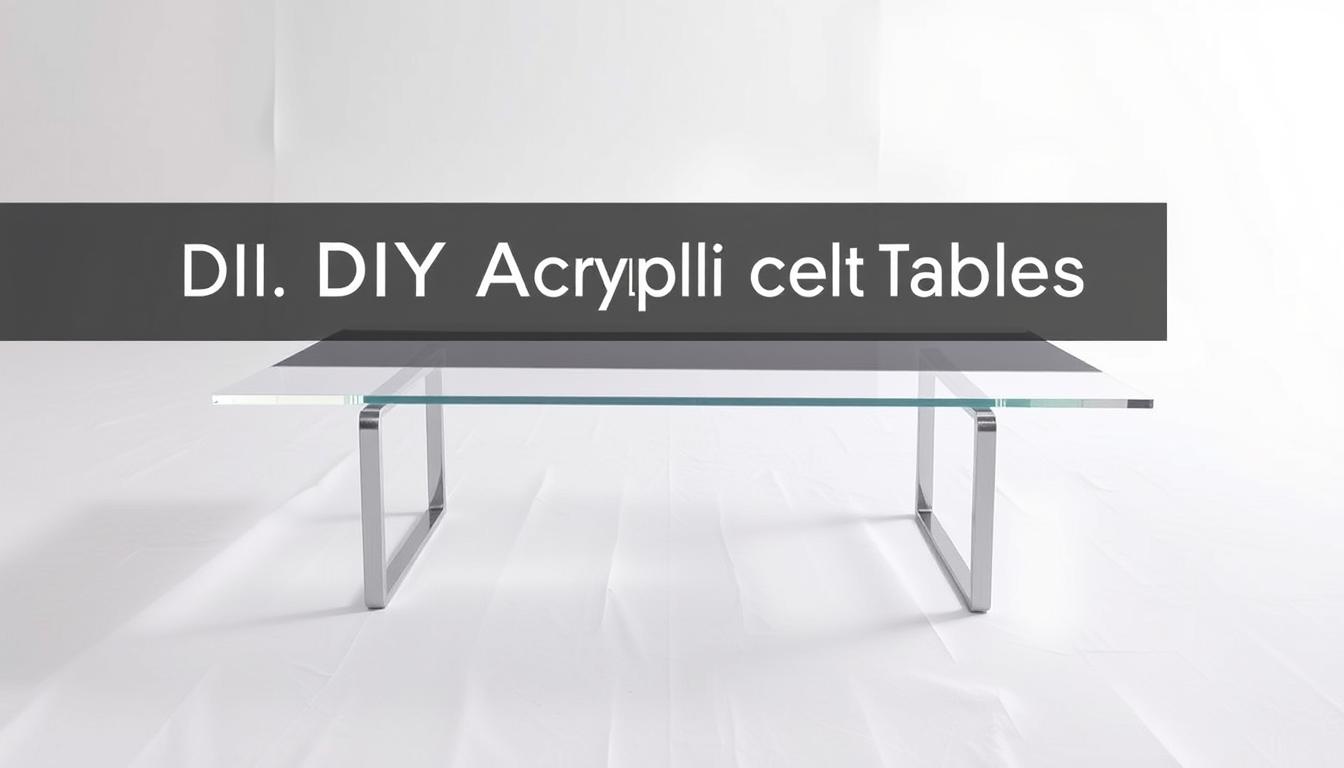
Surprising fact: clear plastic furniture first boomed in the 1960s and 70s, and interest has climbed again so much that many makers call it a full resurgence.
You’ll build a striking coffee piece that keeps your living room airy while standing up to daily use. This guide shows what items and tools you need, from a heat gun and plexiglass blade to F-clamps and a 60–80 tooth crosscut blade.
Learn simple bending tips—hold a heat gun about 4–5 inches away for 4–5 minutes for a controlled bend—or choose a pro bending machine for repeatable angles. You’ll also see how protective film, masking tape, correct drill bits, and hidden fasteners keep edges clean and joints solid.
In the end, you’ll have a weekend plan to tailor height and width so the piece fits your home and keeps traffic flow open.
Key Takeaways
- Resurgence: Midcentury clear furniture is trending again.
- Use the right items and tools to cut and bend without chipping.
- Heat-gun bending is flexible; a bending machine gives precision.
- Hybrid builds pair acrylic legs with a stained wood top for warmth.
- Plan dimensions so the table fits seating and room flow.
Plan Your DIY Acrylic Coffee Table: Sleek And Modern DIY Project
Start by choosing whether you want a full clear waterfall build or a hybrid with a wood top—this decision guides materials, tools, and final size.
Select the right sheet thickness: target at least 6–8 mm for a full clear piece, or 1/2″ for legs that will support a solid wood top. The cited PERSPEX® example used 8 mm for an 80 x 50 x 40 cm layout; adapt those dimensions to your room and seating height.

Materials, tools, and sourcing
- Core items: plastic cutting knife, circular saw with a 60–80T crosscut blade, jigsaw with a plexiglass blade, heat gun, and F-clamps.
- Keep the protective film on during layout and cuts; add painter’s tape if film is missing.
- Compare local suppliers for off-cuts or check secondhand markets to source sustainable products affordably.
Workshop safety and prep
Clamp firmly and place a sacrificial board on top to reduce vibration and chipping when using power saws. Mark fold lines clearly if your design uses bent legs from a single sheet.
Hold the heat gun about 4–5 inches away and warm evenly for roughly 4–5 minutes before bending; never force a bend.
Plan fasteners early: use 2-1/2″ wood screws, match through-hole and pilot sizes, and hide hardware with hinged screw caps near the top edge. This prep saves time once you cut and assemble the final surface.
Build Steps: Cut, Bend, Drill, and Assemble your acrylic coffee table
This section walks you through precise cutting, safe bending, and solid fastening so the finished piece sits true and fits your room. Follow the order: layout, cut, form, drill, and assemble for predictable results.

Cutting like a pro
Keep the protective film on and mark all lines. For thin sheet, use score-and-snap: make 6–12 light passes with a plastic cutting knife until you’re just over halfway through, then snap with firm, even pressure.
For longer straight cuts, fit a 60–80 tooth crosscut blade on a circular saw. Start the blade before contact, clamp scrap wood on top, and secure the sheet to reduce chip-out. Use a jigsaw with a plexiglass blade for curves and clamp thin stock to MDF to prevent bounce.
Bend methods and tips
Use a heat gun held 4–5 inches away and warm the fold line for about 4–5 minutes. Form radii by wrapping the warmed edge around a 2″ dowel or a 5″ tube, supporting the line with a straight board and F-clamps.
If you have a bending machine, set the jig degrees, heat evenly, fold, and let cool. Always allow each bend to cool fully; a small fan speeds this and reduces warp.
Drilling, fastening, and final fit
Drill 1/4″ clearance holes through the sheet so screws pass without stress. Transfer hole locations to your wood top and drill 1/8″ pilot holes for the 2-1/2″ wood screws used to secure the top to legs or rails.
Tip: conceal fasteners with hinged screw caps near the top edge for a clean finish.
Dimensions and stability
Aim for a coffee table height around 16–18″. For hybrid builds, cut legs to match a ~19.25″ wide top (legs ~19.25″ W x 17-7/8″ H). For full clear pieces, reference the 80 x 50 x 40 cm example and scale to your seating.
For stability, choose ≥6–8 mm sheet thickness and add a hidden 1×4 support rail under wide spans (4′ top) to prevent racking over time.
Design, finish, and care: from modern shapes to anti-static cleaning
Choose a direction for form and finish so your new centerpiece fits both function and style. Start by picking a shape that suits your space: a waterfall silhouette reads light in a compact living room, while rounded radii feel softer in high-traffic zones.
Style variations
Go crystal-clear for an airy look, smoky tinted to set a mood, or pick bold colored panels to make the piece act like sculptural furniture. For seamless waterfall legs, bend a single sheet into a U-shape.
For gentler corners, wrap the heated fold around a dowel or cylinder to form smooth radii. These choices change how light plays across the surface and how the item sits in your home.
Finishing touches and maintenance
If you pair a wood top with clear supports, condition the wood first. Apply stain—Weathered Oak is a reliable choice—then seal with satin polyurethane and let the final coat cure 24 hours before placing items on the top.
- Hide hardware: use hinged screw caps and spray-paint them satin bronze to match your palette.
- Clean and protect: use an anti-static cleaner such as Burnus; avoid ammonia-based glass cleaners that haze the surface.
- Shape safely: keep your heat source about 4–5 inches (~5 cm) from the fold line and move steadily to avoid bubbles.
“Lift rather than slide decorative pieces, use felt pads, and place coasters under hot items to keep clarity and prevent scratches.”
Minor scuffs buff with a plastic polish system; for deeper marks, step through fine grits and finish with an acrylic-safe polish to restore clarity. Thoughtful design and simple care will keep this furniture piece looking gallery-ready in your home.
Conclusion
Finish strong: check fit, fasteners, and finish so your new centerpiece performs well in daily use. Confirm that legs and supports meet the ≥6–8 mm (full) or 1/2″ (panel) thickness you planned.
Prioritize precision and safety: keep the protective film on while you cut with a 60–80T blade, heat fold lines about 4–5 inches away for 4–5 minutes, and drill 1/4″ clearance through the plastic with 1/8″ pilots in wood.
Match thickness and hidden rails to prevent flex. Condition and seal wood tops, let them cure 24 hours, and use anti-static cleaners like Burnus to maintain clarity.
With these checks, your coffee table will be a durable, stylish piece of furniture for your home.