

Surprising fact: nearly one in five makers say their first pour failed due to a bad form or trapped bubbles.
You can build a striking live-edge piece that fits your home and furniture style, even if this is your first project. This guide lays out a clear process for selecting wood, building a leak-free form, and preventing slabs from floating during the pour.
Mix ratios, pour depth, and heat control matter. Typical mixes follow manufacturer ratios like 1:1 or 2:1, and many makers pour up to 2 inches at a time. You’ll learn how to remove bubbles with a heat gun or torch and how cure times change by depth and temperature.
After the pour you’ll demold, flatten with a planer or router sled, sand through progressive grits, and choose a finish such as tabletop epoxy or oil-based coatings. Finally, attach legs using pilot holes or threaded inserts for a sturdy result.
Key Takeaways
- Plan the layout: pick live-edge slabs and design the river path before cutting.
- Seal and clamp: build a reliable form and secure slabs to stop leaks and floating.
- Mix and pour carefully: follow ratios, pour slowly, and remove bubbles with heat.
- Allow proper cure: expect 12–72 hours depending on depth and temperature.
- Finish and fit: flatten, sand through grits, pick a durable finish, and attach legs securely.
What You’ll Learn and How This How-To Guide Sets You Up for Success
You’ll get clear, practical steps that turn a design idea into a finished home centerpiece. This guide walks you through planning, building a melamine or HDPE mold sealed with silicone, prepping slabs, and doing deep-pour work safely.
The full process covers mixing and pouring resin up to about 2 inches per layer, using a heat gun or torch during the first hour to remove bubbles, and allowing up to ~72 hours to cure before demolding.
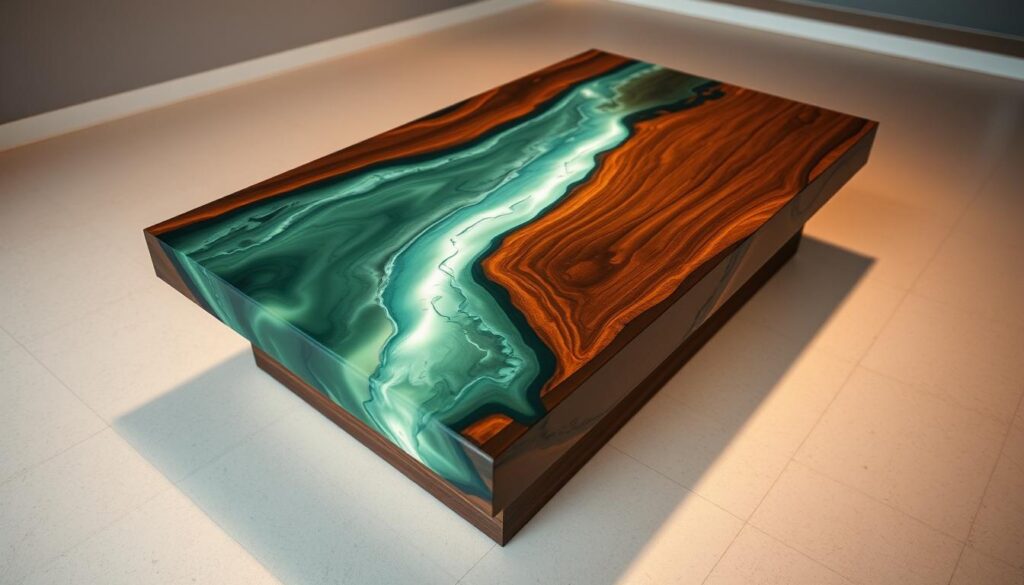
Follow simple, numbered instructions and you’ll learn each step from layout to attaching the base. We explain how workspace prep, dust control, and product choice affect the final look of your furniture.
- Clear instructions: mold building, wood prep, and mixing tips for safe pours.
- Time and tools: realistic time estimates and when to use a heat gun.
- Quality matters: why better resin gives clarity and fewer cure problems.
By the end you’ll have confidence to tackle river tables and similar projects, and to finish a coffee table that fits your home and design goals.
Plan Your River Table: Size, Design, Wood, and Epoxy Resin Choices
Start by locking in your size and style so the finished piece fits the room and your daily use. Pick a clear footprint and note how it relates to other tables and seating nearby.
Choose live edge slabs
Select fully dried hardwoods such as walnut, maple, or oak for stability. Budget-friendly softwoods work if dry. Verify moisture content to reduce warping and trapped air.
Design the river
Decide whether the river runs down the center or is offset. Choose straight lines for modern looks or a meandering path for an organic feel. Plan a typical gap of about 4–10 inches based on your desired visual impact.
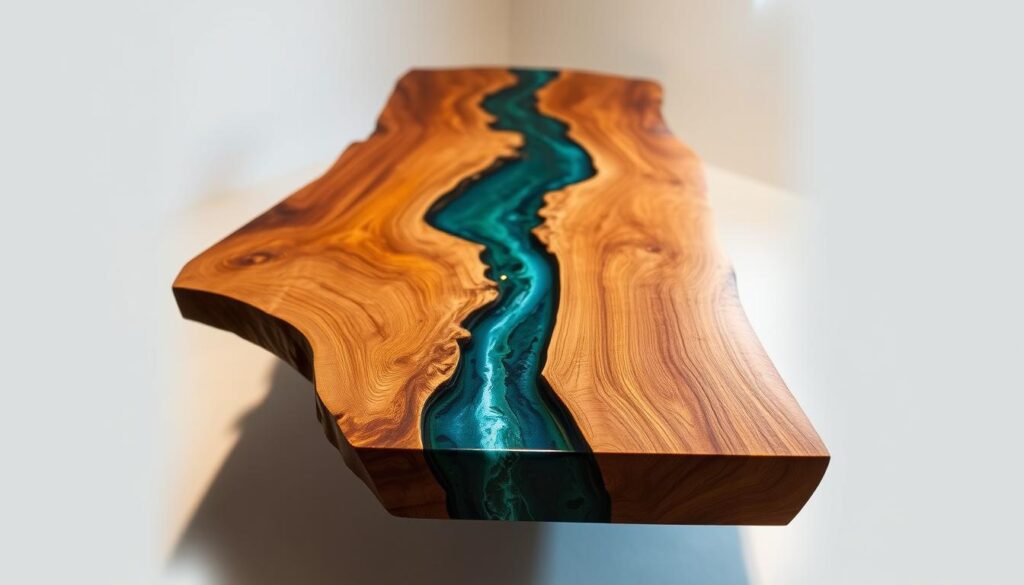
Pick color and effects
UltraClear deep pour products often allow ~2-inch pours. Use clear, tinted, or mica swirls for depth. Seal wood before embedding stones, shells, or lights so objects don’t trap moisture.
Decide thickness and base
Common tabletop thickness is 1.5–2 inches for a balanced look and weight. Match your base to the top—metal for contrast or wood for warmth. Plan overhangs, leg placement, and attachment points before ordering materials.
- Action tip: make a materials list now—slabs, resin, pigments, mold supplies—so you can buy everything before you start.
Tools, Materials, and Safety Gear You Need Before You Start
Start by assembling reliable tools, quality materials, and a clear safety plan for your shop. This saves time and prevents common mistakes on a table project.
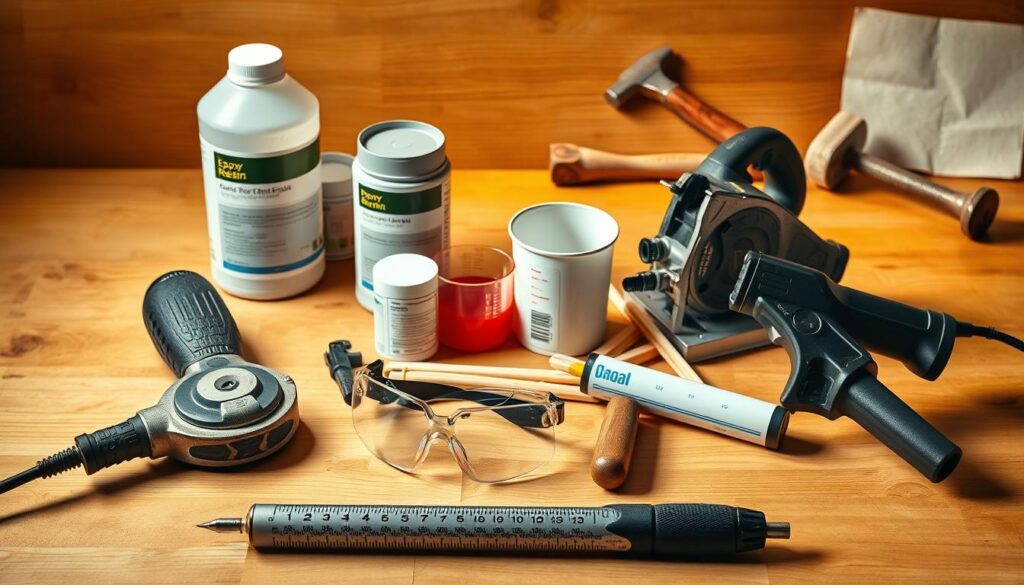
Essential supplies include live-edge slabs, melamine or HDPE panels for the mold, silicone caulk to seal seams, and Tyvek or sheathing tape to ease demolding.
- Core tools: saws to trim slabs, an orbital sander with multiple grits, clamps to prevent slab float, and a straightedge or level to ensure flatness.
- Stock epoxy supplies: accurate measuring cups, flat stir sticks, a drill with a mixing bit, and clean buckets for mixing.
- Bubble control: a heat gun or a small propane torch—use short passes to pop air without scorching.
- Optional upgrades: pigments, mica powders, polishing compounds, mold release, and threaded inserts for removable legs.
“Gathering the right gear before you mix keeps your pours clean and predictable.”
Safety first: wear a respirator, nitrile gloves, and goggles. Ensure good ventilation in your shop, control dust, and review the epoxy instructions before mixing. Small prep steps protect your finish and your health.
Prepare Your Workspace and Build the Melamine or HDPE Form
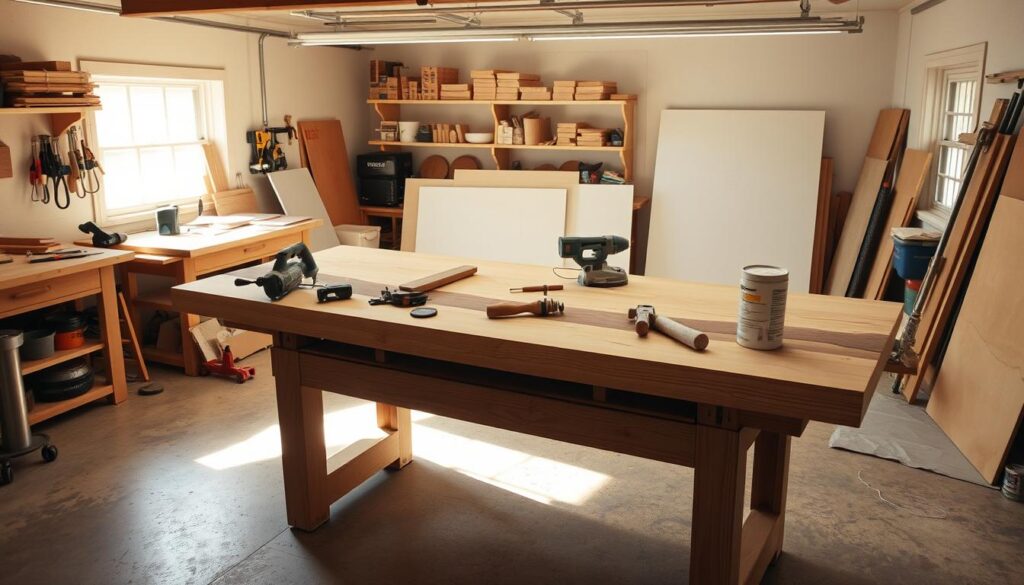
Before you cut or glue, secure a flat, protected area in your shop. A level surface and strong dust control are the simplest ways to avoid blemishes during the curing process.
Protect floors and benches with plastic sheeting. Position the assembly where it won’t be bumped. Keep ventilation and safety gear nearby so you can move quickly once mixing starts.
Set up a level, dust-controlled space and protect your surfaces
Level the base so the pour self-levels and the finished top stays true. Use a long straightedge or spirit level and shim under the base if needed.
Cover surrounding areas with plastic and tape to reduce airborne dust. Stage spreaders, a heat tool, and gloves within reach to streamline the process.
Build and seal the form: melamine or HDPE, Tyvek/sheathing tape, silicone caulk
Cut melamine or HDPE to your final dimensions and rip sidewalls ~3 inches for a 1.5–2 inch thick top. Pre-drill and screw the walls to the base for a square, rigid form.
Line all interior faces with Tyvek or sheathing tape so the pour does not bond to the mold. Seal every seam with silicone caulk and allow it to cure fully to prevent leaks.
Dry fit the slabs, mark outlines, and check consistent river width and edge alignment. Remove slabs to fine-tune the form, then reinstall and clamp or weight them to stop floating once you pour.
“A tight, taped, and cured form saves material, time, and frustration.”
| Material | Ease of Use | Demold |
|---|---|---|
| Melamine | Cut & screw easily | Good with tape and caulk |
| HDPE | More durable, harder to trim | Excellent release, low bonding |
| Interior tape + silicone | Prevents bonding | Reduces seam leaks |
Prep the Wood: Clean Edges, Cut to Size, Seal, and Clamp
Start by making the wood and slabs shop-ready. Remove loose bark, rotten patches, and dust so the material bonds cleanly to the resin.
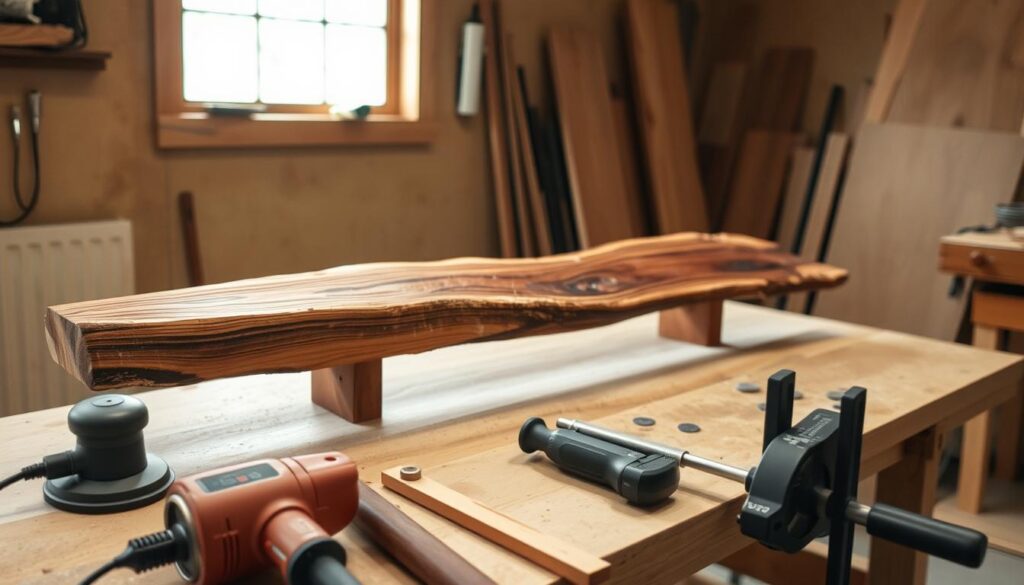
Use a drill or an angle grinder fitted with a wire brush to strip bark and soft material. Work until the surface is solid and free of loose fiber.
Create one long straight reference edge and square the ends. This single straight side makes it simple to seat the slab inside the rectangular form without gaps.
Dry fit both slabs and mark layout lines for repeatable placement. Seal porous live edge faces that face the river channel with a thin seal coat to reduce outgassing and bubbles.
- Wipe the surface clean of dust so the clear finish won’t telegraph contaminants.
- Confirm final table dimensions and make trim cuts now for a snug fit.
- Reinstall slabs, then clamp or weight them to prevent slab float as the resin fills the void.
“Clamping and a precise dry fit cut your risk of leaks and floating during the pour.”
Recheck level and alignment before you mix. Stage tools nearby so you can move from wood prep to the pour without delay and keep the project on schedule.
Mix, Pour Epoxy, and Eliminate Bubbles for a Crystal-Clear River
Proper measuring and controlled pours keep heat low and clarity high in deep fills. Measure by volume or weight exactly to the product’s 1:1 or 2:1 ratio. Follow the mixing time and use a drill with a mixing bit for large batches. Scrape sides and bottom as you mix to avoid unmixed pockets.

Choose a deep-pour resin for fills up to ~2 inches per lift. For greater depth, build layers and respect recoat windows or full cure plus light sanding for adhesion. Keep ambient temps near 75–80°F and avoid drafts.
Blend pigments or mica sparingly (about 3–4 ounces per gallon for mica) and test small batches before a final pour. Pour slowly into the channel and let the material self-level. Use taped dams where needed to hold edges.
Bubble control and timing
During the first hour, move a torch or heat gun smoothly 6–8 inches above the surface to pop bubbles. Work quickly but gently to avoid scorch marks or divots. Revisit the surface as bubbles rise, and monitor the piece for the initial set in the following hours. Full cure takes days—do not rush handling or trimming.
Cure, Demold, Trim, and Flatten the Table Top
Give the piece enough time to reach handling strength before you touch the mold. In many pours the mix will reach a safe handling state in about 12–14 hours. Full cure usually takes 24–72 hours depending on depth and ambient temperature.
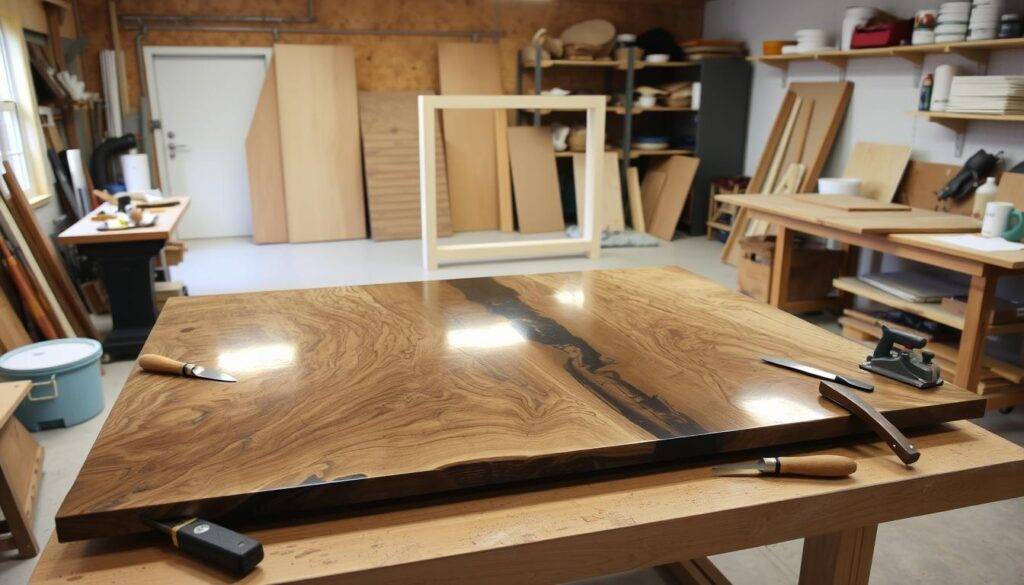
Release the form carefully. Back out all fasteners and gently pry the melamine walls away. Well-taped and caulked forms will usually come apart cleanly and protect your edges and slabs.
Trim excess squeeze-out on a track saw or table saw to set the final outline of your river table. Take light passes and keep the cut line steady so you preserve the intended profile.
Flattening and inspection
Flatten the top using a planer for a quick, flat surface. If you don’t have a planer, use a router sled to get the same result without risking tear-out.
Inspect the surface for tiny pits, drips, or uneven areas and address them now. Clean your shop and control dust before you start sanding and finishing the next phase.
“Patience during cure and careful demolding set the stage for a standout top.”
- Allow full cure per product specs—deeper pours need more time and often more hours.
- Remove screws, open the form, and trim the profile cleanly.
- Flatten with a planer or router sled and document any removed material for consistency if you make matching pieces.
Sanding, Finish Options, and Attaching the Base or Legs
A careful sanding plan and the right coat will protect the wood and keep the surface clear.
Sanding progression for wood and resin
Start with a leveling grit such as 100 to remove high spots. Move through 120, 150, and finish at 180 for a smooth surface.
Clean dust between grits and vacuum the top before the final pass. Small, even passes prevent swirl marks and keep the finish clear.
Coating strategies and bubble control
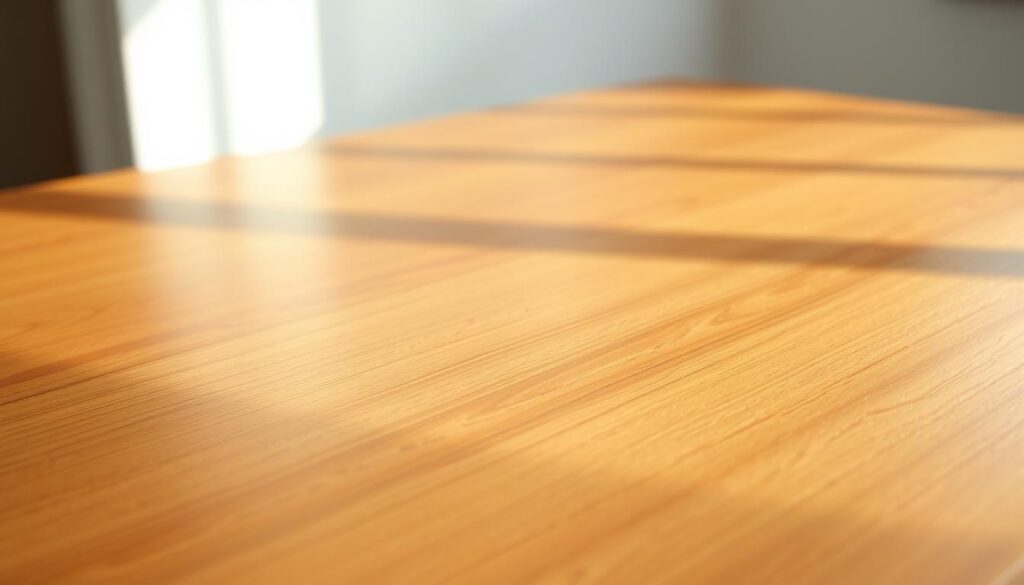
For a high-gloss look, mix a tabletop epoxy per manufacturer ratio (often 1:1). Spread evenly and limit edge flow.
Have a torch or heat gun ready and pass lightly to release bubbles in the first 15–30 minutes. Plan a second coat either when tacky for chemical bond or after full cure and a light scuff for mechanical adhesion.
Rubio Monocoat and attaching the base
Apply Rubio Monocoat thinly with accelerator, buff it in, and wipe excess. Allow about seven days before heavy use.
Attach the base or legs using pilot holes or threaded inserts for repeatable, removable mounting. Check alignment and overhangs before final fastening.
“Mix fully, control dust, and keep heat tools moving to avoid trapped bubbles.”
Care and common mistakes
Clean with mild soap and a soft cloth. Avoid harsh chemicals and use coasters to reduce wear.
Epoxy River Coffee Table: Complete Beginner’s Guide with Pictures
This final recap pulls each major step into a compact checklist you can follow at the bench.
Step-by-step recap: plan size and design, build a taped and caulked melamine or HDPE mold, and prep and seal slab edges. Mix and pour a deep-fill epoxy within product depth limits. Pop bubbles during the first hour and let the piece cure 24–72 hours.
After cure, demold, trim squeeze-out, flatten with a planer or router sled, and sand through progressive grits. Finish using a tabletop epoxy or Rubio Monocoat and attach your base with pilot holes or threaded inserts.
Smart buying and instructions
Avoid low-cost formulas that often cloud, yellow, or cure poorly. Choose batch-tested U.S. options like UltraClear Deep Pour or Bar & Table Top Epoxy for clarity and support. Quality resin reduces rework and VOC risk.
“Better materials improve the final look and lower the chance of costly fixes.”
- Keep instructions and tools staged to avoid mid-pour delays.
- Test pigments in small mixes to confirm your color and look.
- Track resin volumes with a calculator so you don’t run short.
| Concern | Low-cost product | Quality option |
|---|---|---|
| Clarity | May cloud or yellow | Batch-tested for clarity |
| Cure reliability | Inconsistent ratios | Predictable cure and support |
| Support & safety | Higher VOCs, minimal support | Lower VOCs, manufacturer support |
Conclusion
Finish strong. Confirm full cure and demold carefully from your taped, caulked form to protect the live edge and slabs.
Trim to size and flatten the top with a planer or a router sled. Sand progressively and keep dust off the surface so your final coat looks glass-clear.
Use quality deep-pour resin systems, accurate mixing, and a torch or heat gun in the first hour to remove bubbles. Plan recoat windows if you pour in layers.
Attach a matched base with pilot holes or threaded inserts, then care for the furniture with mild cleaners and avoid harsh solvents or heat. Track hours and notes so each project improves.