

Did you know a thrifted glass-top coffee table bought for $10 can change how a whole living room feels?
You found a slightly wobbly piece with solid wood and two handy drawers. You planned a project that keeps the wood’s grain, lightens the finish, and preserves character while brightening your space.
The process you chose focused on careful prep: safe disassembly, stripping, sanding, and stain testing. You used water-based polyurethane for faster dry time and easy future care. Hardware got an aged gold upgrade with Rub ’n Buff Gold Leaf for subtle polish.
In short, you proved a small-budget update can deliver big impact. The result is a warm, modern focal point that resists glare, hides fingerprints, and fits your decor without feeling heavy.
Key Takeaways
- Thrift finds can be transformed into a bright living room focal point.
- Preserving wood grain and choosing lighter tones reduces visual weight.
- Careful surface prep is the most time-consuming step for a durable finish.
- Water-based polyurethane and Rub ’n Buff offer practical, polished results.
- Small updates to hardware and finish greatly improve function and look.
Why Refresh an Old Glass Coffee Table for Your Living Room
A dated red-tinged finish made the piece feel heavy and out of step with the rest of your living area. Replacing the surface with a lighter, patina-rich tone instantly opened the space and made the room feel larger.
Because the base was solid wood, refinishing kept valuable material out of the landfill while giving the furniture a modern look. Keeping the built-in drawers preserved storage without changing the footprint.
Beyond aesthetics, a new finish adds real protection. A fresh topcoat resists moisture, rings, and daily wear from mugs and remotes. That durability means less upkeep and longer life for the table.
- You save money and keep quality materials in use.
- You tailor color, sheen, and metal accents to match your home.
- You anchor the seating area with a refreshed focal point that ties textiles, lighting, and art together.
Refreshing this piece was a small project that upgraded both form and function. It gave your living space a cleaner look and practical benefits that retail pieces rarely match.
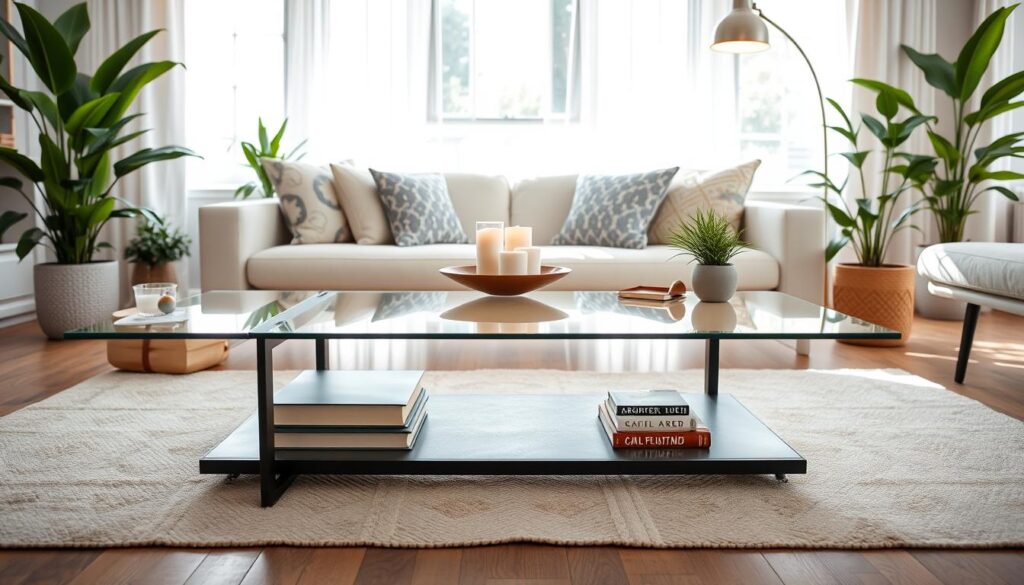
DIY Glass Coffee Table Makeover: Refresh Old Glass With Style
Start by stabilizing the base—tighten loose screws and remove the glass insert and hardware so you can work safely and accurately.
Next, strip the old finish using a gel stripper like Citristrip. Let it dwell about 30 minutes, then scrape the lifted finish away. This step saves sanding time and reveals clean grain.
Sand flats with an orbital sander and use a Ryobi multi-tool or detail sander for corners and curves. If you find thin veneer or particle board, switch to gentle sanding or patching to avoid cutting through the surface.
Before-and-after potential: brighten, modernize, and add warmth
Test stains on a scrap and select a light, modern tone—Minwax Weathered Oak worked well to counter red undertones. You can layer a white wax for a soft patina that reads aged but fresh.
Seal with three coats of water-based polyurethane (matte) for a natural feel and durable finish. Refinish or replace hardware to match your palette, clean the glass, and reassemble.
- Active work: 1–2 days; longest time is prep and drying between coats.
- Key steps: disassembly, stripping (30 min dwell), sanding, stain test, sealing.
- Result: a brighter look that fits your room and lasts through daily use.
| Step | Tool / Product | Estimated Time |
|---|---|---|
| Disassemble & stabilize | Screwdriver, clamps | 30–60 minutes |
| Strip old finish | Citristrip (gel) | 30 minutes dwell + scraping |
| Sanding & detail work | Orbital sander, Ryobi multi-tool | 1–3 hours |
| Stain & optional wax | Minwax Weathered Oak, white wax | 1–2 hours (plus dry time) |
| Seal | Water-based polyurethane, matte (3 coats) | Several hours between coats; total cure time varies |
Tools and Materials You’ll Need for a Coffee Table Makeover
The right combination of tools and products keeps the work clean and efficient. Before you begin, gather all materials so you can move through each step without interruption.
Stripping, sanding, and repair essentials
Stripping: Citristrip gel, plastic scrapers, and shop rags make lifting old varnish safer and faster.
Sanding: An orbital sander with 80–220 grit pads for flats and a Ryobi multi-tool for edges keeps the sanding even. Add a dust collection setup to protect your shop and lungs.
Repairs: Keep wood putty matched to your species, wood glue, clamps, and extra screws on hand to fix loose joints or veneer sand-throughs.
Stains, waxes, and protective topcoats: choosing color and finish
Test stains like Minwax Weathered Oak on a scrap to check undertone and color against your room. Consider a white wax for a soft patina without darkening the wood too much.
For protection, choose a water-based polyurethane (matte) for low odor, faster dry time, and a clear, non-yellowing finish that reduces glare near a glass insert.
Hardware, gold accents, and decor add-ons
Use small brushes and lint-free cloths for wipe-on stain and wax. Refresh hardware with spray paint or try Rub ’n Buff in Gold Leaf for an elegant accent.
| Item | Use | Why it matters |
|---|---|---|
| Citristrip | Varnish stripping | Clears old finish with minimal sanding |
| Orbital sander / Ryobi multi-tool | Sanding flats & edges | Saves time and preserves profile |
| Minwax Weathered Oak / white wax | Color & patina | Test on scrap for best choice |
| Water-based polyurethane | Topcoat | Fast dry, clear, matte finish |
Prep, Disassembly, and Safety for Working With Glass and Wood
Before you start sanding or stripping, make the workspace safe and the piece solid. Lift the top off first so you can work on the frame without risking the pane.
Remove the top, hardware, and drawers safely
Take the glass out and stand it upright on padded supports to avoid chipping corners. Label screws, slides, and small parts in bags so reassembly is foolproof.
Stabilize the base and protect your workspace
Elevate the table on blocks and cover floors with rosin paper or drop cloths. Tighten loose fasteners and add wood glue where joints wobble to stop movement while you work.
- Safety tip: wear cut-resistant gloves and eye protection when handling the glass and use a respirator while stripping and sanding.
- Vacuum the surface before applying stripper so it bonds cleanly.
- Test a hidden spot to confirm dwell time and removal behavior.
- Clear a path between your workspace and the reassembly room so you can move the top back without impacts.
Strip, Sand, and Repair: Getting Back to Beautiful Wood Grain
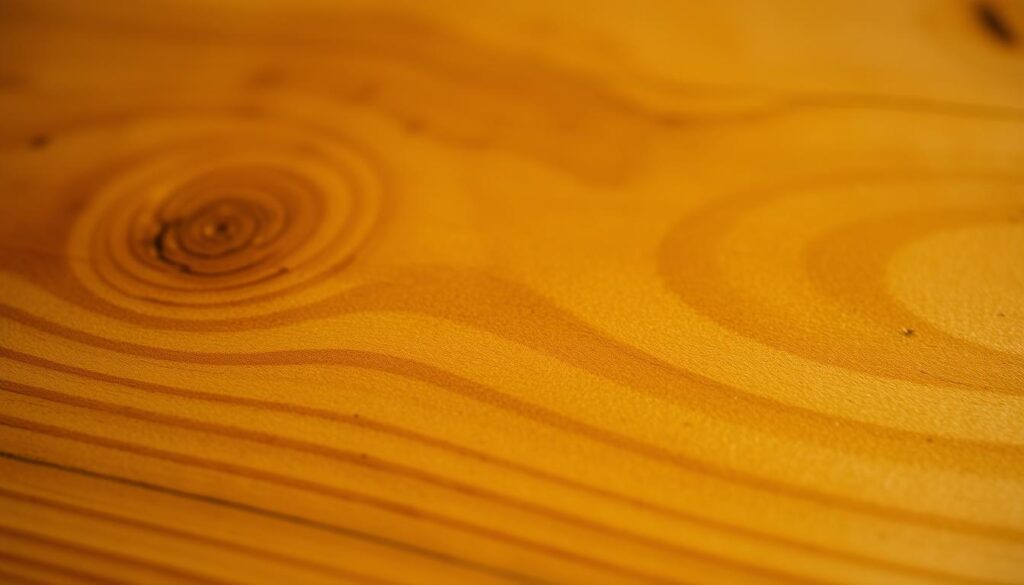
A careful stripping and sanding sequence brings out the true character of the wood beneath the old varnish.
Brush on a generous, even coat of Citristrip and let it sit until the finish wrinkles—about 30 minutes for most spots. Then scrape gently with a plastic putty knife to protect the surface. Repeat only in stubborn areas rather than forcing the scraper.
Sanding follows. Start with 120 grit on flats, then move to 180–220 for a smooth feel. Keep the orbital sander flat to avoid divots and cross-grain marks that show through stain.
Detail work and repairs
Switch to a detail sander or hand sanding for edges, corners, and curved profiles. A Ryobi multi-tool reaches tight spots without flattening molded lines.
Identify veneer by thin edge profiles and uniform grain. Patch sand-throughs with color-matched wood putty and re-sand lightly so the piece accepts stain evenly.
For concave or carved zones, consider skinning with thin plywood that matches grain and color. This saves excessive sanding and keeps profiles intact.
- Clean dust between grits with a vacuum and tack cloth for a nib-free surface.
- Keep final strokes with the grain for a professional appearance.
| Step | Tool / Product | Outcome |
|---|---|---|
| Strip | Citristrip (30 min dwell), plastic scraper | Old varnish lifts, grain revealed |
| Sanding flats | Orbital sander (120 → 220) | Smooth, even surface for stain |
| Detail sanding | Detail sander / Ryobi multi-tool | Crisp edges and clean corners |
| Repair & skin | Wood putty / thin plywood | Patch sand-throughs; preserve profile |
Stain, Add Patina, and Seal: Build a Durable, Modern Finish
Begin the finishing stage by comparing several stain samples under daylight to choose the best undertone.
Test on a scrap so you see how the color shifts in real light. You picked Minwax Weathered Oak for a light, nuanced tone that counters red undertones while keeping the wood’s character.
Test colors, then stain for the look you want
Remove dust outdoors with a blower before staining to avoid nibs. Apply stain with a lint-free rag, working in sections and wiping excess immediately for an even, subtle result.
Optional white wax for a subtle, aged texture
Brush on white wax sparingly and wipe back so it settles into the grain. This adds a soft patina and depth without darkening the surface too much.
Seal with water-based polyurethane: coats, sheen, and cure time
Choose a matte water-based polyurethane to keep a low-glare, raw-wood look that complements the top insert. Apply thin, even coats and lightly de-nib between layers.
- Plan three coats for lasting protection and balanced sheen.
- Follow manufacturer dry times and allow full cure before heavy use.
- Document products and steps so future touch-ups match precisely.
| Task | Product / Method | Outcome |
|---|---|---|
| Stain testing | Minwax Weathered Oak on scrap | Confirms undertone and final color |
| Application | Lint-free rag; wipe excess | Even, subtle coverage that preserves grain |
| Patina option | White wax; wipe back | Soft aged texture without heavy color |
| Sealing | Water-based polyurethane, matte (3 coats) | Durable, low-glare finish with raw-wood look |
Refresh the Hardware: From Dated to Polished
Small metal details influence perceived quality, so choose tones that feel intentional and durable. The original bronze pulls were cleaned and refinished to complement the lighter wood and overall room palette.
Pick a metal tone—brass, matte black, or aged gold—based on whether you want the hardware to blend or provide contrast. Hold a sample up in room lighting to confirm the final look before you commit.
Refinishing tips: Rub ’n Buff and spray paint
Clean hardware thoroughly and scuff lightly to improve adhesion. For an elegant aged gold, use Rub ’n Buff in Gold Leaf and apply with cling wrap or a cotton swab for fingertip control and precise coverage.
If you prefer paint, spray prime after cleaning and use a durable enamel. Allow full cure before handling and confirm screw spacing matches existing holes to avoid patching.
- Check fit: test backplates and screw spacing after refinishing.
- Add felt bumpers and verify drawer glide alignment for smooth function.
- Keep extra product for touch-ups in high-contact spots.
- Avoid overly shiny lacquers if you want a soft, understated presence next to a matte wood finish.
How to Style a Glass Coffee Table After the Makeover
A well-composed layout keeps the centerpiece usable while reflecting your room’s palette. Start by choosing a shape that fits how you live. Rectangular tops suit sectionals and offer generous reach. Square tops balance proportions and feel intimate. Round tops ease circulation in tight walkways. Oval blends length with softer edges for busy rooms.
Anchor the surface with a tray sized to the table’s shape—about 12–16 inches for rectangles, roughly 10 inches for compact square or round tables. Stack two to three hardcover books off-center and top them with a small object or plant to add height and focus.
Add greenery like a succulent or a small bouquet in a clear vase to echo the glass and bring freshness. Layer two or three candles in neutral tones, or pick LED pillars for child- and pet-safe glow. Leave about one-third of the surface open so the piece stays functional and uncluttered.
Use reflective accents sparingly—a brass object or glass orb—to bounce light without overwhelming the composition. Keep colors cohesive: neutrals plus one accent hue will tie the vignette to the living room palette. Refresh seasonally with subtle swaps and protect the surface with felt pads under heavier items. These simple decor ideas will keep your coffee table looking crisp and intentional.
Alternative Makeover Ideas if You’re Not Refinishing Wood
Not every piece needs a full sand-and-stain; alternative finishes can deliver a fresh, durable look in less time. These options save effort and let you tailor color and texture to the room.
Chalk paint and whitewash mask imperfections quickly and create a vintage, casual vibe with minimal prep. Try a two-tone approach: a painted base and a stained or natural top to keep some wood character while modernizing lines.
Add texture with fluting on aprons or legs, or install rustic plank tops from rough-sawn pine for farmhouse warmth. Metallic accents—Rub ’n Buff or spray enamel—lift hardware and feet for subtle glam.
For dramatic surfaces, explore faux marble painting or a mirror-top upgrade to boost sheen and reflection without rebuilding the base. Decoupage, stencils, and peel-and-stick wallpaper offer patterned options you can undo later.
Bold moves: black paint gives a clean, contemporary look. You can also shorten a small dining table to convert it into a low coffee-height side table that fits your seating scale.
| Approach | Tools / Materials | Result |
|---|---|---|
| Chalk paint / whitewash | Light sanding, primer optional, chalk paint | Quick vintage finish; low prep |
| Two-tone / plank top | Paint, stain, rough-sawn pine | Modern profile with warm texture |
| Faux marble / mirror | Glazing paints or mirror sheet | High-impact sheen without heavy rebuild |
| Metallic accents / stencils | Rub ’n Buff, spray enamel, stencils | Pattern or glam details; easy updates |
Conclusion
A focused set of steps lets you turn a bargain find into a tailored piece that anchors the room. Follow the order: remove the glass top, stabilize the base, strip with Citristrip, sand, test Minwax Weathered Oak, add a light white wax if wanted, then seal with three thin coats of water-based polyurethane.
Handle hardware by refinishing pulls with Rub ’n Buff or spray enamel and test fit before final assembly. Keep your surface protected and leave breathing room when you style the top with a tray, books, and a plant.
Whether you prefer a full table makeover or alternate finishes like chalk paint or faux marble, these methods scale to side pieces and even a dining table conversion. Use the steps above to make sure materials and color choices match daily use and the living room you love.