
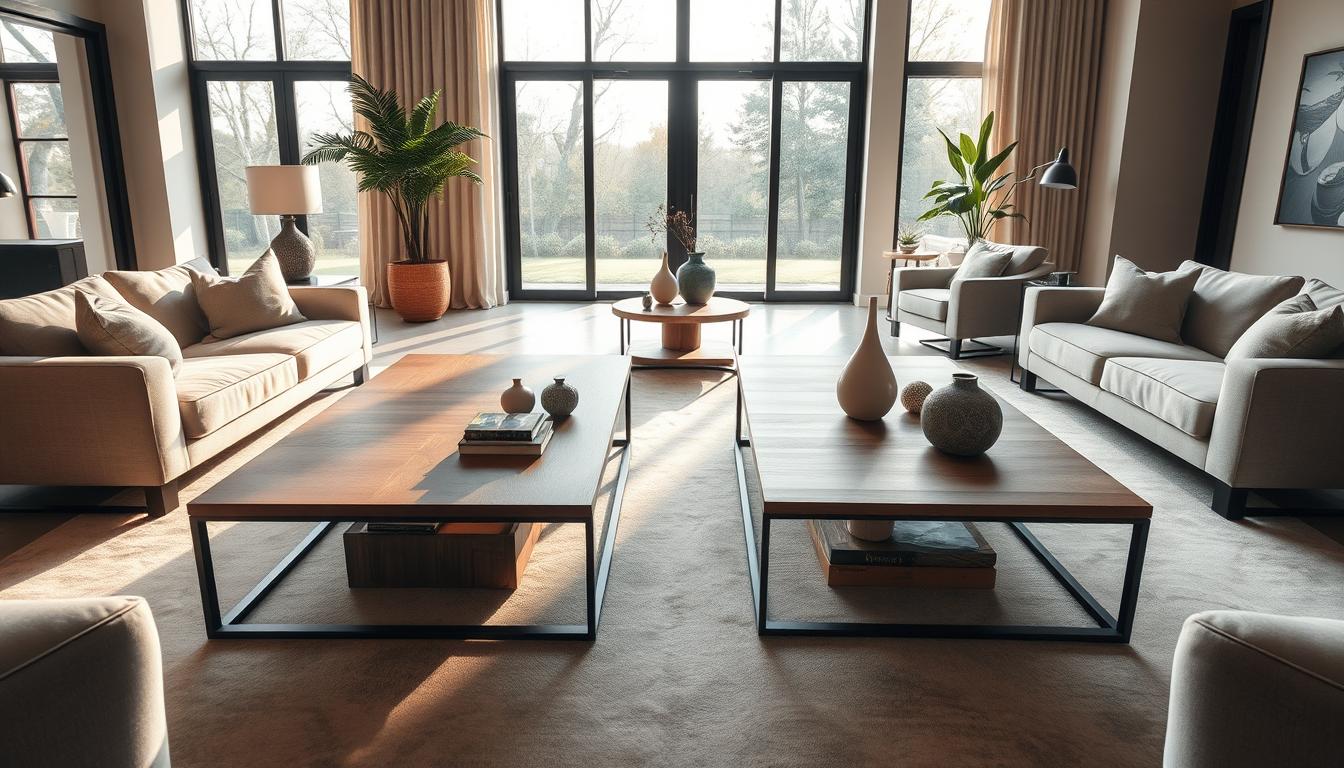
Surprising fact: designers often choose multiple small surfaces in place of one large table, and this shift shows up in many high-end living rooms.
Pairing two smaller tables creates the look of a bigger piece while keeping mobility when guests arrive. Buying matching shorter tables lets you push pieces to form one broad surface. Nesting sets add layered height and can be pulled apart without a mismatch.
Clusters of different tables work when they share a finish, shape, or tone. Repeat a wood hue elsewhere — a mirror frame or rug border — to make mixed tables feel unified. In long rooms, two surfaces help anchor seating and improve flow.
Key Takeaways
- Smaller paired tables give upscale flexibility and easy mobility.
- Choose matching elements—color, shape, or finish—to create cohesion.
- Nesting options offer staggered heights and quick separation when needed.
- Repeat materials in the room to tie different pieces together.
- Two surfaces solve layout problems in wide or long seating plans.
Why Two Coffee Tables Work in a Modern Living Room
Using multiple modest tables can improve traffic flow while keeping every seat within reach.
Flexible layouts let your living area adapt. Two small coffee table pieces slide apart to serve opposite seats or push together to read like one broader surface. That way the room shifts easily from quiet nights to a busier gathering without heavy lifting.
Split surfaces also clear circulation. In rooms with several pathways, you can angle or separate tables so people move freely around furniture and avoid bumped knees.
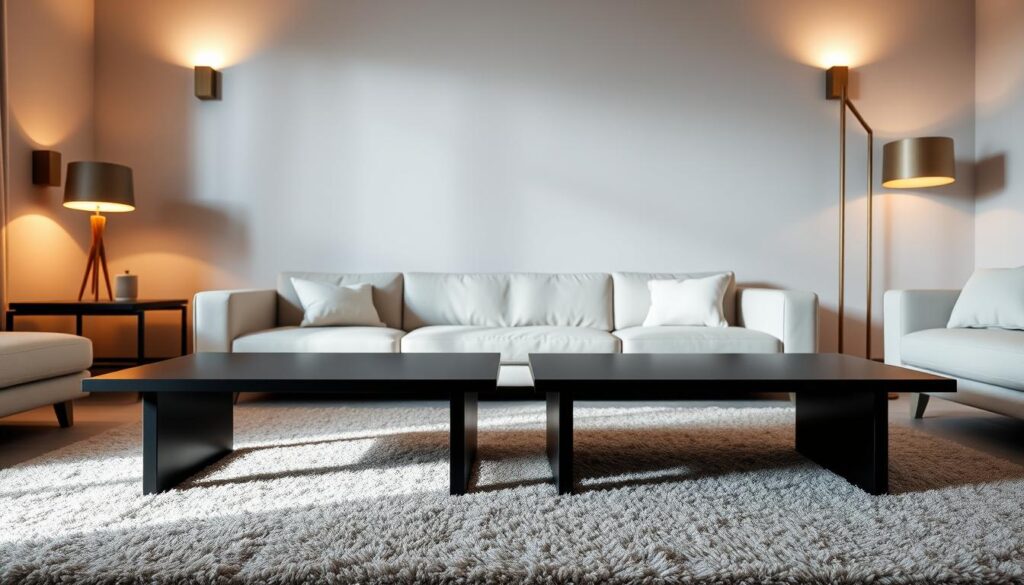
When this setup helps most
Large or long rooms gain balance when surfaces are distributed across the seating plan. Odd arrangements—say, a sectional plus chairs—call for placing one table near the chaise and another by the chair area so every seat has a handy surface.
Budget-smart and movable
Choosing two modest pieces or a nesting set often costs less than one oversized designer table. Nesting options coordinate finish and height, so you tuck one away for daily life and pull it out when hosting.
- Repeat a wood tone elsewhere—frame, rug edge, or shelf—to tie pieces together.
- Add a compact side table next to a deep sofa so every spot has a landing place.
Plan Your Double-Table Layout like a Designer
Start by mapping how each surface will sit in the space so furniture feels intentional, not accidental.
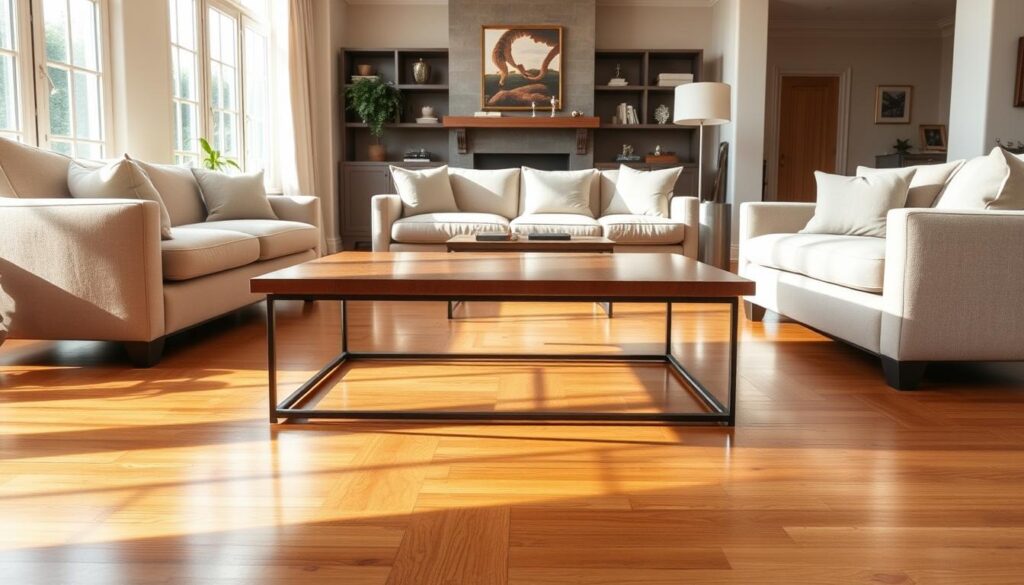
Measure the room, sofa, and pathways
Begin with simple measurements. Aim for the front edge of each coffee table to sit about 14–18 inches from the sofa. This range keeps drinks and books within easy reach.
Leave roughly 16–18 inches of walkway between the table edges and adjacent furniture so circulation stays smooth. Use blue tape to map footprints on the floor before committing to size or placement.
Shapes, heights, and materials
Mix shapes with intention: pair a rounded piece with a soft-corner square to soften lines, or choose matching rectangles for a linear seating plan.
Target table heights within 1–2 inches of the sofa seat for ergonomics. If you use a nesting set, stagger heights so books, remotes, and decor remain visible and accessible.
- Repeat a wood tone at least twice—either across both pieces or in a frame or rug detail—to tie varied elements together.
- Anchor tops with a low tray, keep one or two stacks of books, and add a slim side table near deep seats the table can’t reach.
Can You Put Two Coffee Tables Together: Design Tips For Double Layouts
A matched pair creates a seamless, larger surface while staying nimble for shifting guests.
Matched pair approach
Push two identical small units edge-to-edge so the seam reads intentional. This gives the look of one broad coffee table while letting you split the set quickly when hosts arrive.
Line up heights and finish, and repeat a wood tone elsewhere in the living room to make the arrangement feel deliberate.
Nesting table strategy
Nesting sets are great when you need a compact footprint most days. Tuck the smaller table under a larger one, then slide it forward to extend usable surface during games or snacks.
Staggered heights keep books, a remote, and a mug visible without crowding a single table surface.
Mix-and-match cluster
Choose different pieces that share a throughline—shape, leg style, or a repeated color—to keep the look cohesive. Slightly overlap edges and vary heights to add depth and flexible placement in a wide room.
Styling two levels and surfaces
Anchor at least one table with a tray to corral items and protect soft finishes. Group objects in threes: low bowl, medium candle, tall vase.
Keep larger items and stacks of books on lower tiers. Use thin, tall decor like orchids or taper candles on top to add height without blocking sightlines.
- Try matched pairs for symmetry and fast split options.
- Use nesting to tuck away extras and pull out when needed.
- Echo a wood tone or color in pillows or a frame to tie mixed tables to the room palette.
- Add a nearby side table if a seat sits beyond arm’s reach of main tables.
| Approach | When to use | Key benefit |
|---|---|---|
| Matched pair | Symmetry or wide sofas | Large look, easy split |
| Nesting set | Small space, flexible hosting | Compact daily footprint |
| Mix-and-match | Layered, eclectic rooms | Visual depth, varied heights |
Conclusion
Layered tables offer reach from every seat while keeping a curated, lived-in look.
Using paired pieces—matched, nesting, or mixed—gives a room both flexibility and style.
Keep proportions and spacing tight so each table feels easy to use. Repeat a wood tone or a material across furniture and finishes to unify the setting. Anchor a surface with a tray, edit accessories in threes, and place larger items lower to keep sightlines open.
When you need change, move pieces until the layout, function, and aesthetic match how you live. This simple approach transforms small surfaces into a cohesive coffee table solution that adapts from quiet mornings to lively gatherings.