

Surprising fact: a typical coffee table sits just 16–18 inches high, yet that small range shapes the comfort and style of your entire living room.
You can plan a practical centerpiece that fits your seating, budget, and style without overcomplicating the process.
Start by choosing material that matches your goals: softwood for easy cuts and low cost, hardwood for long life and a refined look, or reclaimed pieces for a rustic touch.
We’ll cover the essential tools, safety gear, and a clear workflow so your first project moves from measuring to finish with confidence.
Expect simple joinery options, finish choices like oils or lacquer, and a few pro tips—such as the threaded-rod glue-up for thick tops—to raise build quality on a tight timeline.
Key Takeaways
- Standard height matters: aim for 16–18 inches for most seating setups.
- Choose material based on ease, cost, and desired durability.
- Essential tools and safety gear keep the project smooth and safe.
- Simple fastening and the threaded-rod method both work for solid tops.
- Finishes like Danish oil are easy to apply and protect your surface.
Plan your coffee table for your living room: size, function, and style
Measure your seating and traffic paths before you sketch any proportions. Record sofa seat height and aim for a top that sits between 16–18 inches so the surface aligns with cushions and is easy to reach.
Balance footprint and flow. A too-small table looks lost; an oversized piece blocks movement. Note clearances for walkways and note target inches for length and width so boards fit the space.
Decide function first: a simple top for minimalists, a lower shelf for daily storage, hidden compartments to hide clutter, or caster wheels for easy repositioning.
- Match style to decor—farmhouse, minimalist, industrial, or gaming-forward—then lock proportions.
- Set a realistic budget: softwoods cost less; hardwoods and specialty hardware raise spend but last longer.
- Schedule milestones: planning, cutting, assembly, sanding, and finishing so you don’t rush steps.
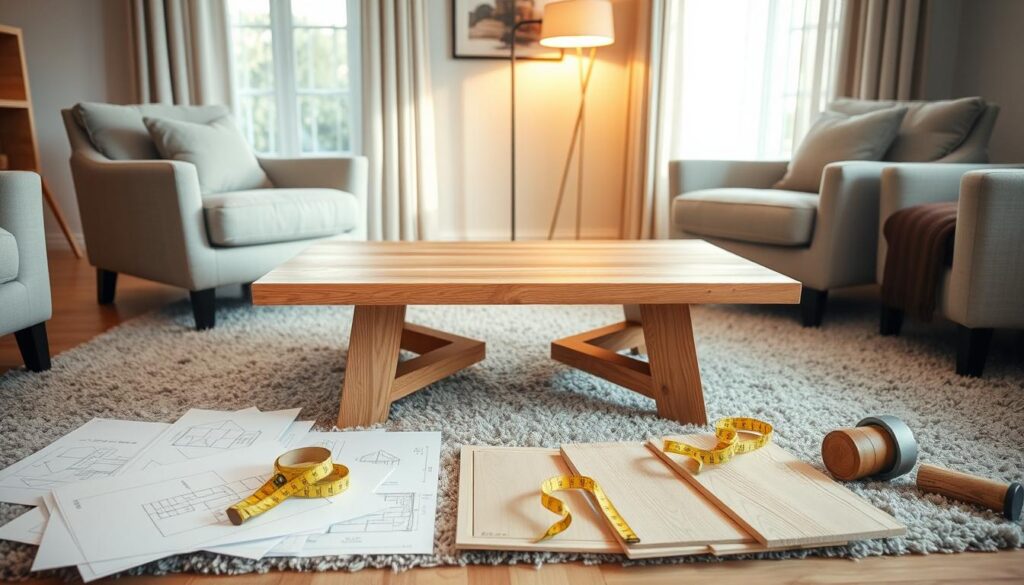
| Style example | Typical dimensions (L x W x H inches) | Best function |
|---|---|---|
| Modern farmhouse | 43.5 x 33 x 17.75 | Display + shelf storage |
| Gaming-ready | 36 x 24 x 17.75 | Compartments and cable access |
| Indoor/outdoor farmhouse | 46 x 22 x 18 | Durable finishes, easy cleaning |
Choose your timber and materials for the tabletop and legs
Deciding the right lumber and supplies early prevents surprises during assembly.
Softwoods like pine are forgiving and budget-friendly, so they suit your first project. They cut easily and sand smooth, but they dent more than hardwoods. If you want a premium look, pick oak, maple, or walnut—these species add durability and a rich finish.
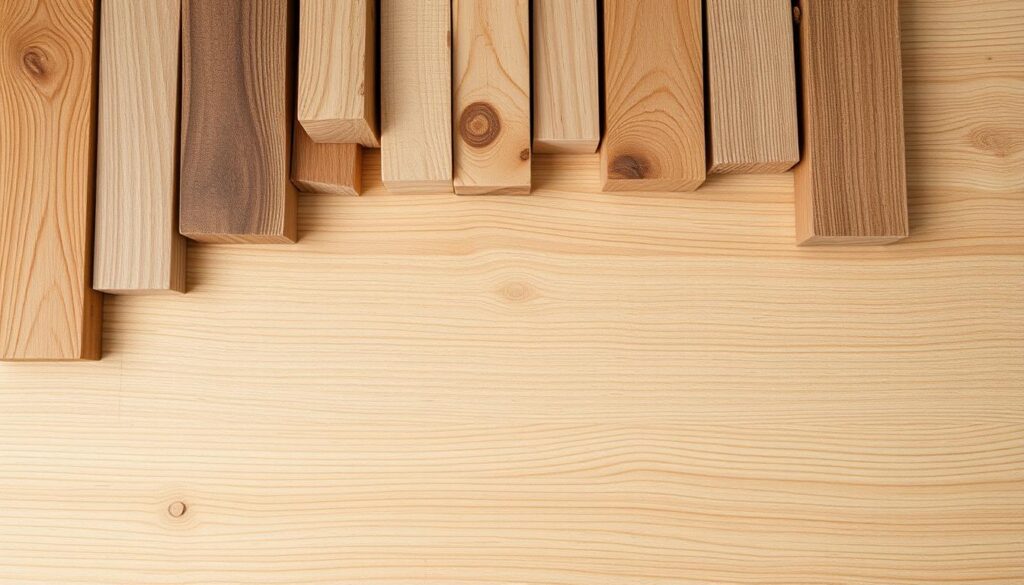
Reclaimed wood and plywood options
Reclaimed boards bring knots and patina that enhance a farmhouse or rustic design. Plywood gives you a clean, modern tabletop with minimal movement and crisp edges. Plan thickness early: thicker tops add presence but raise weight and influence leg choice.
Hardware and consumables
Specify screws, construction adhesive, and a threaded rod with washers and nuts before you cut. Use heavy-duty glue-up methods for laminated tops, and match legs to the mass of the surface so the final piece stays stable.
- Buy straight boards; avoid twist or cupping.
- Purchase extra lumber for trimming and test cuts.
- Test finish compatibility on offcuts—Danish oil behaves differently on soft and hard grain.
Essential tools and safety gear you’ll use
Gather the right gear before you cut a single board — it saves time and avoids mistakes.
Core tools you’ll rely on include a circular saw or a hand saw for straight cuts, a drill with a good selection of bits, sturdy clamps, a measuring tape, and a reliable square. Keep blades sharp and batteries charged so cuts stay clean and safe.
Safety first: always wear safety glasses, a dust mask, and hearing protection when running power tools. Use gloves and closed-toe footwear when handling stock or hardware.
- Set circular saw depth for board thickness and use a straightedge guide for long rips.
- Choose bit sizes for proper pilot holes; correct pilots prevent splits and improve screw hold.
- Lay out clamps before glue-up and stage sanders, a shop vac, and rags nearby to keep workflow steady.
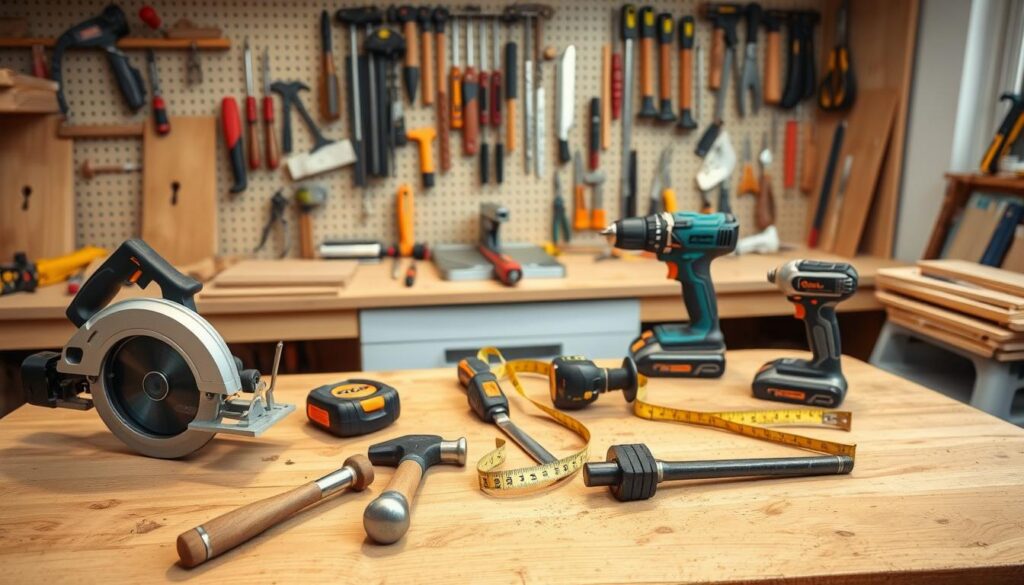
| Item | Purpose | Tip |
|---|---|---|
| Circular saw / hand saw | Straight and cross cuts | Use a track or straightedge for accuracy |
| Drill + bits | Pilot holes, countersinks, fastening | Match bit to screw and pilot size |
| Clamps & square | Align and secure pieces | Multiple clamps keep tops flat during glue-up |
| Safety gear | Protect eyes, lungs, ears, and feet | Replace masks and lenses when worn |
Prepare your workspace for cutting, assembly, and finishing
Set up a dedicated work place before you cut any boards. A garage, backyard, or roomy indoor area works well if it has strong lighting and steady ventilation. Good airflow clears dust and finish fumes so you can work safely and see layout lines clearly.
Stability matters: use sawhorses with a sacrificial sheet of plywood or a solid workbench so parts stay flat during glue-ups. Keep both sides of your cutting station clear to support long boards and avoid binding or tipping mid-cut.
- Organize clamps, screws, and adhesives within arm’s reach so assemblies move quickly while glue is active.
- Use a drop cloth to protect floors and make finishing cleanup easier; set a dedicated zone where the coffee table can cure undisturbed.
- Stage disposal for offcuts and dust to prevent slips and keep freshly finished parts clean.
- Confirm outlets and cords won’t become trip hazards, and dry-fit major assemblies on the bench to verify squareness before gluing.
These steps help your project run smoothly and keep the final table straight, strong, and ready for finish. A little prep now saves time and rework later.
Create your cut list and layout for boards and pieces
Map each board and piece on paper first to prevent wasted cuts and last-minute surprises. Start by listing the top, four legs, and the connecting frame with final inches for each dimension. Many stores will rough-cut stock if you hand them a clear cut list.
Tabletop, frame, and legs: boards, edges, and grain orientation
Lay out boards so the grain runs consistently across the tabletop. Alternating growth rings across adjacent planks reduces cupping and keeps edges aligned over time.
Marking in inches and labeling each piece
Label every piece at both ends and on the face with painter’s tape so parts don’t get swapped during dry fits and assembly. Make sure labels show orientation and final dimensions in inches.
“A careful cut list turns messy stock into a clean, accurate build.”
- Include kerf loss in your measurements; blade width can eat several inches on long rips.
- Group similar cuts to reduce fence changes and improve repeatability.
- Note pilot hole locations and screw lengths on your cut sheet to avoid errors during fastening.
- Buy an extra board for test strips and finish samples before applying stain or oil.
| Component | Quantity | Final size (inches) | Notes |
|---|---|---|---|
| Top planks | 3–5 boards | 48 x 18 x 1 | Arrange grain; allow 1/8″ kerf per rip |
| Legs | 4 pieces | 3 x 3 x 17 | Pre-drill and mark orientation |
| Frame rails | 4 pieces | 42 x 3 x 1.5 | Account for corner joins and pilot holes |
DIY Coffee Table Wood: Beginner’s Guide To Building With Timber
Mark every piece clearly before you cut so mistakes stay on paper instead of lumber. Transfer cut lines to all faces of thick stock. For deep sections, cut as far as the circular saw will reach using a straightedge guide. Then finish the pass with a hand saw so the kerf is clean and square.
When assembling the top, lay out boards in final orientation and dry-fit first. Use construction glue and clamps for the glue-up. Add dowels or screws for alignment and extra strength.
Threaded-rod and drilling tips
For threaded-rod glue-ups, drill from both faces if your bit is too short. Align holes carefully and test-fit rods before gluing. Use washers and nuts to tighten, and add adhesive between lamination faces for a solid bond.
Fastening, pilot holes, and squaring
Drive pilot holes using the correct bit size to prevent splits. Install screws at even spacing so joints pull tight without overdriving. Build legs and frame subassemblies, then attach and check diagonals to confirm square.
Sanding and edge work
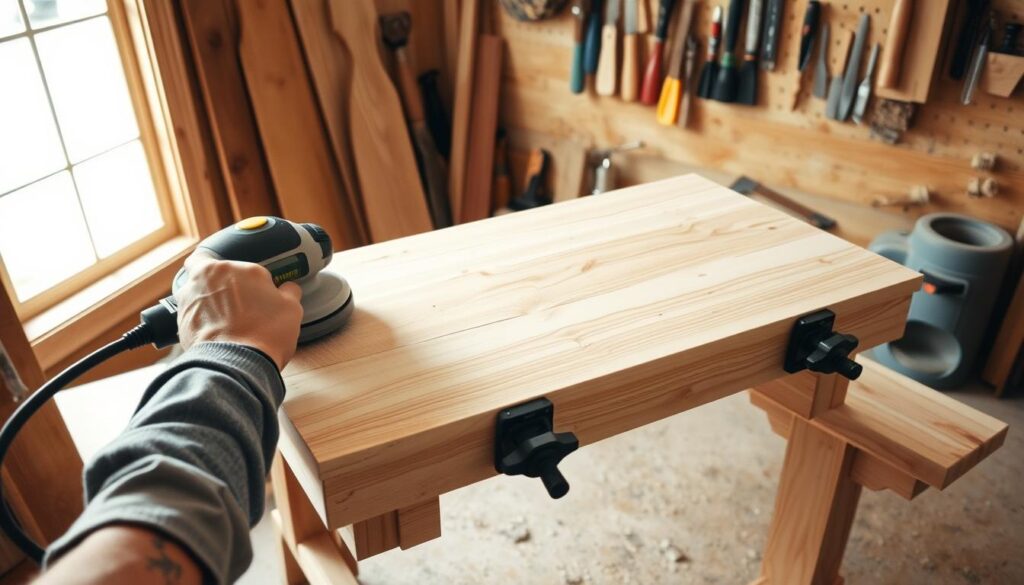
Break sharp corners on all exposed edges for comfort. Start sanding at about 80 grit to level seams and remove glue squeeze-out. Progress to 120–180 grit for a smooth surface that accepts finish evenly.
Final assembly: perform one full dry fit, then glue and fasten permanently. Verify leg alignment and overhangs match your cut list before the final cure.
| Step | Key action | Quick check |
|---|---|---|
| Cutting | Use circular saw + straightedge; finish thick cuts by hand | Lines on all faces; square ends |
| Top assembly | Glue-up with clamps; add dowels/screws or threaded rod | No gaps; rods aligned; dry-fit first |
| Legs & frame | Pre-drill pilot holes; attach and square | Diagonals equal; screws flush |
| Sanding | 80 grit → 120–180 grit; break edges | Smooth touch; no burn marks |
Finish like a pro: stain, oil, lacquer, or paint
A smart finish protects the surface and brings out grain without masking character.
Choose a finish that matches how you use the piece. Danish oil is easy to apply and gives a warm, natural glow. Traditional stain or wax-oil tints deepen tone and highlight grain for richer color.
Optional burning then sanding
Some makers lightly torch-burn the top to accent grain. After burning, refine the area with about 120 grit and progress as needed.
Application and sanding tips
Wipe or brush thin, even coats and avoid puddles that leave tacky spots. Between coats, a light pass with sandpaper and a fine grit removes nibs and produces a smooth finish.
- Pre-condition end grain—it soaks finish faster than face grain.
- Test stain on offcuts to confirm color across species or reclaimed boards.
- For high-wear homes, add a hardwax oil or lacquer topcoat for better resistance.
Respect manufacturer dry and cure time before you move the table into service. Rushing this step risks impressions and dulling the sheen on your coffee piece.
Design variations to fit your home and space
Match form and function: pick a silhouette that fits your living space and the way you use it. A clear design gives purpose and prevents wasted detail.
Farmhouse, minimalist, and industrial X-leg inspirations
For cozy warmth, a farmhouse design with substantial legs and soft edges reads timeless and anchors the room. Example dimensions often land near 43.5 x 33 x 17.75 inches, which balances scale with seating.
Minimalist builds keep lines clean so the tabletop takes center stage. Use thinner legs for an airy feel and simple joinery for quick assembly.
Industrial X-leg styles pair wood and steel. Double-decker tops add storage and visual heft while a shelf gives you a practical place for remotes and magazines.
Gaming and hidden-storage tabletops to declutter your living area
Gaming tops with compartments at about 36 x 24 x 17.75 inches hide controllers and cables. Lift panels or flip sections keep your room tidy and ready for play.
“Built-in storage lets you enjoy the living area without constant clutter.”
Outdoor-ready tables with slatted tops and weatherproof finishes
Outdoor-ready slatted tops shed water and reduce warping. Seal with exterior-grade epoxy or varnish and protect the feet to cut moisture wicking.
- Mix inspirations: a farmhouse top over minimalist legs or an industrial base under a parquet surface.
- Choose leg geometry carefully: stout legs anchor, thin legs feel light.
Budget, materials list, and time estimates for beginners
Knowing material prices and expected hours helps keep this project on track.
Materials matter for cost and durability. Pine is affordable but dents more easily, while oak or walnut costs more and lasts longer. Include basic hardware like screws, construction adhesive, and if you plan a heavy top, threaded rod with washers and nuts.
Cost ranges and common hardware
Plan a simple budget comparing soft and hardwoods. Factor in extra boards for mistakes and test cuts.
| Item | Typical cost | Notes |
|---|---|---|
| Pine boards | $20–$60 | Low cost; soft grain |
| Oak / Walnut | $80–$250 | Higher upfront, lasts longer |
| Hardware & consumables | $15–$60 | Screws, glue, washers, sandpaper |
Estimated timeline
Expect the whole project to span a couple of weekends. Break it into phases: measuring and cutting, dry fits and assembly, sanding, finish coats, and final cure.
- Cutting & layout: a few hours (use inches-based cut lists).
- Assembly & dry-fit: 2–4 hours over a session.
- Sanding: several hours across passes.
- Finishing + cure: 24–72 hours per coat as needed.
Tip: Track costs and time as you go. Small upgrades in hardware or finish often improve lifespan without large price jumps, so plan margins and you’ll finish a solid coffee table that fits your room and schedule.
Common mistakes to avoid when building your coffee table
A few careful checks at each stage prevent the most common assembly failures. Work deliberately and treat dry-fitting as a mandatory step rather than optional prep.
Skipping test fits, misaligned holes, and over-tightening screws
Always dry-fit parts before glue so you can spot gaps and misalignment early. Slide threaded rod through all drilled sections as a test; this shows if holes need slight adjustment.
If rods or fasteners bind, mark and bore the holes out a touch for play. Tighten nuts only after the adhesive cures fully so the joint sets square.
Make sure you pre-drill pilot holes where needed and avoid over-tightening screws. Stripped threads weaken joints and can split near edges when you force fasteners.
Under-sanding surfaces and edges or rushing the finish between coats
Don’t rush sanding. Progress from coarse to fine grits in deliberate passes so mill marks vanish and the finish looks even. A skipped grit leaves scratches that show through stains and clear coats.
Give each coat time to flash off and cure before the next step. Rushing layers can create tacky spots and adhesion failures that ruin the final surface.
- Re-check square after each major step; small deviations compound into wobble.
- Protect corners and edges during handling; chips are hard to blend later.
- Follow the same order for every step so you won’t skip a check before the final clamp-up.
“A careful dry-fit and steady sanding sequence are the best investments in a long-lived piece.”
Care and maintenance to extend your table’s life
A few simple routines will stop minor wear from becoming major repair. Use light, regular care so your piece stays useful and attractive in your home.
Protect the finish first: place felt pads under décor and serving trays to prevent micro-scratches in busy home settings. Rotate coasters and trays now and then to even out wear and UV exposure.
Cleaning, oiling, and spot repairs
Wipe spills immediately with a damp cloth and dry right away so the coffee table surface does not dull or stain. Avoid abrasive cleaners; they can cloud the finish and remove protection.
Refresh oil finishes annually or as needed. A light clean and a maintenance coat restore luster without a full refinish. For stained or clear-coated tops, spot-sand small blemishes, apply matching stain, then recoat the area.
- Use a humidifier or dehumidifier seasonally if your place has big humidity swings.
- Inspect fasteners yearly; tighten loose bolts to prevent wobble and surrounding damage.
“Small, regular steps protect finish and structure better than occasional major repairs.”
| Task | Frequency | Quick tip |
|---|---|---|
| Felt pads under items | Always | Replace when compressed |
| Wipe spills | Immediate | Use damp cloth, then dry |
| Oil or maintenance coat | Yearly or as needed | Light clean first |
| Fastener check | Annually | Tighten bolts; avoid overtightening |
Conclusion
Wrap up your build with one last round of checks: confirm heights near 16–18 inches, verify leg alignment, and test stability in the living room before you move the piece into place.
Measure, cut, dry-fit, assemble, sand, and finish—follow each step slowly and use the right tools such as a circular saw with a guide and a hand saw for thick crosscuts. Make sure pilot holes for screws and straight holes for threaded rod align across all pieces.
Sand methodically (80 → 120–180 grit) and test a stain or Danish oil on an offcut so the top color matches your room. Keep edges and overhangs consistent for a clean look from every side.
You’re ready: with careful layout, steady assembly, and basic tools, even a first project can yield a sturdy, attractive table that fits your home and daily life.