

Surprising fact: rooms with only overhead lighting feel 40% colder to visitors, and that sterile feel often starts at the center — your coffee table.
You want a piece that supports daily life and lifts your interior, not one that looks wrong in scale or gets in the way. Many DIY builds fail because of bad height, tight clearance from the sofa, or finishes that show every fingerprint.
In this short guide, you’ll learn simple, measured targets: leave 15–20 inches between the sofa edge and the table, hang art around 57–60 inches, and keep rugs large enough so furniture sits partly on them. We’ll cover joinery choices that stop wobble, and styling systems — tray zones, layered heights, and negative space — that keep the surface usable without clutter.
By the end, you’ll know which design choices save time and prevent rework so your new table fits your home and your life.
Key Takeaways
- Keep 15–20 inches between sofa and table for easy reach and flow.
- Match table height to seating for comfort when setting down a drink.
- Layer lighting and hang art at 57–60 inches for a curated look.
- Choose joinery and leg geometry that prioritize stability.
- Use trays, varied heights, and negative space to style without clutter.
- Pick finishes that balance appearance with wipeability and glare control.
Before You Cut: Align Your Coffee Table Build With Your Room’s Scale and Use
Decide the main role your table must play so every cut and finish supports that use. Clarifying function first—serving, display, play, work, or mixed-use—keeps the design practical and long-lasting.
Make sure the footprint fits your seating plan. Designers recommend leaving about 15–20 inches between the sofa edge and the table for reach and circulation. Use the sofa width and seat depth as your proportional guide rather than guessing.
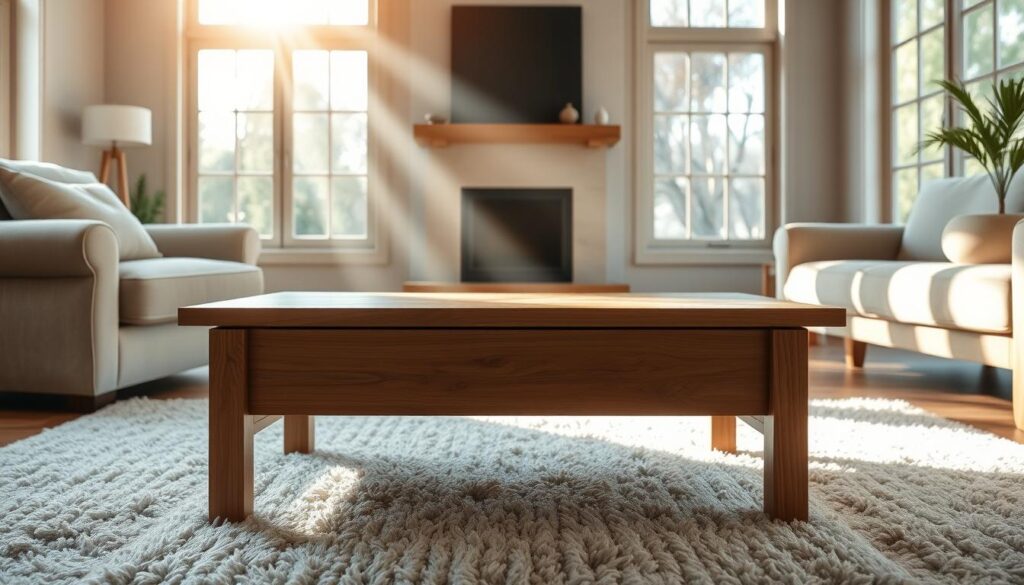
Clarify function first: display, everyday living, or mixed-use
List the tasks the table will see most often. If it will host laptops and snacks, plan for durable finishes and storage. If it’s mostly for styling, reserve an upper shelf and a tray zone for small items.
Match table footprint to seating plan for a cohesive interior
Sketch the seating and test a cardboard mockup in the actual room. Aim for a footprint that sits two-thirds to three-quarters the sofa width for visual balance.
- Pick a shape that suits walking paths: rectangular for long sectionals, round or oval for tighter corners.
- Consider lighting and wall art when choosing finishes—gloss can glare under bright lamps or windows.
- Check leg placement against rugs and floor vents so you don’t block airflow or create wobble.
Getting Size and Proportion Wrong
Proportion makes or breaks a living room; get the width relationship right and the whole seating area will read as intentional.
Right-size the coffee table so it sits about two-thirds to three-quarters the width of your sofa. This mirrors the visual rule you use for art above furniture and keeps the group balanced.
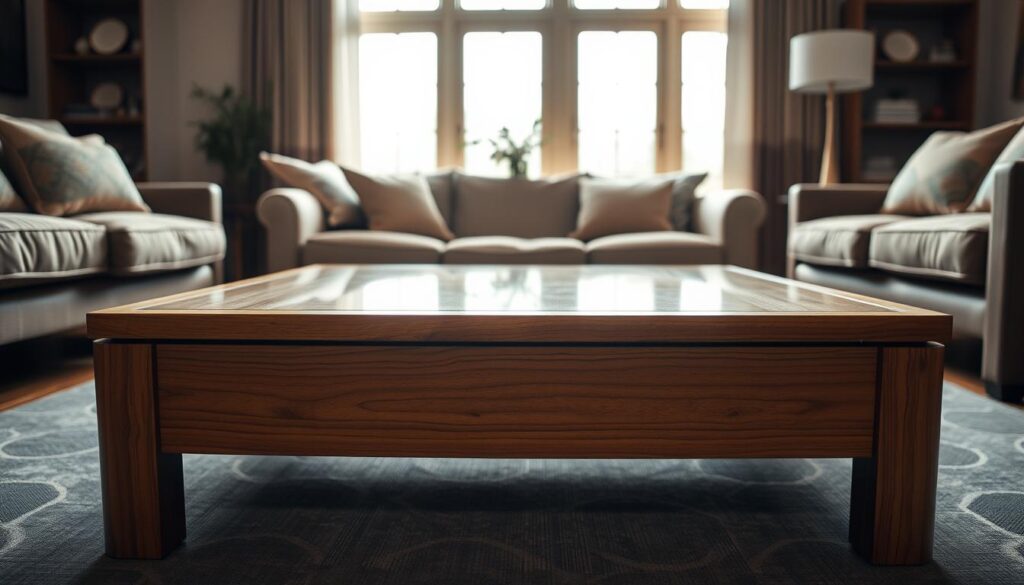
Keep roughly 15–20 inches between sofa and table for easy reach and clear walking paths. If seats at the ends sit farther back, consider a longer or nested option to get right coverage.
Leave one-third of the surface clear as negative space. That empty area makes the piece useful and prevents the surface from feeling crowded when you add books, trays, or serving dishes.
- Depth should match seat depth so you can reach without leaning.
- Choose round or oval in tight corners to ease traffic; rectangular suits linear seating.
- Prototype with tape on the rug and check that the floor and rug pile keep the legs level.
| Aspect | Rule of Thumb | Why it matters |
|---|---|---|
| Width | 2/3–3/4 of sofa | Maintains visual balance and prevents a wrong size look |
| Clearance | 15–20 inches | Allows reach and unblocked traffic paths |
| Surface styling | ~1/3 clear space | Keeps function and negative space for a calm eye |
| Shape | Rectangular / Round / Oval | Choose based on room flow and floor use |
Building the Wrong Height for Comfort and Reach
A wrong top height can turn a smart living area into an awkward, unusable one.
Design for ergonomics: set the tabletop even with the sofa seat or within one to two inches. That small margin keeps drinks and remotes reachable without leaning forward.
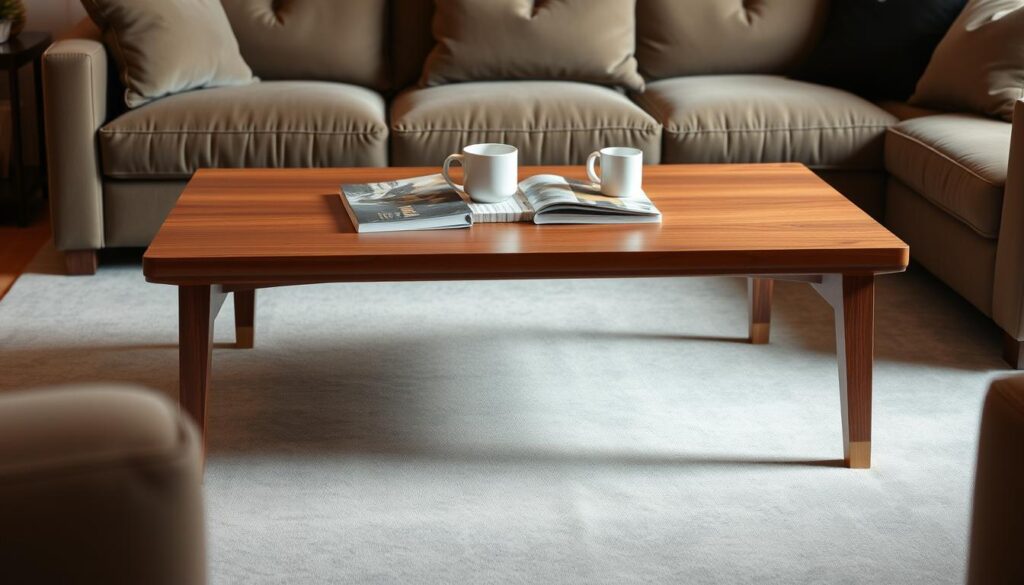
Practical checks before you fix leg length
Verify reach from every seat. If someone must stretch, raise the top slightly or move the piece closer to the sofa.
“Many designers prefer the top to match the seat height for effortless use.”
- Include top thickness in your final height math so the finished piece lands in the ergonomic zone.
- Test with temporary boards on recliners or chaises before cutting legs.
- Consider adjustable glides if rugs or flooring change seasonally.
| Metric | Target | Why it matters |
|---|---|---|
| Top vs sofa | Even ±1–2 inches | Easy reach without leaning |
| Clearance | 15–20 inches | Walkways stay open and the space feels calm |
| Styling height | Keep tall items low | Preserves sightlines and lighting across the room |
Ignoring Clearance and Traffic Paths Around the Table
A small shift in placement can change how a living area flows and how people use it. Take a moment to map walking lanes before you set the piece in place.
Maintain about 15–20 inches between the sofa edge and the coffee table for easy reach and smooth circulation. This distance keeps drinks and devices within arm’s reach without crowding the path.
Size your rug so walkways don’t force one foot on the rug and one on the floor. Aim to have furniture sit at least halfway on the rug for a polished look and stable feel.
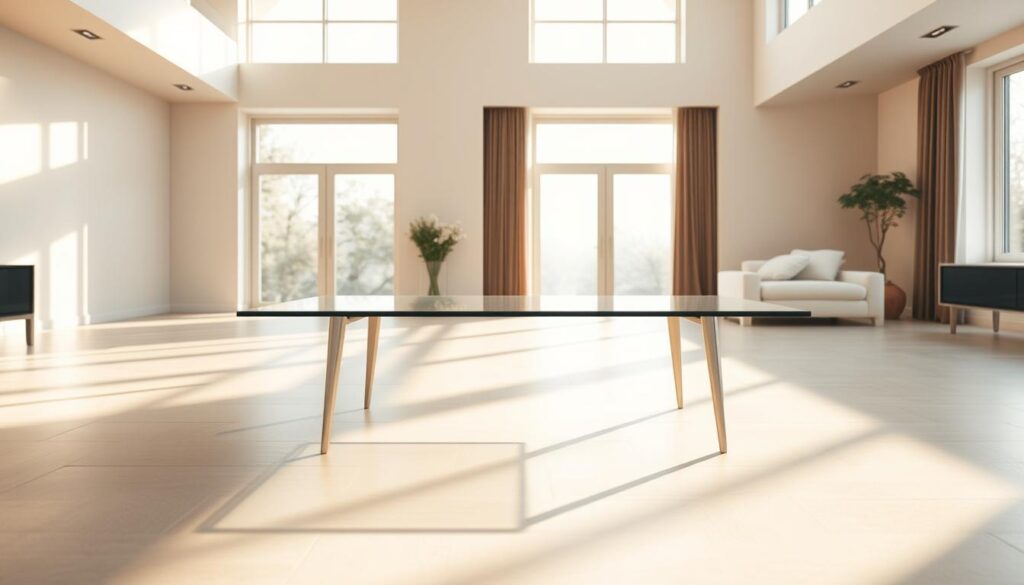
- Confirm clearances for side chairs, ottomans, and storage so pieces slide or pivot without hitting legs.
- Check door and drawer swings and nearby cabinetry to avoid collisions with hardware or wall finishes.
- Use round corners or eased edges in homes with kids or pets to reduce impact and make the space more forgiving.
- On thick rugs, add wide glides or a larger footprint to prevent wobble as people move around the furniture.
Finally, if one side sees heavy traffic, shift the table slightly off-center. Small moves improve the space feel and help your design look intentional while keeping every seat usable.
Skimping on Stability: Weak Joinery, Wobbly Legs, and Undersized Bases
Strong joinery and a properly sized stance keep a surface steady even in busy homes. Your build should resist daily racking, not rely on screws driven into end grain. Test connections in dry assembly before glue-up.
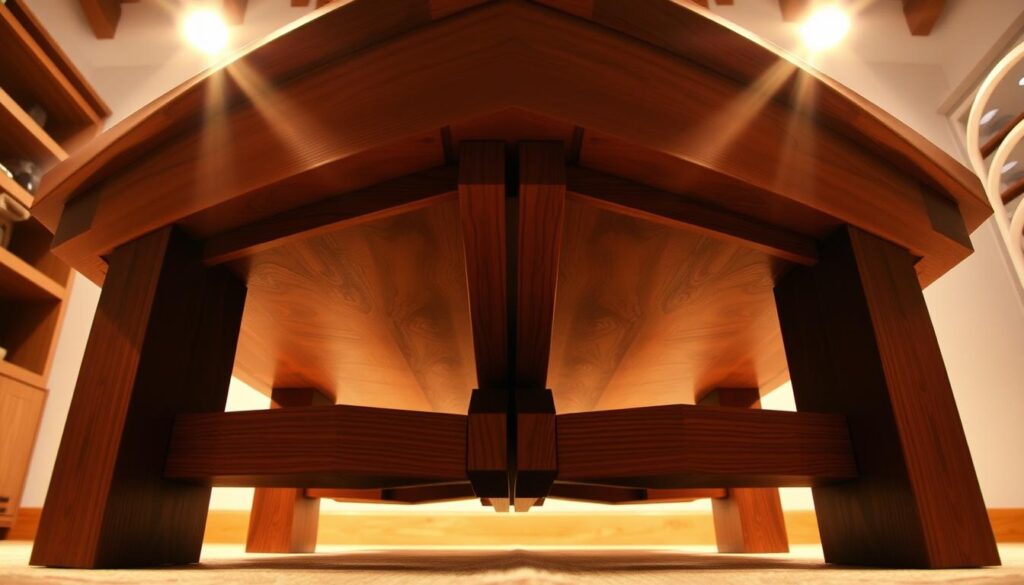
Choose sturdy connections for daily use and long life
Pick joints that lock under lateral loads—mortise-and-tenon, bridle, or reinforced dowels work far better than short screws. Thicker aprons and corner blocks add stiffness where people rest feet or lean in.
Match base footprint to top weight and room traffic
Size the base for your top: heavy stone, thick hardwood, or glass needs a wider stance or splayed legs to prevent tipping. On soft rugs, use wider pads or sled feet so the piece won’t rock as pile compresses.
- Integrate shelves as structural braces to reduce sway on long spans.
- Plan for real-life loads—kids and pets add lateral stress that weak joints won’t survive.
- Fit felt or UHMW pads to reduce micro-movement and noise that loosen fasteners over time.
“Designers caution that fixtures collide when clearance is poor; the same principle applies to a poorly anchored base that tips or wobbles.”
| Risk | Fix | Why it matters |
|---|---|---|
| Racking | Mortise-and-tenon or bridle joints | Stops lateral twist from use |
| Rocking on rugs | Sled base or larger pads | Maintains level underfoot |
| Tipping | Wider footprint / splayed legs | Matches mass of heavy tops |
Using the Wrong Materials and Finishes for Your Space
Material and finish choices affect daily wear, glare, and how the piece reads in your room. Pick surfaces that match your lifestyle so the centerpiece stays useful and attractive.
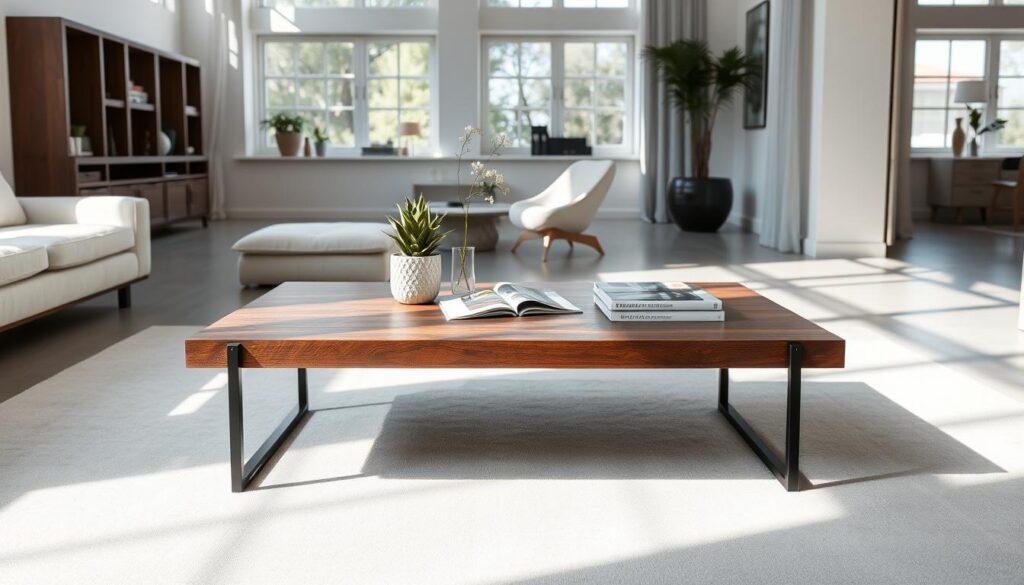
Finish sheen matters
Satin and semi-gloss topcoats are practical for high-traffic zones. They resist moisture and wipe clean without showing every spill.
For a family room, choose woods like oak, maple, or ash and seal them with a durable finish. That prevents dents and keeps cleaning from dulling the surface.
Glare and fingerprints: material trade-offs
High-gloss or glass tops can create harsh reflections under layered lighting and show fingerprints fast. Matte or honed finishes diffuse light and keep the surface calm.
If you want a bright, modern look, pick tempered glass with an easy-clean coating or sealed stone with a honed face. Test sample boards under your actual lamps and window light before you commit.
- Weight: match heavy tops to a beefier base so stability matches the size and mass.
- Coordination: check undertones against nearby furniture and wall color to avoid clashes.
- Edges: eased or rounded profiles resist chipping and feel nicer in daily use.
“Test samples in your room — color shift and glare often reveal themselves only in place.”
Forgetting Style Cohesion With Your Interior Design
A well-chosen surface can quietly tie the seating and wall art into a unified look. Think of the piece as part of a set, not an isolated object.
Match lines, finishes, and scale so your coffee table reads as part of the room’s story. Repeat a wood tone or metal finish found on nearby furniture or art frames to knit finishes across the space.
Designers advise mixing high and low across a room so spaces feel balanced. Keep quality consistent: a very low-end piece next to refined seating breaks the sense of place.
Hang art at about 57–60 inches and size it to relate to the table and seating. Echo shapes—curved edges with rounded frames, for example—to make the grouping feel deliberate.
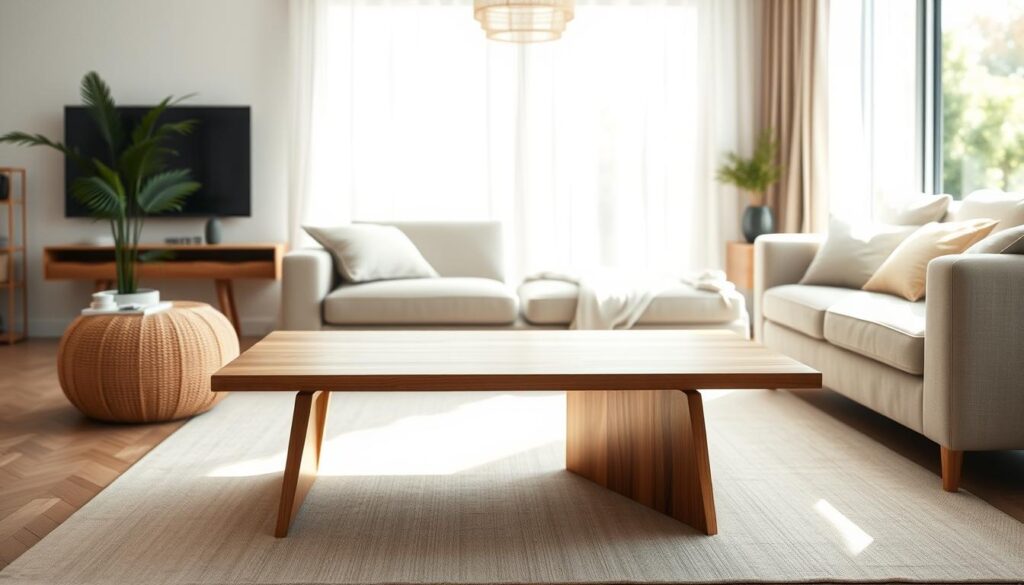
Use layered lighting and a unifying rug to anchor the group. Small styling moves—proportionate decor, a balanced visual weight, and restrained finishes—make the space look cohesive and calm.
| Issue | Quick Fix | Result |
|---|---|---|
| Mismatched finishes | Repeat one material or tone | Visual unity across furniture and art |
| Disparate visual weight | Choose a base that matches nearby seating | Balanced composition |
| Poor relation to wall art | Size art to the grouping; hang at 57–60 in | Curated, intentional look |
Ten design pitfalls that silently harm your build
Small styling choices often determine whether a living area feels curated or cluttered. Fixing these issues while you finish the piece keeps the end result useful and beautiful.
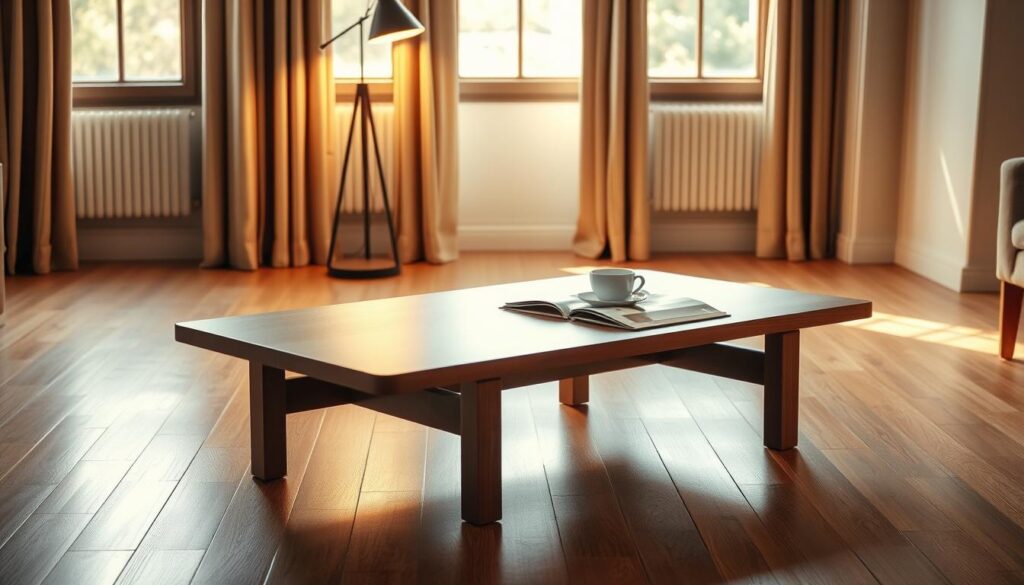
Overcrowding the surface undermines function. Use a tray to corral remotes and small items. Vary heights with a tall vase, a low stack of books, and one sculptural object. Leave generous negative space so the surface stays practical.
Right-size rugs and scale
Wrong size rugs make the table look adrift. Aim for the seating and table to sit at least halfway on the rug so the group reads as one. Undersized rugs disrupt traffic and make the floor plan feel accidental.
Layer lighting beyond ceiling fixtures
Don’t depend only on overhead lighting. Add lamps, floor lights, or picture lights so finishes don’t glare and styling reads well at night. Layered lighting also helps the coffee table surface feel warm and inviting.
Make the piece relate to nearby art and walls
Scale wall art to roughly two-thirds the width of the seating group and center at about 57–60 inches. When the art and the table share visual weight, the whole room gains balance and an intentional look.
“A tray, varied heights, and a little negative space transform a crowded surface into a useful focal point.”
| Issue | Quick fix | Result |
|---|---|---|
| Overcrowded surface | Use tray + 3 objects of varied height | Functional zone with clean negative space |
| Undersized rug | Move rug so furniture sits halfway on it | Anchored grouping; better traffic flow |
| Only ceiling light | Add lamp or sconce near seating | Reduced glare; more layered ambiance |
| Mismatched quality | Match finish level across pieces | Coherent, curated interior |
Styling Impacts Build: Plan Zones, Vary Heights, and Add Personal Pieces
Design the top with zones in mind so daily use doesn’t fight your decor. Plan a dedicated tray area, a small vignette, and an open spot for plates or drinks.
Integrate a tray zone sized for coasters, remotes, and earbuds so small items stay tidy and are easy to move when you need surface space.
Layer heights for balance
Leave room for a tall vase, a medium stack of books, and a low sculptural piece. This three-level approach gives rhythm and prevents a flat, cluttered look.
Keep meaningful negative space
Size the top so there’s still clear surface after styling. Negative space keeps the piece useful and helps the room feel calm.
“A tray, varied heights, and a little negative space transform a busy surface into a usable focal point.”
| Element | Practical goal | Why it matters |
|---|---|---|
| Tray zone | Corral small items | Makes clearing fast and keeps clutter out of sight |
| Layered heights | Vase + books + sculpture | Creates visual interest without blocking sightlines |
| Hidden storage | Shallow drawer or decorative box | Hides remotes and chargers for a neat look |
| Finish choice | Satin or semi-gloss | Resists rings and wipes clean during nightly resets |
- Add a compact planter for life and color.
- Use book stacks to change height and anchor small pieces.
- Route chargers through leg channels so styling stays clean.
Conclusion
Finish strong: small checks now save time later and keep the piece working in your room.
Measure and mock up first—keep roughly 15–20 inches between the sofa and the coffee table and center wall art near 57–60 inches. These numbers help the size and scale feel right for your interior.
Match width to the sofa, leave negative surface space, and choose finishes that read well under layered lighting. Stabilize construction with solid joinery and a base that suits the top’s weight.
Style simply: a tray, varied heights, a personal object, and seasonal swaps. Reassess small things on occasion and you’ll get a lasting, useful look that fits your home and the way people live there.